Italy’s Oscar Submission: LFM Reviews Terraferma

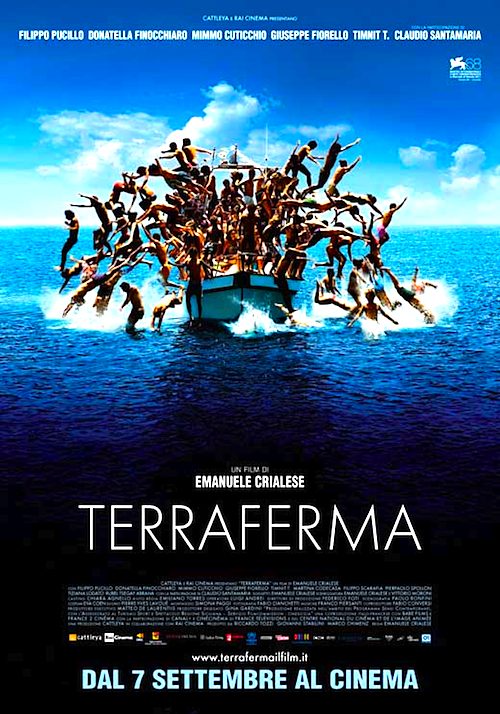
By Joe Bendel. The tiny Sicilian island of Linosa looks like a Mediterranean paradise. Unfortunately, regular work can only be found there two months out the year. In addition to tourists, illegal immigrants from North Africa have also been flocking to the isle, further complicating the local economy. Indeed, immigration is the driving concern of Emanuele Crialese’s Terraferma (trailer here), which has been officially submitted by Italy for Academy Award consideration as the best foreign language film of the year.

Filippo is not too bright, but the kid has not had a lot of breaks in life. After his father was lost at sea, his grandfather and uncle have waged a cold war over his future. The old salt-of-the-earth Ernesto wants Filippo to be a fisherman like his father before him, whereas the smarmy Nino offers his nephew seasonal work catering to tourists. Unsatisfied with either dead-end option for her son, Giulietta resolves to leave the island after the upcoming season, a decision that does not sit well with Filippo.

Even though Filippo remains determined to stay, a series of disparate new arrivals will challenge his family’s traditional way of life. First, his mother rents out their home to three tourists from the “dry land,” including the very noticeable Maura. Soon thereafter, Ernesto and Filippo fish out several drowning Ethiopians from the sea, secretly sheltering the pregnant Sara and her young son. For their efforts, Ernesto’s boat is confiscated. From this point on, Terraferma is not very subtle.

That water sure is blue, though. Not merely background color, the deep azure sea is a critically important visual element for the film. Crialese pointedly contrasts images of tourists playfully diving off pleasure cruisers with that of illegal immigrants desperately abandoning sinking makeshift vessels. It is heavy-handed, but striking.

Dazzlingly lensed by Fabio Cianchetti, Terraferma captures all the natural beauty of Linosa. He also evokes the chiaroscuro effect of old masters in several hushed scenes of good Samaritans ministering to the despised huddled masses. There are plenty of bikini shots as well, not that anyone will ever confuse the film with Beach Blanket Bingo.

The azure seas of Linosa.

Cianchetti’s camera also loves Mimmo Cuticchio, both an award winning puppeteer and an accomplished actor. Resembling a wiser, more weathered Andrew Weil, Cuticchio has the perfectly seasoned gravitas to serve as Ernesto, the film’s proletariat moral compass. Filippo Pucillo does not have any of that going on as his namesake. Granted, the twenty year-old is supposed to be immature, but one starts to wonder how he has gotten this far in life. Conversely, Donatella Finocchiaro plays mother Giulietta with a convincing world-weary earthiness, despite not looking particularly matronly. Former model Martina Codecasa also shows a bit of unexpected substance beyond mere eye candy as the topless sunbathing Maura.

Terraferma is mostly quite effective as a bit of fun in the sun with a guilty social conscience, though the spectacle of throngs of prospective asylum seekers overwhelming Filippo’s “borrowed” skiff like a horde of zombies nearly undermines the message. Regardless, it is an absolutely lovely looking film. Indeed, both the lush visuals and simplistic humanism ought to appeal both to Academy voters and to prospective distributors.

Posted on December 28th, 2011 at 8:57pm.
Serbia’s Oscar Submission: LFM Reviews Montevideo: Taste of a Dream

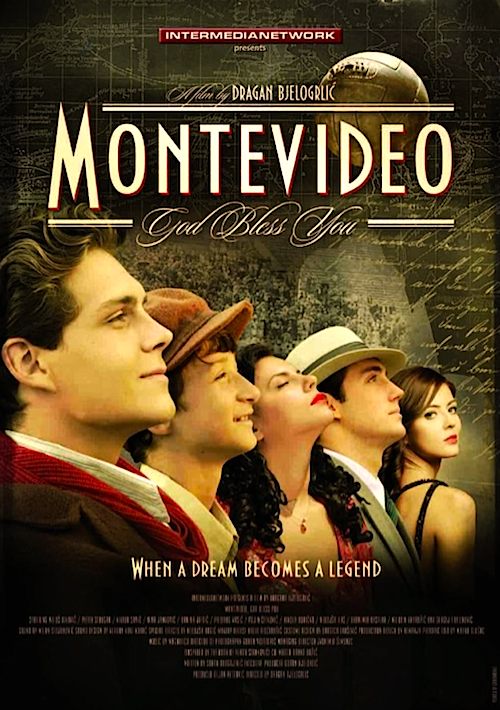
By Joe Bendel. In 1930, Yugoslavia’s national football (a.k.a. soccer) team had quite a run during the very first FIFA World Cup. If you think Serbia still remembers with pride that celebrated team consisted entirely of Serbians, you would be correct. The story of how a team of underdogs played their way into the tournament, in spite of a Croatian boycott, is dramatized in Dragan Bjelogrlic’s historical sports drama Montevideo: Taste of a Dream (sometimes also subtitled as God Bless You, trailer here), which has been officially submitted by Serbia for Academy Award consideration as the best foreign language film of the year.

Serbia is a long way away from Uruguay. With the memories and repercussions of WWI still very fresh for the newly formed country of Yugoslavia, the team requires a serious patron to underwrite their journey, like the king. He will need some convincing. Unfortunately, the national team is a motley bunch, largely overlapping with Belgrade’s sort of-kind of professional club, conveniently owned by their chairman. There is hope though when they sign the poor but cocky Tirke Tirnanić, who can do just about anything with a soccer ball (from here on, we’re sticking with the American vernacular). Still, he has a good heart, always looking out for the film’s Oliver Twisty narrator, Stanoje, a street urchin who must wear a leg brace.

Naturally, Tirnanić has a rival on the team, the comparatively well-heeled Mosha Blagoje Marjanović. Initially they clash over differences of style and then over two women: Rosa, the good girl barmaid and Valeria, the vampy artist. It is pretty clear who should be with whom, but somehow they get mismatched.

Montevideo might be an Oscar long shot, but a forward-thinking art-house distributor should snap it up fast. It is easily one of the most commercial films in contention. Soccer continues to grow in popularity, with American fans tending to be rather internationalist in their outlook (so subtitles should be no problem). As sports films go, Montevideo has plenty of on-field action to satisfy enthusiasts, as well as two beautiful women. Of course, it is also totally manipulative. It is a sports film, after all.

Nina Janković as Valeria.

Despite his baby-face, Petar Strugar makes a convincingly dashing rogue as Marjanović. While Miloš Biković’s nice guy right-winger (that is his position) comes across as something of an earnest stiff, such is the nature of sports movie protagonists. On the other hand, Nina Janković is downright fascinating as the nuanced troublemaker, Valeria.

A lovely period production, Montevideo captures all of Belgrade’s old world charm. Nemanja Petrovic’s design team’s attention to detail shows in every frame, while cinematographer Goran Volarevic gives it all a lush, nostalgic look. Still, given recent history in the Balkans, the occasional flash of nationalism remains a little scary, as when the crowd spontaneously bursts into the Serbian anthem after a pivotal game.

While a tad long at one hundred forty minutes, it is quite entertaining in a pleasingly old-fashioned way, with an appropriately hot and swinging-ish soundtrack. Considerably better than last year’s best foreign language Academy Award winner, Montevideo ought to have a further distribution life regardless of what Oscar does.

Posted on December 28th, 2011 at 8:56pm.

LFM Mini-Review: We Bought a Zoo

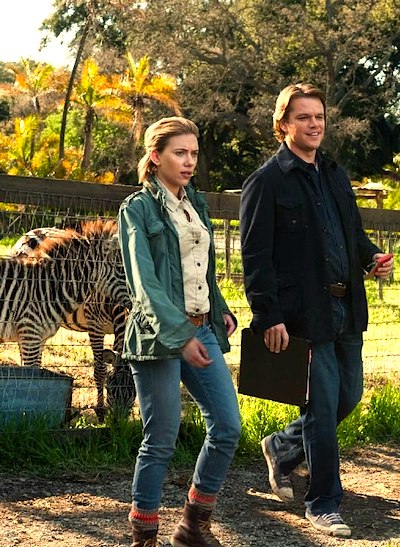
Maggie Elizabeth Jones and Scarlett Johansson.

By David Ross. THE PITCH: Grieving widower (Matt Damon) purchases and restores a ramshackle zoo. Surly teenage son and adorable moppet of a daughter work out psychological trauma of mom’s death, while lovable band of zookeeper misfits provides comic relief and romantic opportunity (Scarlett Johansson).

THE SKINNY: Having to choose this holiday season between a weepy Matt Damon and a gaggle of wise-ass cartoon chipmunks, I reluctantly choose the former. The group-therapy dynamic is gluey and interminable, but I don’t mind watching Scarlett Johansson lug buckets of raw meat in a zookeeper’s jumpsuit. Kids will of course enjoy the animals.

WHAT WORKS: • There are a few veiled penis jokes and booze references, and the above-mentioned moppet does use the word ‘d**k’ (they don’t make moppets the way they used to), but for the most part moms will not have to lunge in human earmuff mode.

• Matt Damon is a Hollywood packhorse; plodding along, he gets the job done, whatever the film, whatever the genre. What I take to be his genuine intelligence and good nature shine through. More than ever, he’s oddly rectangular, as if he’s made of Lego or gingerbread. The obvious analogy is to Spencer Tracy, another squat savior of otherwise mediocre films.

• Scarlett Johansson’s potbelly is long gone. Svelte and tomboyish only in quotation marks, she’s a little hard to believe in the role of zoo drudge. She’s become very good at conspiring in this kind of narrative hypocrisy. It’s not the flaunters who drive you crazy; it’s the figurative librarians in their figurative cardigans. Scarlett’s cardigan consists of her shyness and her husky voice and her imperfect features. We’re eventually blindsided by the realization of our initial error. Scarlett is such a fizzle as a model (Dolce and Gabbana) because none of this works in the context of negligee and deliberate smolder.

• The film’s only bad guy is a priggish little zoo inspector who wields his measuring tape like a sadist’s whip. The film is not trying to make a political point, but all the same it effectively silhouettes the state regulatory apparatus in its fascist aspect. Damon’s zoo owner must grovel and beg for permission to operate his business, all his dreams (not to mention his life savings) hinging on the whim of a petty bureaucrat. Matt Damon, this is what you vote for and would have us vote for! Learn a thing or two from your own movie.

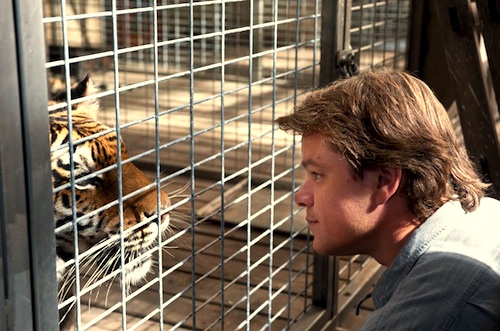
Matt Damon stares at a tiger.

WHAT DOESN’T WORK: • The dwindling imagination of Hollywood can conceive of only two dramatic premises at this point: dead spouse or dead kid. The actuarial chance of a woman dying in the prime of life is one in many thousands; the actuarial chance of a woman dying in the prime of life in the average Hollywood ‘drama’ is about 50%. In a ‘supernatural thriller,’ the odds are 100%. If cancer doesn’t get her, then a wet road at night certainly will. The husband will have had a few drinks and must therefore ‘learn to forgive himself.’ This scenario is catnap to reviewers like Kenneth Turan, who know ‘surprising psychological complexity’ when they see it. I, for one, am tired of being subjected to this ghoulish graveyardism. No more flashbacks of picnics in fields strewn with spring flowers! No more wrinkled wallet photos and beery viewings of old home movies! No more bedtime attempts to explain what happened to mommy’s soul while scrupulously avoiding the specifics of Christian theology!

• Likewise, I’m sick of surly teenagers. I’m sure they exist. I’m sure they secretly yearn to stop sniffing glue and torturing cats and to be told how much they’re loved by their gruff but well-meaning fathers. But none of this is interesting. Hollywood’s endless riffling of Freud for Dummies has reduced nearly all of modern American film to therapeutic mush.

Scarlett Johansson and Matt Damon..

• Cameron Crowe, once a renegade reporter for Rolling Stone, is now so mired in Hollywood formula that he probably can’t shave without peering deeply into the mirror and pondering the toll of the passing years.

• Is there a Guinness Record for number of emotionally wringing false endings? It seems to me that We Bought a Zoo has four or five. End the damn movie already!

THE BOTTOM LINE: We Bought a Zoo connects the emotional dots in all the predictable ways. Kids will enjoy it without remembering it for very long; parents will be pleased with their own parenting (“I’m so glad we didn’t let the kids see those chipmunks”). What a film like this doesn’t teach or even recognize is the old fairy tale stuff: irony, energy, danger, mystery, the dark declivities of the true Freud – the stuff that children instinctively reenact in their games of pretend. It’s a film for an era of calculated blandness and diminished pop-cultural expectations.

P.S. We Bought a Zoo opens with a coming attraction for Big Miracle, which may be the most gag-inducing film ever released. Drew Barrymore plays a Greenpeace type who must rescue a pair of whales trapped in the arctic. She’s predictably outraged that the U.S. and the U.S.S.R. don’t immediately drop what they’re doing (trying to win the Cold War) and come to the whales’ rescue. “The whales are just like us!” wails Barrymore. “They love! They hurt! They develop adolescent drug problems and wind up dating second-rate rock stars!” The whole scenario leaves me longing for the old days of Japanese industrial whaling. Incidentally, was ever a film endowed with such a preposterously lazy title?

Posted on December 27th, 2011 at 7:17pm.

The Dutch Cat Woman: LFM Reviews Miss Minoes

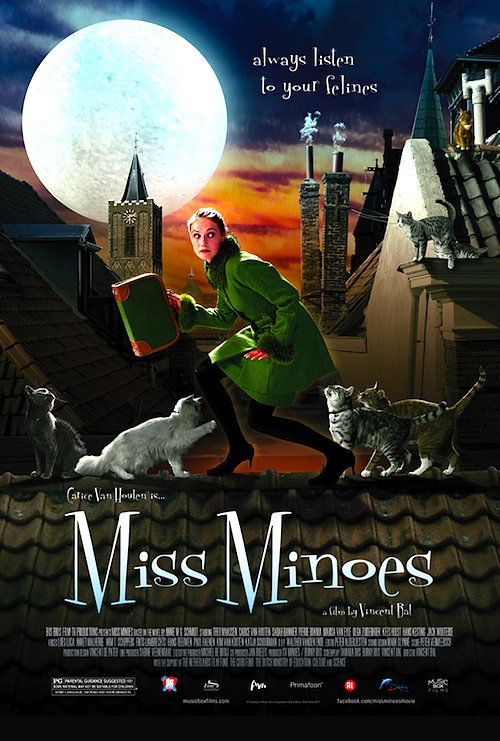
By Joe Bendel. Do not call Miss Minoes catty. The proper term is feline. She should know what passes for political correctness amongst the cat population. She used to be one. Indeed, she has a difficult time acclimating to the human world in Vincent Bal’s Miss Minoes (trailer above), which opened Friday in New York.

After an unfortunate accident involving a mysterious barrel of chemicals from the local deodorant factory, Miss Minoes suddenly transforms into a human. However, she retains many of her feline characteristics, including a taste for fish, the fear of dogs, and an ability to caterwaul. Though some of her former friends now shun her, she can still communicate with the cats of Killendoorn, whom she uses as a network of informers for Tibbe, the incompetent journalist temporarily sheltering her. Naturally, newsmakers do not think twice about talking in front of cats. They are commonplace in this quaint little town and frankly rather disposable.

For a while, Tibbe becomes top dog at the paper. Unfortunately, when Miss Minoes and her feline associates goad him into writing an unsourced attack on the deodorant factory owner (a secret animal hater) he becomes the Mikael Blomkvist of Killendoorn. Still, a philanthropic industrialist will surely be no match for a woman with the mentality of a house cat and the eight year old girl living below Tibbe.

Without question, Carice van Houten’s work as Miss Minoes is quite a pleasant surprise. Her twitchy, cat-like mannerisms and wide-eyed naivety are rather disarmingly winning. Though an international star, she is clearly not afraid to look silly, which is cool. On the other hand, Theo Maassen’s Tibbe is just a big lunkhead. He might be somewhat “likable,” but it is hard to invest in a character that is dumber than the animals around him.

Yet the biggest problem with the film is the standard issue villain, Mr. Ellemeet of the DEO factory (broadly but flatly played by Pierre Bokma). Frankly, the nefarious businessman-slash-hypocritical fussbudget is such a cliché even the cats in the film seem bored with him. It really is a shame, because his subplots are so rote and uninspired, they weigh the film down like an albatross around its neck.

Indeed, there are some nice elements to be found in Miss Minoes, including an appealingly eccentric lead turn from van Houten. Cinematographer Walther Vanden Ende’s warm lighting and autumnal color palette are also quite inviting. They just get no help whatsoever from the inert, paint-by-numbers screenplay, based on Annie M.G. Schmidt’s Dutch children’s book. For cat loving little girls, it is probably still quite engaging, but parents should be warned, there is some mild, dubbed cursing. Cineastes should also beware, the dubbing is considerably below current anime standards. Mostly harmless and occasionally charming, despite trafficking in the worst class-based stereotypes, Miss Minoes opened Friday in New York at the Cinema Village and the Elinor Bunim Munroe Film Center.

Posted on December 27th, 2011 at 7:43pm.

LFM Review: The Girl with the Dragon Tattoo

By Joe Bendel. For a while, Lisbeth Salander was like Scarlett O’Hara with a nose ring. Every actress claiming to be under thirty who was not in contention for the role should have fired her agent. Eventually Rooney Mara was chosen to follow in Noomi Rapace’s footsteps. It was one of several odd choices that produced David Fincher’s surprisingly straight forward remake of The Girl with the Dragon Tattoo (trailer here), which opened Tuesday in New York (a few hours earlier than first announced).

Stop me if you’ve heard this one before: Lisbeth Salander is a difficult woman to get to know. However, the hacker for hire can find out all there is to know about anyone else—for a price, of course. Her latest target she actually finds sort of interesting: Mikael Blomkvist, a crusading journalist just found guilty of libeling a controversial businessman. Based on Salander’s vetting, Blomkvist has been hired by retired industrialist Henrik Vanger to solve the decades old disappearance of his favorite niece Harriet.

Still grieving the loss of the teen-aged girl, the old Vanger finds little comfort from the rest of his ghoulish clan, many of whom were (and continue to be) open National Socialist sympathizers. With a large, ugly family full of suspects to check out, Blomkvist has his work cut out for him, but he will find an unlikely ally in Salander, once she has dealt (severely) with some of her own personal issues.

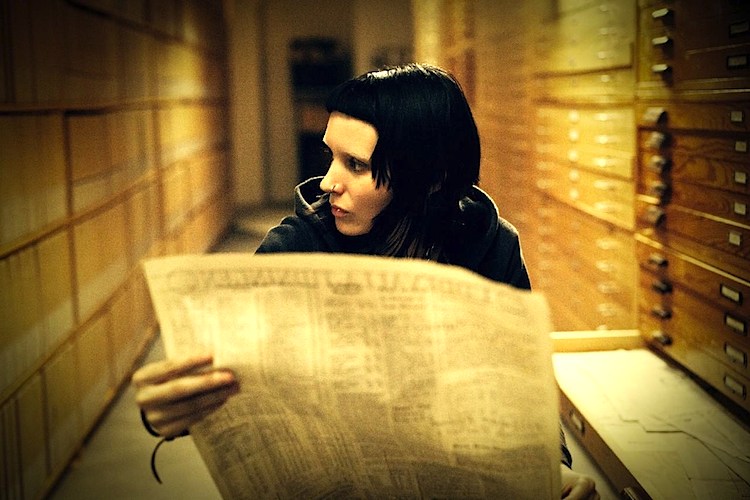
Rooney Mara as Lisbeth Salander.

As fans of the series already know, Blomkvist and Salander soon suspect the disappearance of the Vanger niece is part of a hitherto undetected pattern of serial killings. Indeed, anyone who has seen Niels Arden Oplev’s Swedish Tattoo will find no surprises in Fincher’s remake. All the villains and shocking revelations remain exactly the same.

Frankly, Fincher’s approach to the material is nearly identical as well, delving into lurid family secrets to find grisly thrills. Nor does he shy away from the forerunner film’s two infamous inter-related scenes involving Salander and her so-called legal guardian. Yet, despite the cool dark vibe, Tattoo is not particularly Fincheresque. Compared to Fight Club and even The Social Network, it is far more conventional than auterist.

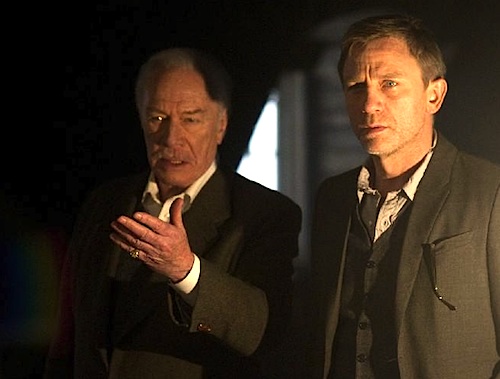
In terms of casting, Daniel Craig is a perfect fit for Blomkvist, looking like the slightly younger and more attractive brother of his Swedish predecessor, Michael Nyqvist. He is very convincing as the world weary journalistic everyman with an edge. In contrast, Rooney Mara is impossible to buy into as Salander. To put it bluntly, she looks like a horrendously made-up little girl rather than a grown woman, which might be in keeping with the source novels, but simply does not work on-screen, especially in her more harrowing scenes.

Christopher Plummer and Daniel Craig.

If you are going to remake one of the Salander films, Tattoo is the one to do. It features the most intriguing mystery that best stands alone. Wisely, Steven Zaillian’s screenplay downplays Blomkvist’s leftist ideology, but it also waters down the subplot involving Sweden’s Nazi-sympathizing past, which gave Oplev’s version some of its distinctive seasoning. Still, when Blomkvist and Salander’s investigation starts humming along, it is easy to get caught up in the film’s energy.

Fincher’s Tattoo is certainly a professionally crafted film. Cinematographer Jeff Cronenweth gives the film an icy, grey look that perfectly represents Sweden. Trent Reznor and Atticus Ross’s electro-industrial-ambient score is also eerily effective, largely establishing an independent identity for the film by itself. Still, considering how closely this Tattoo parallels the original, one wonders why they bothered to remake it. Critically miscast in a key role, Fincher’s Tattoo is a watchable but unnecessary remake. An acceptable compromise film during the holiday season but not worth standing in long lines for, Tattoo opened Tuesday in New York at the AMC Empire.

Posted on December 22nd, 2011 at 11:18am.

YouTube Jukebox: Jeff Beck and Imogen Heap

By David Ross. Every ten years or so Jeff Beck emerges from manorial seclusion to prove why he’s the fifth best guitarist in history (so says Rolling Stone this month). His most recent groundhog cameo was his 2007 live set at Ronnie Scott’s in London, which the BBC, making itself useful for once, preserved for posterity. The highlights are Beck’s pair of unlikely duets with the arty poetess Imogen Heap. Always at his best with a strong vocal foil – Rod Stewart being the original case in point – Beck found his match in Heap. She’s as melodically sly as he is, and there’s something weird and entrancing about her great height and beauty – her regality – as it were stooped to the earthly traffic of the blues chestnut “Rollin and Tumbling” (above).

Beck and Heap radically reverse themselves on Heap’s own “Blanket” (here). Seeming to grow darker with each listening, the song is a confession of decadence in the nineteenth-century vein, a confession of forlorn and weary compensation for the loss of something irreplaceable. If music is the only possible sanctuary–the blanket of the song’s title–the song’s dreamy washes of electronic sound evoke the kind of world from which sanctuary is necessary: a floating world of pattern recognition and virtual light (to borrow phrases from William Gibson), of Calatravian airport terminals and glass needles spiring above Asian cities. The song’s irony is that the narrator can express her alienation from this world only in the tonality of its ennui; if music is a sanctuary, it’s a compromised one.

Posted on December 22nd, 2011 at 11:17am.