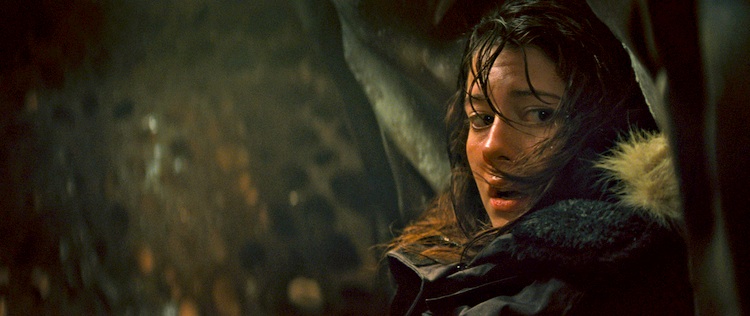
By Joe Bendel. Two of the hottest topics in fiction ostensibly written for teens – but really read by adults – are angels and vampires. Ava Chen is neither, but she is only too aware they both exist in Jennifer Thym’s sleek action-horror short film Bloodtraffick (trailer here), which screens at the 2011 San Diego Asian Film Festival.
According to Bloodtraffick’s mythology, angels took human form to wage an earthly battle against the vampires. Unfortunately, the latter rather logically proved to be much more effective hunters, taking the war to the angels instead. Chen’s two sisters are angels, but she is human—another race known for producing killers. Following the trail of her long missing-in-action siblings, Chen comes face-to-face with a sadistic vampire. There will be carnage.
Clearly intended as a prologue to a forthcoming franchise, Bloodtraffick efficiently establishes its Underworld-esque backstory, while announcing the arrival of an intense new vampire slayer. Soon to be seen with Russell Crowe in RZA’s The Man with the Iron Fists, Grace Huang has far more action cred than Buffy or Kate Beckinsale, and is considerably more photogenic than either. Frankly, the prospective of watching her mow down the undead looks pretty bullet proof.
Thym’s execution in Bloodtraffick is also quite strong. Deftly capitalizing on the short’s creepy burnt-out industrial setting, she keeps the action gritty and the adrenaline pumping, but also invests the film with some pretty heavy archetypal imagery. Without question, this is professional grade filmmaking.
After watching Bloodtraffick, viewers will definitely want to see a full feature outing for Chen, which is really the best recommendation for a film like this. Combining stylish action, an intriguing premise, and a fanboy-pleasing heroine, it certainly has all the elements. Definitely recommended, Bloodtraffick screens with Sion Sono’s Cold Fish today (10/21) and the Friday following (10/28) at the 2011 SDAFF. It also screens at the 2011 Philadelphia Asian American Film Festival on November 5th, along with JP Chan’s cool Digital Antiquities, as part of Shorts Program 1.
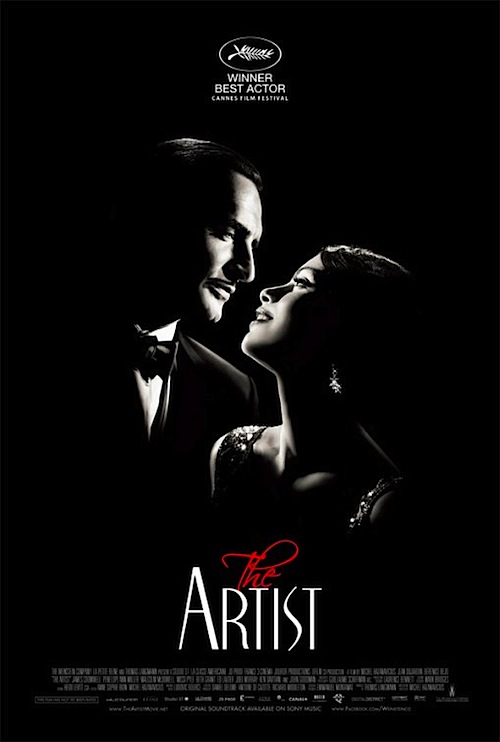
By Joe Bendel. Talking pictures were a truly Schumpeterian phenomenon for Hollywood. As any film lover knows from Singin’ in the Rain, some silent movie stars could weather the creative destruction wrought by the transition to sound, whereas some could not. Matinee idol George Valentin was one of those who could not “talk.” Fittingly, his story is a told silently (or nearly so) in The Artist (trailer here), Michel Hazanavicius’s glorious black-and-white homage to the golden age of Hollywood, which screened Sunday at the 49th New York Film Festival.
It is 1927. George Valentin is at the height of his popularity as a Douglas Fairbanks-style swashbuckler. He has just fought the red menace as an agent of free Georgia in The Russian Affair. However, studio mogul Al Zimmer has something disturbing to show him: synchronized sound. Dismissing the future, Valentin returns to work on his next picture, which will be remembered as the brief screen debut of future superstar Peppy Miller. Obviously thrilled to have any screen time, Miller is particularly excited to share a scene with her favorite star, George Valentin.
When talkies become the standard, Miller’s career takes off like a rocket with frothy romantic comedies. Meanwhile, Valentin’s attempt to finance his own silent comeback vehicle proves disastrous. Yet, Miller’s feelings for yesterday’s leading man remain unchanged.
Hazanavicius consciously draws from dozens of classic films (both pre- and post-Jazz Singer), as well as numerous real larger-than-life Hollywood figures. What follows incorporates elements of A Star is Born, Sunset Boulevard, and Greta Garbo’s relationship with John Gilbert. (Sadly, many modern movie-goers will miss the allusions, but perhaps the notion of a film without diegetic sound might be a brand new novelty item for them.)
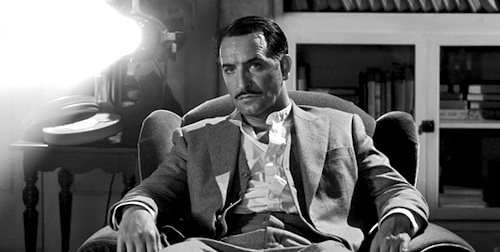
Jean Dujardin as George Valentin.
The work of many artists, the film is a visual splendor, beginning with Guillaume Schiffman’s lush and moody black-and-white cinematography, which makes the elegant sets and costumes softly glow like a Cecil Beaton portrait. Still, it is the depth of Hazanavicius’s screenplay that really distinguishes The Artist.
Not merely a series of winks at TCM watchers, the film is quite a touching love story, completely free of irony. On the two occasions he breaks format, sound is used in creative ways that cleverly advance the film. Periodically, Hazanavicius also appears to indulge in a witty in-joke, yet in each case, their dramatic logic quickly catches us by surprise. Likewise, while his intertitles have a simplicity befitting the period, they convey a surprising richness of meaning.
Familiar to American audiences from the French OSS spy spoofs, Jean Dujardin gives another very physical performance here, but the complexity and pathos of his Valentin is in a whole different league. Indeed, it is a tricky proposition to play a mugging actor without ever mugging for the camera, yet he is never overly broad or over the top, keeping the faded movie star acutely human throughout. He also develops some endearing romantic chemistry with Bérénice Bejo as Miller.
Frankly, the Argentine-French Bejo is about the only person working in film today who can approximate the glamorous look of Hollywood in its heyday (yes, this definitely includes Michelle Williams). Exquisite and vulnerable, she deserves a bit of award attention along with Dujardin, the best actor winner at this year’s Cannes. In contrast, the American supporting cast does not have much to do, but John Goodman’s cigar-chomping shtick works perfectly for Zimmer, even without sound.
Right now, the Oscar prognosticators are focusing on Dujardin for best actor, but with a shrewd campaign behind it, The Artist might have a puncher’s chance at the top prize. It is a beautifully rendered valentine to movie-making, featuring two wildly charismatic romantic leads. Highly recommended, The Artist was one of the highlights of a very strong slate at this year’s NYFF.
[Editors’ Note: we want to thank Joe Bendel for his rich, comprehensive coverage of this year’s New York Film Festival.]
By Patricia Ducey. Director Craig Brewer of Black Snake Moan and Hustle and Flow has proven he can rock a Southern stereotype, but in his remake of Footloose, to my astonishment, he dumps every one of them into the Georgia red clay—and proves his bona fides as a skilled director. Several times in the movie theater I braced myself for that bucket of ice cold cliché to be dumped over my head, but it never happened—and that’s this movie’s triumph.
Bible-thumping preacher? No, good man laid low by grief.
Stupid Southern redneck? Nope, man-to-be who carries his self-esteem lightly, with charm to burn.
Well, surely then, Woody, the African American football captain faces racist teammates? Um, no again. We all get along just fine here in Bomont, Georgia, thank you very much.
The story opens as Boston kid Ren MacCormack (Kenny Wormald) arrives in Bomont, Georgia, taken in by his Aunt Lulu and Uncle Wes (Ray McKinnon and Kim Dickens) after his father abandons the family and his mother passes away. He soon discovers the ban on dancing and music, all due to a horrific fatal car accident three years prior when five teens went joyriding after a kegger, all explained to him by new friend Willard (Miles Teller) . . . wait, Willard? So he must be the big dumb hick then? Au contraire, Teller is the breakout star of the movie and probable new teen heartthrob. His Willard, Pitchford and Brewer’s charming and witty creation, is a delight.
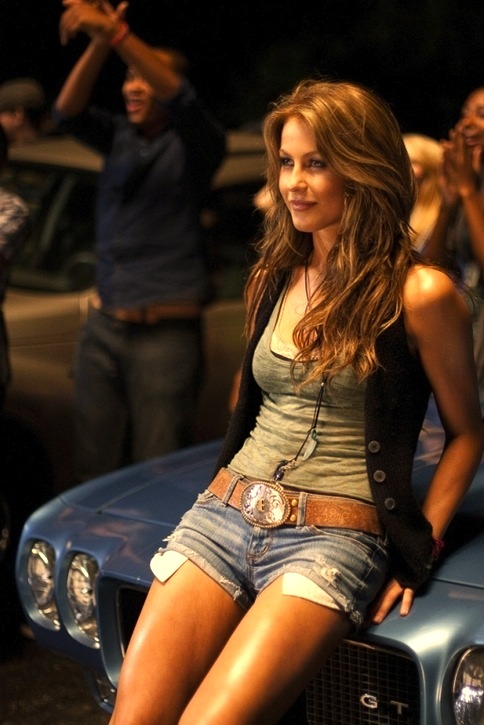
On his first day at the new school, Ren locks eyes with the preacher’s daughter Ariel (Julianne Hough), who is carrying on with a race car driver bad boy, reacting against her own sorrow after brother Bobby’s death in the car crash. Complications, love triangles and spirited dancing ensue; lessons are learned. And Brewer delivers without pandering or disdain for his subject—or audience.
Yes, this movie understands and respects its audience. Brewer deepens the original’s broad caricatures into characters; we come to care about and root for even the grownups. He edits out the derisive edge exhibited in the first. Notably, Ren respects Ariel before she respects herself, like a true man would—and he learned that from his family. Footloose understands that to its teen audience a single kiss can hold greater import in their lives, as in Ren and Ariel’s, than the cynical hooking up in most other Hollywood movies aimed at their demographic.
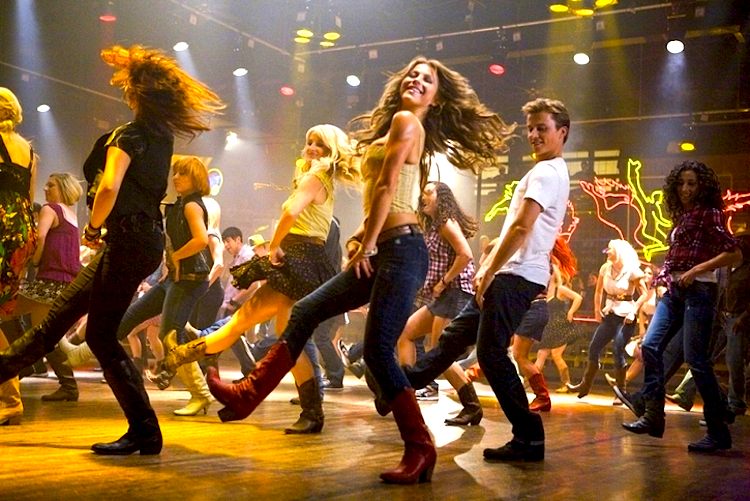
Big dance numbers.
The supporting characters are well developed as well. Uncle Wes (only a bit less scruffy as his character in Sonsof Anarchy), and his wife own and work at a used car dealership, take care of their own kids and even manage to send money to Ren’s mother after his father left. They’re good people, smart and fairly successful; their business is holding fast in the recession. The parents and kids enjoy and care for each other. They take Ren in when the need arises. In short, they are not cartoons. Instead, they embody the best of the American family ethic. The townsfolk are real people: they reluctantly support the curfew and ban on dancing because they fear another horrific accident, like the one that killed the preacher’s son and four other kids. There’s no bannin’ of books or firin’ of uppity teachers as in the earlier version. Ren protests the dancing ban with respect and through proper channels (take note, Occupy Wall Street) because he respects where the town and the reverend are coming from. And yet there is no sugary aftertaste; Ren doesn’t smoke dope, because he’s a gymnast—not because he’s holier than thou. The kids chafe under the restrictions of their elders, and they demand a little freedom— along with the risk. Safety versus security—timely questions. Continue reading It’s Safe to Visit The South Again: LFM Reviews Footloose
By Joe Bendel. Archery is a handy sport to take up if you want a valid excuse to carry about a potentially lethal weapon. As it happens, a young Italian woman has a strong motivation to become an archer in E.M. Artale’s My Bow Breathing (trailer here), one of two shorts with both genuine art film polish and genre movie appeal screening at the 49th New York Film Festival.
She has not been training long, but her coach recognizes her natural talent. However, the woman has weightier matters on her mind than merely winning competitions. She is out for revenge and she will have it. Played with slow burning intensity by Giulia Bertinelli, “The Archer” holds her own with “The Bride” from Kill Bill, delivering more retribution on a per frame basis than the original Death Wish. Like Chaimae Ben Acha in Sean Gullette’s Traitors, Bertinelli has real movie-star potential, but a lot of people will miss their work at NYFF because of a prejudice against shorts. Do not mistake this mistake.
Stylishly helmed by Artale, Bow looks nothing like a standard vigilante-payback film, but it can easily be enjoyed on such terms by those so inclined. Likewise, Jaime Dezcallar’s The Bird Spider is far more psychologically complex than a mere killer spider movie, but there is no denying the presence of the deadly eight-legged crawler.
If arrows are a somewhat unusual weapon for vengeance-seeking, a poisonous spider represents a downright bizarre method of suicide. Yet, a depressed man is not simply out to take his own life, but to burn away the pain of his recent break-up by enduring his worst childhood phobia, until it kills him. Buying a poisonous spider from a pet store (exotic pet regulations must be lax in Spain), he turns it loose in his apartment. Conscious the spider could strike at any moment, he willingly plunges himself into a Kafkaesque nightmare.
Bird Spider has a similar vibe as many of the recent bumper crop of creepy Spanish horror movies, but offers more than just a few good jolts (which it definitely has). The claustrophobic setting and unsettling premise really get under your skin, while Raffel Plana Honorato’s score also nicely helps build the suspense as well as a sense of melancholia.
Highly recommended, Bow and Bird are excellent short films that should satisfy snobby cineastes and genre diehards in equal measure as the 2011 NYFF approaches the homestretch.
Mary Elizabeth Winstead lights it up in "The Thing."
By Jason Apuzzo. THE PITCH: Universal and director Matthijs van Heijningen, Jr. bring The Thing back to life as a direct prequel to John Carpenter’s 1982 cult favorite about a shape-shifting alien discovered by a research team in the Antarctic – both films being based on John W. Campbell, Jr.’s classic 1938 sci-fi short story, “Who Goes There?”
THE SKINNY: While the 2011 version of The Thing will not likely be remembered as fondly as Howard Hawks’ 1951 classic, this new adaptation serves as a crisp, gripping prelude to Carpenter’s film, driven by a stand-out performance from Mary Elizabeth Winstead and suspenseful direction from Matthijs van Heijningen.
WHAT WORKS: • Mary Elizabeth Winstead radiates warmth and intelligence as American paleonthologist Dr. Kate Lloyd, in the same kind of role that once made Sigourney Weaver a star (playing Ripley in Alien). A conventional scream queen in her earlier roles, Winstead graduates here to depicting a resourceful, sympathetic female scientist who keeps her wits about her while the rest of her colleagues fall to pieces – both literally and figuratively.
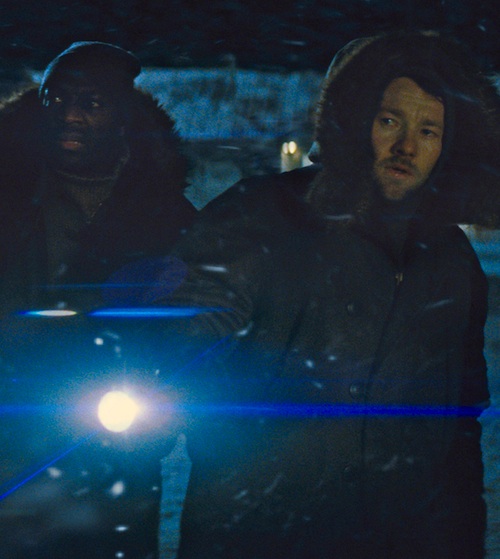
Adewale Akinnuoye-Agbaje & Joel Edgerton as American helicopter pilots.
• Matthijs van Heijningen’s understated direction brings out the natural suspense of the story, allowing the isolated setting, mutual suspicions of the characters and the intrinsically frightening situation to do the heavy dramatic lifting.
• The cast feels credible as a hardy professional research crew, much more so actually than the (otherwise superb) cast in Carpenter’s film – and this has the effect of enhancing the suspense and paranoid vibe of the film. Indeed, Winstead’s heroism in the film consists precisely in her taking a more professional-scientific attitude toward the alien threat than that of her compatriots. (And on this point, the new version of The Thing is rarely played for laughs in the way that the Carpenter version sometimes seems to be.)
• One thing this 2011 Thing has over previous versions is that it exploits the alien’s saucer more than before, eventually even taking us inside it at the film’s climax to nice effect.
WHAT DOESN’T WORK: • This new version of The Thing is burdened by the need to present the same grotesque, Hieronymus Bosch-show of creature-transformations as were depicted in the Carpenter version of the film. With that said, the transformations in this new film are slightly less disgusting, and often take place in shadow.
• Both the 1951 and 1982 versions of The Thing have iconic musical scores, from Dimitri Tiomkin (with his groundbreaking use of the theramin) and Ennio Morricone/John Carpenter, respectively. Composer Marco Beltrami’s score here is too conventional; he should’ve tried something more unusual or distinctive for this new film to keep the tradition of musical innovation going.
• As I mentioned last week with respect to the film’s screenplay, this new version of The Thing lacks humor – a major component of both the 1951 and 1982 films. Also: the new film drops one of the great gags of Carpenter’s film, which is depicting several of the researchers as having such bizarre personalities (particularly Richard Masur as Clark) as to seem alien even before the creature shows up.
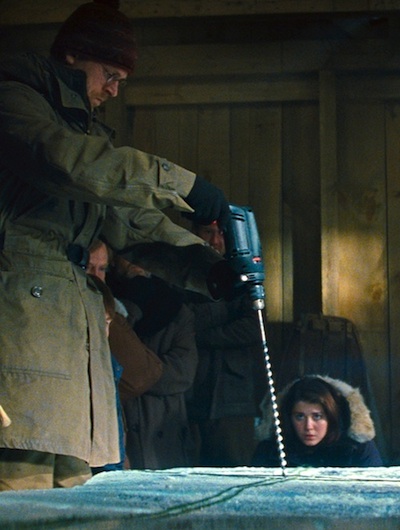
Opening Pandora's box.
• There’s room to ask here whether it was a good idea to bring back this story in the form of a prequel to Carpenter’s film. There is, ultimately, very little about this version that qualifies as being ‘original’ or imaginative, even if its execution is solid. The Hawks version is tighter, more sophisticated and features larger Cold War connotations; the Carpenter version has more colorful characters and satiric flourishes. Possibly what was needed here was a totally different interpretation in order to take the film to the next level.
THE BOTTOM LINE: What makes this new version of The Thing work – which it does, in my opinion – is that it has the basic sense to tell what is already a great story straight, without the embellishments that contemporary filmmakers sometimes add when they don’t trust their material. Director Matthijs van Heijningen and screenwriters Eric Heisserer and Ronald Moore obviously believed in Campbell’s/Carpenter’s basic story material here, and therefore didn’t clutter the film up with obnoxious revisionisms or distractions like the political propaganda found in the Day the Earth Stood Still remake from 2008, or the bizarre plot involutions of 2007’s The Invasion (a flaccid remake of Invasion of The Body Snatchers). This by-the-book approach doesn’t necessarily make this new version of The Thing a classic, but it does make it effective and streamlined as an exercise in sci-fi horror.
Certainly the easiest thing in the world to say about this new version of The Thing is that it doesn’t rise to the level of Howard Hawks’ 1951 version, nor of John Carpenter’s 1982 film. I’m not sure how much that says, however; Hawks’ film is easily one of the greatest sci-fi films ever, and Carpenter is one of the greatest sci-fi/horror directors of all time. Judged against such standards, a lot of contemporary films and filmmakers would pale in comparison.
A better point of comparison for this new version of The Thing might be the recent wave of alien invasion thrillers from this past year – and here I think The Thing stands out as a solid, suspenseful film that is better than a whole variety of over-hyped/under-performing competitors from 2011, including: Super 8, Cowboys & Aliens, and an entire season’s worth of Falling Skies. Call me old fashioned, but I prefer my aliens to be really terrifying, and of all the aliens I’ve seen from this past year – and I’ve seen a lot of them, with a few more still to come – the one I would least want to be caught in a room with (outside of Transformers’ Shockwave, who wouldn’t fit into a room to begin with) would be the omnivorous, protean, infinitely imitative and malevolent creature from The Thing. The creature in this new film still packs an unnerving, visceral punch, in much the same way that Carpenter’s did – even if the previous film’s spectacle of gore is slightly toned down here.
My advice if you are a fan of Carpenter’s film? Give this new one a shot, preferably late at night.
Mary Elizabeth Winstead projects authority and professionalism as Dr. Kate Lloyd.
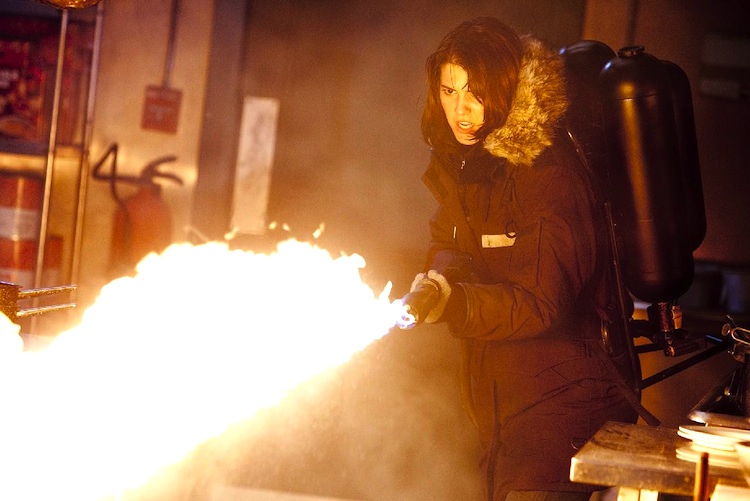
One final point: films are star-driven, and there’s a special pleasure associated with watching a new star emerge in a film. I went into this film looking forward to seeing Joel Edgerton, whom I already knew to be a good young actor (and he’s good here, playing a rough-and-tumble American helicopter pilot), but the real discovery in this film was Mary Elizabeth Winstead. This is clearly going to be a break-out role for her, largely because of her ability to project intelligence and authority. And although she doesn’t yet have the screen presence that the young Sigourney Weaver showed back in the 1980s (she isn’t as lanky, sexy or vaguely odd as Sigourney), Winstead brings a conviction to this type of role that I haven’t seen since the Sigourney-heyday of the 1980s. And what’s nice here is that she doesn’t have to become a Kate Beckinsale-type action hero to do it; instead, like a classic female scientist from 50s sci-fi (think Faith Domergue from It Came from Beneath the Sea or This Island Earth) she uses her wits and innate professionalism to get herself out of jams – along with, of course, a handy flamethrower.
After all, no one ever said sci-fi women can’t heat things up.
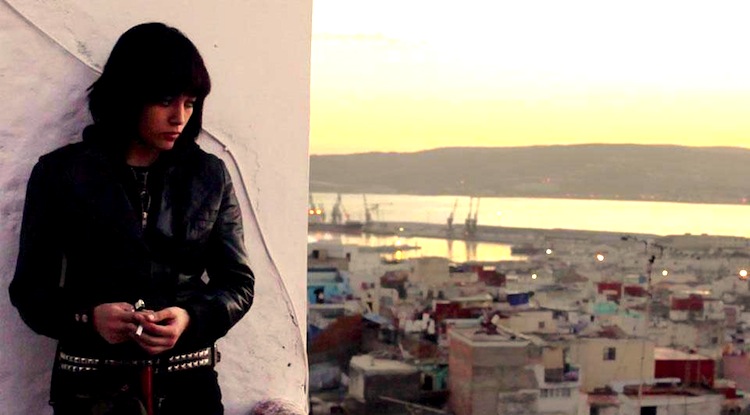
By Joe Bendel. They are like the Runaways of Tangier, except a Moroccan all-women punk group really is rather rebellious, just in its very existence. Yet family issues will preoccupy their fiery lead singer over the course of a typically eventful day for the band in Sean Gullette’s Traitors, which screens this Saturday as part of the 49th New York Film Festival’s Shorts Program #2.
Best known as the ragged mathematician in Darren Aronofsky’s Pi, Gullette makes his directorial debut with Traitors (that is, with an anarchy sign for the “a”), named after the band fronted by Malika. The camera truly loves hitherto unknown Chaimae Ben Acha as the lead singer, even the handheld digitals used by Gullette’s cinematographers Benoït Peverilli and Niko Tavernise. If there is one future international star represented at this year’s festival, it must be Acha.
For one thing, she can really belt it out Joan Jett style. We first encounter Traitors rehearsing a song that tells us all we need know about their opinion of Morocco’s cops and politicians. It’s not very high. In need of cash for an upcoming gig, Malika naturally plans to “borrow” some from her elegant, professional-class mother. However, in the process of rifling through her parents’ room she learns an upsetting secret.
As Malika and her bandmates careen through the night, we get a visceral sense of the Tangier underground youth culture. When the cops show up, they do their best to live up to Traitors’ cynical assessment. Yet, aside from petty public corruption, Gullette’s film avoids the larger potential macro-conflicts. Just what the local religious authorities would think of the band is left to viewers’ imagination. Still, crude sexism and unwelcomed lechery seem to be fairly widespread among the Moroccan men Malika encounters.
Acha gives a knockout performance, but she is not carrying the film alone. Firouz Rahal Bouzid and Abdesslam Bounouacha also contribute wonderfully human supporting turns as Malika’s parents. Running just over half an hour, Traitors is no mere sketch. By any standards of dramatic cinema, it is a wholly satisfying, self-contained film. A real discovery, Traitors screens this Saturday (10/15), as a selection of Shorts Program #2 at the 2011 NYFF.
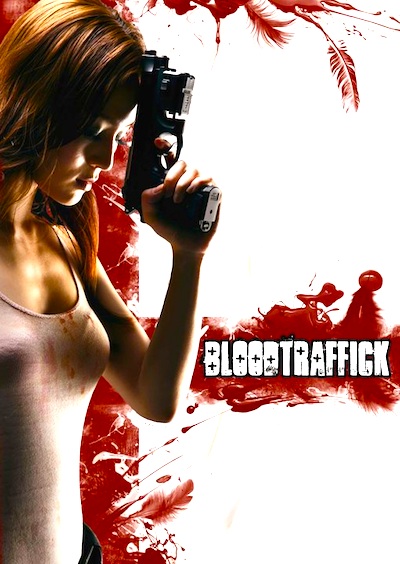 By Joe Bendel. Two of the hottest topics in fiction ostensibly written for teens – but really read by adults – are angels and vampires. Ava Chen is neither, but she is only too aware they both exist in Jennifer Thym’s sleek action-horror short film Bloodtraffick (trailer here), which screens at the 2011 San Diego Asian Film Festival.