Libertas @ The 2011 New York Film Festival: Le Havre

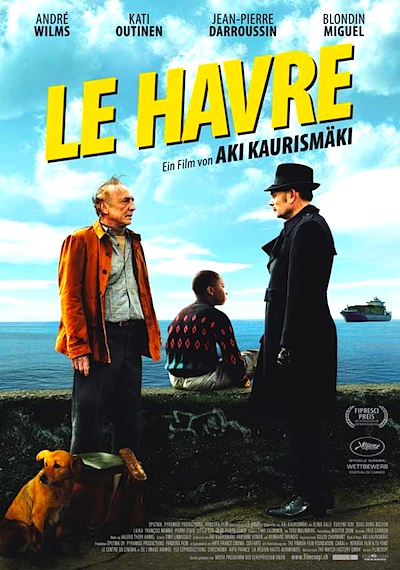
By Joe Bendel. As the home of smugglers and cutthroats, ports are always the perfect setting for hardboiled crime drama – not, however, Aki Kaurismäki’s Le Havre. It’s nothing like the French film noir cities of Henri-Georges Clouzot, perhaps because Kaurismäki is Finnish. Instead, these marginalized roughnecks of Le Havre inhabit a quietly whimsical and deeply humanistic community in Kaurismäki’s Le Havre (trailer here), which screens during the 49th New York Film Festival.

Marcel Marx works the streets as a shoe-shiner in the tradition of Jacques Tati. He never had much money nor any worries before his beloved wife Arletty is hospitalized. Shielded from her fatal prognosis, he is at loose ends puttering about the waterfront, until he chances across Idrissa, a young illegal African immigrant hoping to be reunited with his parents in England.

Initially, he merely leaves some food for the boy. Then he opens his home to the sad-eyed Idrissa. Before long, Marx (hmm, heavy name, that) and his salt-of-the-earth comrades are working in concert to help their furtive guest elude Monet, the dour flatfoot.

Granted, a thumbnail description of Le Havre probably sounds unappetizingly didactic. However, Kaurismäki astutely employs a light touch with the material, emphasizing the inherent innocence and charm of Marx and Idrissa. Unlike far too many filmmakers, he seems to understand the old adage about catching more flies with honey. He also recognizes and capitalizes on the considerable charisma of his proletarian leads.

The twinkle in André Wilms’ eyes could light up a city block, yet he still invests Marx with a wonderful sense of dignity and a genuine élan. In contrast, Jean-Pierre Darroussin is his near total inverse as Monet, projecting an exquisitely French fatalism. As a bonus, cinematic Francophiles should keep their eyes peeled for Truffaut and Godard regular Jean-Pierre Léaud in a brief but fittingly idiosyncratic cameo.

Yet, it is the look and feel of the city itself that will dominate viewers’ impressions of the film. Cinematographer Timo Salminen gives Le Havre a warm glow that is inviting and nostalgic, while the back alleys rendered by Wouter Zoon’s design team look ideally suited for dancing in the rain.

Though never tackily melodramatic or cloyingly quirky, Le Havre has to be one of the most heartfelt, unabashedly old-fashioned films to carry major festival laurels this year. Regardless of politics, it is hard not to be swept along by its effervescent spirit. Definitely recommended, it screens Sunday (10/2), Monday (10/3), and Wednesday (10/5) as a Main Slate selection of the 2011 New York Film Festival.

Posted on September 29th, 2011 at 1:11pm.
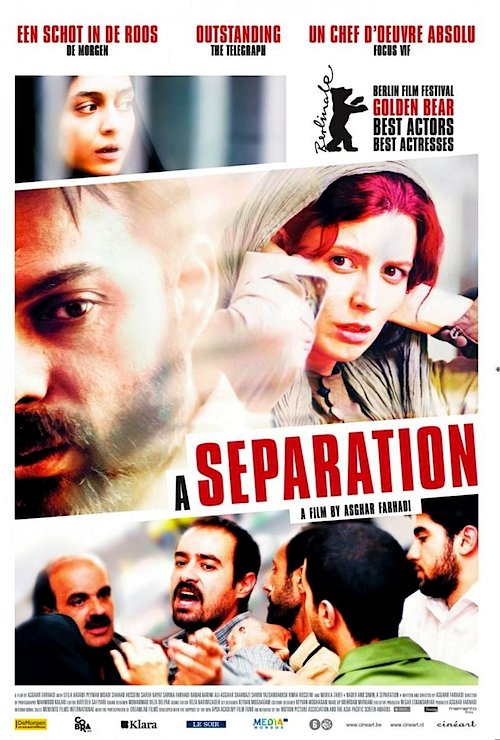
Libertas @ The 2011 New York Film Festival: A Separation

By Joe Bendel. As a well educated, comparatively liberal Iranian woman, Simin wants to live abroad -not so much for herself, but for her daughter Termeh. Unfortunately her travel visa will soon expire and her husband Nader refuses to leave. It causes what westerners would call irreconcilable differences for the couple. It also sets in motion a tragic chain of events that will jeopardize their way of life in Asghar Farhadi’s Golden Bear winning A Separation (trailer here), which screens during the 49th New York Film Festival.

Nader is not exactly a fundamentalist, but he is stubborn. He also must care for his Alzheimer’s stricken father, though Simin considers this a questionable excuse. Since divorce is not an easy no-fault proposition in Iran, she moves back in with her parents as their case drags on. Requiring help with his father, Nader hires Razieh as an in-house aide. She is poor, uneducated, extremely religious, and married to the abusive Houjat.

She only accepts the position in place of Houjat when the deadbeat is thrown in jail for his debts. Yet, as soon as she appears to settle into the routine of the household, a moment of chaos turns their world upside down. Suddenly, Nader is on trial for causing the death of Razieh’s unborn child while the thuggish Houjat harasses his family.

Granted, A Separation’s portrayal of Iranian jurisprudence does not inspire a lot of confidence, but it is almost the least of Nader’s problems. Instead, he becomes his own worst enemy, responding to Razieh and Houjat in the worst possible way at every juncture. Yet explaining his decisions to his acutely sensitive daughter is often his greatest challenge.

Much like Farhadi’s Tribeca award winning About Elly, Separation vividly depicts how one tragic mistake compounds over and over again. It is an intense film, almost to the brink of exhaustion. Like many of the persecuted Jafar Panahi’s films, it shines a searing spotlight on the divisions of Iranian society, largely cleaving along professional and secular-as-they-dare versus poor and fundamentalist lines. Ostensibly, Nader and Simin should have the upper hand, but this is Iran.

Separation is also smart and scrupulously realistic on the micro level, as well. The relationship dynamic between Simin and Nader is particularly insightful, rendered with great sensitivity by leads Leila Hatami and Peyman Moaadi. We clearly understand this is a couple with a lot of history together who do not hate each other. They are unable to make it work, but they cannot stop trying. Likewise, teenage Sarina Farhadi (the director’s daughter) gives a finely-calibrated performance as the insecure Termeh.

Separation and Elly before it are like Iranian Cassavetes films, uncomfortably intimate and direct, but undeniably visceral in their impact. Their place within the contemporary Iranian cinema establishment is a little trickier to pin down. Separation had to be produced outside the official film system without government support after Farhadi cautiously spoke out on behalf of the imprisoned Panahi and Mohsen Makhmalbaf. Reportedly, though, he has since walked back those comments and Separation was subsequently chosen as Iran’s official submission for best foreign language Academy Award consideration. It is hard to judge an Iranian artist for whatever survival strategies they might employ. Regardless, Separation is an unusually powerful film. Highly recommended, it is easily one of the best of the festival.  It screens this Saturday and Sunday (10/1 and 10/2) at Alice Tully Hall as a Main Slate selection of the 2011 New York Film Festival.

Posted on September 28th, 2011 at 11:54am.

Libertas @ The 2011 New York Film Festival: Patience (After Sebald)

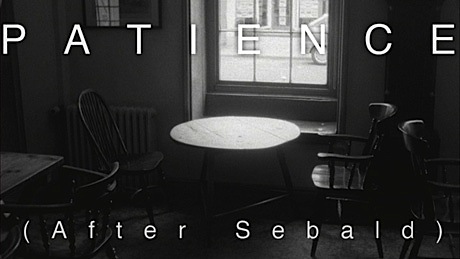
By Joe Bendel. W.G. Sebald rose to prominence late in life, but due to his accidental death at a relatively young age, he is probably already due for a critical rediscovery. Yet, for a brief period, he was considered one of the leading candidates for the Nobel Prize in literature and influenced many artists working in diverse disciplines. Rock music documentarian Grant Gee radically shifts gears, using Sebald’s fictionalized travelogue-essay The Rings of Saturn as a jumping off point for his meditative documentary, Patience (After Sebald), which screens Sunday during the 49th New York Film Festival.

Though keenly aware of the pitfalls of such an approach, Patience largely retraces the steps of the fictional narrator Sebald’s walking tour of the picturesque but lonely Suffolk landscape in the German expatriate’s acknowledged masterwork. Yet it quickly becomes clear Sebald the author is a subject who resists biographers’ conventional strategies.

Instead, Sebald is often presented as a series of paradoxes. The German-born English professor wrote all his significant books in his original tongue, requiring their translation into English. Several commentators note that it is really the Michael Hulse translation of Rings on which his reputation really rests. His work was deeply informed by the Holocaust, but is not easily aligned with any subsequent ideology. Indeed, despite increasing invitations to serve as a public intellectual, Sebald remained a private, almost inscrutable individual.

For practical purposes, this leaves Gee with Sebald’s text and some striking East Anglia scenery, beautiful in a grey Wuthering Heights kind of way. Sounding like the essence of erudition, Jonathan Pryce’s voice-overs perfectly suit the former, while the mostly black-and-white photography of the latter evokes a mood of quiet introspection. However, Gee’s reliance on an academic researcher’s online map of Sebald’s sojourn, though impressive scholarship, consistently undermines the film’s visual style.

In a case of truth in titling, Patience is not exactly a breakneck film. However, it treats the written word with admirable reverence. In many ways as much a work of literary criticism (rather more insightful than the current academic standard) than a documentary profile, Patience is recommended for select genuinely literate audiences. It screens this coming Sunday (10/2) at the Walter Reade Theater as part of the 2011 New York Film Festival.

Posted on September 28th, 2011 at 11:52am.

Libertas @ The 2011 New York Film Festival: Andrew Bird: Fever Year

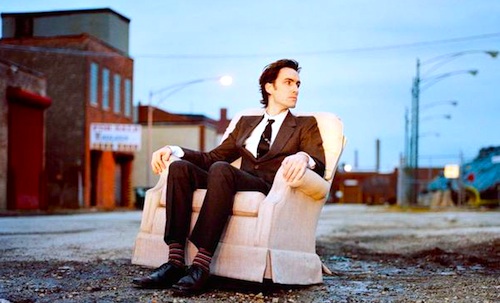
Musician Andrew Bird.

By Joe Bendel. When a musician breaks out after years of scuffling, they should strike while the iron is hot. Andrew Bird understands this. When his tricky-to-categorize hybrid of string band and jam band alternative music caught on, he spent nearly an entire year on the road headlining concerts at up-scale theaters. It took a toll physically, as viewers witness in Xan Aranda’s behind-the-scenes concert documentary, Andrew Bird: Fever Year, which screens during the 49th New York Film Festival.

Bird is definitely a live act. A musician with a jazz background who spent years gigging as a solo, the multi-string instrumentalist and vocalist incorporates a great deal of improvisation into his shows. His current band was specifically chosen for their ability to react and play-off his in the moment decisions. In fact, bassist and reed player Michael Lewis also has a jazz background, as befitting the son of a jazz musician.

Through much of the tour, Bird suffers from the titular low-grade fever. Yet, this almost seems to be something the musician masochistically needs to struggle against in order to maintain each show’s freshness. Indeed, he explicitly demands their concerts be spontaneous and never feel scripted, well aware that this sometimes involves falling without a net.

Wisely, Bird and Aranda focus almost entirely on the subject of music. We learn next to nothing about his private life and glean no idea about his political views (not that we care, anyway). Frankly, it is refreshing to listen to a musician discuss the performance process with such insight. Hearing Bird breakdown his thought process during one of the live numbers captured in the film should be fascinating for his established fans and create a few new converts, as well. Though equally interesting material, his Zen-like composing methods are so idiosyncratic that they’re unlikely to be applied by other musicians. Mind-bogglingly, he uses no notation, simply molding each song from memory day after day. Still, this method has produced a considerable body of work, so more power to him.

Aranda deserves a great deal of credit for the integrity of her approach, displaying confidence the audience will be interested in Bird’s creative process and the music itself, rather than the usual extraneous rubbish. The resulting Fever definitely proves Bird is a technically accomplished musician, a fleet improviser, and an eloquent interview subject. She also ends the film on the perfect note: Bird’s encore number and only cover we hear from the concert. Recommended for Bird fans and first-time listeners alike, Fever screens this Saturday (10/1) and Sunday (10/2) as part of the 2011 New York Film Festival.

Posted on September 27th, 2011 at 7:09pm.

Libertas @ The 2011 New York Film Festival: Dreileben

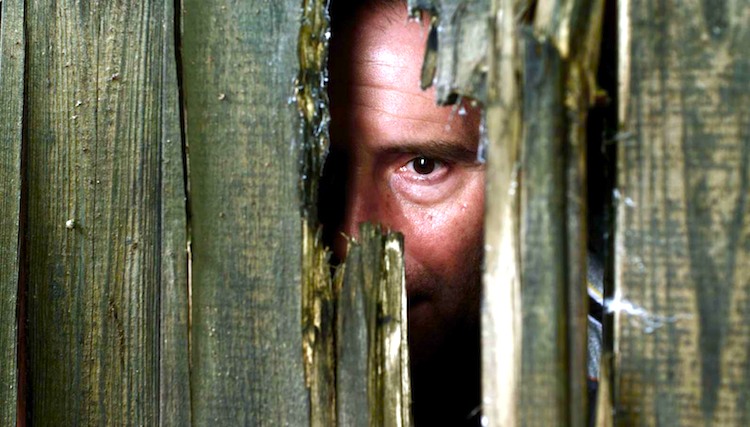
By Joe Bendel. There is a fugitive in the woods. He might be an innocent man, or a dangerous psychopath. Determining the truth is a tricky proposition in Dreileben, a trilogy of interlocking films produced for German television in the tradition of Red Riding, which screens in its entirety this coming Saturday as part of the 49th New York Film Festival.

Christian Petzold’s Beats Being Dead begins the cycle, but keeps most of the crime drama off-screen. While visiting his dying mother in the hospital, the convicted murderer Molesch essentially walks away from his police guard. A manhunt ensues. To shield him from inquiries, Dr. Drier gives some time off to Johannes, the nursing intern on duty that fateful night. It allows the pre-med student time to pursue a passionate in-the-moment romance with the tempestuous Ana, a Bosnian refugee working as a maid in the hotel that will eventually factor into the police investigation. He might even forget Sarah Drier, the head doctor’s daughter, who dumped Johannes in no uncertain terms.

Petzold’s Dead and Dominik Graf’s subsequent Don’t Follow Me Around are like some of Claude Chabrol’s craftier late films, presenting the nefarious business obliquely, while ostensibly focusing on the workaday lives of those seemingly on its margins. Yet Petzold creates a palpable undercurrent of menace that carries over for his filmmaker colleagues. He also presents an unusually dark and intense vision of young love (or lust) that sometimes borders on the unsettling.

Luna Mijovic burns up the screen as Ana, viscerally projecting her raw self-destructive impulses and insecurities. Jacob Matschenz is also quite effective keeping the audience off-balance as the everyman Johannes, while Vijessna Ferkic is appropriately hot and shallow as Sarah Drier. Indeed, not only is Dead the strongest film of the trilogy, it also (quite conveniently) stands alone better than its companion films.

Still, for those willing to buy into Dreileben, Graf’s Follow is also quite clever, nicely explaining a few of the confusing moments in Dead. Johanna is a single-mother police psychologist in the tradition of the old Profiler show, sent to help the corrupt and incompetent local constabulary capture Molesch. Yet, she is considerably more interested in revisiting some important episodes from her past with her old friend Vera, with whom she is staying. We also briefly meet Marcus Kreil, the one competent copper who will be featured prominently in the final film. Continue reading Libertas @ The 2011 New York Film Festival: Dreileben

A Tale of Two Releases: Red Dawn Remake Finally Gets a Distributor; Ben-Hur Blu-ray Arrives Tomorrow (9/27)

By Jason Apuzzo. I wanted to briefly comment today on two releases of note. First of all, the 1959 classic Ben-Hur is getting a lavish new Blu-ray release that arrives in stores tomorrow. I’ve embedded the Blu-ray trailer above, and you can read here about the details of this fabulous-looking set – which includes a documentary featuring newly-discovered behind-the-scenes footage from the set of the film provided by Fraser Heston (Charlton’s son). The Blu-ray set will also include a reproduction of Charlton Heston’s set diary, along with behind-the-scenes photographs taken by Heston’s wife, Lydia. All in all, it looks to be a wonderful release for one of Hollywood’s landmark films of the 1950s – an epic tale of one’s man’s struggle to regain freedom for himself, his family and for his people.

The new "Ben-Hur" Blu-ray box set.

Govindini and I had the pleasure of attending the recent exhibition of Debbie Reynolds’ costume-and-props collection, at which we saw Charlton Heston’s, Stephen Boyd’s and Sam Jaffe’s costumes from Ben-Hur – along with a variety of props from the film. It was an incredible experience seeing these things in person, with the film having been such a favorite of ours over the years. I’m not certain what’s happened to those items since, in terms of whether they’ve already been auctioned; whatever their fate, it seems a tragedy that Reynolds’ collection couldn’t have been kept together. In any case, after so many years it was a thrill to see items from Ben-Hur, at all. (Amazingly, Reynolds’ collection even included Francis X. Bushman’s winged helmet from the original 1925 Ben-Hur) I hope this Blu-ray release further burnishes the film’s legacy for a new generation.

In other news, according to the LA Times today the Red Dawn remake has finally picked up a distributor, FilmDistrict (Drive). As regular Libertas readers know, Libertas is still the only media outlet that’s seen the original, uncensored version of the film (see our exclusive review of the new Red Dawn) that featured the Chinese communist People’s Liberation Army as the villains. The forthcoming, digitally-altered version of Red Dawn – which apparently features some sort of generalized Asian communist menace, led by North Korea – will now likely be arriving in theaters sometime in 2012.

Chris Hemsworth and Adrianne Palicki lead the cast of the new "Red Dawn."

Somewhat lost in the controversy when we initially published our review of Red Dawn was that we actually liked the film, and were simply disappointed at the corporate decision to re-edit it in order to placate the Chinese. I still don’t like MGM’s decision to re-edit the film because of what that decision implies about freedom of speech in Hollywood, particularly at a time when many of China’s own ‘D-Generation’ (‘digital generation’) filmmakers are currently risking their lives and careers (see our review of Once Upon a Time Proletarian from just this week) in telling truthful stories about China’s oppressive regime. The re-editing/censoring of Red Dawn is a much bigger deal than, say, whether Han or Greedo shot first in the Mos Eisley cantina – because it has broader implications for what can and can’t be said by mainstream American filmmakers about the human rights situation in China.

As Charlton Heston himself used to say, “Film is our best export next to freedom,” and it’s best when the films America exports also say something about freedom. Red Dawn had that opportunity – an opportunity to say something sharp, poignant and specific about one particularly tyrannical modern regime (in the same way John Milius’ original Red Dawn had) – but the makers of the film apparently flinched when corporate profits were on the line.

That’s not a very inspiring example, certainly not in the way Ben-Hur was.

Posted on September 26th, 2011 at 4:32pm.