The Ghosts of Gallipoli: LFM Reviews The Water Diviner

By Joe Bendel. Joshua Connor has the Australian version of The Shine. The grizzled farmer senses certain things, like where to drill for water. If he can only get to the blood-soaked beaches of Gallipoli, he is sure he can find the remains of his three sons who died in combat there. That is something the British authorities are not so eager to facilitate in Russell Crowe’s The Water Diviner, which opens today in New York.

All three of Connor’s sons enlisted in the ANZACs and all three presumably perished at Gallipoli. When the bitter news drives their mother to her grave, the salt-of-the-earth Connor promises his late wife he will find their sons and bring them home to her. However, Gallipoli is not exactly a tourist attraction in 1919. The British military consul flatly refuses him access to the prohibited beaches. Of course, he is not about to be dissuaded after such a long and arduous journey.

Bribing a fisherman, Connor makes his way to the fateful beaches, where a combined team of British and Turkish military personnel are working to identify and properly bury as many fallen combatants as possible. Although Lt. Col. Cyril Hughes is a little put off by Connor’s sudden appearance, his Turkish counterpart, Maj. Hasan, convinces him to assist Connor’s search. Sure enough, the farmer quickly finds his sons, but only two of them. Through a little bureaucratic digging, Hasan discovers the eldest Connor brother might have been taken captive as a POW.

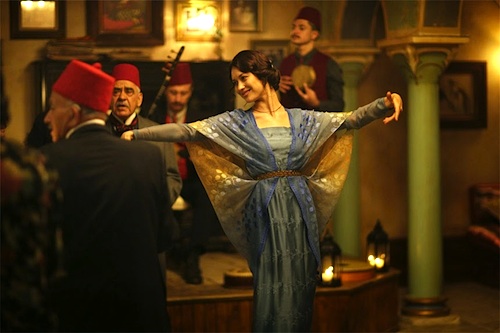
Suddenly, Connor has a glimmer of hope and a knotty mystery to entangle. The British are even more determined to send him packing, but Connor finds unlikely allies in Hasan and his veteran aide-de-camp, Sgt. Jemal. As Turkish nationalists loyal to Ataturk, they are more concerned with the Greek occupation of Smyrna. The fact that Hasan commanded Turkish troops at Gallipoli also makes their relationship somewhat awkward, but the slowly develop a degree of mutual respect. Much to his surprise, Connor also finds himself acting as a surrogate father for Orhan the urchin-like son of Ayshe, the widowed proprietor of the hotel he is staying at.
From "The Water Diviner."

In Australia, Gallipoli is still the source of strong national emotion, so this was a somewhat bold choice for Crowe’s feature directorial debut. Presumably, his countrymen are okay with it, since Diviner tied with The Babadook for best picture at the Australian Academy Awards. Frankly, Crowe’s film should have had the award all to itself or shared it with the Spierig Brothers’ Predestination. Crowe uses an epic story to tell an acutely personal story—and quite effectively so.

Screenwriters Andrew Anastasios and Andrew Knight accurately reference all the macro forces roiling the Ottoman Empire’s final days, but they keep a lot of details hazy, such as Ataturk’s commitment to secularism. These days, Turkey could use a reminder on that score. Nevertheless, it is reasonable for the film to reflect Connor’s naïve confusion with Turkish mores and politics.

As his own lead, Crowe is perfectly on-key as Connor, the quietly grieving father. It is the sort of understated performance that pays far greater dividends than overindulgence, over-the-top Meryl Streepian wailing and garment-rending. The French-Ukrainian Olga Kurylenko also puts the “hot” in hotelier as Ayshe, developing some better-than-you-expect chemistry with Crowe. However, it is Yilmaz Erdoğan who really puts a stamp on the film, oozing integrity while avoiding cliché as the hard but compassionate Maj. Hasan.

There are a lot of potential potholes in Diviner, including Connor’s prophetic dreams and his chaste non-courtship of Ayshe. However, Crowe consistently brings a light touch to bear in scenes other directors would drive into the ground. More often than not, his filmmaking instincts are correct. Recommended for those who enjoy sweeping historicals, The Water Diviner opens today (4/24) in New York, at the AMC Empire.

LFM GRADE: B+

Posted on April 24th, 2015 at 2:36pm.
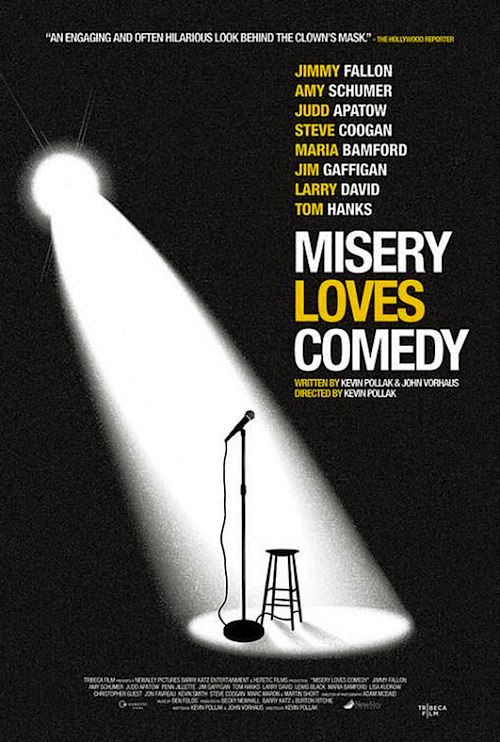
LFM Reviews Misery Loves Comedy @ Tribeca 2015

By Joe Bendel. Stand-up comedy is a tough racket. When you’re on, you’re killing and when you’re off, you’re dying—and you’re rarely anywhere in between. What kind of person is drawn to this business? Depressive neurotics. At least that is the casual thesis of Kevin Pollak’s riff-heavy interview documentary Misery Loves Comedy, which had a special Tribeca Talks screening at the 2015 Tribeca Film Festival, ahead of its official opening today at the IFC Center.

To explore the notion that comedy is either some kind of cathartic therapy or sick compulsion, Pollak interviewed over sixty comics and performers, as well as Jimmy Fallon. Of course, everyone was “on.” That is the whole point. Nevertheless, they said some revealing things. After all, they just can’t help themselves.

Pollak and editor Robert Legato went for and nailed the rat-a-tat pacing. They never linger long enough after a punchline for the audience to supply their own rim-shots. As a result, there are a lot of laughs in Misery. A good deal of attention will be focused on big names like Penn Jillette, Steve Coogan, Tom Hanks, Jim Gaffigan, Mike Birbiglia, Christopher Guest, Martin Short, and Richard Lewis, as well as filmmakers like Jason Reitman and James L. Brooks. Fittingly, Lewis Black and Jim Norton are also prominent in the film, considering they joined Pollak for the Tribeca Talk and will also represent at the IFC Center. However, some of the best material come from unlikely sources, like journeyman comic Dana Gould getting in a killer bit about his struggle with depression and Freddie Prinze, Jr’s reflections on his father.

Listening to Black and Norton after the screening really helps underscore Pollak’s general point. Clearly, they are both gallopingly neurotic, but in vastly different ways. It also provided Pollak with an opportunity to respond to criticism regarding the alleged lack of diversity in the film, but such charges are completely unfair. For instance, he features Whoopi Goldberg and she isn’t even funny.

Sure, you could ask about dozens of absent well-known comics, but a film like Misery is largely captive to people’s schedules. You get who you can get and then you go. Pollak’s film never delves too deeply into serious pain (arguably, Adam Carolla’s Road Hard offers a more revealing look into the trials of life as a comedian), but so what? It’s breezy and consistently amusing, which is what most people want from a comedy doc. Recommended for stand-up fans, Misery Loves Comedy opens today (4/24) at the IFC Center.

LFM GRADE: B

Posted on April 24th, 2015 at 2:35pm.

LFM Reviews All Eyes and Ears @ Tribeca 2015

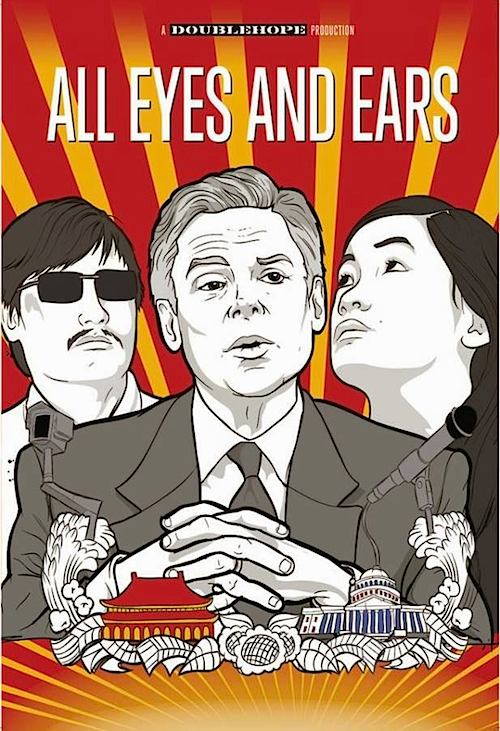
By Joe Bendel. During his confirmation hearing, our current ambassador to China, former Sen. Max Baucus, admitted: “I’m no real expert on China.” At least he was being honest. In contrast, his predecessor’s predecessor certainly was. A former Ambassador to Singapore, Gov. Jon Huntsman was familiar with the region and fluent in Mandarin. However, his greatest asset was probably his adopted daughter Gracie Mei Huntsman. Vanessa Hope chronicles their posting to Beijing in All Eyes and Ears, which screens during the 2015 Tribeca Film Festival.

Huntsman’s nomination was a bit of a surprise in 2009, especially considering Huntsman was still widely seen as a conservative at the time. He would leave the Utah Governor’s Mansion with high marks from the Cato Institute, after having signed an ambitious school voucher program into law. However, it was fortunate America had an experienced adult serving as ambassador during Huntsman’s eventful tenure, which would include the aborted Jasmine Revolution and the diplomatic crisis arising from blind dissident attorney Chen Guangcheng’s request for asylum.

Essentially, All Eyes follows Huntsman’s term of service from three perspectives: that of the diplomat, his adopted daughter, and the so-called “Barefoot Lawyer.” While braiding the three threads can get a little unwieldy, it is crucial to have Chen’s viewpoint, because it often acts as a corrective to the Communist Party’s narrative. As a diplomat, Huntsman acts scrupulously diplomatic, whereas young Gracie Huntsman has a very personal reaction to the events unfolding.

Of the three vantage points, Hope arguably favors hers—and it is easy to see why. She is clearly a “good kid” with remarkable poise. Commentators in the film make the point that probably no other Chinese adoptee will ever return to their birthplace under similar circumstances. Most likely this is true, but Hope never really delves into what Gracie Huntsman truly represents to the Chinese people. She documents the Huntsman family’s return to the orphanage she was adopted from, which all parties clearly find quite moving. However, China’s One Child policies were very likely a major reason why her name is now Huntsman, yet they are only mentioned in passing. Likewise, the widening gap between the oligarchical urban haves and the provincial have-nots is a direct cause of other children getting put up for adoption. Only Chen talks about these issues in the film, which is why it is so important to have him there.

Frankly, so many significant events transpired during Huntsman’s stint and Hope’s three primary POV figures are so compelling, All Eyes could easily be expanded to a longer form series, which reportedly might be in the works. Yet, somewhat ironically, Hope’s short doc China in Three Words (also featuring the Huntsmans) is even more incisive and grabby. Still, Chen Guangcheng and Gracie Huntsman definitely deserve your full attention (but some of the old China hands, not so much). Recommended as a reflection of a good deal of contemporary Chinese reality and the often awkward messiness of diplomacy, All Eyes and Ears screens again tonight (4/24), at the reasonably located Chelsea Bowtie, as part of this year’s Tribeca Film Festival.

LFM GRADE: B

Posted on April 24th, 2015 at 2:35pm.

LFM Reviews Song of Lahore @ Tribeca 2015

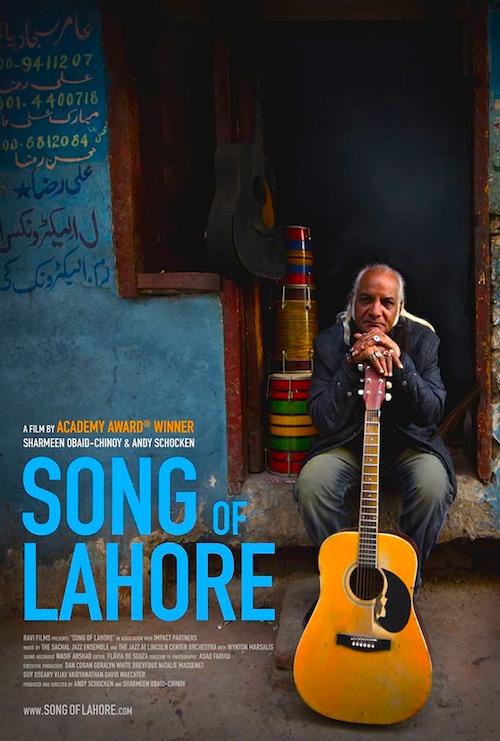
By Joe Bendel. There have been many notable fusions of jazz and South Asian musical forms over the years, such as Buddy Rich’s percussion duets with Alla Rakha and the Indo-Jazz Fusion double quintet co-led by Joe Harriott and John Mayer. However, the impetus for such explorations typically started on the jazz side. The traditional musicians of Pakistan’s Sachal Studios are a different case entirely. They decided to experiment with jazz forms and they did it at a time when simply being a musician could get them killed in Islamist Pakistan. Sharmeen Obaid-Chinoy & Andy Schocken chronicle their unlikely collaboration with Wynton Marsalis and the Jazz at Lincoln Center Orchestra in Song of Lahore, which screens during the 2015 Tribeca Film Festival.

In Taliban infested Pakistan, culture of any sort is largely prohibited. It was not always so. The Sachal Studio musicians represent a long line of artists, stretching back to the time when Lahore was a renowned center of music. Things were bad under the Zia regime, improved somewhat after his fall, but became even more dangerous in recent years. Identifying the need for a safe creative outlet, Izzat Majeed secretly opened Sachar Studios.

Finally, Pakistani musicians had a place to play together. With their chops rebounding, Majeed challenges them to tackle American style jazz, hoping it will broaden their potential base of listeners. The idea that the commercial popularity of jazz looks enviable to Pakistani musicians is a pretty depressing thought. Nevertheless there are kinships between the two musical traditions, most notably the improvisational ethos.

Of course, one of the bestselling jazz records of all time was Dave Brubeck’s Time Out, featuring his classic rendition of “Take Five.” When the Sachar Studio posts a video of the ambitious arrangement of “Take Five” on YouTube, its viral appeal quickly surpasses their expectations. Soon, they are invited to play a special concert at Jazz at Lincoln Center. However, melding the two ensembles will be a tricky proposition.

From "Song of Lahore."

Wow, it is simultaneously inspiring and horrifying to see musicians risking everything to play jazz. Indeed, Song leaves little doubt jazz is the music of freedom, giving a deserved shout out to the U.S. State Department’s Jazz Ambassadors program of the 1960s. Longtime fans and patrons will also find it cool to see J@LC mainstays like Ron Westray, Victor Goines, Ryan Kisor, and Joe Temperley on the big screen. However, not to be pedantic, but the frequent references to “Dave Brubeck’s Take Five” get a little irksome. Actually, Paul Desmond, a longtime Brubeck band-member and leader in his own right, composed “Take Five” and his alto solo (along with Joe Morello’s classic drum solo) helped make it so enduringly popular.

Regardless, Obaid-Chinoy & Schocken show a fine general understanding of the music and appreciate it enough to let us hear some of the performances in their entirety. Ellington’s “Limbo Jazz” is an especially hospitable vehicle for the combined group’s improvisations.

Song of Lahore does something that is almost impossible. It gives viewers a faint glimmer of hope for the future of Pakistan. It also features some wonderfully swinging and sophisticated music. Highly recommended, Song of Lahore screens again today (4/23), as part of this year’s Tribeca Film Festival.

LFM GRADE: A-

Posted on April 23rd, 2015 at 4:00pm.

LFM Reviews Fastball @ Tribeca 2015

From "Fastball."

By Joe Bendel. They say for fastball pitchers, it more about movement and location then velocity, unless they can hurl it over 100 mph. In that case, it really is about velocity. Some of the game’s best power pitchers and power hitters explain what it is like to be on either side of the high heat in Jonathan Hock’s enormously entertaining Fastball, which screens during the 2015 Tribeca Film Festival.

Obviously it is almost impossible to compare pitchers from different eras, but Hock and his on-screen experts will develop a methodology to do just that. Hock surveys the game-changingest fastball pitchers throughout baseball history, starting with Walter Johnson’s celebrated 122 feet per second fastball, segueing into Bob Feller’s still impressive 98.6 mph benchmark. Yankee fans will be delighted to see Goose Gossage get ample screen time, but will be baffled by the absence of Mariano Rivera (what, the cutter doesn’t count?). Still, future Hall of Famer Derek Jeter turns up as consolation (presumably he is like Martin Scorsese in classic cinema docs – if you can get him, you find a place for him).

Okay, fans from every city might wonder why their respective teams are not better represented, but nobody will question the time spent with Bob Gibson and Nolan Ryan. There are even more Hall of Famers represented on the hitters’ side of the equation, including George Brett (yes, the pine tar incident is revisited), Hank Aaron, and Al Kaline. Some fans might find it rather bittersweet seeing the recently passed Ernie Banks and Tony Gwynn adding even more class to the film.

From "Fastball."

There are a lot of laugh-out-loud stories in Fastball, but there is also a lot of nostalgia. In fact, the film becomes unapologetically sentimental and empathetic when chronically the story of Steve Dalkowski, the almost Major Leaguer who partly inspired the film Bull Durham. It is a tough game sometimes.

Surprisingly, Hock even incorporates lessons in physics and physiology into the film that really heighten our appreciation of fastball pitching (and hitting). The manner in which the documentary breaks down and adjusts fastball measurement over time might sound a little geeky, but it is totally perfect for such a wonky, numbers-obsessed sport. To Hock’s credit, Fastball is willing to make the call as to which pitcher really was the fastest, without any hedging or second-guessing, so there is even some suspense built in.

Throughout the film, Hock always hits the right notes and Kevin Costner’s narration is the perfect finishing touch. If you are a baseball fan, Fastball will bring make fond memories of the game and if you do not follow the boys of summer, you can still enjoy the anecdotes. Highly recommended, Fastball screens again this Saturday (4/25) and Sunday (4/26), as part of this year’s Tribeca Film Festival.

LFM GRADE: A

Posted on April 23rd, 2015 at 3:59pm.

LFM Reviews The Forger @ Tribeca 2015

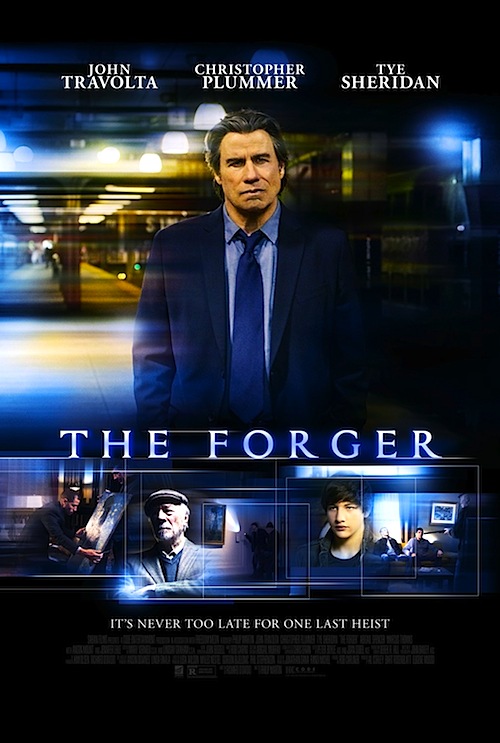
By Joe Bendel. Raymond J. Cutter is not exactly Raffles or the Pink Panther. This working class art thief and forger is a decidedly Gloomy Gus. His son Will’s terminal illness gives him a very valid reason. To get out of prison while there is still time to reconnect with the young lad, Cutter makes a deal with the devil involving a Monet. Eventually, things will get caperish in Philip Martin’s The Forger, which screens during the 2015 Tribeca Film Festival.

With a little less than a year left on his sentence, Cutter would ordinarily sit tight and do the time. Unfortunately, time is one thing Will Cutter does not have, so Cutter reaches out to Keegan, a Boston mobster, to “fix” things with the judge. Of course, there will be a quid pro quo. In this case, Cutter must steal Monet’s Woman with a Parasol on loan from the National Gallery, replacing it with a fake. It seems Keegan desperately needs to clear a debt to his art-loving cartel connection—hence the caper.

It takes a while to get to the actual art thievery, though. Instead, Martin and screenwriter Richard D’Ovidio force viewers to cool their heels in a lot of hospital waiting rooms and sit through many father-and-son heart-to-hearts. Patience and character development are both good things, but at some point the film starts to feel like it is stalling for time.

It has been a while since Travolta rekindled that old magic on-screen, but in a way that works to his advantage here. Believe it or not, he is quite good as Cutter, forcefully conveying all his guilt and regret, without wallowing in melodramatic excess. Unfortunately, Tye Sheridan is pretty dull and wooden as his son, whereas it is hard to know what to make of Christopher Plummer as Travolta’s extremely Irish father.

There are random flashes of chemistry between Travolta and Abigail Spencer’s Special Agent Paisley, but the film goes out of its way to keep them apart. The actual heist is well executed, but the film’s casts its lead characters as Red Sox fans, thereby making it extremely difficult to establish any degree of viewer sympathy.

Much to the frustration of his fans, The Forger probably ranks as one of Travolta’s better vehicles in recent years (anyone care to make a case for Old Dogs or Wild Hogs? Anyone?). It is not without merit, but it is maddeningly uneven and undeniably slow out of the blocks. Watchable but hardly worthy of Manhattan movie ticket prices, The Forger opens tomorrow (4/24) in New York, at the AMC Empire.

LFM GRADE: C+

Posted on April 23rd, 2015 at 3:59pm.