LFM Reviews Stung @ Tribeca 2015

From "Stung."

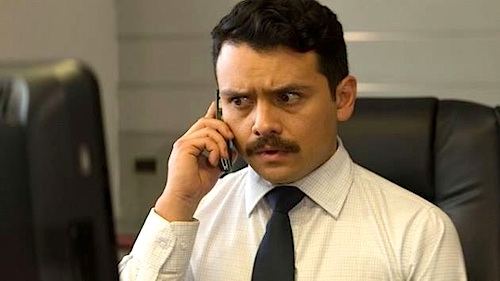
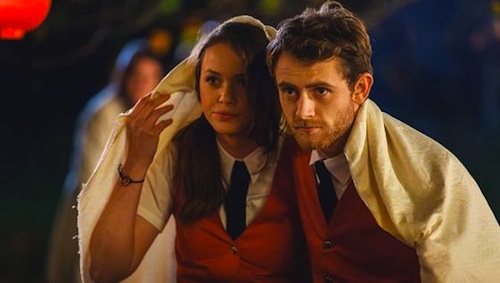
By Joe Bendel. These are wasps, not bees, so the stakes are already higher than in Irwin Allen’s The Swarm. A plucky caterer and her slacker assistant are about to lay a spread for the worst garden party ever. It was totally dead, until the mutant wasps crashed the soiree. Laughter and gore go together like white wine and canapés in Benni Diez’s Stung, which screens during the 2015 Tribeca Film Festival.

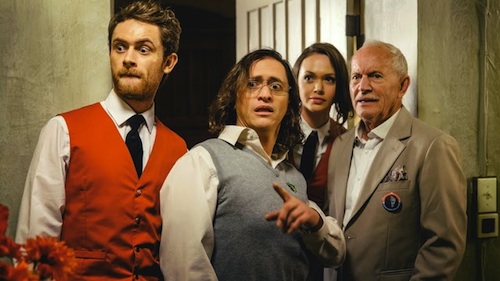
After inheriting her father’s catering business, Julia is struggling to keep it afloat. She employees the obviously besotted Paul, who struggles to keep himself together. They will cater the annual shindig hosted by Mr. Perch and her socially stunted son Sydney. By the way, the mutated wasps are all his fault, because he foolishly spiked the fertilizer with his late researcher father’s molecular juice. Unfortunately, these killer wasps are not just big and angry. They also lay their larva inside their victims, creating mutant-hybrid, with some Alien-style chest cavity explosions thrown in for good measure. Of course, that is nothing Lance Henriksen hasn’t seen before. This time he turns up as Mayor Carruthers, a flinty Korean War veteran, who appreciates a nice bottle of wine.

Seriously, how money in the bank is Henriksen? In this case, he is no mere “guest star.” He has significant screen-time as the Mayor (you know you’d vote for him) and he never wastes a second of it. Frankly, it is darned difficult sharing the film with a rampaging swarm of evil wasps and a cult favorite like Henriksen. Nevertheless, Matt O’Leary and Jessica Cook are admirably good sports dealing with all the spurting blood and spewing goo, as Julia and Paul, respectively. They seem just real enough to be worth rooting for and tough enough to not try our patience as experienced genre movie fans.
From "Stung."

Nevertheless, the mutant insects are always the most important thing in a bugs-gone-wild movie, but happily Stung delivers the goods. Frankly, Diez gets the balance just right with creatures realized well-enough to facilitate all kinds of gruesome gags, but not so realistic it can’t poke fun at itself and its genre. Not to be spoilery, but normally the “it’s still out there” ending is predictably lame, yet Stung’s finale is truly a spectacle to behold.

Stung is not quite as gleefully nuts as last year’s Tribeca-selected Zombeavers, but it is not for a lack of trying. An inspired exercise in gross-out humor and big creepy bug effects, Stung is one of the first 2015 Tribeca film to get picked up for distribution (by IFC Midnight), which suggests we might live in a just world after all. Highly recommended, Stung screens again this Thursday (4/23), as part of Tribeca ’15.

LFM GRADE: A-

Posted on April 20th, 2015 at 4:38pm.
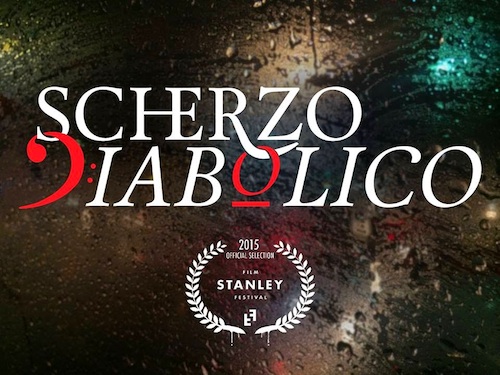
LFM Reviews Scherzo Diablolico @ Tribeca 2015

By Joe Bendel. There is nothing like music to summon deeply buried sense-memories. That is why music therapists have had such success treating Alzheimer’s patients. On the other hand, it is not so pleasant for a school girl held captive by a classical piano loving sociopath. However, just when he thinks he has completely realized his plan, karma does what it does in Adrián García Bogliano’s Scherzo Diabolico, which screens during the 2015 Tribeca Film Festival.

Aram seems like the nebbish drone at a boiler-room law firm, whose work keeps his manager Licenciado Granovsky looking good with upper management. This will soon change. Tired of being a doormat, Aram will kidnap Granovsky’s diabetic daughter Anabela, using the same meticulous planning that makes him such a valuable employee. As the weeks pass without news of his daughter, the completely destabilized Granovsky never notices all the other little things Aram does to undermine his position. Eventually, Aram replaces his terminated boss, just like he planned. However, he will be completely blind-sided by the third act.

Scherzo plods along a bit early on and frankly it seems to be missing some obvious establishing shots, but if you are confident enough to fill in the gaps, the big reversal quite a sight to behold. Over the top hardly begins to describe it. This is horror-revenge filmmaking on an operatic scale, fueled by Romantic Era classical music. If you are inclined towards pedantry than you will miss out on the pleasures of its bold, gory spectacle.

From "Scherzo Diablolico."

As Aram, Francisco Barreiro stands apart from recent movie villains, making the audience truly despise him, before almost winning back their sympathy down the stretch—almost, but not quite. Indeed, Scherzo raises viewers’ indignant blood lust almost as much as José Manuel Cravioto’s Reversal. Likewise, Juan of the Dead director Jorge Molina’s Granovsky evolves in very complicated, human ways, constantly challenging the audience to reassess him. In contrast, Daniela Soto Vell only uses two speeds to play Anabela, but the second is something else entirely.

If that weren’t enough, Scherzo also boasts one of the most distinctive opening credit sequences since the days of Saul Bass. It is not simply cool looking. It helps link the piano sonatas with a sense of ominous foreboding. This is a film very much about the transforming power of music. We usually just assume it will be transformative in a good way, because only a philistine would argue to contrary—but not in this case. (It is also worth noting the titular composition was penned by Charles-Valentin Alkan, who bitterly resented being passed over for a Conservatoire position.) Stylish and outrageous, Scherzo Diabolico is not quite as sly and satisfying as Bolgiano’s Late Phases, but it is on par with his Here Comes the Devil. Highly recommended for fan of horror and dark payback thrillers, it screens again next Saturday (4/25), as part of this year’s Tribeca.

LFM GRADE: B+

Posted on April 20th, 2015 at 4:37pm.

LFM Reviews Human Highway

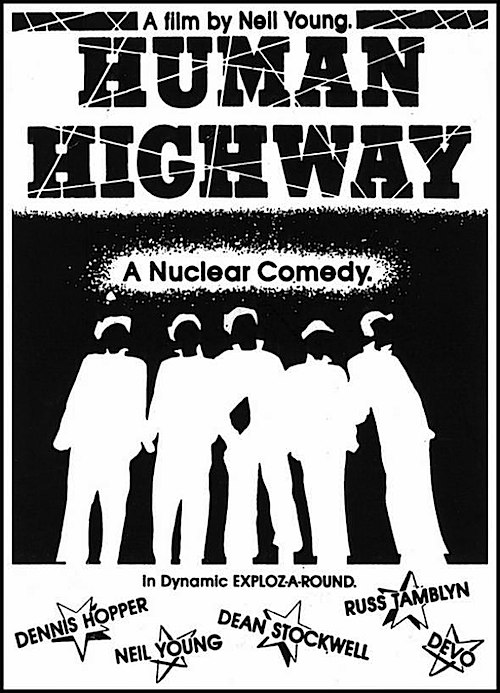
By Joe Bendel. It is the end of the world, but everyone feels fine. Linear Valley is pretty much devastated from the radiation spewing from the nearby nuclear power plant and outright nuclear war is imminent. However, burning down the local diner for the insurance money is still a viable scheme for the new owner. Too stoned-out to even be considered satire, Neil Young’s pseudonymously directed apocalyptic musical Human Highway finally gets a proper New York release, starting today, as part of the IFC Center’s new film series, Bernard Shakey Retrospective: Neil Young on Screen.

Co-directed under Young’s Shakey alter-ego with co-star Dean Stockwell, Highway also features Dennis Hopper (in dual roles), Russ Tamblyn, and Mark Mothersbaugh with Devo, so that should give you a general idea what’s on-tap. Young plays earnest loser mechanic Lionel Switch, who harbors dreams of rock & roll stardom, but every year the nuclear power plant’s garbage men win the radio station’s talent show. This morning he has brought along his pal Fred Kelly, whom his boss, Old Otto has promised a job.

Unfortunately, he wasn’t known as “Old Otto” for nothing. Sadly, the town benefactor has passed away and his money grubbing son, Otto Quartz has inherited the diner and garage. He has some new policies that will not go over well with the staff. Yet, it may not matter very much, judging from the ominous radio reports.

It is hard to apply any rational critical standard to such a manic exercise in DIY spit-ball shooting and general tom-foolery. Frankly, the reason most people will want to see it would be Young’s hard-edged rendition of “Hey Hey, My My (Into the Black)” with Devo. Arguably, Highway is even more a curio for Devo fans than admirers of Young (who has been quite well documented on film, by Jonathan Demme).

As Switch, Young is pretty shameless mugging for the camera. Likewise, Stockwell is not exactly shy about chewing the scenery while playing the villainous Quartz. What would you expect from a film conceived as a lark and fueled by peyote and transcendental meditation, or who knows what?

This is the sort of film you watch just to confirm it exists. Some see seeds of The Simpsons in its wacky nuclear waste handlers, but you could probably find crude analogs for just about every subsequent surreal vision quest within Linear Valley. For fans of Young, Devo, and anarchic micro-budget slapstick allegories, the director’s cut of Human Highway opens today (4/17) at the IFC Center.

Posted on April 20th, 2015 at 3:26pm.

LFM Reviews Drunk Stoned Brilliant Dead: the Story of the National Lampoon @ Tribeca 2015

From "Drunk Stoned Brilliant Dead."

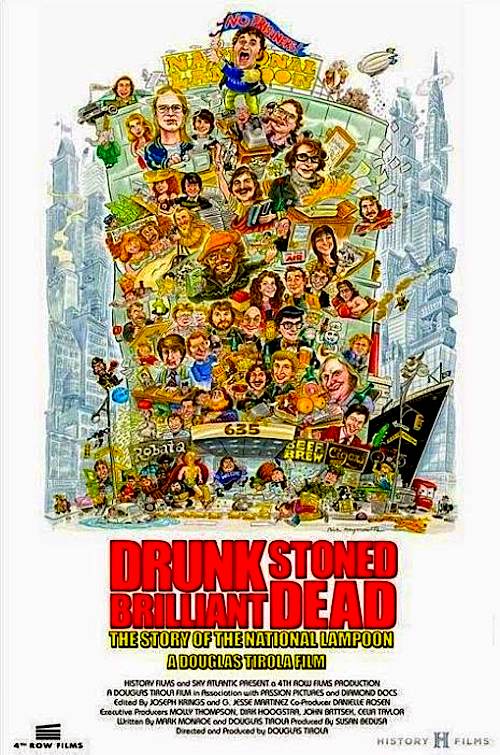
By Joe Bendel. Fortunately, they did not make sex jokes and potty humor respectable, because then they wouldn’t have been fun anymore. However, this crude band of brothers were able to move them out of the frat houses and onto our newsstands and movie screens. War stories are told and the thanks of a grateful nation is expressed throughout Doug Tirola’s Drunk Stoned Brilliant Dead: the Story of the National Lampoon, which screens during the 2015 Tribeca Film Festival.

It all started with two slightly off-center Harvard students. The Harvard Lampoon was considered the nation’s oldest humor magazine, but it was usually more about racking up extracurriculars than being funny. Editors Doug Kenney and Henry Beard were the exceptions. Together with fellow alumnus Robert Hoffman they took the Lampoon national. It took a while to catch-on, partly due to the underground comix look of the early issues. However, their tastelessness and contempt for authority soon found an appreciative audience.

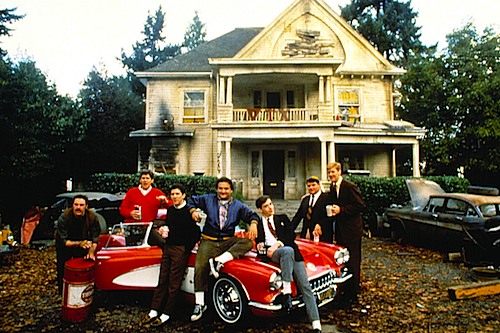
From the vantage point of the internet age, it is hard to imagine the vastness of the Lampoon’s comedy empire at its height. In addition to the magazine, there were books, radio shows, stage productions, records, and of course films. Naturally, Animal House is chronicled in fitting detail. While Van Wilder fans might be upset over the franchise’s snubbing, Tirola and the surviving Lampoon staffers own up to the notorious head-scratcher that is Disco Beaver from Outer Space.

Happily, former editor P.J. O’Rourke gets substantial screen time, but Tirola never plugs the national bestsellers that came after his magazine stint, like Holidays in Hell, which made his reputation and had a considerable influence on the prose you read here every day. Indeed, Tirola scores interviews with just about everyone still living you would hope to hear from, including John Landis, Tim Matheson, and Chevy Chase.

From "Drunk Stoned Brilliant Dead."

However, there is no getting around his Tony Hendra problem. He can hardly ignore Hendra’s long association with the magazine, but he never acknowledges his personal controversies. The problem is, Jessica Hendra’s memoir How to Cook Your Daughter, in which she accuses her father of sexual abuse, takes its title from a now notorious Lampoon piece Hendra wrote, so the subsequent media frenzy becomes part of the magazine’s extended story, regardless how uncomfortable it makes us. By not addressing it in some fashion, Tirola risks being told he has a Hendra problem by internet know-it-alls.

Regardless, Drunk etc is a fun documentary that reminds us how different the state of entertainment looked in the 1970s and 1980s. In today’s world Funny or Die wishes it were National Lampoon, but it is so not. Highly recommended as a nostalgia trip, Drunk Stoned Brilliant Dead screens again this Tuesday (4/21) and Friday (4/24) as part of this year’s Tribeca Film Festival.

LFM GRADE: B+

Posted on April 20th, 2015 at 3:25pm.

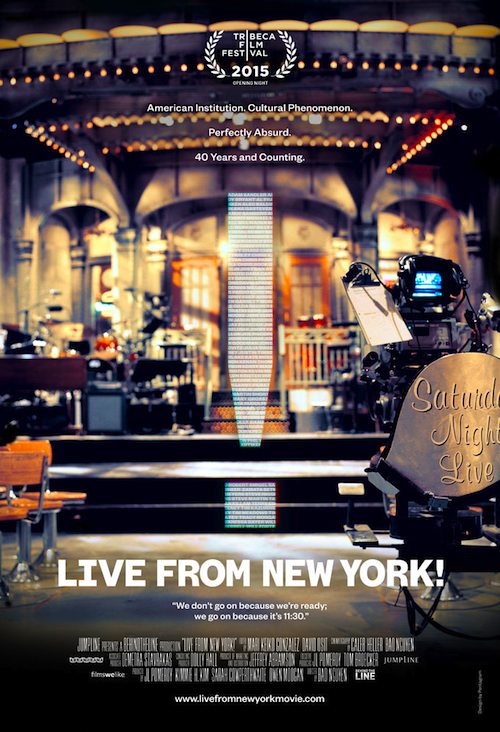
LFM Reviews Live from New York @ Tribeca 2015

By Joe Bendel. Having featured Ornette Coleman as a musical guest, Saturday Night Live has a claim to coolness nobody can ever take away from it. Unfortunately, the show is a pale shadow of what it once was. Where did it go wrong? Do not look for an answer from Bao Nguyen’s documentary, since it refuses to acknowledge any slippage in the show’s cultural currency. Instead, expect several rounds of back-patting when Live from New York! screens at the 2015 Tribeca Film Festival.

Live duly chronicles the show’s creation story, largely from Lorne Michaels’ perspective and spends a fair amount of time with the surviving original cast-members. However, the only skits they really analyze are Chevy Chase’s bumbling Gerald Ford impressions. Julia Louis-Dreyfus then apologizes for how bad the show was during Michaels’ five year absence—before the film hastens to celebrate Dana Carvey and Will Farrell’s impressions of the respective Presidents Bush. Eventually, it stutter-steps to the one high-point: the first show broadcast after September 11th, as remembered by Michaels and Giuliani. It shows how SNL can capture the sentiments of the City when it tries.

Frankly, Live is not merely shallow. It is a nauseating combination of self-congratulatory narcissism periodically interrupted by bouts of self-flagellation for not being more racially and ethnically inclusive over the years. Of course, they take great self-serving efforts to call out their new and improved line-up, but the obvious lack of a Hmong cast-member suggests they still plagued by extensive institutional racism.

To give you an idea of the film’s editorial focus, its de facto centerpiece sequence revolves around the twitter reaction to Leslie Jones jokes about her hypothetical sex life if she were a slave. Right now, you’re probably wondering who is Leslie Jones? To put this in perspective, the doc has nothing to say about the Coneheads, the Killer Bees, the Wild and Crazy Guys, Mr. Bill, Father Guido Sarducci, Deep Thoughts, Buckwheat, Ed Grimley, the Liar, “You Look Marvelous” Fernando, Charles Rocket dropping the F-bomb, or Elvis Costello pulling a set-list switcheroo, whereas Jones’ twitter feed represents the show’s defining moment. That’s just sad.

Live would be a disappointment as a DVD extra, but it was inexplicably chosen to open this year’s festival. The fact that it presents Brian Williams as an authority on the show’s wider significance without a trace of irony is tragically embarrassing. Yet in a way, it is so politically incorrect and deeply in denial, it is exactly the sort of docu-treatment the current incarnation of the show deserves. Not recommended, Live from New York! screens again next Friday (4/24) and the following Saturday (4/25) as part of this year’s Tribeca. Watch the 1979 show surreally featuring Coleman as musical guest and Milton Berle as host, instead.

LFM GRADE: D-

Posted on April 20th, 2015 at 3:25pm.

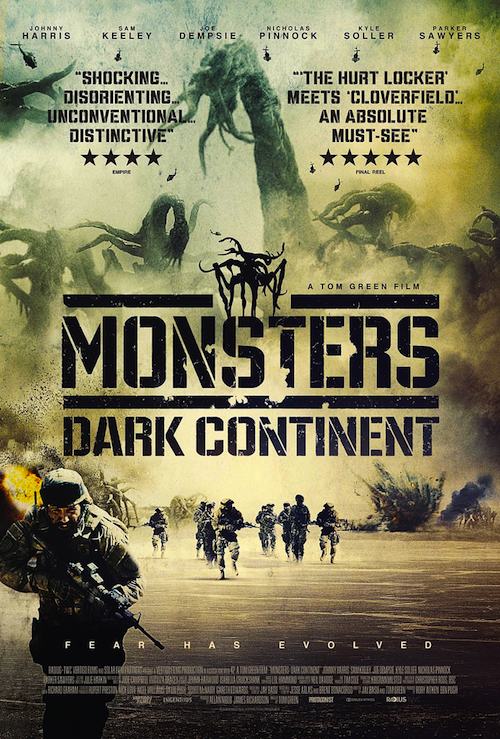
The Smell of Burning Kaiju in the Morning: LFM Reviews Monsters: Dark Continent

By Joe Bendel. There is an old saying about no atheists in fox holes. By the same token, a herd of rampaging kaijus ought to make even the most irrational jihadist grateful to see the U.S. Marines. Sadly, that is not the case in this chaotic near future monster bash. The Middle East has become the world’s hottest infection zone, so the American military has come to fight the monsters where they are. Yet, every accidental case of collateral damage becomes grist for Islamist grievance propaganda in Tom Green’s Monsters: Dark Continent, which opens this Friday in New York.

For those keeping score at home, Dark Continent is technically a sequel to Gareth Edwards’ Monsters, but it is probably just as well if prospective viewers are not aware of its lineage, or else they might expect a significantly better film. Ten years after the events of straight Monsters, the Middle East has become the new center of battle. A group of thuggish friends from Detroit (looking even scarier than the terrorist and tentacle ridden desert) have shipped off to Sgt. Noah Frater’s unit, so he will make sure the maggots are in proper fighting condition. They are a stereotypical pack, who hardly deserve names, including the sullen orphan protagonist, his unstable protector, and the buddy whose girlfriend just had a baby. Right, odds are he won’t even make it into the second act.

Edwards’ Monster was a clever DIY calling card that led directly to his Godzilla gig. Unfortunately, even though Green retained the general creature designs, he emphasizes the worst aspects of the previous film. Where Monsters offered a lot of not so subtle immigration commentary, Dark Continent sees itself as an extended critique of American military intervention in the Mid-East. However, the message-making was hardly the reason the prior film was successful. The first time around, Edwards understood his responsibility for providing certain kaiju deliverables. In fact, aspects of the politicized near future worked in tandem with the film’s genre movie conventions. Being stuck on the monster-plagued side of an ultra-fortified border follows right in line with the basic rock-and-a-hard-place tradition.

Bizarrely, Green frequently loses sight of the titular monsters and invites the audience to openly side with the terrorist insurgency against the American military. They are just uneducated thrill seekers who shoot first and ask questions later, whereas the victimized local population understands how to live with the monsters in inter-species harmony. Of course, if any of the monsters were women, they would have to wear a burqa – and if any were homosexual, they would logically be stoned to death.

There is precious little characterization in Dark Continent, except for Frater, whom British thesp Johnny Miller plays as a bulging eyed, anti-social, PTSD head case. Happily, nobody in the film says: “it became necessary to destroy the village in order to save it,” but that probably represents a supreme act of restraint on Green’s part. Shallow as a puddle and clumsily didactic, Monster: Dark Continent is not recommended when it opens this Friday (4/17) in New York, at the Village East.

LFM GRADE: D-

Posted on April 16th, 2015 at 10:03am.