LFM Reviews The Lovers

By Joe Bendel. James Stewart is a reluctant imperialist. He and his brothers are sort of gentlemen, but they hardly have a pound to their names. They are serving their military service during the time of the British Raj, to earn enough money to buy a farm in America. Stewart also happens to be Jay Fennel, a near future marine biologist. The spitting image of each other, the two men are somehow connected by destiny, the laws of physics, and a matched set of rings. Centuries pass, but love remains a painful force to reckon with in Roland Joffé’s The Lovers, which opened this Friday in New York.

Jay Fennel and his wife Laura are ocean researchers, who get to use mega-expensive submersibles to scour the ocean floor for shiny objects that might catch their eye—like say a ring. When Laura gets excited by a potential find, she carelessly heads down to the site, getting trapped beneath some debris. Manning-up, Fennel free-dives down to rescue her, but without the proper decompressing, he comes back up essentially brain dead. While his wife and doctors agonize over his condition, the film flashes back to the Eighteenth Century.

Stewart and his brother Charles are decidedly outsiders amongst the colonial establishment. They still think they take their orders from King and Parliament, but the governor makes it clear the British East India Company is calling the shots. Based on the Company’s wink-and-a-nod encouragement, a coup is staged within the Marantha royal family. Much to the new king’s frustration, the beloved queen escapes thanks to her protector, Tulaja Naik, who assumes her identity to further safeguard her security.

In a case of good news-bad news, the queen’s party is to be escorted to Bombay (as it then would have been called) by the Stewart Brothers. Once they arrive at their destination, the queen will be little more than a hostage of the governor and his cronies. However, the Stewarts are probably the only officers resourceful enough to protect the Queen and her retainers from the army of assassins following them.

From "The Lovers."

The Lovers is a very odd film. In many ways it is a throwback to 1940s exotic ports-of-call films, but with a generous helping of New Age mysticism layered on top. It is sort of like Gunga Din crossed with Titanic, as mashed-up by Richard Matheson, writing in his What Dreams May Come-Somewhere in Time bag. Once known as Singularity, the film is supposedly structured around the principles of physics, but that fact will not be immediately obvious to even reasonably attentive viewers.

Frankly, the Eighteenth Century storyline is rather appealingly old fashioned, even though Josh Hartnett’s Scottish accent is almost as big an adventure as their trek across the mountains. Still, he can swagger respectably and develops some rather nice romantic chemistry with Bollywood superstar Bipasha Basu. Without question, she is star of the film, shining in her considerable action sequences and smoldering in her scenes of passion.

Although clearly shot on a limited budget, Joffé shrewdly uses the sweeping backdrops to give the picture a suitably big look, even when he conspicuously lacked the swarming masses of extras. Regardless, the primary reason to see The Lovers is to witness Basu’s American coming out party. Somehow she carries it across the goal line, or at least makes it an interesting viewing experience. Uneven yet strangely absorbing, The Lovers will be better than a lot of things out there as it opens this weekend in New York, at the IFC Center.

LFM GRADE: B-

Posted on March 15th, 2015 at 4:14pm.
LFM Reviews White Haired Witch; Now on DVD/Blu-ray

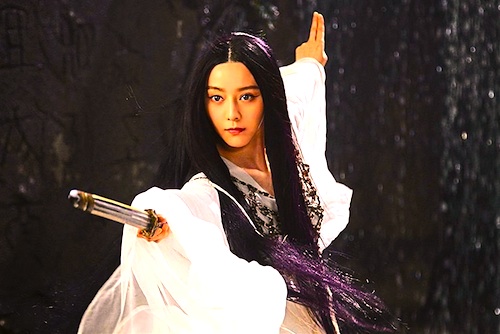
By Joe Bendel. Up until The Matrix, they were cinema’s most troublesome red pills. The historically based “Case of the Red Pills” inspired Liang Yusheng’s wuxia novel, Ronny Yu’s memorable screen treatment, The Bride with White Hair, as well as a sequel and several television serials. However, it is Fan Bingbing’s snowy mane that most fans will most remember about the latest adaptation, Jacob Cheung’s White Haired Witch, which releases this weekend on DVD and Blu-ray from Well Go USA.

Due to his talent and natural lack of ambition, Zhuo Yihang has been anointed the successor to the leader of the Wudang Sect. His first official duty will be to pay tribute to the emperor with an offering of the order’s red pills. Obviously, such a gift presents an ambitious eunuch like Wei Zhongxian the perfect opportunity to dispatch the emperor and blame an innocent fall guy, which he will not squander. Taking the long way home to visit his grandfather, a military governor on the frontier, Zhuo initially has no idea he has been falsely accused. Nor is he aware his grandfather was murdered by the treasonous general Jin Duyi, who similarly framed the demon-outlaw known as “Jade Rakshasha.” However, he sure thinks she is something when he encounters her during his journey.

Soon Zhuo is forced to take refuge in Jade Rakshasha’s Luna Fortress. Ming-era Tracey & Hepburn sparks continue to fly between them, while Zhuo proves his worth to community. Of course, they inevitably fall in love, but they will be separated when Zhuo willingly surrenders to the feared imperial guard, rather than risk the lives of the displaced peasantry sheltered in Luna. He will eventually regain his freedom by skillfully playing a double game with Eunuch Wei, even going so far as to marry his innocent daughter, Ke Pingting (she came before his you know what), but the apparent betrayal turns Jade Rakshasha’s hair white. It also makes her mad, which is never a good idea.

From "White Haired Witch."

Yes, Fan Bingbing looks great with white hair. She also looks fab and establishes decent action cred in her fight scenes. Just for the record, Fan probably kicks more butt in Witch than the entire cast of the prospective “Expendabelles film. You could make an equivalent film any day of the week in Hong Kong or Taiwan, but you simply won’t find an ensemble with the chops in Hollywood.

Be that as it may, Fan’s chemistry with Huang Xiaoming’s Zhuo is just okay. Frankly, he is a little stiff at times, but since he was working for a considerable time with a broken leg, he earns points for being a gamer. In limited screen time, Tanya Tong makes a strong impression humanizing the visiting team as Wei’s daughter Ke. Vincent Zhao chews plenty of scenery as the dastardly Jin, but he also gets to show a more nuanced side of the turncoat.

There are a number of big names in Witch’s ensemble, but along with Fan, the real stars are Stephen Tung’s fight choreography and the Oscar winning (for Crouching Tiger) Timmy Yip’s costuming. Frankly, it is a bit conspicuous that the intricate narrative has been somewhat abridged, but at least Cheung keeps the energy level up. It really is a lot of fun, as long as you can handle a tragically sweeping grand finale. Seriously, would you expect anything else? Recommended for fans of Fan and wuxia, White Haired Witch is now available on DVD and digital platforms from Well Go USA.

LFM GRADE: B

Posted on March 14th, 2015 at 4:13pm.

LFM Reviews The Wrecking Crew

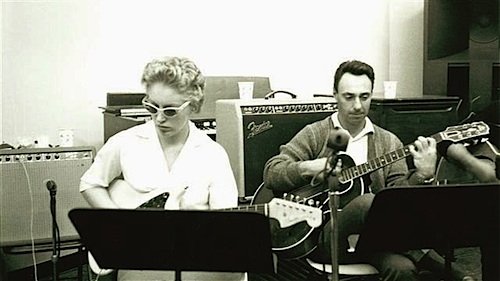
By Joe Bendel. They never had a hard and fast membership, but their big sound was immediately recognizable, especially for the record producers who kept them constantly gigging in the Los Angeles studio scene throughout most of the 1960s and 1970s. If you played a number of studio sessions with Earl Palmer, Plas Johnson, Al Casey, Carol Kaye, Hal Blaine, Don Randi, and Tommy Tedesco then you were probably a member—and you could surely lay down a killer groove. Filmmaker Denny Tedesco pays tribute to his guitarist father and all his friends in the hugely entertaining documentary, The Wrecking Crew, which opens this Friday in New York.

The Wrecking Crew played with just about everyone, including the Beach Boys, the Byrds, the Monkees, Nat King Cole, Sonny & Cher, Frank Sinatra, Nancy Sinatra, Herb Alpert, and the Chipmunks. They were Phil Spector’s Wall of Sound. They were largely unknown to the record buying public, but at least one Wrecking Crew veteran made good as a solo act: Glen Campbell. Naturally, whenever Campbell returned to the studio, he made sure his old pals were the ones backing him. His road band always resented it, yet he was really being true to his roots. They powered six consecutive Record of the Year Grammy winners, but they rarely saw their names on record jackets. In many cases, they were the recording industry’s equivalent of a ghost writer. Still, it was a pretty good living while it lasted.

For obvious reasons, the musical licensing was an absolute nightmare that has delayed the film’s release for years. It is a truly decades-in-the-making project that Tommy Tedesco (1930-1997) sadly never lived to see completed. Yet, the film is better thought of as an upbeat celebration of the musicians and their music than a bittersweet elegy. In fact, it is often wildly funny. These cats (and bassist Carol Kaye) can tell a good story, particularly the wickedly droll Blaine, who shows a drummer’s perfect sense of timing with one zinger after another.

From "The Wrecking Crew."

There is nostalgia in Tedesco’s doc, but there is an even greater sense of camaraderie. It is also gratifying to see these unsung heroes of pop music finally getting their due. Hard core jazz record collectors will especially enjoy hearing from Don Randi (who recorded some excellent sessions for Pacific Jazz) and Plas Johnson, who might be the most widely heard tenor saxophonist in the world. Seriously, you know that “Pink Panther Theme?” That was him.

Wrecking Crew will bring to mind films like Standing in the Shadow of Motown and Muscle Shoals, which also paid tribute to some of the under-appreciated artists who helped make so many beloved hit records. They are all very good films, but Wrecking Crew is far more fun. Worth the wait, it delivers a lot of laughter and generous helpings of dearly licensed grooviness. It is just a blast from start to finish—and audiences will want to hang through the credits because there is a stinger worth sticking around for. Highly recommended for anyone who has ever listened to music recorded in the latter half of the Twentieth Century, The Wrecking Crew opens this Friday (3/13) in New York, at the IFC Center.

LFM GRADE: A

Posted on March 9th, 2015 at 11:07pm.

LFM Reviews 3 Hearts

By Joe Bendel. Could you fall for a taxman? Two women from the provincial French town of Valence will do exactly that. Their similar tastes make sense, considering they happen to be sisters. Complications will necessarily ensue in Benoît Jacquot’s 3 Hearts, which opens this Friday in New York.

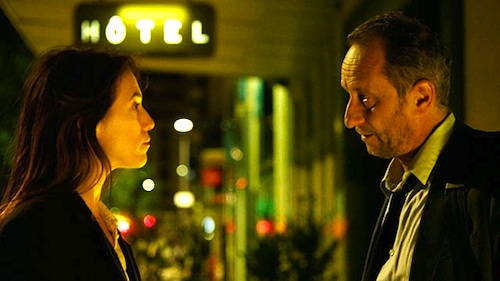
Marc Beaulieu is a revenue agency bureaucrat based in Paris, but he sometimes ventures out into the field for an audit. He missed the last train home on his first fateful night in Valence—the sort of sleepy town that rolls up the streets after eleven o’clock. However, Sylvie Berger is also roaming through the shuttered nocturnal streets. She guides him to a hotel, but they spend most of the night gliding through the quiet sidewalks together. Little is said, but a connection is formed. Beaulieu leaves for Paris in the morning, but they make hasty plans to rendezvous at the Jardin des Tuileries, but a few mild hassles like a heart attack make Beaulieu prohibitively tardy.

Naturally, the two would be lovers never exchanged cell numbers or even properly introduced themselves. That would have killed the mood, which is admittedly intoxicating. We wish the film would return to that vividly in-the-moment romantic vibe, so we can understand why Beaulieu will do some truly reckless things later in the film to recapture it.

For the time being, life goes on. Berger agrees to move to Minneapolis with the underwhelming boyfriend she had just broken up with, resigning herself to a crummy relationship and cold winters. Returning to Valence on business, Beaulieu looks for Berger, but instead he finds her sister Sophie weeping in the tax office over the state of her returns. Of course, the name Berger means nothing to him. Taking pity on her, Beaulieu straightens out her bookkeeping, winning her heart as a result. Through a carefully contrived set of circumstances, he never figures out who the absent sister is until their wedding plans are well underway.

When they finally come face-to-face, it is rather awkward. Sylvie Berger tries to avoid her new brother-in-law as much as possible, but their mutual ardor is constantly at risk of boiling over. As Beaulieu becomes rasher, the threat of scandal grows. Clearly, it is all building to a bad end for several sides of the love triangle, as Bruno Coulais’s surprisingly moody and somewhat discordant score has foreshadowed right from the beginning.

3 Hearts could be considered the dark analog of films like Brief Encounter and An Affair to Remember. While the romanticism of the initial meeting is overwhelmingly potent, it leads to an obsession that becomes toxic over time. Frankly, love at first sight is not a healthy proposition in 3 Hearts.

From "3 Hearts."

Much will be made of Catherine Deneuve once again portraying the mother of her real life daughter Chiara Mastroianni, but Madame Berger plays a tangential role in this drama. The real show is Mastroianni and Charlotte Gainsbourg complimenting and contrasting with each other as the needy, insecure Sophie and the reserved but passionate Sylvie, respectively. They are totally credible as the closest of sisters, but it is a bit harder to understand why they are both so profoundly attracted to a wheezing, walking coronary like Beaulieu. Regardless, Benoît Poelvoorde is uncomfortably compelling as the compulsive, self-destructive auditor.

While 3 Hearts sounds like a straight drama on paper, its tone approaches that of a thriller. Jacquot constantly maintains the nagging sense something dreadful might happen in the very next scene. It is tenser and more unsettling than most infidelity films, including those that venture further into violent or noir territory. Consistently effective despite, or because of its openly melodramatic inclinations, 3 Hearts is recommended for Francophiles when it opens this Friday (3/13) in New York at the Lincoln Plaza Cinema.

LFM GRADE: B+

Posted on March 9th, 2015 at 11:06pm.

LFM Reviews The Returned on A&E

By Joe Bendel. Generally, in the western tradition, rising from the dead is usually either something miraculous or horrifying. The jury is still out whether an isolated Pacific Northwestern community’s sporadic resurrections are a blessing or a curse. For two formerly grieving parents, it is certainly the former case when their youngest daughter literally walks back into their lives. However, she is not the only formerly deceased to reappear in The Returned, an Americanized remake of the French television show of the same name, which premieres on A&E this Monday.

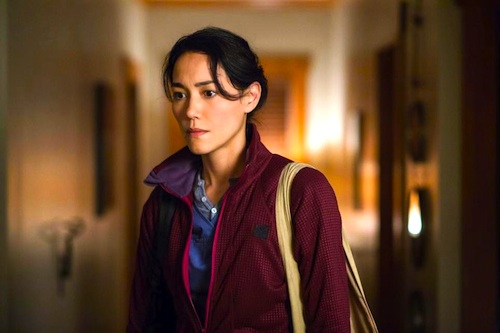
Four years ago, Camille Winship perished with most of her classmates in a school bus accident that devastated the town. As the show opens, she comes to near the fateful scene and rather confusedly makes her way home, unaware of her temporary death and the subsequent passage of years. Her all-but-separated parents, Jack and Claire, had tremendous difficulty dealing with her loss, particularly her father. Understandably, they are not quite sure what it means for their relationship when she comes back, but they are instinctively protective and secretive. It is almost too much for her older sister Lena to take, considering she always suspected Camille was their favorite.

Quite faithful to the original source material in the early episodes, co-writer-showrunners Carlton Cuse and Raelle Tucker give us plenty of backstory for the Winships, but slowly dole out tidbits of history on the other once dead characters for dramatic effect. Unfortunately, probably the storyline getting the second most screen time after Camille Winship’s family involves the formerly dearly departed bar band bad boy Simon Moran and Rowan Blackshaw, the fiancée he stranded at the altar in the worst way possible. However, the most intriguing story arc follows Victor, a mysterious little boy given shelter by Dr. Julie Han. After four episodes, viewers will truly have no idea what to expect from him, unless they have seen the French show. However, it is safe to say one returnee is a seriously bad cat, but his secrets remain closely guarded.

Cruse and Tucker might be faithful to a fault adapting The Returned, but there are plenty of similar thematic precedents out there already, including the Canadian film also titled The Returned and the BBC America show In the Flesh, both of which chronicle the challenges of the formerly deceased in treatment for their zombie condition. However, A&E’s The Returned still mostly works, if you come to it without any baggage from its source material, because of the strength of its cast.

From "The Returned."

Mark Pellegrino is convincingly guilt-ridden and surly as Jack Winship and Tandi Wright is similarly engaging as the more stable but equally pained Claire. It is quite compelling to watch them process an unimaginable turn of events. Likewise, India Ennenga and Sophia Lowe truly look like sisters and share believably catty sisterly chemistry as Camille and Lena, respectively. As usual, Sandrine Holt’s sophisticated presence just generally elevates the proceedings and she sensitively expresses Han’s frustrated maternal instincts in her scenes with the squirrely Victor. Strangely though, Agnes Bruckner, who has a bit of a cult reputation for films like The Pact gets little work of substance in the first four episodes as busybody copper Nikki Banks. If only the same could be said of the quickly tiresome Blackshaw and Moran, played with excruciating angst by Mary Elizabeth Winstead (so much better in Faults) and Mat Vairo.

Over the course of the initial four episodes, A&E’s The Returned remains light on allegorical pretension and heavy on its extreme form of family drama, which is all for the best. In fact, the local pastor played by Carl Lumbly is unusual sympathetic and down-to-earth. When unknowingly challenged by a rather embittered returnee, his words on faith sound heartfelt rather than rote. He is one of many in the ensemble who inspire optimism The Returned will continue to be quite watchable. Highly moody but weirdly grabby, The Returned is worth checking out for fresh viewers in search of new genre television when premieres this Monday (3/9) on A&E.

LFM GRADE: B

Posted on March 9th, 2015 at 11:05pm.

LFM Reviews Satellite Girl and Milk Cow @ The 2015 New York International Children’s Film Festival

By Joe Bendel. KITSAT-1 is sort of like Skylab, but when she fell to Earth, she turned into a girl. Kyung-chun used to be a boy, which would have made them a good match, but he turned into a cow, because that sort of thing regularly happens to the broken hearted in this world. So maybe she is a bit stiff and he is a bit bovine—love can still find a way in Jang Hyung-yun’s Satellite Girl and Milk Cow, which screens during the 2015 New York International Children’s Film Festival.

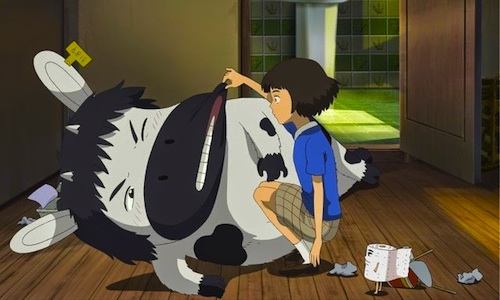
KITSAT-1 was Korea’s first satellite, but hardly anyone notices when she goes on the fritz. After decades of observing Koreans from all walks of life, she wants to join in. She will have the opportunity thanks to Merlin, who has assumed the form of a roll of toilet paper, because he could. Suddenly Kyung-chun is sharing his apartment with Il-ho, as KITSAT-1 now calls herself, and the wizard himself. At least thanks to Merlin’s help, Kyung-chun is able to temporarily return to his prior human appearance in a magical suit that is logically made out of enchanted toilet paper.

It turns out Kyung-chun could actually use the help going incognito. Lately, he has been stalked by a shadowy poacher, whose employer covets the reputed power that comes from ingesting the organs of broken-hearted changelings like Kyung-chun. Fortunately, Il-ho is there to protect him with her Inspector Gadget-like projectile limbs, in between their bickering.

SG&MC sounds completely bonkers and it probably is, but it feels relatively normal in the moment. Things just work differently in its world—roll with it. In fact, the vibe is more closely akin to a Korean rom-com. It’s your basic satellite meets moo cow story. However, nobody dies from cancer at the end, so it stays safely in rom-com territory rather than taking on the tone of a tragically romantic blockbuster.

From "Satellite Girl and Milk Cow."

Throughout the film, Jang maintains an appealing mix of sweetness and goofiness. After all, it is easy to identify with Kyung-chun because everyone has had their hearts ripped out, stomped to pieces, and then kicked into their faces at some point in time. He gets a key assist from Hong Sang-soo regular Jung Yu-mi (Oki’s Movie, In Another Country), who charming voiceover performance brings the awkward but earnest Il-ho fully to life.

This is a gentle film that should be perfectly appropriate for kids of eight years and older (as per the festival’s guidelines), but it will be the parents and big kids who fully appreciate its wackiness and empathy for the lovelorn. Jang’s animation is not exactly Studio Ghibli quality (to which it has been compared), but it has a lot of character and a healthy energy level. Highly recommended for those who can get behind some idiosyncratically romantic animation, Satellite Girl and Milk Cow screens again this coming Saturday (3/14) at the SVA Theatre, as part of this year’s NYICFF.

LFM GRADE: B+

Posted on March 9th, 2015 at 11:05pm.