Tibetan Buddhism Takes America: LFM Reviews When the Iron Bird Flies

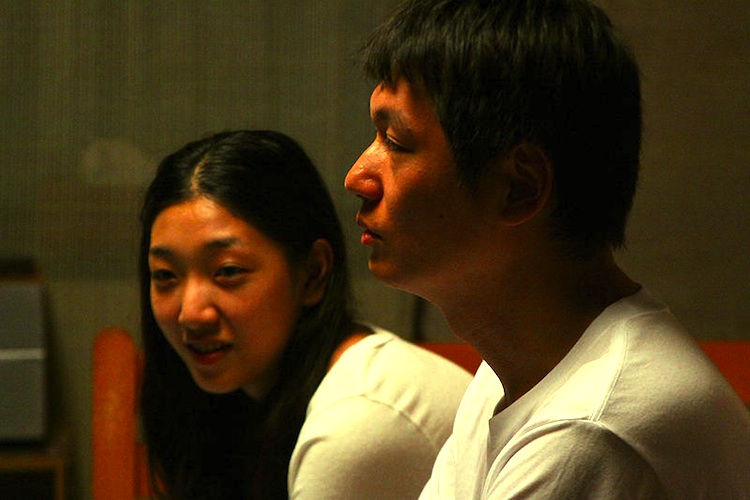
By Joe Bendel. Niall Ferguson would say “I told you so.” For centuries, Tibetan Buddhism was largely confined to the Himalayan region. Then China invaded Tibet, precipitating an exodus of refugees. A few decades later, Tibetan Buddhists have earned growing ranks of converts around the world. Arguably, a bit of competition and Westernization has been beneficial. Victress Hitchcock explores the positive implications of their exile in When the Iron Bird Flies: Tibetan Buddhism Arrives in the West, which appropriately screens before and after New Year’s at the Rubin Museum of Art in New York.

It is a rather eerie prophecy in retrospect. In the Eighth Century, Guru Padmasambhava wrote: “When the iron bird flies and horse run on wheels, the Tibetan people will be scattered like ants across the face of the earth.” Communist China realized the prediction with the 1959 invasion. In many ways, it was absolutely devastating to Tibetan culture, particularly during the madness of the Cultural Revolution. Yet Hitchcock suggests it forced one of the world’s most isolated religions into contact with entirely new nations and peoples during the 1960’s, a period when popular Western culture was widely receptive to Eastern thought.

In Iron, Hitchcock challenges our traditional thinking on the Tibetan exile experience, suggesting it has invigorated, modernized, and spread their religious practice. She has a real point. If one took a survey of most American college dorms and neighborhoods, one would be far more likely to find books about Tibetan Buddhism than Mao’s Little Red Book, even in Berkeley. That is a defendable standard of victory, but it has certainly been costly.

Iron revisits subjects of several documentaries that have played at the Rubin over the last two years, including one covering the late E. Gene Smith’s game-changing campaign to preserve and digitize ancient Tibetan texts (fully documented in Dafna Yachin’s Digital Dharma) and another dealing with Chogyam Trunpa, Rinpoche, a learned teacher who adopted a Western business suit and lifestyle to popularize Tibetan Buddhism with the Western counter-culture (profiled in Crazy Wisdom, directed by Johanna Demetrakas, who served as a consulting editor on Iron).

If the learned Rinpoches became evangelists out of necessity, Iron spreads the Tibetan Buddhist “gospel” with the zeal of a convert. Hitchcock clearly hopes to convince Western audiences this once exotic faith speaks directly to the times in which we live. A little of that is all well and good, but she risks alienating the sympathetic by coming on too strong.

Still, Iron offers a fresh perspective on Tibetan Buddhism, capturing its efforts to shed centuries of male chauvinism. It is very definitely the result of Western contact, but also a reflection of the fundamental humanism of the Tibetan Buddhist establishment in exile. Do not hold your breath waiting for similar soul searching from the Islamic world. The wit, erudition, and humility of many exiled Tibetan leaders also help enrich Hitchcock’s portrait. Educational and surprisingly optimistic, When the Iron Bird Flies is definitely worth checking out when visiting the Rubin, home to the world’s leading collection of Himalayan art. It screens again this Wednesday (12/26), Saturday (12/29), and Sunday (12/30), as well as the 2nd and 23rd of January 2013.

LFM GRADE: B

Posted on December 26th, 2012 at 12:02pm.
Sorry, No Jazz Guitar Here: LFM Reviews Django Unchained

By Joe Bendel. The real question is where’s the Gatling gun? The nineteenth century machine gun certainly found its way into Sukiyaki Western Django, Takeshi Miike’s homage to Sergio Corbucci’s spaghetti western, Django. Considering the shtickiness of his supporting performance in Miike’s film, Quentin Tarantino has good reason to distinguish his Django pastiche from its predecessor. This he surely does, re-conceiving the gritty western as a blaxploitation revenge beatdown. Frontier justice gets a whole new look in Django Unchained, which opens Christmas Day nationwide.

Dr. King Schultz is no ordinary dentist. The German expat has taken up the more lucrative work of bounty hunting. He also finds slavery appalling, so he has no qualms about liberating a slave to help him track down the Brittle Brothers, three of his former overseers who are now wanted by the law. That slave is Django, and when he teams up with Schultz, the Brittles do not stand a chance.

As everyone knows from Unchained’s media campaign, Django embraces bounty hunting because he gets paid to kill white people. However, he and Schultz make good partners, even becoming friends. After a profitable winter of killing outlaws, Schultz agrees to help the freeman liberate his wife, Broomhilda, who was taught German by her homesick former owner. Unfortunately, she was recently purchased by Calvin Candie, the master of the notorious Candyland plantation. A bit of subterfuge will be required to buy Broomhilda’s freedom, but Shultz has a suitably dubious plan.

They will masquerade as a prospective slave fight promoter and his free “Mandingo” advisor looking to buy one of Candie’s brawlers. Of course, the white racists of Candyland have trouble dealing with Django on civil terms, but the promise of Schultz’s cash keeps them temporarily in check. Unfortunately, Stephen (as in Fetchit?), the head house slave is instantly suspicious of Django and his partner.

The weird racial undercurrents detectable in Tarantino’s previous films build into a tidal wave in Unchained. On the surface, it is a scathing indictment of the antebellum era Deep South. There will be retribution of Biblical proportions, carried out in some of the best choreographed shoot-outs since John Woo’s Hard Boiled. However, before justice is served, Tarantino will thoroughly objectify African Americans, both men and women, and unleash a blizzard of racial epithets. Yet he will largely get away with it because of the film’s ostensibly politically correct sense of moral outrage.

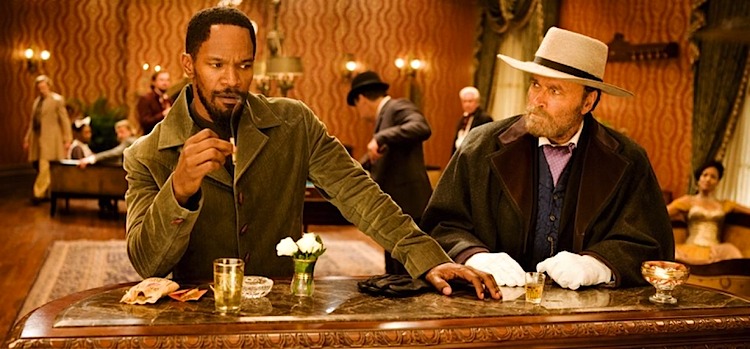
Jamie Foxx encounters the original Django, Franco Nero.

When watching Unchained, one gets a sense Schultz and Candie represent two sides of the auteur’s persona. Schultz is the white trickster he wants to be, finding acceptance from African Americans through social conscience and hipster sensibilities. Yet, if you peeked into the dark recesses of his subconscious, one might find fantasies of the master slinking off to the slave quarters late at night.

While he looks a bit like Christopher Guest, Christoph Waltz thoroughly dominates the film as Schultz. Conveying a charismatic sense of danger, he is the only character who consistently surprises viewers, while serving as the film’s figure of tolerance. Waltz also has the perfect flair for Tarantino’s dialogue, which is razor sharp as ever. In fact, the period setting is something of a blessing, forcing him to avoid ironic pop culture references.

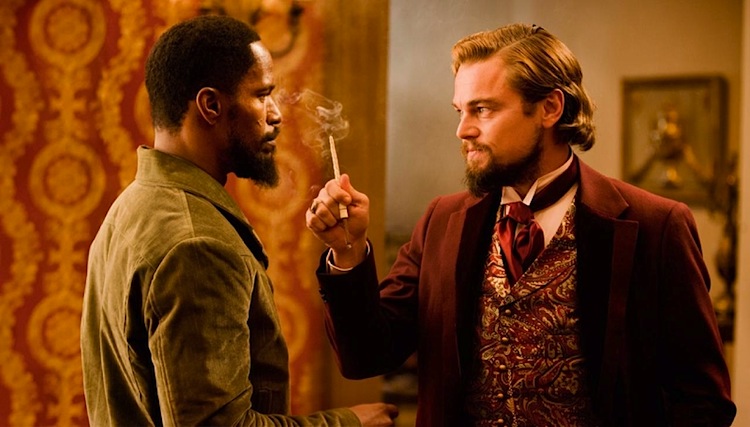
Jamie Foxx is appropriately flinty when going toe-to-toe with his racist antagonists, but lacks Waltz’s dynamic screen presence. Cruel but disturbingly subservient, Samuel L. Jackson’s Stephen is one of the most distinctive villains of the year. Yet on some level, it is oddly problematic that Unchained invites the most scorn for an African American character. Conversely, Leonardo DiCaprio and his pasted on mustache are simply ridiculous as Candie. Completely lacking gravitas or menace, he looks like he should have a surf board under his arm rather than a whip.

Tarantino delivers some spectacular mayhem and some wickedly clever lines. Still, there is a leering tone to the film that feels wrong when the bullets are not flying. Regardless, there is enough attitude and inventive bloodshed to satisfy the filmmaker’s fans, as well as a cool cameo from the original Django, Franco Nero – but the running time of one hundred sixty-some minutes is just excessive. By comparison, Corbucci’s Django unleashes just as much mayhem in nearly half the time. Recommended strictly for connoisseurs of violent exploitation films and spaghetti westerns, Django Unchained opens wide this Christmas.

LFM GRADE: B-/C+

Posted on December 21st, 2012 at 10:29am.

Accept No Substitutes: LFM Reviews Sergio Corbucci’s Original Django

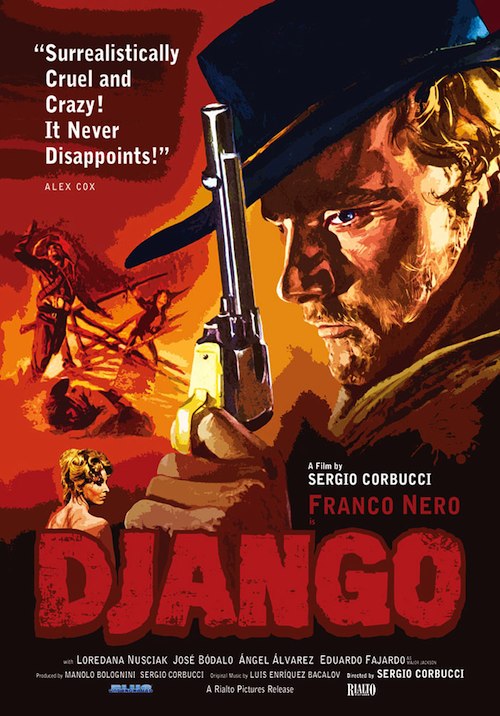
By Joe Bendel. Italian spaghetti western maestro Sergio Corbucci only helmed one official sequel to his classic 1966 western gundown Django, but scores of scruffy bootleg Django follow-ups were produced. In fact, they keep on coming, don’t they? None of them, including the recent homages from Takeshi Miike and Quentin Tarantino can hold a cigarillo to Corbucci’s original Django, which opens today in New York at Film Forum.

A stone cold killer comes to town wearing Union Blue and dragging a coffin. Much mayhem ensues. Basically, that is what the film boils down to. Like A Fistful of Dollars, there is an element of Yojimbo in Django, turning the title character loose in a town embroiled in a war between Maj. Jackson’s ex-Confederate white supremacists and a band of Mexican revolutionaries (who all look more or less the same), but attitude and action are more important than plot, per se.

Temporarily Django throws in his lot with his old associate, “General” Hugo Rodriguez, but that is only because he needs a few men to stage a daring gold heist from the Mexican army depot just across the border. He also holds a mysterious grudge against Jackson, whom he saves killing for last. Along the way, he rescues a fallen woman who duly falls for Django, but he is not really at a place in his life where he is looking for a serious relationship.

Notoriously violent in its day, Corbucci’s Django does not seem so shocking at a time when the Weinsteins will release Tarantino’s pseudo-reboot on Christmas Day (regardless of the unforeseeable national tragedy). However, its body count is still impressive. Django’s action scenes are not really shootouts, they are massacres. After all, that casket holds a heck of an equalizer, courtesy of Mr. Richard Gatling.

In a career defining role, Franco Nero is all kinds of steely badness as Django. There is something deeply existential about his presence, yet he is strictly business when it counts. Eduardo Fajardo is also thoroughly despicable as Jackson, providing the anti-hero with a worthy antagonist.

Frankly, some of the details do not make a lot of sense, like the racist Klansman Jackson being buddy-buddy with the Mexican army. At times, extras literally walk into the line of Gatling gunfire, which is awfully convenient of them. Yet, the metaphorically muddy environment and gritty action more than compensate for any pedantic grousing. Plus, it is truly impossible to watch Django and not hum the iconic theme song in your head for several days afterward.

Alex Cox suggests Django’s name is indeed a reference to the great Roma jazz guitarist Django Reinhardt, in a way that would be spoilerish to explain. If so, it adds another layer of cult weirdness to the film. Regardless, Django delivers enough unrepentant action to satisfy any genre fan. An essential Italian western, Corbucci’s 1966 original is the Django to see when it opens today (12/21) at Film Forum.

LFM GRADE: A

Posted on December 21st, 2012 at 10:29am.

LFM Reviews Chiller, The Complete Yorkshire Horror Anthology on DVD

From "Chiller."

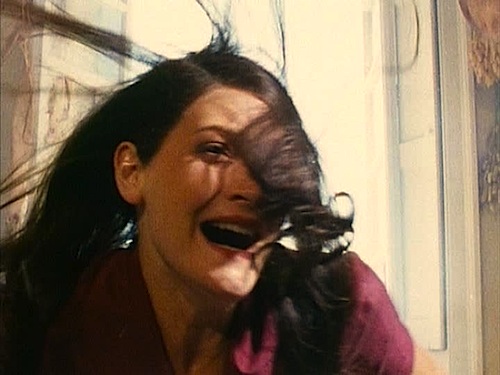
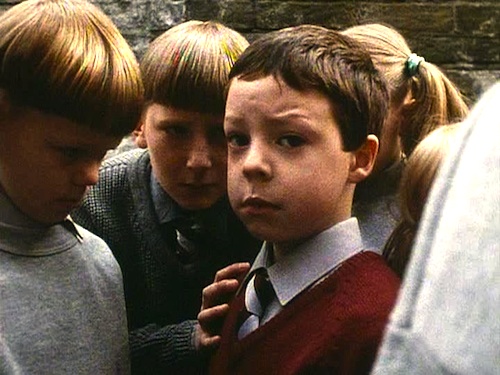
By Joe Bendel. Yorkshire is known for its green hills and savory pudding. However, the region is also rife with supernatural activity, if one can judge from a Yorkshire produced anthology series that aired in 1995. While totaling only five episodes, it built up a cult following, so this should be a happy Christmas for fans now that Chiller—the Complete Television Series has just been released on DVD by Synapse.

ITV may not have done Chiller any scheduling favors, but the show maintained a surprisingly gritty, mature vibe. Indeed, one of the striking consistencies throughout each installment is the rather grim, depressed look of the characters’ environment. In fact, a bit of urban renewal kicks off a whole mess of trouble in the initial episode, Prophecy.

Francesca Monsanto’s family diner is about to face the wrecking ball, but not before some of her drunken hipster friends convince her to hold a séance in the basement. It always creeped her out down there—with good reason. It was loads of laughs at the time, but one by one they suffer grisly accidents that were in some way foretold by the Ouija board. Stranger still, the son of her fabulously wealthy new boyfriend seems to be involved somehow. Featuring Chariots of Fire’s Nigel Havers as the well-heeled Oliver Halkin, Prophecy is one of the best of the series, cleverly blending all kinds of genre elements, including ancient evils and exorcisms. It will also be of particular interest to teen horndogs for Sophie Ward’s fleeting nude scene as Monsanto.

In contrast, Toby, the second episode, is the weakest of the short-lived series. Miscarrying after an auto accident, Louise Knight and her husband naturally move into a spooky old house with a macabre history, hoping to start over. Before long, she appears to be pregnant again, but the ultrasound says otherwise. Essentially, Toby recycles elements of Bradbury’s story “The Small Assassin” and scores of subsequent demonic baby films.

From "Chiller."

Here Comes the Mirror Man represents a return to atmospheric form for the series, capitalizing on the eeriness of the abandoned church where a young social services case is squatting with his homicidal imaginary friend, Michael. Phyllis Logan (widely recognizable from Downton Abbey and Lovejoy) stars as Anna Spalinsky, the lucky caseworker who inherits Gary Kingston’s file when her predecessor dies an untimely death.

Beginning like the standard “skeptic learns the hard way” tale, The Man Who Didn’t Believe in Ghosts develops some interesting twists and ambiguities. Richard Cramer is an Amazing Randy style writer whose books discredit paranormal humbug. Suffering a stroke after a television appearance, he naturally relocates with his family to the big, spooky Windwhistle Hall, where the former owner’s wife died in a tragic “sleep-walking” accident. Why doesn’t anyone ever want to recuperate in the city, with plenty of people around? Nevertheless, the Cramers cannot resist the low asking price, only to be terrified by a series of mysterious accidents as soon as they move in. Of course, Cramer is not going anywhere, lest he commit professional suicide.

Just as it began, Chiller ends with one of its strongest episodes. Every full moon, a serial killer preys on the children of the aptly named burg of Helsby in Number Six, perhaps inspired by the ancient druid rituals once (and maybe still) practiced in the region. Indeed, there may be both human and supernatural agencies involved. Quite engaging as a police procedural, Number Six also boasts some of the series’ most sinister moments.

Arguably, Chiller makes perfect sense for Christmas viewing.  There is a big turkey dinner at the Cramers (which becomes magically infested with maggots), a mass is held (as part of an exorcism), and kids chant nursery rhymes (derived from old Druidic rites). As a stocking stuffer for anyone who enjoys horror anthologies like Tales from the Crypt and Hammer House of Horror, Chiller is a solid bet. Recommended for fans of British genre television, the short but complete series is now available on DVD from Synapse Films.

Posted on December 21st, 2012 at 10:28am.

The Long Shadow of North Korea: LFM Reviews Our Homeland, Submitted By Japan for the Oscars

By Joe Bendel. In the 1960’s and 1970’s, many Korean-Japanese immigrated back to their homeland. Unfortunately, they chose the wrong one. With family at risk in the DPRK, active members of Japanese-North Korean friendship associations had no choice but to tow the party line. Yet, the implications of the basic foodstuff care packages they sent to loved ones spoke volumes. Granted a special three month visit for medical reasons, one such “repatriated” North Korean reconnects with his guilt-ridden family in Yang Yonghi’s devastating Our Homeland, which has been selected by Japan as their official foreign language Academy Award submission.

Yun Sung-ho most likely has a brain tumor. Given the woeful inadequacies of the North Korean medical system, he is allowed to briefly return to Japan—after a five year waiting period. He is fortunate his father is the president of the North Korean society, but he will still be monitored the entire time by his minder, Mr. Yang. Regardless, his family is grateful to see him again, especially his poor mother. Likewise, Rie is delighted to see her beloved brother again, but she cannot ignore certain ironies, like her brother developing malnutrition in the “Workers’ Paradise.” Yes, she is our kind of free-thinker and the unambiguous conscience of Our Homeland.

Based on writer-director Yang Yonghi’s own family experiences recorded in Dear Pyongyang and a subsequent documentary, Homeland is even more direct in addressing conditions in North Korea. Perhaps liberated by the fictional context, the film explicitly blames the DPRK for the misery of its citizens. There is no inclination towards moral equivalency. In fact, there is a clear affection for the Ozu-like quiet serenity of Japan.

While Yang’s script is unusually honest and challenging, her leads really make it hit home. Dynamic and vivacious but deep as a river, Sakura Andô is simply remarkable as Rie. It is an award caliber performance. Conversely, it takes a while for Iura Arata’s pitch-perfect portrayal to sink in, striking uncomfortable chords between bitterness and resignation. Boasting a top flight ensemble from top to bottom, Homeland is also distinguished and humanized by memorable supporting turns from Kotomi Kyôno as Yun’s ex Suni and Tarô Suwa as his loving blacksheep capitalist Uncle Tejo.

An assured narrative debut, Yang masterfully controls the mood and tone, despite the almost complete lack of soundtrack music. Her approach is intimate and not surprisingly documentary-like, but Homeland never feels overly talky or draggy. Indeed, the emotional drama never slacks.

Our Homeland is a deeply compassionate film, but it is also somewhat angry, plainly calling an older generation to account for sacrificing their children on ideological grounds. Its unmistakable critique of North Korean Communism might not sound like Academy fodder, but the foreign language division can be surprising – in a good way. After all, The Lives of Others won the Oscar and Andrzej Wajda’s Katyn was nominated before it even had American distribution. Regardless, Our Homeland would be a worthy nominee that deserves an international audience.

LFM GRADE: A

Posted on December 18th, 2012 at 11:59am.

Peter Jackson Cranks Up the Frame Rate: LFM Reviews The Hobbit: an Unexpected Journey

By Joe Bendel. Does this sound familiar? A little dude with big feet saves the world. A magic ring is involved. Welcome back to Middle Earth. After the complete triumph of the Lord of the Rings trilogy, a big screen treatment for The Hobbit was almost inevitable. Fortunately, after a complicated development process, Peter Jackson retook the reins of what is now a prequel trilogy. As most anyone remotely connected to the media culture knows, Jackson’s The Hobbit: an Unexpected Journey opens today, just about everywhere.

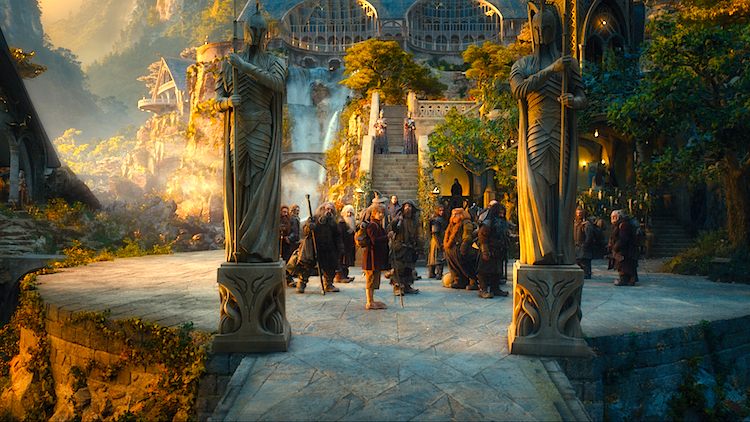
Blink and you might miss him, but Frodo appears in passing early on. Of course, The Hobbit is Bilbo Baggins’ story, which he is writing out for Frodo’s edification. In his younger years, Baggins was recruited by Gandalf the Grey to aid a company of dwarves in reclaiming their ancestral home from an ancient dragon. A bookish homebody, Baggins cannot fathom what he would bring to the expedition, but Gandalf just seems to think it will be helpful to have a hobbit along. Thorin Oakenshield, the fiery heir to the Dwarvish throne, is openly contemptuous of Baggins, but several of his compatriots eventually warm to their halfing compatriot.

Thorin also makes no secret of his resentment for the Elvish kingdom, whom he blames for turning their backs on the Dwarves in their hour of need. However, Gandalf insists they will need their assistance deciphering a certain magical map. They could also use a hand with the orc hordes pursuing them through the mountains. Frankly, there should not be so many trolls and goblins roaming about the foothills. There seems to be an evil agency at work, with most signs pointing to the former Dwarvish homeland.

Considering The Hobbit is just one average sized book and The Lord of the Rings is a fat trilogy, one would expect a lot of filler in Unexpected Journey. Yet, since about seventy-five percent of the film consists of the orcs chasing or battling the dwarves, its nearly three hours do not seem so excessively padded (as long as you enjoy fantastical action).

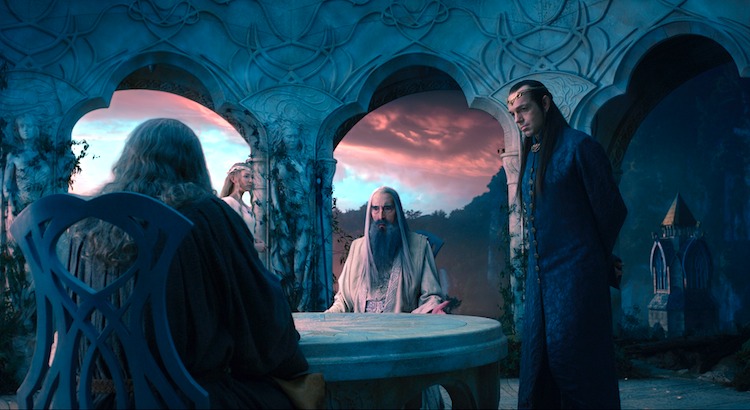
Ian McKellen, Cate Blanchett, Christopher Lee and Hugo Weaving in "The Hobbit: An Unexpected Journey."

All that melee looks great in 3D. No lame 2D fix-up (like Clash of the Titans), Journey was clearly conceived for the format. However, the High Frame Rate (HFR) gimmick is another story. Frankly, the super sharp clarity of the image often makes the effects look more fake, rather than the opposite. Also, the early scenes in Bag End lack the warm, cozy vibe one would expect.

Even if HFR is more of a distraction than an attraction, Jackson gets the bigger Tolkien picture. He understands and always remains true to the series’ themes of sacrifice, faith, courage, and humility. Fans trust him adapting this world, with good reason, so if the HFR experiment is the price to pay for Jackson’s return to Middle Earth, it is probably worth it.

Journey might not be as epic as its LOTR predecessors, but it does not disappoint. Martin Freeman (Sherlock’s Dr. Watson) has the right everyhobbit presence and looks quite credible as Sir Ian Holm’s younger analog. Most importantly, Sir Ian McKellen is back as Gandalf, a role he was probably born to play. Hammer fans will also be pleased to see Sir Christopher Lee return as Saruman the White. It is sort of more of the same, but Jackson makes it feel right even when it looks a little weird. Recommended for fantasy fans, The Hobbit is now playing on over 4,000 screens nationwide, including the AMC Loews Lincoln Square in New York.

LFM GRADE: B

Posted on December 14th, 2012 at 9:45am.