Malaise in Moscow: LFM Reviews Twilight Portrait

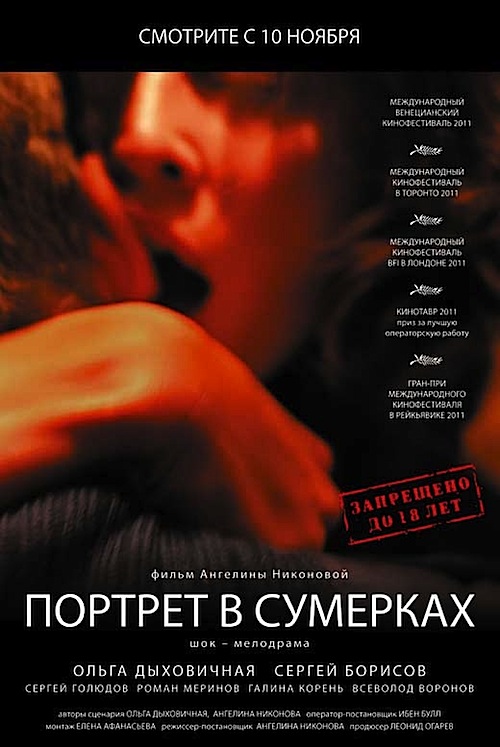
By Joe Bendel. In Moscow, you can never find a cop when you need one—if you’re lucky, that is. While ostensibly nonpolitical, a scathing picture of the Putin era’s petty corruption, casual cruelty, and moral malaise emerges in Angelina Nikonova’s Twilight Portrait (see a clip here), which screens this week during the 2012 edition of New Directors/New Films.

Initially, Marina appears to be a woman who has it all: a career she is ambivalent about, a husband she cannot respect, and a lover she despises. Unfortunately, after another unsatisfying tryst, the wheels come off Marina’s life. A stolen handbag, a broken heel, and a bit of dishevelment later, the cops pick up Marina on the assumption she is a prostitute and therefore fair game. The details are kept deliberately obscure from the audience, but we know some combination of the three officers rapes her in their patrol car.

Twilight’s second act might be the most realistic, bluntly unvarnished portrayal of the aftermath of such trauma yet rendered on film. Marina’s depression and anger manifest themselves in ways that are sometimes understandable, but often perplexing and off-putting. However, Twilight is just getting started. When Marina takes up with Andrei, one of the cops from that fateful night (who apparently does not recognize her in a different context), the film gets even darker. Is this part of an elaborate plan for revenge or compulsive self-debasement? Perhaps it is both or neither. Indeed, part of her seems drawn to Andrei’s unapologetic masculinity in much the same way Russia collectively submits to an authoritarian strongman like Putin. Twilight keeps its cards close to its vest, but it is safe to surmise their relationship is deeply twisted.
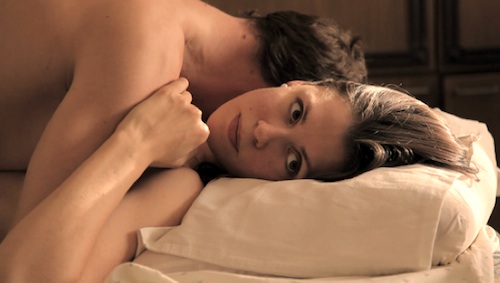
Olga Dihovichnaya as Marina in Angelina Nikonova's "Twilight Portrait."

At this point, it might be helpful to point out Twilight was co-written by Nikonova and her lead actress, Olga Dihovichnaya. Nonetheless, some might find the film’s sexual dynamics, as described above, considerably troubling – which is perfectly reasonable.  This is not a film for everyone, just like Bad Lieutenant is not a film for the masses. However, like Ferrara’s arguable masterwork, there is always a point to the degradation. Frankly, Twilight is not very explicit in terms of what it shows on-screen, but the implications of the character’s words and actions are undeniably disturbing.

Beyond visceral, Dihovichnaya gives a phenomenal performance that will make viewers squirm in discomfort. Film patrons will not see better work on-screen this year, but it is so brutally honest and tightly controlled, Dihovichnaya is unlikely to get the accolades she deserves, at least around these parts. (We’ll probably just shower our awards on Meryl Streep’s next schticky impersonation.)

Nikonova masterfully controls what the audience sees and what it thinks it perceives, keeping them off-balance and edgy throughout the film. It is not an easy film to watch, but it has some real arsenic to it. Recommended for those who fully understand what they are getting into, Twilight screens this Friday (3/30) at MoMA and Saturday (3/31) at the Walter Reade Theater, as the 2012 ND/NF wraps up a particularly strong year.

Posted on March 28th, 2012 at 4:55pm.
China’s One Child Policy: LFM Reviews Huan Huan

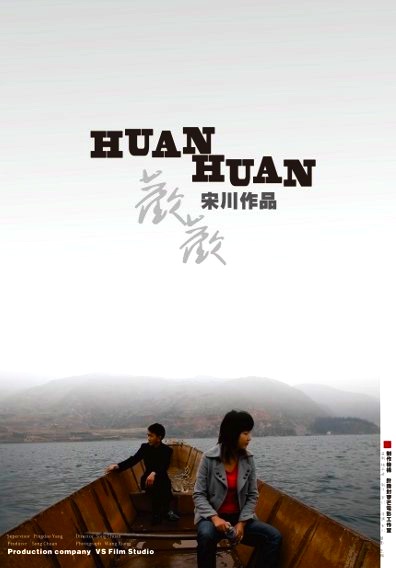
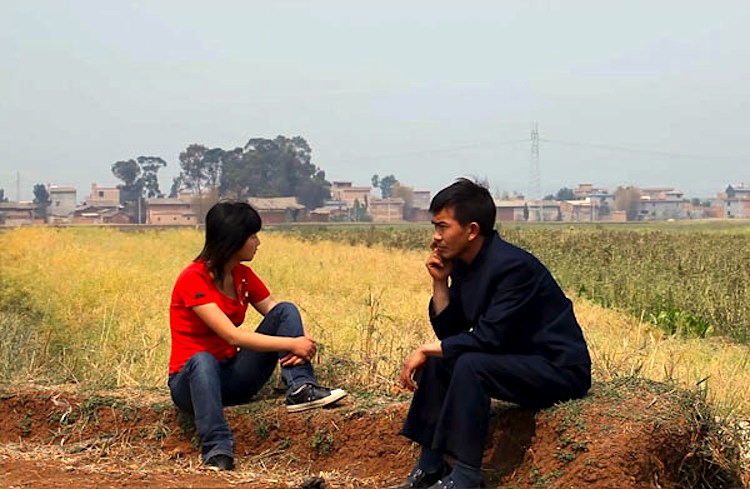
By Joe Bendel. China is a man’s world and becoming ever more so. In addition to making young girls increasingly less common, China’s One Child policy poisons the personal relationships of several working class provincial villagers in Song Chuan’s Huan Huan, which screens during the 2012 New Directors/New Films, jointly presented by the Film Society of Lincoln Center and MoMA.

Huan Huan has not taken control of her own life. She passively married a habitual gambler and acquiesced to the advances of “Doctor” Wang, a dodgy practitioner of “Chinese and Western medicine” married to Chunfeng, the village’s government enforcer. When their ill-concealed affair becomes public, Chunfeng starts harassing Huan Huan’s family, while Wang starts paying a monthly consideration to her deadbeat husband. Huan Huan’s eventual pregnancy complicates matters tremendously, particularly in light of the One Child policy and Chunfeng’s infertility.

Indeed, given the harsh procreation laws, everyone is interested in Huan Huan’s baby, hoping for a son of course. As a result, what might be a passionate infidelity melodrama in the West becomes a study in cold calculated decisions for Huan Huan’s circle. The frank matter-of-factness with which Song Chuan addresses the One Child policy and the petty corruption of local officials is nothing less than stunning. He also clearly argues contemporary Chinese society is sexually objectifying women, most notably in the low pop culture it imports.

Unfortunately, though Song’s social criticism is undeniably trenchant, his unprofessional cast largely acquit themselves as such. Lead Tian Yuefang is rather convincing in a true-to-life way as the sullen and self-destructive title character. However, the supporting cast is guilty of frequently awkward line readings and a clumsy fight scene that would not pass muster in most dinner theaters.

In addition, Song follows in the aesthetic tradition of independent Chinese filmmaking initiated by the Digital Generation (or DGenerate) School. As a result, Huan Huan features the long static shots and unhurried ground level naturalism that are hallmarks of the movement, but can be distancing for undisciplined viewers. He displays a strong sense of composition, though, vividly conveying the hardscrabble environment of Yunnan.

Ultimately, Huan Huan is more interesting for what it portrays than as a fully engaging drama for audiences to submerge themselves into. According to Deadline Hollywood, Song was denied a visa to attend ND/NF, so it worth seeing on those grounds alone. A bold undertaking, but quite a mixed bag cinematically, Huan Huan screens this Tuesday (3/27) at the Walter Reade Theater and Wednesday (3/28) at MoMA.

Posted on March 26th, 2012 at 11:09am.

LFM Reviews My Girlfriend is an Agent

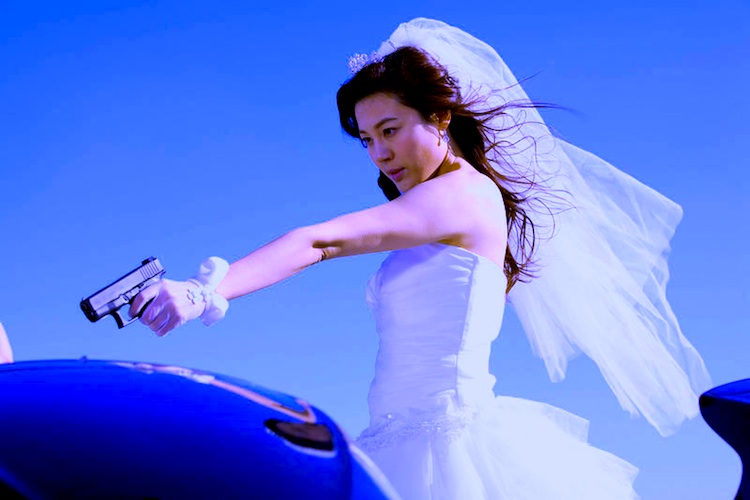
Kim Ha-neul in "My Girlfriend is an Agent."

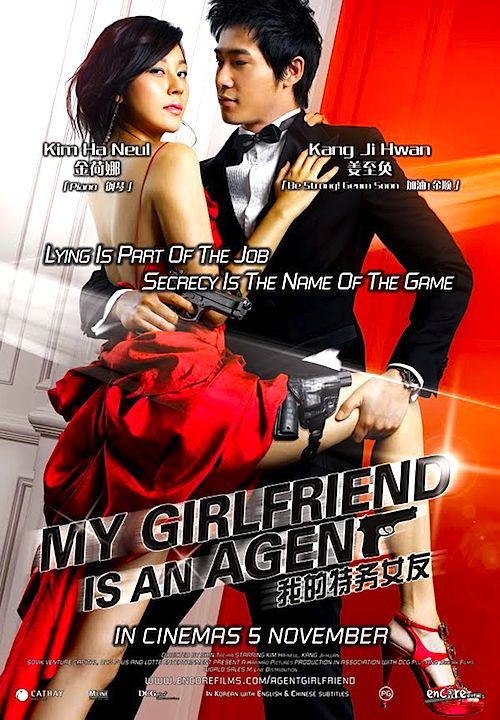
By Joe Bendel. Evidently Jamie Gorelick also set up an information-sharing firewall for Korean intelligence. Unbeknownst to each other, two agencies are tracking the same Russian gangster-spies out to purchase the latest monster virus. Nor do Ahn Soo-ji and her ex realize they work for the rival agencies. Things get rom-com complicated in Shin Tae-ra’s My Girlfriend is an Agent (trailer here), which screens – for free – this Tuesday in New York as part of the Korean Cultural Service’s current It’s a Fine Romance film series.

Ahn is an excellent operative, but things like rejection make her loose her cool. In contrast, Lee Jae-joon is completely incompetent, but he is a rookie. At least his Russian background will be useful. Obviously, the evil Victor Somethingrussian has a huge advantage. Every Korean operation targeting him is blown when Ahn and Lee blunder into each other.

Of course, they fight like cats and dogs, providing much entertainment for the local coppers, while scrupulously maintaining their classified affiliations. When Ahn and Lee’s teams finally start to suspect their respective exes, they assume each is in league with the Russians, as duly required in secret agent comedies.

Agent is not afraid to milk a public yelling match for all its worth. Indeed, the comedy is pretty broad here, but it barrels ahead quite confidently. To give credit where it is due, Shin and screenwriter Cheon Seong-il certainly know how to introduce their heroine, immediately putting Ahn into the field as a pistol-packing, jet-ski driving undercover bride. That so works.

In fact, as Ahn, Kim Ha-neul makes a pretty engaging action protagonist, poised in her fight scenes and rather endearing when navigating her romantic frustrations. However, the slapstick incompetence of Kang Ji-hwan’s Lee is lathered on far too strongly, quickly undermining any possible dramatic credibility. Still, his goofiness is not difficult to translate.

Clearly, Agent just wants viewers to have fun, which is cool. Frankly, it contrasts rather favorably with Hollywood spy comedies of recent vintage that unfailingly portray either the CIA or the U.S. military as the “real villains.” Though they have their secrets, Agent’s heavies are still Russian, through and through.

A smash hit in Korea, it is fairly easy to understand Agent’s appeal. Light and breezy with a healthy dose of romance, it is an amusing bauble. It ought to be quite pleasant to watch it with an appreciative audience—again, for free—so plan to arrive early when it screens this Tuesday (3/27) at the Tribeca Cinemas, courtesy of the Korean Cultural Service in New York.

Posted on March 26th, 2012 at 11:07am.

Armageddon on the Lower East Side: LFM Reviews 4:44 Last Day on Earth

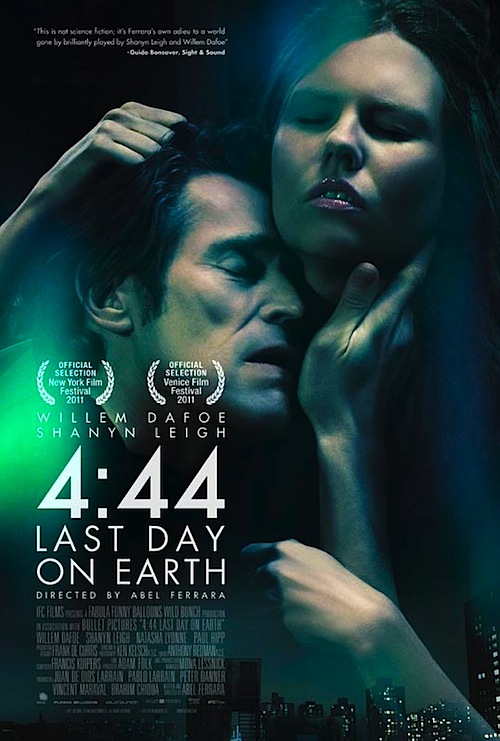
By Joe Bendel. Abel Ferrara is determined to vindicate Al Gore. He will have to destroy the world to do it, but surely that is a small price to pay. Armageddon indeed comes to the Lower East Side in Ferrara’s 4:44 Last Day on Earth, which opens today in New York at the IFC Center.

The details are vague (for obvious reasons), but we are told Gore was more right than even he knew. Global warming has become so severe, all life will end at 4:44am in some sort of great microwaving, but of course women and children will be hit the hardest (?). At least it’s not daylight savings, because it would be a real bummer to lose an hour tonight. Cisco and his girlfriend Skye will spend their final hours together, as New York prepare for the end.

Frankly, Ferrara’s set up is surprisingly effective. During the first half hour or so, New Yorkers will be reminded of the empathic solidarity that swept over the City on 9-11 and to a lesser extent during the blackout. He really creates a convincing sense of what it would be like to knowingly experience the apocalypse in New York.

As the day progresses, Cisco and Skye frequently make love in between her creative bursts of painting, which is perfectly appropriate given the dramatic context. However, viewers will start to wonder where Ferrara is taking it all. Frankly, nowhere.

Essentially, 4:44 shows us scene after scene of Cisco puttering about his apartment, wrestling with the mother of all existential crises. Late in the day, Ferrara makes a half-hearted attempt to gin up some phony drama, but it quickly subsides. We also get one cheesy montage before its Hasta time.

During the long stretches of Wilem Dafoe gamely channeling his inner Ferrara as Cisco, we hear intrusive excerpts from an old Gore appearance on Charlie Rose and several streaming lessons from the Dalai Lama and other Buddhist teachers. It is as if the secular faith of environmentalism is battling Buddhism for the soul of the apartment. Considering how clumsily Ferrara tilts the playing field in favor of the former, most viewers will want to throw their lot in with His Holiness.

Strangely, despite the Dalai Lama’s archival appearance, 4:44 is largely unconcerned with the religious ramifications of the end of the world. Indeed, it never speculates on the implications for the cycle of reincarnation so important to the Buddhism, but viewers might as their attentions start to wander. In another piece of good local color, 4:44 also shows the final broadcasts of NY1 anchor Pat Kiernan. He might not be particularly well known outside New York City, but that’s okay, considering ninety-nine percent of the film’s audience will come from a handful of Brooklyn and lower Manhattan neighborhoods.

As you would expect from such a quintessentially New York filmmaker, Ferrara nails the City vibe, but that’s about all 4:44 has. Quite skippable in theaters, it might be worth sampling the first twenty minutes on cable eventually, but don’t make any special effort. For Ferrara’s die-hard fans, it opens today (3/23) at the IFC Center.

LFM GRADE: D+

Posted on March 23rd, 2012 at 12:09pm.

New York International Children’s Film Festival 2012: LFM Reviews The New Restoration of The Monkey King: Uproar in Heaven in 3D

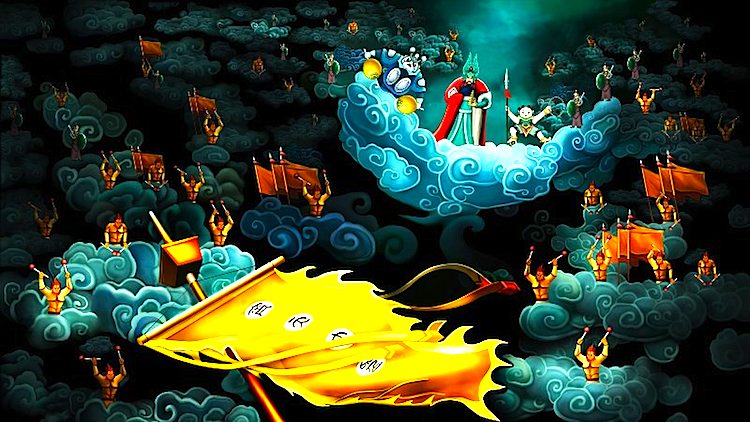
By Joe Bendel. Wan Laiming was the Walt Disney of China. Unfortunately, his long planned masterwork finally came to fruition on the eve of the Cultural Revolution. Just as the second part of his animated adaptation of the Ming-era novel Journey to the West was released to general acclaim, the Chinese film industry was shuttered for reasons of ideological madness. Recognized as one of the greatest Chinese animated features ever, Wan’s complete The Monkey King—Uproar in Heaven has been meticulously restored, frame-by-frame, and converted to widescreen 3D. Su Da and Chen Zhihong’s Monkey King restoration had its North American premiere screenings during the 2012 New York International Children’s Festival.

Being in fact a monkey, the Monkey King is perfectly suited to animation. Supernaturally powerful, he happily leads the monkey tribe of Flower Fruit Mountain, but his rambunctious nature attracts celestial attention.  On the orders of the Jade Emperor, the Monkey King is whisked up to the heavens, only to be given a dubious title and shunted off the a harmless corner of the cosmos. The Monkey King does not play that game, though. He creates quite the ruckus before returning to his clan on Flower Fruit Mountain.  However, the beings of the higher realm consider his rebellious drive a threat and will not leave well enough alone.

Often thought to be influenced by Hindu deities, the Monkey King clearly fits the Trickster archetype. While he eventually settles down in the source novel, Uproar features him at his most uproarious. Frankly, some of his moves prefigure several signature sequences from the Matrix franchise. He is also quite proficient with his magical staff, delivering plenty of satisfaction for martial arts fans.

However, the look of Wan’s film, by way of the Su and Chen’s restoration, is truly remarkable. It has a rich lushness, but there is also a mystical vibe that resists comparison to other films. It is also hard to describe the film’s color palate, but it is quite distinctive (and a testament to the filmmakers’ restoration efforts). Some sequences are incredibly graceful, such as the Monkey King’s encounter with a wonderfully cinematic group of fairies, at least until his mischievousness asserts itself. In addition, the restored Uproar is one of the most skillful and refined examples of 3D rendering, aside from Wim Wenders’s Pina. More than just pointy objects jutting out from the screen, the 3D here emphasizes depth on a grand scale.

The Monkey King’s story holds a place of honor amid China’s rich cultural legacy, which the ideological campaigns of the mid and late 1960’s tragically nearly destroyed. Presumably, some purists will debate aspects of the 3D digital refurbishment, most definitely including the 3D itself, but also the restoration directors’ abridgment of the film, the newly composed and recorded soundtrack (directly inspired by the Beijing Opera) and their alteration of the aspect ratio. However, these debates are good to have.

Ultimately, their efforts will bring Wan’s images to a new generation of viewers and ensure they will be preserved for generations to come. Perhaps more to the point, Uproar is an enormously entertaining spectacle that is both high-brow and action-oriented. Recommended for kids and animation fans with an interest in Chinese Culture, The Monkey King—Uproar in Heaven is likely to have a long life on the festival circuit and in specialty distribution, following its enthusiastically received screening last night at NYICFF.

Posted on March 22nd, 2012 at 12:19pm.

New York’s New Directors/New Films 2012: LFM Reviews The Rabbi’s Cat in 3D

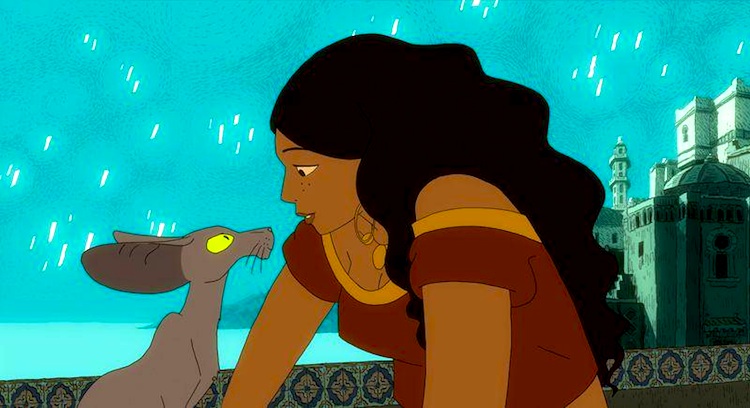
By Joe Bendel. It is a time in Algiers when Jews and Muslims lived together harmoniously. It is also an animated fantasy with a talking cat. Nonetheless, there is a distinctive mix of gentle nostalgia and broad comedy in Joann Sfar & Antoine Delesvaux’s The Rabbi’s Cat, which screens as part of the 2012 New Directors/New Films.

The time is the early 1920’s, after the Russian Revolution, but before World War II. We know this because Rabbi Sfar regularly gets shipments of Russian Rabbinical texts sent to him for safekeeping from the Bolsheviks. He has a cat with no name, known only as “le chat du rabbin.” While his identity comes from the Rabbi, it is the Rabbi’s voluptuous daughter Zlabya whom the cat loves best. However, the Rabbi temporarily forbids the cat to see his mistress when the cat mysteriously begins talking one day.

Actually, the talking thing comes and goes, to the Rabbi’s befuddlement. He will have even more to puzzle out when through a turn of magical realism, a Russian refugee is found alive and well in his latest cargo from the Soviet Union. Of course, nobody can understand his Russian, except the cat, who inconveniently is currently amid one of his speechless stretches.

From "The Rabbi's Cat."

There are enough Jewish identity jokes in Cat to fill Billy Crystal’s next Catskills set. Yet, there is also something seductively exotic about this cat’s eye view of Algiers. Sfar and Delesvaux earnestly want to present a picture of interfaith tranquility, perfectly represented by the Rabbi and his Sufi cousin, Sheik Mohammad Sfar, two branches of the same but diverse family. They even skewer the unrehabilitated and pre-Spielbergized Tintin in one rather random scene. Yet, they do not completely burry their heads in the Kumbaya sand, depicting the touchy intolerance of an Islamist Bedouin clan, whose hospitality quickly becomes somewhat precarious for the inclusively motley Sfar expedition.

Considering Cat adapts non-sequential volumes of Sfar’s popular graphic novel series, it is hardly surprising the narrative jumps around quite a bit. In an odd way, though, that hop-scotching gives the film its energy. Those looking for something to offend them will probably find it here, but Cat is mostly just harmless fun. Though a bit spicy at times, it is probably okay for older kids, but parents should probably decide on a case by case basis.

Evocatively rendered, Cat’s animation captures the spirit of the original comic art, while conveying the allure of the Middle Eastern locales. It also represents a bit of festival history, holding the distinction of being ND/NF’s first 3D selection and their first screening deliberately intended for family viewing. Recommended for animation fans, particularly admirers of Sfar’s work, and kids who can handle subtitles and more advanced thematic material (but still enjoy talking animals), The Rabbi’s Cat screens this Sunday (3/25) at MoMA and the following Tuesday (3/27) as ND/NF continues at both venues.

LFM GRADE: B

Posted on March 21st, 2012 at 11:28am.