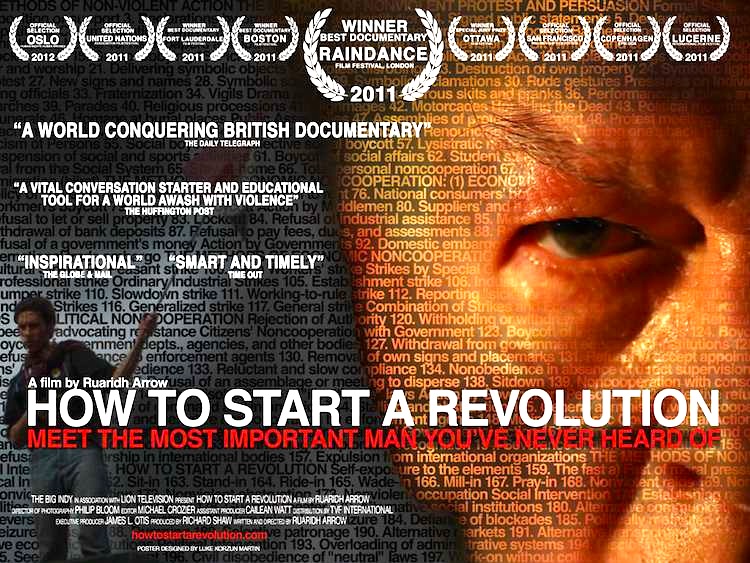
A Nonviolent but Dangerous Mind: LFM Reviews How to Start a Revolution

By Joe Bendel. Dr. Gene Sharp has been vilified by Hugo Chavez, the Iranian government, and bizarrely, the Occupy Oakland blog. Whatever such a man has to say is worth listening to, unless of course you are trying to protect the ruling party. In contrast, Dr. Sharp always sides with the revolutionaries, but advocates strictly nonviolent tactics. Journalist-filmmaker Ruaridh Arrow, who reported from Tahrir Square for the BBC, profiles Sharp and documents the applications of his work in How to Start a Revolution, which opens this Friday in Brooklyn at the ReRun Gastropub theater.

Dr. Sharp literally wrote the book on nonviolent revolution. It is called From Dictatorship to Democracy and it is available as a free download from the Albert Einstein Institute he heads. If you ever wondered why so many protests around the globe have signs written in English, it is because Dr. Sharp recommends it. He has a lot of general tactical advice, but eschewing violence is the essential point.

Nonviolence might sound hippy-dippy, but Dr. Sharp comes across as a rather down-to-earth nonpartisan scholar. He has just as readily advised democracy advocates struggling under leftist dictatorships – such as in Venezuela, Burma, Georgia, and Ukraine – as regimes considered friendly to American interests, like Mubarak’s Egypt. Despite the canard that he is a CIA puppet, his independence seems pretty evident, based on the Egyptian and Syrian activists who pay homage to Sharp in the Institute’s shoebox offices.

Arrow lucidly lays out Dr. Sharp’s principles and how various democracy movements have put them into practice. However, the results seem like more of a mixed bag than he would like to admit. In fact, Dr. Sharp’s celebrated volume was originally written for the Burmese, who have yet to shake off their military oligarchy, despite the enormous personal price nonviolently born by Aung San Suu Kyi. While applauding their courage, Dr. Sharp also argues the Tiananmen Square protests lacked proper planning and direction. They certainly were not able to co-opt the police and military, which is a crucial step in his playbook. As for Egypt, the jury is still out, but they seem to have traded a corruptocracy for military rule (if they are lucky, that is).

Probably the strongest material in Arrow’s film logically involves the greatest success: Serbia’s ouster of Slobodan Milošević. Trained in Dr. Sharp’s methods by his unlikely protégé, retired Col. Bob Helvey (who is as colorful an interview subject as ever there was), the opposition youth movement Otpor did everything right. It is a fascinating and inspiring story that remains woefully under-reported in this country.

HTSAR to will not spur wholesale conversions to pacifism. However, it will likely challenge and broaden the way people think about the continuing struggle for freedom and constitutional democracy around the world. Indeed, it is rare that a film offers so much to engage with. Unusually provocative and intellectually rigorous, HTSAR is (surprisingly) recommended quite keenly when it opens this Friday (2/24) at the ReRun Gastropub Theater.

GRADE: B+

Posted on February 24th, 2012 at 3:30pm.

Burma from the Inside: LFM Reviews They Call It Myanmar

By Joe Bendel. Even the Buddhist monks are fed up with Burma’s oppressive military regime. A deeply devout nation, the Burmese people were shocked when the army fired on their peaceful demonstrations. Yet, the junta still rules. Physics professor, novelist, and independent filmmaker Robert H. Lieberman explores the tragic dynamics of the Southeast Asian country from a layman’s point of view in They Call It Myanmar: Lifting the Curtain, which screens for two nights only this coming Monday and Tuesday in New York.

Perhaps because of the wide variety of professional hats Lieberman wears, he was recruited to participate in a State Department sponsored filmmaker mentoring program. Having gained entrée into the “second most isolated country on the planet,” Lieberman recognized what an unusual opportunity he had. Over the next two years, Lieberman furtively filmed the people and their customs, keeping his eyes peeled for anything that might shed light on the nation’s political and social realities. He even scored an on-camera sit-down interview with the recently released Aung San Suu Kyi.

Culled from hours of footage, Call mixes sort of National Geographic-style appreciations of Burma/Myanmar’s stunning temples and their distinctive application of thanaka facial paste for cooling and cosmetic purposes via handheld camcorder, with legitimate muckraking. Indeed, at not insignificant personal risk, Lieberman conveys a real sense of the fear and paranoia fostered by the military police state. Yet, perhaps even more shocking are the truly Sisyphean hand-to-mouth living conditions endured by the overwhelming majority of Burmese, vividly documented in Call.

For obvious reasons, Lieberman scrupulously maintains the anonymity of his interview subjects. Their commentary is consistently illuminating and more often than not depressing, suggesting the regime’s pervasive oppression has even affected the populace’s psychological ability to think as political free agents. Still, for true profundity, it is hard to top Suu Kyi’s parting words: “politicians who think they’ve gone beyond being politicians are very dangerous.” Someone should carve that in marble where the current and future occupants of the Oval Office will see it every day.

There is nothing more frustrating than an ostensibly independent filmmaker producing a puff piece in a notorious closed society (as was the case with Justine Shapiro’s whitewashed Our Summer in Tehran, for instance). To his credit, Lieberman chose to take the tougher path. The result is a solid, boots-on-the-ground overview of contemporary Burma, periodically spiked with moments of shocking outrage. Interested viewers who find it a good general introduction can then fill in the details with more specific case studies, like HBO2’s Burma Soldier and Luc Besson’s upcoming Suu Kyi biopic The Lady. Recommended for general audiences, They Call It Myanmar screens Monday and Tuesday (2/27 & 2/28) at New York’s Landmark Sunshine, with similar two-evening Landmark engagements to follow in Philadelphia, DC, and Boston.

GRADE: B

Posted on February 24th, 2012 at 3:29pm.

LFM’s Govindini Murty in The Atlantic: From Méliès to Montparnasse, a Cultural Cheat Sheet for Hugo

[Editor’s Note: The article below and its accompanying slideshow appears in its entirety today at The Atlantic.]

Decoding the many references to film history in Martin Scorsese’s Oscar-nominated movie

By Govindini Murty. Martin Scorsese’s delightful children’s film Hugo is currently nominated for eleven Oscars, the most of any film of 2011. And in a year of movies like The Artist and Midnight in Paris that pay homage to early 20th century film and cultural history, Hugo might be the most complex cinematic homage of them all.

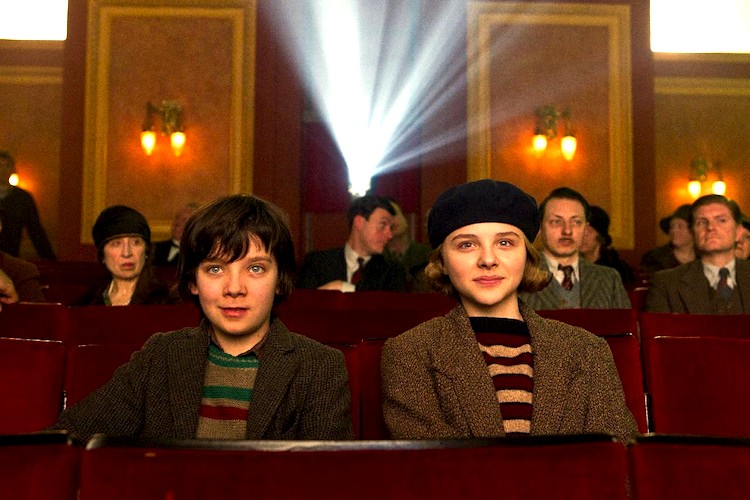
Based on the children’s book The Invention of Hugo Cabret by Brian Selznick, Hugo tells the story of an orphaned boy who lives in the walls of a train station in 1931 Paris. Young Hugo (Asa Butterfield) maintains the station’s clocks and tries to repair a mysterious automaton left to him by his late father, a clock maker. While doing so, Hugo encounters an old man who sells toys in the station, Papa Georges (Ben Kingsley), and his precocious step-daughter Isabelle (Chloë Grace Moretz). Hugo and Isabelle team up to find the secret of the automaton, discovering along the way that Papa Georges is none other than Georges Méliès, the legendary turn of the century filmmaker known for such fantasy films as A Trip to the Moon (1902).

Scorsese uses the stunning 3D cinematography of Hugo much like a palimpsest, layering multiple levels of historical, cinematic, and intellectual history in each scene. Hugo references everyone from Jules Verne, Django Reinhardt, and the robot C-3PO to classic silent movies like Douglas Fairbanks’s The Thief of Bagdad, Robert Wiene’s The Cabinet of Dr. Caligari, and Harold Lloyd’s Safety Last. Scorsese has even said that he considers the 3D in Hugo as a cinematic form of Cubism.

This cultural guide will help to decode the wealth of allusions in Hugo, making for a crash course in film, art, and literary history:

Maria from "Metropolis," C-3PO from "Star Wars."

Mysterious Automata

Hugo’s central mystery revolves around the automaton left to Hugo by his late father. The eerie metallic figure recalls such classic automata as the Machine-Man in Fritz Lang’s 1927 sci-fi epic Metropolis and C-3PO in Star Wars. According to Hugo author Brian Selznick, the inspiration for Hugo’s automaton came from an 1805 writing automaton created by Swiss clockmaker Henri Maillerdet, currently in the Franklin Institute in Philadelphia, as well from the 18th century Jaquet-Droz writing automata in Neuchâtel, Switzerland. Animated figures go back to the Renaissance, when mechanical humans and animals would appear out of clock faces to mark the time. Automata were also popular in Hellenistic Alexandria, where automated figures were used in mechanical puppet theaters and in temples to provide oracles.

In Hugo, the automaton possesses a dual quality—both ominous and marvelous. This reflects the ambiguous feelings that people have toward humanoid automata—seeing them either as frightening doppelgangers (as in Metropolis) or as magical helpers (as in Star Wars). The scene where Hugo dreams that he turns into the automaton reinforces this ambiguity and dramatizes a common fear of dehumanization in the machine age.

[For the rest of the article and the accompanying slideshow, please visit The Atlantic.]

Posted on February 22nd, 2012 at 8:16am.

The Aussie ‘Red Dawn’: LFM Reviews Tomorrow, When the War Began

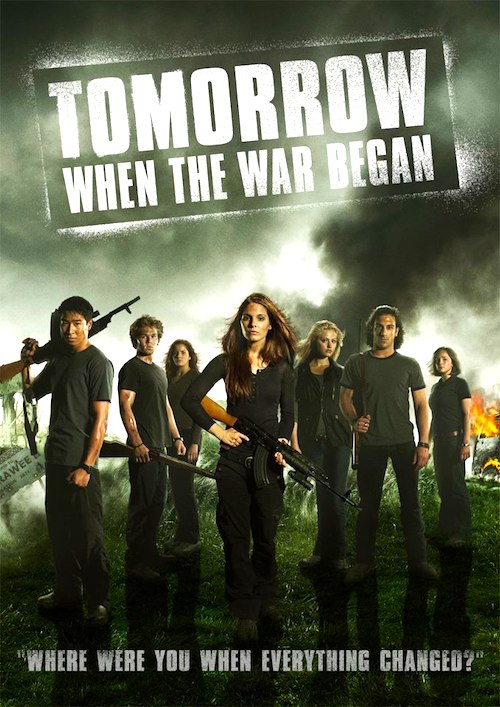
By Joe Bendel. The freedom of Australia depends on a handful of teenagers. Fortunately, they are mostly quite good looking. That means they have even more to lose and will therefore be fiercer fighters. A rag tag band of students duly unleash their inner Wolverines in Stuart Beattie’s Tomorrow When the War Began, which opens this Friday in select cities and streams on demand via Freestyle Digital Media’s Facebook platform.

The time is twenty-for hours from now. The place is coastal New South Wales. It is a nice area to grow up and raise a family. At least it was until a foreign military invaded. Ellie Linton and her friends do not know that yet. They have been camping out in a remote mountain clearing misnamed “Hell.” When they return, cell service is out, the land lines are down, and their families are nowhere to be found.

Eventually, they discover the town’s fairground has been turned into a detention center by a vaguely Asian looking army. After a few narrow escapes and a considerable amount of bickering, they decide it is time to take the fight to their invaders – and that strategically positioned bridge looks like a good place to start.

Based on John Marsden’s bestselling Tomorrow series of YA novels, TWTWB obviously owes a debt to the original old school Red Dawn, but that’s okay. Considering how cool the classic Dawn remains, it is downright bizarre that it has not been emulated more often. Frankly, Beattie somewhat tarries in the first act, establishing full well and good just which teens like whom (Linton has a thing for the Lee Takkan, while the well heeled Fiona Maxwell fancies Homer Yannos, the slightly delinquent son of Greek immigrants).

Still, he juggles a lot of teen angst relatively nimbly. His adaptation also treats evangelical character Robyn Mathers with respect, even when presenting her reverence for life as a source of friction with her less conflicted friends. (Why not just throw some St. Thomas Aquinas books at her? Or better yet, throw them at the enemy.)

On one hand, the conspicuous effort taken to not identify the nationality of the invaders is somewhat problematic (one would think that would be valuable intel to suss out). Based on their rhetoric about natural resources and establishing stability in the Pacific region, China sounds like an obvious suspect. Yet it allows the film to effectively ratchet up the teens’ mood of what-the-heck-is-going-on bewilderment and perhaps sets the scene for big revelations in films to follow.

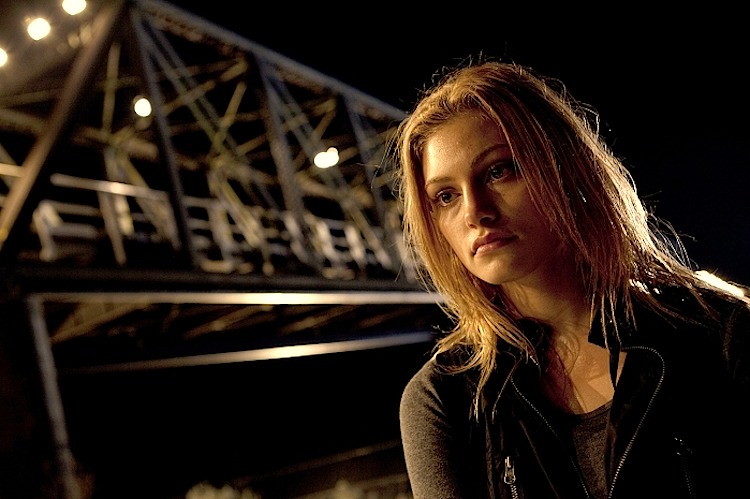
As Linton and Takkan, the more-or-less leads, Caitlin Stasey and Chris Pang are reasonably charismatic presences and wholly credible action figures. Phoebe “The Secret Circle” Tonkin is also surprisingly engaging as the Clueless-esque Maxwell, but Deniz Akdeniz’s Yannos seems to be looking for a Welcome Back Kotter reboot much of the time.

Phoebe Tonkin in "Tomorrow, When the War Began."

Once Linton and her comrades get organized and down to business, the film starts cooking nicely. It certainly sets up viewers, leaving us wanting more. Since TWTWB ranks as Australia’s highest grossing domestically produced release of 2010, more is indeed reportedly on the way. That is rather welcome news. TWTWB is certainly fun and professional grade popcorn fare that also seriously addresses themes of freedom, responsibility, and sacrifice. It is exactly the sort of film that could make a mint for Hollywood, but apparently they are content to leave such money on the table.

As is customary for most imports, TWTWB will only open in select cities this Friday (2/24) including the Criterion 7 in New Haven and the Palace 18 in Miami, but it will also be accessible to audiences nationwide, through Freestyle’s digital distribution on Facebook. Recommended as a non-taxing teen action picture with a good message and the promise of even better installments down the road, TWTWB is definitely worth checking out from the comfort of your own laptop.

Posted on February 21st, 2012 at 12:27pm.

French to the Core: LFM Reviews Mortem

Diana Rudychenko in "Mortem."

By Joe Bendel. Death never takes a holiday. When a young woman’s spectral companion manipulates her into stopping at a desolate hotel, it must be all business. However, things get more complicated than either expects in Eric Atlan’s trippy Mortem (trailer here), which screens during the 2012 edition of Film Comment Selects, hosted by the Film Society of Lincoln Center.

Jena and her fellow rider evidently enjoy feeling the wind in their hair as they motorcycle helmetless down lonely country roads. The fog, though, is a little too much – forcing them to stop at a truly gothic looking hotel. It seems the proprietors have been expecting them, or at least Jena’s companion, whom they can see, but she cannot, yet. It seems the uncanny woman has arranged to do some ominous business at their establishment, once the creepy staff leaves her to it.

Viewers soon learn Jena and the strange woman are profoundly connected – and once she reveals herself, it is supposed to be curtains for the mortal woman. To the surprise of her ghostly captor, however, Jena’s will to live proves quite strong. Much like the knight in The Seventh Seal (a head-smackingly obvious influence on Mortem), Jena shows great resourcefulness navigating the games and rituals of death. As the fateful night advances, the stakes increase for everyone.

Mortem is a very strange stylistic and tonal hodgepodge. The opening scenes play like high camp, but as it cranks up the metaphysics, it gets deadly serious. It is almost like David Lynch took over the helm of Gene Wilder’s Haunted Honeymoon after the first fifteen minutes. Fortunately though, this is no Lost Highway. Atlan actually wants viewers to follow his story, which seems to follow its internal rules well enough once established.

Panchenko Daria and Diana Rudychenko in "Morem."

It will still baffle the lowest common denominator, but at least Atlan offers them some steamy distractions. As it happens, Jena’s mysterious tormentor likes her a lot, which gives her a weakness to exploit. Indeed, for a surreal and cerebral genre movie mash-up, Mortem is rather hot.

Atlan and Marc Bercovitz, the co-producer and co-composer of the deliberately overbearing Bernard Hermann-on-steroids score, were clearly not concerned about going too far over the top with Mortem. In a way, though, that is rather refreshing. It has been a while since a film has really gone for broke, but this one certainly does.

Panchenko Daria and Diana Rudychenko are, yes, attractive – but also pretty compelling as the supernatural chess players. While their characters could easily be reduced to archetypal cut-outs, they suggest each has a real emotional investment in the face-off.

Gorgeously shot by the director-cinematographer in moody black-and-white, Mortem has all kinds of noir going on. No doubt about it, this is a weird film, but mostly in a good way. Frankly, considering how atmospheric and narrative-driven Mortem is (not to mention the other attention-generating aspects), it is surprising it has not been snapped up by an American boutique distributor yet. Recommended for genre audiences looking for something new, Mortem screens again this Tuesday afternoon (2/21) at the Walter Reade Theater, as part of this year’s Film Comment Selects.

Posted on February 21st, 2012 at 12:26pm.

Islamist Persecution of Baha’i Followers: LFM Reviews Iranian Taboo

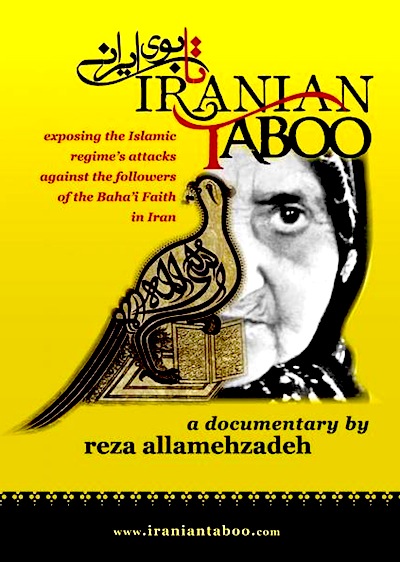
By Joe Bendel. For some, Dizzy Gillespie’s conversion is they know about the Baha’i Faith. Many believe it to be a denomination of Islam, but that is a misconception. However, it was founded within the Islamic world, which makes its very existence an act of apostasy to hardline Islamists. As a result, Baha’i followers have often been persecuted in Islamic countries, most particularly Iran. Iranian-Dutch expatriate filmmaker Reza Allamehzadeh exposes Iran’s long and progressively escalating oppression of its Baha’i religious minority in Iranian Taboo (trailer here), which opens this Friday in the Los Angeles area.

Taboo may not be the most refined looking documentary, because so much of its footage was crudely recorded and surreptitiously smuggled out of Iran. Ironically, getting out of Iran is relatively easy for Baha’i followers. Living there in peace is another matter entirely. Taboo tracks one unfortunate family on their involuntary immigration to a less than welcoming Turkey.

Incorporating their video diary with the testimony of other Iranian followers, Allamehzadeh compiles a compelling indictment of the Iranian religious and governmental authorities. Perhaps most eye-opening is the story of the Baha’i Institute for Higher Education (BIHE), an underground university founded to serve followers who were denied college admittance solely on the basis of their religion. Internationally recognized, it probably maintained higher standards than Iran’s officially sanctioned universities, until the government forcibly shut it down late last year.

Openly critical of the Islamist regime, Allamehzadeh was not allowed back into Iran, so he relied on a courageous network of professional and amateur filmmakers, who remain anonymous for obvious reasons. At one point, though, he offers up some kneejerk criticism of Israel that might depress more informed viewers. Yet, this criticism makes it difficult to dismiss him as a “Zionist agent.”

In fact, he makes a similar point, arguing that the Israeli-“Palestinian” issue he buys into has nothing to do with the repression of innocent Iranian Baha’i followers, especially those who found themselves absurdly accused of spying for the Mossad, the CIA, or whomever. Still, it is worth noting, as home to the Baha’i World Centre in Haifa, Israel’s tolerance and hospitality stands in marked contrast to the institutionalized discrimination of her neighbors. After all, Allamehzadeh was obviously allowed to freely film there.

Indeed, Taboo vividly illustrates the orchestrated thuggery and systemic prejudice endured by Iranian followers on a daily basis. Though it leans a bit heavily on talking heads during the closing segments, it is overall quite informative and authoritative. Shining a needed spotlight into a hidden corner of contemporary Iran, Taboo is a sobering film, well worthy of audience and media attention when it opens this Friday (2/24) at the Laemmle Music Hall 3 in Beverly Hills and March 13th for a three day engagement at the Landmark Shattuck in Berkeley.

Posted on February 21st, 2012 at 12:24pm.