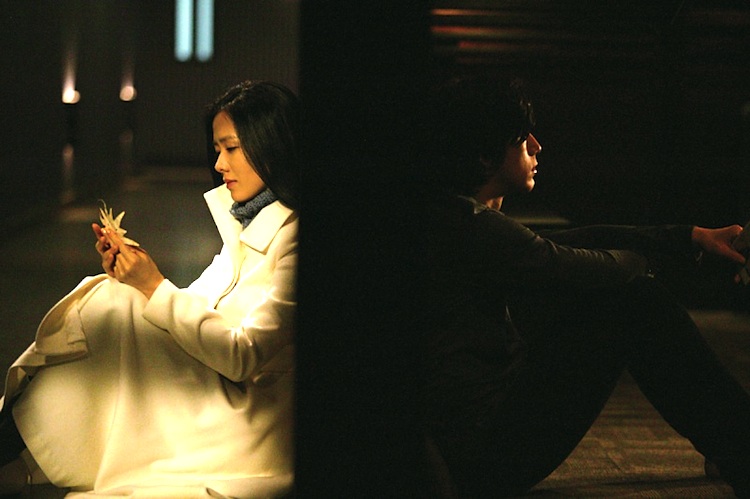
By Joe Bendel. The setting is Seattle and the lead actress is Chinese, but it is based on a classic 1961 Korean film. Yet, this is a universal story that might remind viewers of films like Brief Encounter and Before Sunrise. Two not-lovers’ abbreviated relationship will be ambiguous but deeply meaningful in Kim Tae-yong’s Late Autumn (trailer here), which screened at the recently wrapped 2012 New York Korean Film Festival.
Kim’s Late Autumn and Lee Man-hee’s before it should not be confused with Yasujiro Ozu’s classic film of them same name. Still, they are similarly distinguished by their wistful tone and humanistic sympathy for their flawed characters. Anna is serving a seven year prison term for killing her abusive husband. Released on a seventy-two hour furlough for her mother’s funeral, she shares a long bus ride with the caddish Hoon. Initially, the “escort” thinks she might be a soft touch, but she is not impressed with his act. Ironically, she is the one who makes an impression on him.
Stifled by the awkwardness of her homecoming, Anna prefers the solitude of walking through Seattle’s historic downtown area, but her path keeps crossing Hoon’s. As they spend guarded time together, something develops between them. Yet, whatever it is cannot last, which is the delicate beauty of the film.
Yes, we have been told before, time is fleeting. Yet it is quite exquisitely expressed in Autumn. However, Kim’s film has a dark side unlike the David Lean classic or a host of sentimental copycats. In addition to Anna’s tragic past, Hoon is running away from something rather ugly. Time may or may not be quite fleeting indeed.
Tang Wei is achingly vulnerable as Anna, showing a remarkable range of emotions while maintaining her frozen façade. Best known for her breakout turn in Ang Lee’s erotically charged Lust, Caution, she was to have appeared in the Chinese Communist Party creation myth propaganda film The Founding of a Party, but reportedly Mao’s grandson had her scenes cut for reasons of ideological philistinism. It is not much of a recommendation for Founding, but another good reason to keep an eye out for Autumn. Tang is a beautiful and remarkably talented actress, who has worked in Chinese cinema since the Founding debacle. Hopefully Korean and American productions will continue to be an option for her as she contends with the Party’s institutionalized dogma.
A true multinational South Korean-American-Chinese-HK coproduction, Late Autumn is an elegantly simple story, even if its funding is head-spinningly complex. Heart-felt and emotionally mature, it is an assured work highly recommended for those who missed its opening night screening at the tenth annual NYKFF. After a double-secret theatrical release, it seems like a strong programming candidate for one of the Asian film showcases in New York.
By Joe Bendel. So many little Chinese girls could have used a fairy god-mother. Young Mei Mei only has an ancient matchmaker to counter-balance her rotten step-mother. Though not magical, the old woman certainly has ambitious plans for her. Based on the Chinese legend of Ye Xian that predates Perrault’s Cinderella by about 800 years, Richard Bowen’s Chinese-produced English-dubbed Cinderella Moon has obvious relevance for China today, but should still charm little girls of any cultural background when it screens at the 2012 New York International Film Festival.
Little Mei Mei is a gifted potter, like her mother, her father’s younger second wife. When Mei Mei’s mother dies in child birth and her spiritually ailing father soon follows, she finds herself the de facto servant of her cruel step-mother and idiot step-sister. However, she takes comfort from her mother’s legacy: a pair of bejeweled gold-fish slippers and the promise of a special destiny.
Mei Mei hopes to follow in her mother’s footsteps, finding a love match by dancing in the village festival. Unfortunately, the moon is stuck in the sky, putting life on hold for the kingdom. It also puts pressure on the young defiant king, who is responsible for keeping the heavens in equilibrium.
Xiao Min as Mei Mei at age fifteen.
Moon is surprisingly rich in archetypes, mixing Fisher King mythology with universal Cinderella motifs. In fact, the celestial themes raise the stakes of the story considerably. However, the core of the film involves Mei Mei’s struggle to find her place in a world that essentially treats girls like chattel. Indeed, the parallels with One-Child China, where girls are all too frequently the victim of abandonment and sex-selection abortions, are difficult to overlook. Young Mei Mei is sweet-tempered and vulnerable, but to her credit she refuses to accept the chauvinism around her.
Thanks to the two highly expressive Mei Mei’s, Xiao Min at age fifteen and Yang Zhicheng at five, viewers will feel a strong emotional connection to the young protagonist. Under Bowen’s sensitive direction, they convey a sense of wonder perfectly suited to a fairy tale. Bowen and cinematographer Wang Yu also capture some breathtaking vistas shot on location in the Southwest Yunnan province.
Moon is a finely crafted period production, featuring some striking costumes designed by Laurence Xu. However, the disembodied-sounding dubbed voices will grate on the ears of cineastes. Still, it might be a necessary trade-off for the film to reach audiences of a certain age.
Of course, it is more important for Moon to reach Chinese audiences. Admirably, it is a mission Bowen takes seriously, having cofounded with his wife Jenny the Half the Sky Foundation, which provides support to Chinese orphans (mostly but not entirely girls like Mei Mei). Deeper and richer than most fairy tale films, Moon is highly recommended (for boys too) at this year’s NYICFF. It screens this Saturday (3/3) at Cantor, Saturday the 17th at the Asia Society, and Sunday the 25th at the IFC Center.
By Joe Bendel. Keigo Higashino’s Byakuyako is the hottest literary property you’ve never heard of. Within a five year span, a Japanese television miniseries and a feature film have dramatized Higashino’s tragic, decade-spanning mystery. In between the two productions, a Korean adaptation shifted the story to the ROK. Faithful to the source material, but radically different in tone from the subsequent Japanese version, Park Shin-woo’s White Night makes its North American debut tomorrow as the latest free screening sponsored by the Korean Cultural Service in New York.
Kim Yo-han’s father and Lee Jia’s mother were thought to be carrying on rather openly. When the senior Lee turns up murdered, she becomes the logical suspect. There are a lot of incriminating circumstances, but little hard evidence. When Lee’s mother apparently commits suicide, the case is conveniently closed. However, Detective Han Doong-soo cannot let it lay.
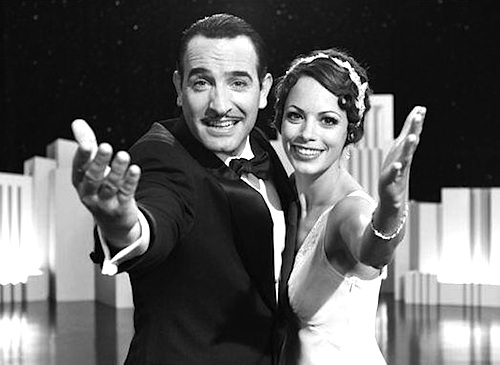
Son Ye-jin in "White Night."
Over the next two decades, the three go in seemingly disparate directions. Han’s career flatlines after the accidental death of his son. Conversely, Lee Jia overcomes the stigma of her infamous mother, with the help of a name change. Now known as Yoo Mi-ho, she is poised to marry a very wealthy man. Kim more or less disappears into anonymity, but he secretly acts as Lee/Yoo’s guardian angel. Anyone threatening her advancement will answer to him.
In both films, Higashino’s two lead characters really have a way of getting into your head. Yoshihiro Fukagawa’s Into the White Nightinvests more time up front on their traumatic childhood, which pays greater dividends later in the film. It also more fully explains the complex circumstances of the original crime. On the other hand, Park’s version plays up the sex and scandal, making it considerably more accessible to general audiences.
White Night features a strong ensemble, but Go Soo might just take the honors over his Japanese counterpart as the adult Kim Yo-han. It is an intense performance, viscerally projecting his pain and ferocity in equal measure. While her character is icier and less vulnerable here (by design), Son Ye-jin is undeniably a striking and rather nuanced femme fatale (much as she was in the stylistically similar Open City). Indeed, her limited screen time with (or near) Go Soo is powerfully potent stuff.
While Fukagawa’s Night is a tour de force among psychological thrillers, Park’s Night is still a devilishly twisted crime drama. It also happens to be playing in town for free, which cannot be said for either Japanese version this week. Highly recommended in its own right, Park’s White Night screens tomorrow (2/28) at the Tribeca Cinemas, courtesy of the Korean Cultural Service.
Libertas’ Jason Apuzzo, Govindini Murty & Joe Bendel participated in this year’s Indiewire critic survey for the Oscars & Indie Spirit Awards. The survey asks critics who will win the Oscars and the Indie Spirit Awards, and also who should win the Oscars and Indie Spirit Awards, based on the actual nominations.
To see the main Indiewire article covering the critics’ Oscar/Indie Spirit picks, see here.
Joe’s list should be up by later today. And if you want to see a list of Joe’s many reviews of Oscar/Indie Spirit-nominated films, visits Indiewire’s Criticwire page and click on ‘Joe Bendel,’ then scroll down his page.
Our thanks to Indiewire for inviting us to participate. The Indie Spirit Awards took place last night, and you can see a list of the winners here.
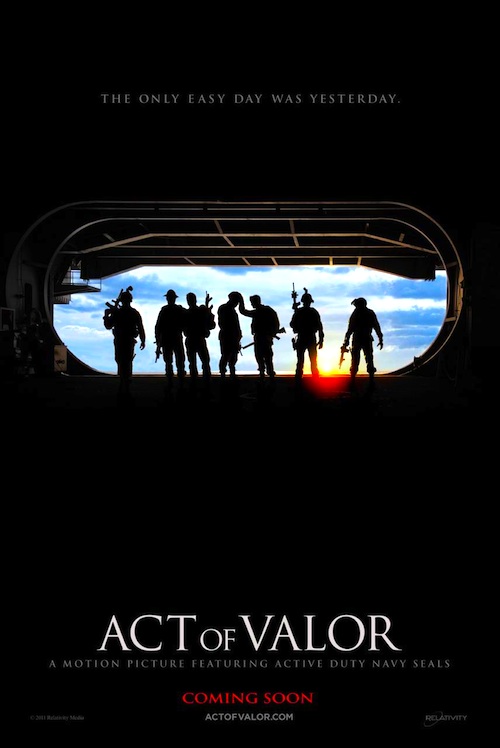
By Patricia Ducey. Act of Valor, a fine movie opening this weekend about the Navy SEALs, looks to crush its box office competitors, with Tyler Perry’s latest in second, and assorted rom-coms and thrillers trailing far, far behind.
Small wonder.
Valor’s non-stop action and gut-twisting suspense, based on real SEAL missions and starring present day SEALs, grabs us by the throat and doesn’t let go for nearly two hours. What makes Valor especially compelling throughout is its grounding in SEAL values like courage, patriotism, and family—their dedication to something bigger than themselves underpins all the action—supplying a much needed corrective to years of equivocal or downright ugly depictions of our military in Hollywood films. In Act of Valor our warriors stand tall as ever.
The action begins when jihadi mastermind Abu Shabal (Jason Cottle) detonates a bomb in a Philippine schoolyard, killing a U.S. ambassador, along with many other innocents, as he fetches his son from school. Soon after, a CIA agent (Nestor Serrano) is killed and his partner Morales (Roselyn Sanchez) is kidnapped from a Costa Rican apartment when their investigation of a drug smuggler named Christo goes awry. The savvy Christo showers the town with his largesse, thus ensuring their loyalty, and the townspeople out the operatives.
The SEALs are called in to recover Morales before it’s too late, and after a last get-together with their families, the Bandito Platoon are off to the jungle. They rescue Morales after a harrowing battle and recover intel that reveals Christo has teamed up with Shabal, who intends to smuggle suicide bombers into the U.S. And they will be wearing a new kind of weapon: ultra thin suicide vests with explosives made of ceramic that will sail through any metal detector and wreak unimaginable damage. If the bombers succeed at detonating at malls and stadiums, the casualties and the ensuing panic could destroy the U.S. economy. So the SEALs press on, crisscrossing the globe to stop the plot, mixing astonishing feats of skill and bravery with military technology unimaginable ten years ago. SEALs rendezvous with submarines; helos drop in boats and teams to inaccessible jungle rivers. It’s incredible stuff. Valor looks a little like 24 thanks to its screen graphics, and the action shifts from Costa Rica to the Ukraine and to the U.S., and from team to team. The cinematography and expert editing add to the heart-pumping suspense.
Yet this realistic film, which started as a recruiting short, has been criticized by some as ‘propaganda.’ Unfortunately, filmmakers today are between a rock and a hard place; if they conscientiously steer away from old, stereotypical racial tropes or political jingoism, that leaves them no alternative but to ‘stereotype’ whoever is left– and as Pogo said, “We have met the enemy and he is us.” Always us. Yet surely anti-military tropes have exhausted themselves; movies like Avatar and Redacted and even Hurt Locker posit a dystopian military culture as ‘the enemy,’ an enemy that the public largely does not buy into any more.
So where all this handwringing has left us is at the tedious notion of ‘balance,’ which requires that if one presents a positive image of the military, as Valor does, one is also required to add a negative one in order to achieve ‘balance’ – or else one is otherwise left with mere ‘propaganda.’ Yet realistically, how would this work out? In real life SEALs are so highly trained and vetted that it would prove a ridiculous stretch to ‘balance’ Act of Valor out with the usual stock neurotics or savages who so often appear in military films made by Hollywood.
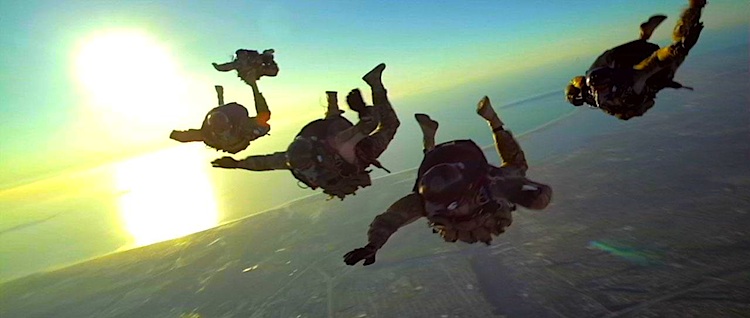
Navy SEALs flying in to save the day in "Act of Valor."
All of this narrative confusion and timidity often leaves critics cringing at movies with a pro-American point of view. But does anyone seriously question whether single-minded pursuit of terrorists is a bad thing, or that the SEALs’ success springs from a profound sense of patriotism? Surely these are unequivocal matters. And besides, ask our own president how he feels about the ‘nuances’ or ‘complexities’ of the missions he sends SEALs on.
The charge of ‘propaganda’ also implies that this movie is lying to us – but this charge fails, as well. You don’t believe a SEAL would fall on a grenade to save others? See Michael Monsoor. Chechen terrorists killing schoolchildren? Beslan. Amazing technology and team precision? The bin Laden raid.
The Navy has concealed nothing about their involvement in the movie (after all, they commissioned it) and acknowledged that they wanted a realistic version of their mostly secret missions out in the public to aid recruitment.
And the SEALs know better than we that the War on Terror has been a long 10 years.
Roselyn Sanchez in "Act of Valor."
The real life SEAL actors, who are identified only by their first names for security reasons, are put to good use. Many critics have assailed the SEALs’ acting here as ‘wooden,’ but I find their calm professionalism under fire more believable and fresh than the histrionics supplied by actors. In fact, it may even help; instead of thinking “I wonder if he’s stoned” while watching a Charlie Sheen or a Demi Moore chew up the scenery, we’re thinking “they’re the real deal!” (And ladies, these SEALs are awfully easy on the eyes.) In any case, this is an action film; an action movie foregrounds the, er, action, not the personal stories. Still, several scenes certainly stand up to the acting in a TV show or film; for example, I loved the “another day at the office” banter of the comrades-in-arms, and several scenes, like the Chief’s interrogation of the suspect Christo, were crisp and compelling. In any case, story and heart trump slick production values every time.
Finally, the voiceover by one of the SEALs that bookends the film explains how and why these SEALS bond to each and to their country so deeply, sentiments they don’t have time to reveal in the midst of battle. At the conclusion, the narrator reads a letter written by one SEAL to his son, to be read in the event of his death. He talks about what his own father taught him in an effort to guide his son to manhood, setting forth guiding principles should he not be there to remind him. I won’t spoil it for you, but his advice is eloquent and wise, something worth reading to any kid.
As the movie fades out, we see a roster of names, much too long, of SEALs who have made the ultimate sacrifice since 9/11. Yes, it has been a long ten years for our military men and women. Yet they continue to live and die for us, in the shadows until now, reminding us in the final Tacitus quote adopted by warriors for centuries: “In Valor There is Hope.” Now, that is hope we can believe in.
Posted on February 26th, 2012 at 12:38pm.
By Jason Apuzzo. Celebrities will invade Los Angeles this weekend for the 84th Academy Awards ceremony. Searchlights will blaze and flashbulbs will pop as Hollywood stars will descend from the heavens — or maybe just the Malibu hills — to touch the ground that regular Angelenos walk on each day.
They’ll smile and snarl our traffic. They’ll toss their hair and forget to thank their husbands. They’ll praise each other for their bravery, while collecting $75,000 gift bags.
L.A. is accustomed to such strange invasions, of course. If you’re a movie fan, you already know that L.A. has been invaded over the years by everything from giant atomic ants (Them), to buff cyborgs (The Terminator), to rampaging 3D zombies (Resident Evil: Afterlife). So Angelenos take invasions from movie stars in stride.
But this weekend marks an anniversary of an invasion you might not know about: L.A.’s first alien invasion.
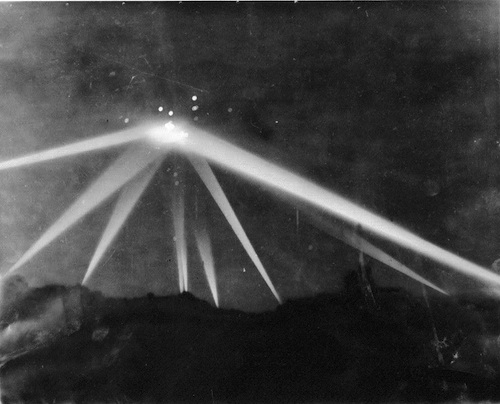
A surviving image from The Battle of Los Angeles.
This February 24th-25th is the 70th anniversary of The Battle of Los Angeles, also known as The Great Los Angeles Air Raid, one of the most mysterious incidents of World War II — and also one of the key, oddball events in U.F.O. lore that’s still inspiring movies and TV shows to this day.
Between the late evening of February 24th, 1942 and the early morning hours of February 25th, the City of Angels flew into a panic as what were initially believed to be Japanese enemy aircraft were spotted over the city. This suspected Japanese raid — coming soon after the Pearl Harbor bombing, and just one day after a confirmed Japanese submarine attack off the Santa Barbara coast — touched off a massive barrage of anti-aircraft fire, with some 1400 shells shot into the skies over Los Angeles during the frantic evening.
Oddly, however, the anti-aircraft shells hit nothing. Despite the intense barrage, no aircraft wreckage was ever recovered.
Indeed, once the smoke had cleared and Angelenos calmed down (the public hysteria over the raid was mercilessly satirized by Steven Spielberg in 1941), no one really knew what had been seen in the sky or on radar. Were they weather balloons? German Zeppelins? Trick kites designed by Orson Welles?
Many people believed the aircraft they’d seen were extraterrestrial – one eyewitness even described an object he’d seen as looking like an enormous flying ‘lozenge’ – and some accused the government of a cover-up. Conflicting accounts of the incident from the Navy and War Departments didn’t help clarify matters.
As if to confirm public fears of extraterrestrial attack, one famous photograph emerged (see above) from the incident showing an ominous, saucer-like object hovering over the city. This much-debated photograph, which even appeared in some trailers for Battle: Los Angeles last year, inspired America’s first major U.F.O. controversy — a full five years before Roswell.
To this day, no one knows for sure what flew over Los Angeles that night and evaded the city’s air defenses. (The raid itself is recreated each year at Fort MacArthur in San Pedro.) But since it’s more fun to assume that it was aliens than weather balloons, we’ve decided to honor The Battle of Los Angeles by ranking the Top 10 movies in which aliens attack L.A. (See below.)
To make this list, a film must feature aliens on the warpath — no cuddly E.T.’s here — and their attacks must take place in L.A. proper, rather than out in the suburbs or desert (eliminating films like Invasion of the Body Snatchers).
As the list demonstrates, no city — other than perhaps Tokyo — has suffered more on-screen calamity at the hands of extraterrestrials than Los Angeles. At the same time, there’s no apparently no other city that’s easier for aliens to hide in.
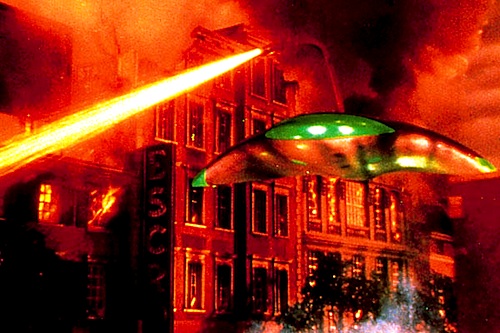
From George Pal's "War of the Worlds."
1) The War of the Worlds (1953)
Producer George Pal’s adaptation of the H.G. Wells’ novel is the granddaddy of ’em all, and still the best L.A.-based film about alien attack. Gene Barry plays Dr. Clayton Forrester, a natty scientist at ‘Pacific Tech,’ who along with his girlfriend Sylvia van Buren (a perky USC coed, played by Ann Robinson) struggles to prevent Martian invaders from destroying human civilization. Highlights of the film include a boffo attack on downtown L.A. (which Pal initially wanted to film in 3D) by the graceful, swan-like Martian ships, and an Air Force flying wing dropping a nuclear bomb on the Martians. Filmed in vivid Technicolor, The War of the Worlds was a huge hit, broke new ground in visual effects technology, and helped kick off the 1950s sci-fi craze.
Best exchange of the film: “What do we say to them [the aliens]?” “Welcome to California.”
2) Independence Day (1996)
Director Roland Emmerich’s funny, exhilarating and patriotic summer hit from 1996 borrows key elements from The War of the Worlds, but adds a few of its own: 15-mile-wide flying saucers, a president who flies fighter jets … and Will Smith. In the role that made him a megastar, Smith plays a trash-talking Marine fighter pilot paired with an MIT-trained computer wiz (played by Jeff Goldblum, channeling Gene Barry) who fights an alien saucer armada out to demolish humanity. ID4 is easily the best of Emmerich’s apocalyptic films, largely due to its tongue-in-cheek humor. Watch as ditzy Angelenos atop the Library Tower cheerfully greet an alien saucer, only to be zapped into oblivion a moment later. Only in L.A.
Best line of the film: “Welcome to Earth.”
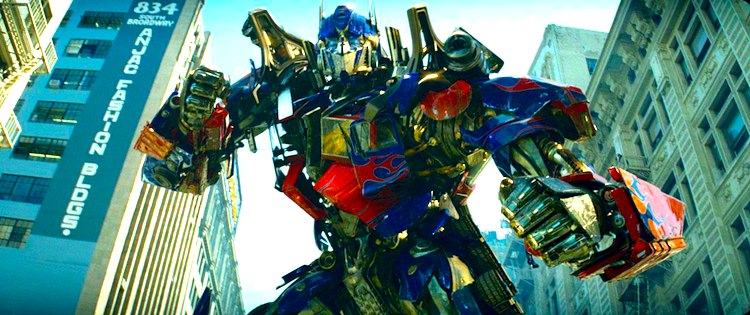
3) Transformers (2007)
There’s mayhem, and then there’s Bayhem. Michael Bay’s Transformers redefined sci-fi action cinema in 2007, featuring a spectacular climax in downtown Los Angeles — a riot of colossal urban warfare and aerial strikes as the U.S. military and Autobot robots unite to fight Decepticon robots out to enslave Earth. A key sequence showcased Autobots and Decepticons ‘transforming’ at 80 mph on a busy L.A. freeway, swatting aside cars and buses while fighting each other — living out the fantasy of every aggressive L.A. driver. Unlike the stately saucers of ID4, or the graceful war machines of War of the Worlds, Bay’s Decepticon robots are fast-moving, anthropomorphic and nasty. Like certain Hollywood celebrities, they trash talk, strut and propagandize as they smash through buildings and otherwise inflict as much collateral damage as possible. The film that made stars out of Shia LaBeouf and Megan Fox, Transformers delivers heaping doses of humor, curvy women and robot carnage; it’s Bayhem at its best.
Best line: “You didn’t think that the United States military might need to know that you’re keeping a hostile alien robot frozen in the basement?!”
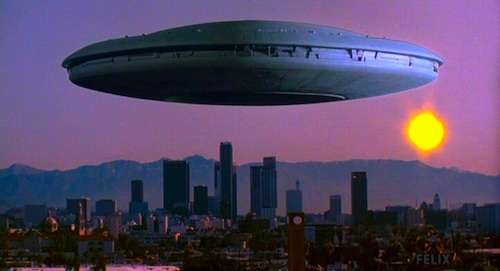
From the NBC miniseries "V" (1983).
4) V (1983)
These alien ‘Visitors’ look just like us, and they come in peace … except that underneath their false skins they’re actually lizards and want to eat us. That’s the premise of Kenneth Johnson’s apocalyptic NBC miniseries from 1983, a show that leans heavily on references to Nazism, communism and other pernicious forms of group-behavior. V is also the show that first gave us gigantic motherships hovering over major cities, years before ID4. The best part of V, however, is the scene-chewing performance by Jane Badler as the alien leader Diana; somebody should put that woman in charge of GM. Otherwise, in V the human resistance movement against the aliens centers around Los Angeles — possibly because it’s hard to cop a tan while saucers are blocking the sun.
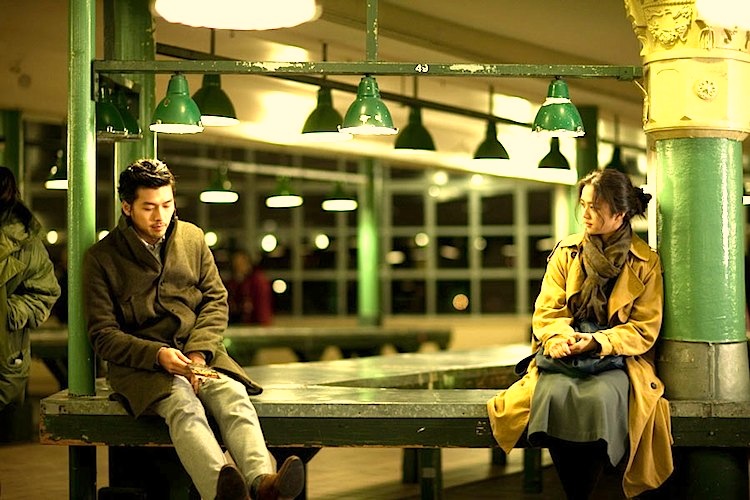
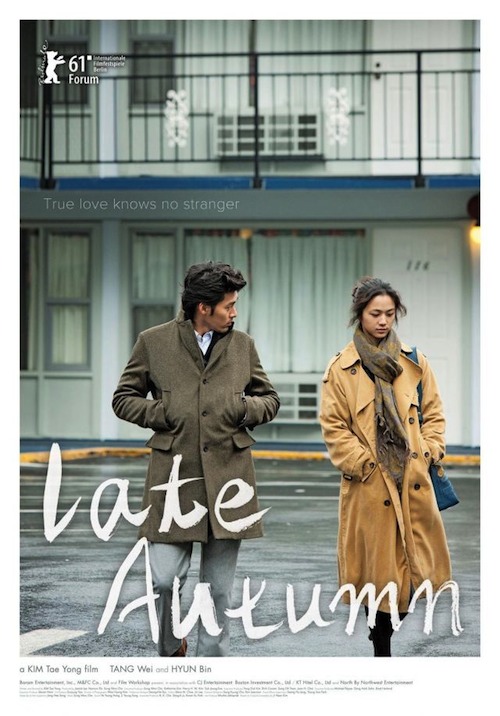 Stifled by the awkwardness of her homecoming, Anna prefers the solitude of walking through Seattle’s historic downtown area, but her path keeps crossing Hoon’s. As they spend guarded time together, something develops between them. Yet, whatever it is cannot last, which is the delicate beauty of the film.