Sundance 2012: LFM Reviews Bestiaire

By Joe Bendel. Zoos, farms, and taxidermy shops are good places for gawking at animals. French Canadian filmmaker Denis Côté essentially invites viewers to do precisely that. Supposedly, the clever part is that the animals will gawk back. However, they do not seem particularly interested in holding up their end throughout his non-narrative documentary Bestiaire, which screened as a New Frontier selection of the 2012 Sundance Film Festival.

Côté’s title is derived from the medieval bestiaries, which evoke images of lavish illustrations on gilt-edged illuminated pages. He takes rather the opposite approach, de-emphasizing the exoticism of the animals, focusing instead on the drabness of their surroundings. Unlike recent animal documentaries, such as the Jouberts’ Last Lions, Nick Stringer’s Turtle: the Incredible Journey, and even Nicholas Philibert’s Nenette (a film much closer akin to Bestiaire in terms of tone), Côté discourages attempts to impose individual personalities on the animals by framing them from off-kilter perspectives and completely eschewing mood-setting soundtrack music.

A considerable portion of Bestiaire was shot at Quebec’s Parc Safari, whose animal handlers are likely to stoke the zeal of anti-zoo protestors with their dispassionate professionalism. Indeed, Bestiaire could almost be considered an expose for people who really need films to be about something. Regardless, less adventurous viewers will be decidedly uncomfortable during the sort-of observational doc.
If you want to learn something about the process of taxidermy, Bestiaire eventually delivers the goods. On the other hand, if you want to get to know some of the beasts, Côté will deliberately undercut any such attempts. There is no question the filmmaker accomplishes exactly what he set out to do. Yet it remains wholly fair to ask “so what?” Probably more interesting as a concept than as a viewing experience, Bestiaire was definitely for the New Frontier track die-hards at this year’s Sundance Film Festival.

SUNDANCE GRADE: C

Posted on January 30th, 2012 at 12:18pm.
Slamdance 2012: LFM Reviews The First Season

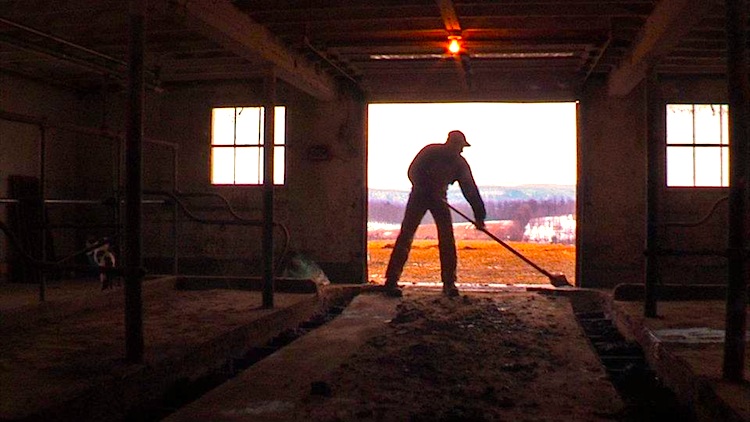
By Joe Bendel. There are far easier ways to go broke than opening a dairy farm from near scratch. However, if they work like dogs, Paul and Phyllis Van Amburgh might eventually break even. The ups and downs of their agricultural start-up are documented in Rudd Simmons’ The First Season, which screened during the recently wrapped 2012 Slamdance Film Festival in Park City.

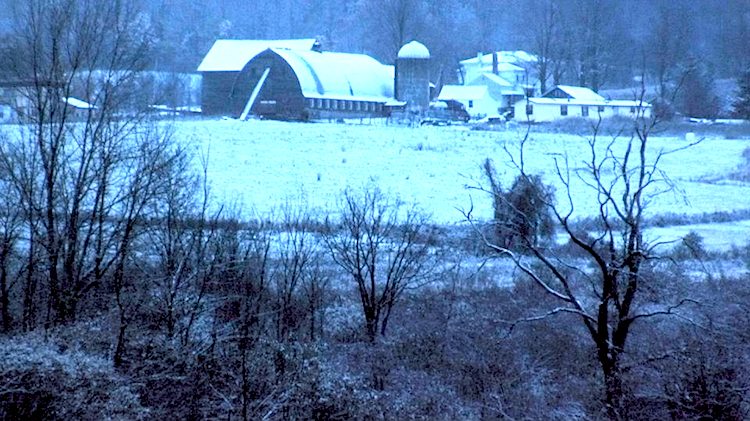
The Van Amburghs’ new/old farm looks like it could have been painted by Andrew Wyeth, but as viewers watch the expensive refurbishing process, it is hard not to think there must be a reason the previous owners stopped farming there. Though hardly expecting to make a fortune, the Van Amburghs are still a bit surprised at how much it will all cost and how slim their margins will be.

Season will teach the audience quite a bit about modern dairy farming practices. One might come to suspect this is an industry that requires economies of scale as a result. Nonetheless, viewers have to root for the neophyte farmers as they grind away. They are hardly city-slickers bumbling about on their pretend farm. Instead, they appear to understand the process quite well and appear to be physically and temperamentally suited to such a life.

Indeed, the Van Amburghs should appeal to a wide spectrum of viewers. Their new venture partly reflects their desire to go back to nature, and a preference for reasonably pure, locally grown crops. However, they are also deeply family oriented and have relentless work ethics. If they were not already, they are now fiscal conservatives as well, at least in practice.

Clearly, Simmons (whose producer credits include Boardwalk Empire and Dead Man Walking) had constant access to the Van Amburghs. Yet, despite the mounting bills and taxes, the Van Amburghs never come across as whiny or resentful, which certainly helps maintain viewer sympathy. He also vividly captures a sense of the stark loneliness of their upstate New York farm and the surrounding environment.

Viewers who want to see a film about herd animals will find the Van Amburghs’ cows far more engaging than the beasts in Denis Côté’s Bestiary, which screened at the other Park City festival. For idealists, the Van Amburghs are also rather refreshingly no-nonsense people. While their film will probably dissuade others from following in their footsteps, audiences will certainly wish them the best. Considerably more involving than one might expect, First Season is well worth catching as it makes the festival rounds, having started strong at the 2012 Slamdance Film Festival, right on scenic Main Street.

Posted on January 30th, 2012 at 11:58am.

Sundance 2012: LFM Reviews The Return

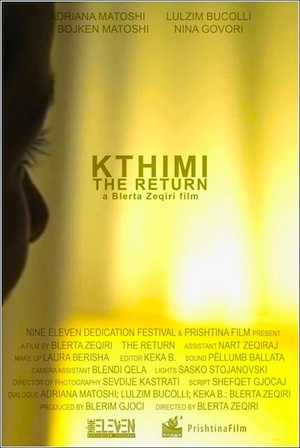
By Joe Bendel. He is like a Kosovar Sommersby, except he is completely legitimate. That does not make the long-held prisoner of war’s homecoming any easier though in Blerta Zeqiri’s The Return (trailer here), the winner of the Jury Prize for Short Film International Fiction at the 2012 Sundance Film Festival.

The man has been missing for four years, one of the many who disappeared during the dirty war. Suddenly released by his Serbian captors, he reunites with his wife and still relatively young son. It is awkward, even before she recounts her harrowing wartime experiences on the homefront.

Frankly, Return is more compelling before it delves into its truly heavy revelations. As the wife and mother, Adriana Matoshi vividly portrays the inappropriate emotional responses born of nervousness and confusion. There is something very honest and raw about her early scenes with Lulzim Bucolli’s shell-shocked ex-POW, as they tentatively reacquaint themselves.

Dedicated “to the missing and the victims of war crimes,” Return is not necessarily an optimistic film, but it is a forgiving one, granting allowances for the couple’s unfortunate responses and thoughtless remarks. It perhaps implies a degree of hope, but justice clearly remains unfulfilled.

Sensitively shot by Sevdije Kastrati, Return has a soft warm glow. Zeqiri also smartly avoids overt manipulation, despite the intimacy of her focus. Respectfully recommended, it screened yesterday (1/29) in Park City as part of a program of award winning short films at this year’s Sundance Film Festival.

Posted on January 30th, 2012 at 11:40am.

Sundance 2012: LFM Reviews V/H/S

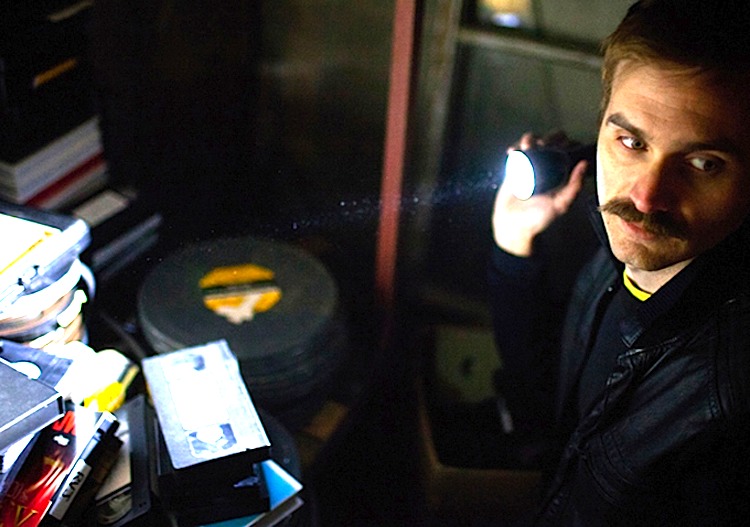
By Joe Bendel. Pretty soon, VHS tapes will be nothing more than odd curios. A group of lowlife thugs is out to steal one that is particularly collectible. Supposedly, they will know it when they see it. If that sounds ominous, it should, because they are about to stumble across some deeply disturbing found videos in the anthology horror film V/H/S, which has generated monster viral buzz at the 2012 Sundance Film Festival.

Adam Wingard’s framing device characters are an ugly lot, who enjoy videotaping their violent crimes. Upon breaking into their target home, they find the owner long dead amid a pile of sketchy looking VHS tapes. Each one they screen tells a twisted tale.

David Bruckner’s opening Amateur Night follows a trio of unenlightened young men as they set out to bed drunk women and record their conquests through the geeky one’s spy camera. They somehow bring two women back to their hotel room, but one promptly passes out and the other is a bit twitchy. While we have a good idea where this is headed from the outset, Hannah Fierman’s penetrating eyes are spooky as all get out. As the mystery woman, she is simultaneously alluring and unnerving.

It is road trip time in Ti (House of the Devil) West’s Second Honeymoon, duly documented by a vacationing couple on their camcorder. Unfortunately, they are having trouble shaking this strange vagrant woman. While it might be the most traditional in its approach, West’s contribution arguably boasts the film’s single freakiest scene.

However, the best chapter is easily Glenn McQuaid’s Tuesday the 17th, which gives the horny teens in the woods subgenre a wicked twist. Whatever it is out there stalking them, it has a distorting power over the camera, greatly affecting our perceptions of events, which makes what goes down quite nerve-racking. Within the horror genre, it is light-years away from McQuaid’s strangely underappreciated I Sell the Dead.

Perhaps the weakest link is Joe “Mumblecore” Swanberg’s The Strange Thing That Happened to Emily When She Was Younger, which purports to be the recorded Skype chats between a woman with a haunted apartment and her long distance boyfriend—on a moldy old VHS tape. Really? Digital to analog, how did that work exactly? Maybe similar objections could be raised regarding Amateur Night’s spy glasses, but it is not so glaringly anachronistic. Still, there is definitely some weird stuff happening in the corner of the screen.

It is back to old fashioned camcorders for the YouTube tag-team Radio Silence’s 10/31/98, a story of carousing youth looking for a Halloween party and finding a house full of evil instead. The quartet clearly understands how to milk tension out of empty hallways and unsettling knick-knacks, before letting loose complete chaos.

Regardless of the hype surrounding audience members passing out and getting nauseous during a screening at Sundance, this is a legitimately scary movie, exponentially more frightening than the Blair Witch Project. Frankly, shaky-cams work better for horror than any other genre. It is always what we don’t see that scares us, so those what-the-heck-was-that moments are quite effective (whereas they are simply annoying in action films). However, the reliance on the hand-held found footage motif levels out the filmmakers’ differences of style, providing the film with a largely consistent look, aside from Swanberg’s internet ringer.

This is easily the scariest film in years. It can be bloody and it depicts some casual cruelty in the introduction that is not a lot of fun to watch, but once Bruckner’s story builds up some steam, V/H/S really buries its hooks into viewers. Recommended for bold genre fans not suffering from altitude sickness, it screens again tonight (Saturday, 1/28) during this year’s Sundance in Park City.

SUNDANCE GRADE: B

Posted on January 28th, 2012 at 3:19pm.

Sundance 2012: LFM Reviews Wuthering Heights

By Joe Bendel. Remember Sir Laurence Olivier and Merle Oberon in William Wyler’s adaptation of Emily Brontë’s romantic classic? If you do, you had best forget them now. Andrea Arnold radically reconceptualizes the familiar story in her mud and thatch version of Wuthering Heights (trailer above), which screens at the 2012 Sundance Film Festival.

The basic elements are still here. Heathclliff is a sullen young waif adopted by Earnshaw, a stern but charitable farmer of property. The lad forges a deep bond with his sort-of sister Catherine, but earns the enmity of Earnshaw’s son Linton, for usurping his father’s affections. When the devout farmer dies, Linton inherits the farm, stripping Heathcliff of his family standing. Now a lowly servant, Heathcliff nurses his resentments, which will lead to tragedy.

However, Arnold’s take on Brontë strips away the high costume drama romanticism, tacking an earthy, naturalistic course. Her casting of Afro-Caribbean actors as Heathcliff has garnered much attention, but that is really the least unconventional aspect of her approach. This is a highly impressionistic and ruminative film that revels in closely observed nature studies (masterfully lensed by Robbie Ryan) and relies on ambient noise rather than complimentary music and even dialogue. Set amid a harsh, unsentimentalized environment, Earnshaw’s home, Wuthering Heights, is simply a working farm, with all the muck and mire one should expect. Even Thrushcross Grange is cut down to size, nowhere near as imposing as Highclere Castle (a.k.a. Downton Abbey).

That is not to say it is not effective. As young Heathcliff and Catherine, Solomon Glave and Shannon Beer forcefully portray their characters’ animalism and instinctive defiance. Glave is a particularly electric screen presence, who largely carries the quiet film on his shoulders. By contrast, James Howson is far less dynamic as the older Heathcliff, lacking the charismatic malevolence the role demands. Frankly, he hardly looks much older than Glave.

Indeed, Arnold’s Heights is at its best during Heathcliff and Catherine’s formative years. Like most adaptations, the late chapters concerning their grown children are omitted. Since the film proceeds without a narrator, Mr. Lockwood also gets the boat. However, Heathcliff’s relationship with Isabella is shoehorned in rather awkwardly, perhaps to placate the faithful.

Heights’ spartan brutality is truly haunting. However, it is doomed to collect decidedly negative online feedback. People who go to Brontë films do not want to see something new and different. They want the “Oh, Heathcliff” scene on the moors. This is not that kind of film. It viscerally expresses a host of tactile sensations, de-emphasizing melodramatic plot turns. Despite a comparatively weaker third act, it is a bold work that really stays with you after viewing – but due to its nature, it is only recommended for adventurous, fully informed audiences. It screens again during the 2012 Sundance Film Festival today (1/28) in Salt Lake.

SUNDANCE GRADE: B

Posted on January 28th, 2012 at 3:19pm.

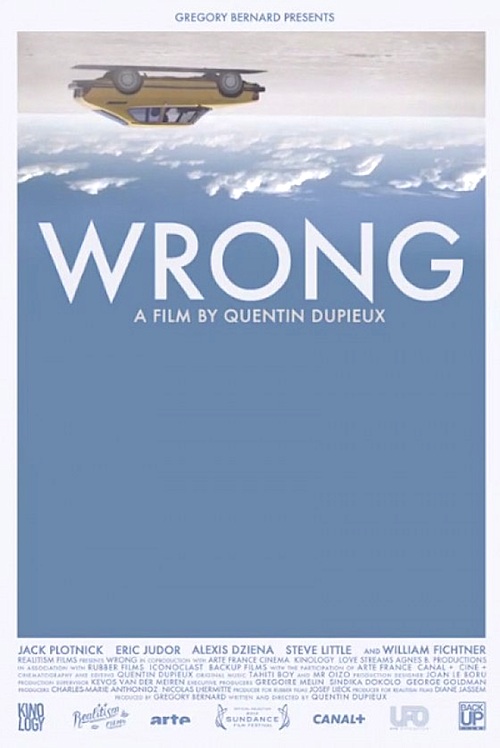
Sundance 2012: LFM Reviews Wrong

By Joe Bendel. It is the story of a man and his dog, but do not expect Lassie from provocateur Quentin Dupieux, a.k.a. Mr. Oizo. He cast off all logic-based constraints and was creatively liberated for it, to judge by the distinctively strange results in Wrong (trailer here), which screens at this year’s Sundance Film Festival.

Dolph Springer’s dog Paul has mysteriously vanished. His neighbor is less than sympathetic, because he is too busy going mad. He is not the only one. Eventually, it seems Paul was kidnapped by Master Chang, a tripped out New Age guru, for reasons that defy conventional reason, but make perfect sense in this world. Springer’s gardener, a pizzeria girl, and a detective also careen in and out of the film, in ways that cannot be explained in a lucid thumbnail description.

In his somewhat notorious Rubber (the killer tire movie), Dupieux came up with an eccentric premise and a clever twist, but seemed too hemmed in by the circumstances he created. In contrast, throughout Wrong he allows anything to happen, whether it makes objective sense or not. The resulting absurdity is quite entertaining to behold.

Jack Plotnick is a heck of a good sport. For Wrong to work, he has to play it all relatively straight, while everyone else acts insane. In fact, he brings an earnest sincerity to Springer that is rather endearing. Prison Break’s William Fichtner clearly enjoys hamming up Master Chang’s wacked out Zen, while Alexis Dziena plays Emma from the pizza shop appropriately over-the-top, like a sweetly innocent version of Fatal Attraction’s Alex Forrest.

Wrong is stylistically surreal and subversive, but rather gentle in tone, which is why it works so well. Unlike David Lynch’s Lost Highway, it never leaves viewers bereft of faith or hope. Indeed, Springer is sort of an everyman model of stick-to-itiveness that is actually sort of refreshing.

Rife with postmodern gamesmanship and goofy sight gags, Wrong is definitely aimed at a hipster audience, but it goes down way easier than one might expect. It is a funny, good-natured film, recommended for the somewhat adventurous. It screened yesterday in Park City.

SUNDANCE GRADE: B

Posted on January 28th, 2012 at 3:18pm.