By Joe Bendel. Two video game characters will continue their epic struggle of good versus evil in the real world. At least one of them also sings and dances. It’s not the super-villain. Combining Bollywood style musical numbers with Terminator and Tron inspired science fiction motifs, Anubhav Sinha’s RA.ONE (trailer here) opens today in New York after already setting box-office presales records in India (a feat that should stand for at least another month, possibly six weeks).
Shekhar Subramanium is a game designer with a bratty son who prefers villains to heroes. For his birthday, Subramanium obliges him with RA.ONE, the monstrous bad guy more powerful than G.ONE, the good guy in his latest cyber-VR game, modeled on its creator. Lucifer, as the kid dubbed himself in gaming circles, is delighted, kicking RA.ONE’s tail in the game’s first round. However, when Lucifer is pulled away before RA.ONE has a chance for payback in the virtual world, the dark lord decides to go get him some in the real world.
While the film pretends to present a scientifically plausible explanation for RA.ONE and then G.ONE making the big Matrix leap to reality, it is really all just hocus pocus. Yes, there are ample science fiction elements, but the film also diligently hits all the traditional Bollywood and Tamil bases. A father dying before his son can tell him he loves him? Check. Flashbacks in the rain? Check. Redemption arriving by way of a surrogate father figure? Maybe, just maybe.
Though at first just a shortening of “Random Access One,” RA.ONE became a digital reboot of Ravana, the Hindu demon king, during Subramanium’s game development process. Similarly, G.ONE became a derivation of the Hindi word for life. That’s about as Joseph Campbell as the film gets, but there are some cool musical numbers. Continue reading India Cranks the CGI: LFM Reviews RA.ONE
By Joe Bendel. Recently, in response to the categorical rejection of Iranian filmmaker Jafar Panahi’s appeal and the truly barbaric sentence of one year in prison and ninety lashes handed down to actress Marzieh Vafamehr, many prominent Iranian artists (including the great Shohreh Aghdashloo) have called on the world to “boycott official Iranian film and television organizations and sanction its members.” While their outrage is appropriate, the work that caused Vafamehr’s plight should not be thrown out with the bathwater. An important film even before the arrest of its lead actress, the Iranian born Australian-based filmmaker Granaz Moussavi’s My Tehran for Sale (trailer here) recently screened during the inaugural Dialogue of Cultures Film Festival in New York.
In what will become an ever more self-referential turn, Vafamehr plays Marzieh, an avant-garde actress seeking to expatriate because her plays have been banned by the censors. She is well educated, middle class, and ideologically moderate, none of which are much of an advantage in contemporary Iranian society. Navigating the Kafkaesque immigration process for years, Marzieh is hoping to soon liquidate all her possessions to finance her move. Of course, complications arise.
Initially, Marzieh has a bit of good fortune. Attending an underground rave in the countryside with her friend Sadaf, Marzieh happened to be in the stables with Saman, the recently repatriated son of immigrants looking to make his fortune in Tehran. Given the unambiguous nature of their encounter, this scene probably did not help Marzieh’s case. However, the real scandal is the conduct of the morality police, terrorizing women like Sadaf for their unadorned heads.
Quickly Marzieh and Saman become something of an item. Despite his myriad of faults, Marzieh enjoys a somewhat pleasant interlude. Still, grim realities are ever-present in the margins of Sale, represented by a woman committing suicide rather face the disgrace of pregnancy out of wedlock, the whispered news of yet another colleague’s arrest, or simply the general sense of unease surrounding her life. Continue reading LFM Review: My Tehran for Sale
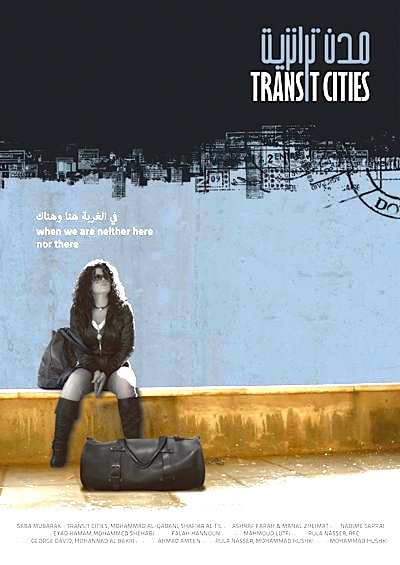
By Joe Bendel. How can a major metropolis simultaneously become larger but less cosmopolitan? Such appears to be the case when Laila Kamel returns to her family home in Amman, Jordan after a long stay in America. Things have changed for the worse in Mohammad Al Hushki’s Transit Cities (trailer here), which has a special one week New York theatrical run in conjunction with the Dialogue of Cultures International Film Festival, beginning today (10/21).
After fourteen years, Kamel returns to Amman a divorced woman. It is a personal failure she is not eager to admit to her family. However, her father is not exactly grilling her for information. Broken by his own disappointments and openly contemptuous of her lifestyle choices, he barely speaks to her. Of course, he hardly speaks to anyone, so acute is his depression.
Much too her surprise, Kamel’s mother and sister now wear the hijab in public. Granted, Amman is not Saudi, but the prodigal daughter is shocked by the radical shift in gender role expectations. Not surprisingly, she has a difficult time acclimating to the “new” Jordan. Nor does she win many new friends disdaining religious hypocrisies, like the practice of charging Murabaha or Islamic interest.
It is more than a bit surprising the state chartered Royal Film Commission Jordan would partner in Transit’s production, yet here it is. Indeed, the film portrays Jordan as a society in regression with a distinctly inflationary economy. In this non-usurious environment, coffee for two in a comfortable café will run you sixty dollars (it must be shade-grown fair-trade). However, if Kamel invites over a man for a long night of wine and reminiscing, it is a scandal.
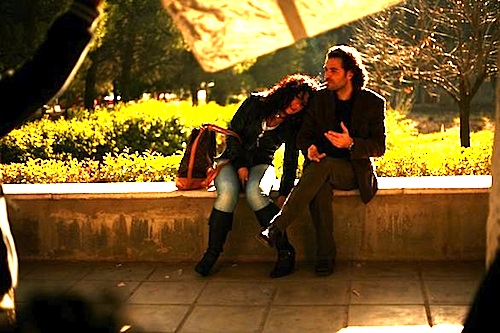
Saba Mubarak and Ashraf Farah in "Transit Cities."
Saba Mubarak makes a strong impression as Kamel, vividly expressing all her mounting frustrations, resentments, and self-doubts. She is a complex character, who sometimes makes matters worse for a host of contradicting motivations, but is never unreasonably unreasonable. Likewise, Ashraf Farah brings assured nuance to the jaded Rabea, her father’s former young colleague, with whom she shares considerable history the film merely hints at. Together, they develop very intriguing if not exactly romantic chemistry together.
Only Jordan’s second “indie” production, Transit is quite stylishly put together. Though Al Hushki intimately focuses on Kamel, cinematographer Mahmoud Lofty evocatively captures the mood of dislocated alienation, like a Lost in Translation with a point to it all. Traditional in its instrumentation but often sounding relatively modern in its melodic and harmonic approach, Nadim Sarraj’s score also perfectly suits the film’s between-two-worlds themes.
While clocking-in just over the seventy minute mark, Transit is a wholly engaging and satisfying film (though alas, not necessarily an optimistic one). A shrewd choice to serve as the DCIFF’s showcase selection, it screens for a full week in New York at theQuad Cinema starting today (10/21)—and tickets are only $5.00.
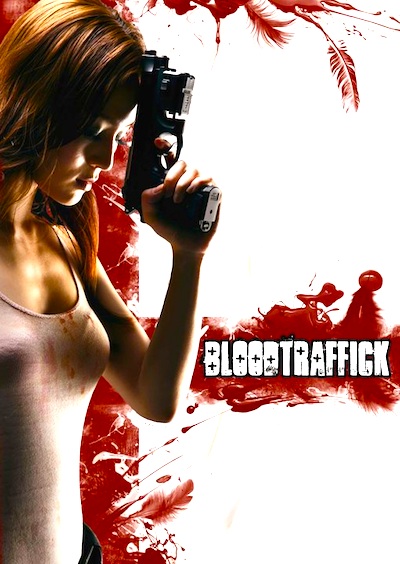
By Joe Bendel. Two of the hottest topics in fiction ostensibly written for teens – but really read by adults – are angels and vampires. Ava Chen is neither, but she is only too aware they both exist in Jennifer Thym’s sleek action-horror short film Bloodtraffick (trailer here), which screens at the 2011 San Diego Asian Film Festival.
According to Bloodtraffick’s mythology, angels took human form to wage an earthly battle against the vampires. Unfortunately, the latter rather logically proved to be much more effective hunters, taking the war to the angels instead. Chen’s two sisters are angels, but she is human—another race known for producing killers. Following the trail of her long missing-in-action siblings, Chen comes face-to-face with a sadistic vampire. There will be carnage.
Clearly intended as a prologue to a forthcoming franchise, Bloodtraffick efficiently establishes its Underworld-esque backstory, while announcing the arrival of an intense new vampire slayer. Soon to be seen with Russell Crowe in RZA’s The Man with the Iron Fists, Grace Huang has far more action cred than Buffy or Kate Beckinsale, and is considerably more photogenic than either. Frankly, the prospective of watching her mow down the undead looks pretty bullet proof.
Thym’s execution in Bloodtraffick is also quite strong. Deftly capitalizing on the short’s creepy burnt-out industrial setting, she keeps the action gritty and the adrenaline pumping, but also invests the film with some pretty heavy archetypal imagery. Without question, this is professional grade filmmaking.
After watching Bloodtraffick, viewers will definitely want to see a full feature outing for Chen, which is really the best recommendation for a film like this. Combining stylish action, an intriguing premise, and a fanboy-pleasing heroine, it certainly has all the elements. Definitely recommended, Bloodtraffick screens with Sion Sono’s Cold Fish today (10/21) and the Friday following (10/28) at the 2011 SDAFF. It also screens at the 2011 Philadelphia Asian American Film Festival on November 5th, along with JP Chan’s cool Digital Antiquities, as part of Shorts Program 1.
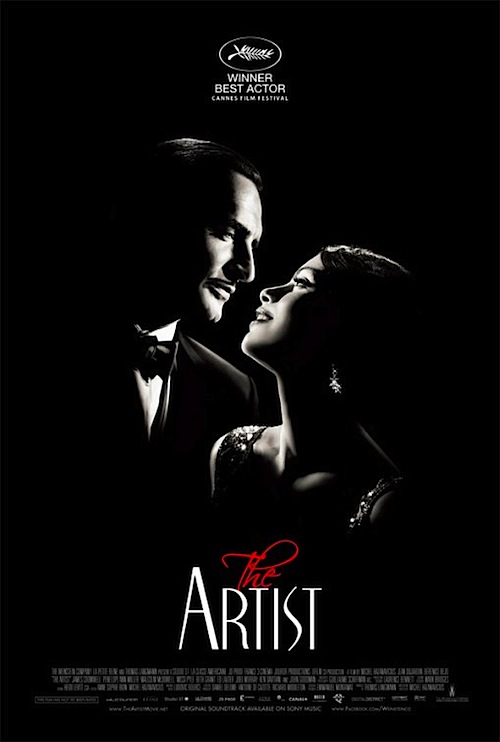
By Joe Bendel. Talking pictures were a truly Schumpeterian phenomenon for Hollywood. As any film lover knows from Singin’ in the Rain, some silent movie stars could weather the creative destruction wrought by the transition to sound, whereas some could not. Matinee idol George Valentin was one of those who could not “talk.” Fittingly, his story is a told silently (or nearly so) in The Artist (trailer here), Michel Hazanavicius’s glorious black-and-white homage to the golden age of Hollywood, which screened Sunday at the 49th New York Film Festival.
It is 1927. George Valentin is at the height of his popularity as a Douglas Fairbanks-style swashbuckler. He has just fought the red menace as an agent of free Georgia in The Russian Affair. However, studio mogul Al Zimmer has something disturbing to show him: synchronized sound. Dismissing the future, Valentin returns to work on his next picture, which will be remembered as the brief screen debut of future superstar Peppy Miller. Obviously thrilled to have any screen time, Miller is particularly excited to share a scene with her favorite star, George Valentin.
When talkies become the standard, Miller’s career takes off like a rocket with frothy romantic comedies. Meanwhile, Valentin’s attempt to finance his own silent comeback vehicle proves disastrous. Yet, Miller’s feelings for yesterday’s leading man remain unchanged.
Hazanavicius consciously draws from dozens of classic films (both pre- and post-Jazz Singer), as well as numerous real larger-than-life Hollywood figures. What follows incorporates elements of A Star is Born, Sunset Boulevard, and Greta Garbo’s relationship with John Gilbert. (Sadly, many modern movie-goers will miss the allusions, but perhaps the notion of a film without diegetic sound might be a brand new novelty item for them.)
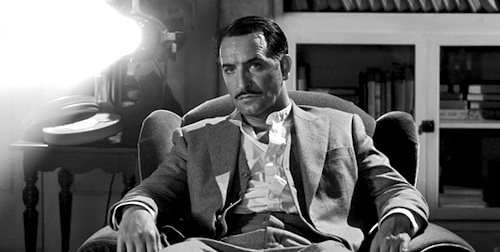
Jean Dujardin as George Valentin.
The work of many artists, the film is a visual splendor, beginning with Guillaume Schiffman’s lush and moody black-and-white cinematography, which makes the elegant sets and costumes softly glow like a Cecil Beaton portrait. Still, it is the depth of Hazanavicius’s screenplay that really distinguishes The Artist.
Not merely a series of winks at TCM watchers, the film is quite a touching love story, completely free of irony. On the two occasions he breaks format, sound is used in creative ways that cleverly advance the film. Periodically, Hazanavicius also appears to indulge in a witty in-joke, yet in each case, their dramatic logic quickly catches us by surprise. Likewise, while his intertitles have a simplicity befitting the period, they convey a surprising richness of meaning.
Familiar to American audiences from the French OSS spy spoofs, Jean Dujardin gives another very physical performance here, but the complexity and pathos of his Valentin is in a whole different league. Indeed, it is a tricky proposition to play a mugging actor without ever mugging for the camera, yet he is never overly broad or over the top, keeping the faded movie star acutely human throughout. He also develops some endearing romantic chemistry with Bérénice Bejo as Miller.
Frankly, the Argentine-French Bejo is about the only person working in film today who can approximate the glamorous look of Hollywood in its heyday (yes, this definitely includes Michelle Williams). Exquisite and vulnerable, she deserves a bit of award attention along with Dujardin, the best actor winner at this year’s Cannes. In contrast, the American supporting cast does not have much to do, but John Goodman’s cigar-chomping shtick works perfectly for Zimmer, even without sound.
Right now, the Oscar prognosticators are focusing on Dujardin for best actor, but with a shrewd campaign behind it, The Artist might have a puncher’s chance at the top prize. It is a beautifully rendered valentine to movie-making, featuring two wildly charismatic romantic leads. Highly recommended, The Artist was one of the highlights of a very strong slate at this year’s NYFF.
[Editors’ Note: we want to thank Joe Bendel for his rich, comprehensive coverage of this year’s New York Film Festival.]
By Patricia Ducey. Director Craig Brewer of Black Snake Moan and Hustle and Flow has proven he can rock a Southern stereotype, but in his remake of Footloose, to my astonishment, he dumps every one of them into the Georgia red clay—and proves his bona fides as a skilled director. Several times in the movie theater I braced myself for that bucket of ice cold cliché to be dumped over my head, but it never happened—and that’s this movie’s triumph.
Bible-thumping preacher? No, good man laid low by grief.
Stupid Southern redneck? Nope, man-to-be who carries his self-esteem lightly, with charm to burn.
Well, surely then, Woody, the African American football captain faces racist teammates? Um, no again. We all get along just fine here in Bomont, Georgia, thank you very much.
The story opens as Boston kid Ren MacCormack (Kenny Wormald) arrives in Bomont, Georgia, taken in by his Aunt Lulu and Uncle Wes (Ray McKinnon and Kim Dickens) after his father abandons the family and his mother passes away. He soon discovers the ban on dancing and music, all due to a horrific fatal car accident three years prior when five teens went joyriding after a kegger, all explained to him by new friend Willard (Miles Teller) . . . wait, Willard? So he must be the big dumb hick then? Au contraire, Teller is the breakout star of the movie and probable new teen heartthrob. His Willard, Pitchford and Brewer’s charming and witty creation, is a delight.
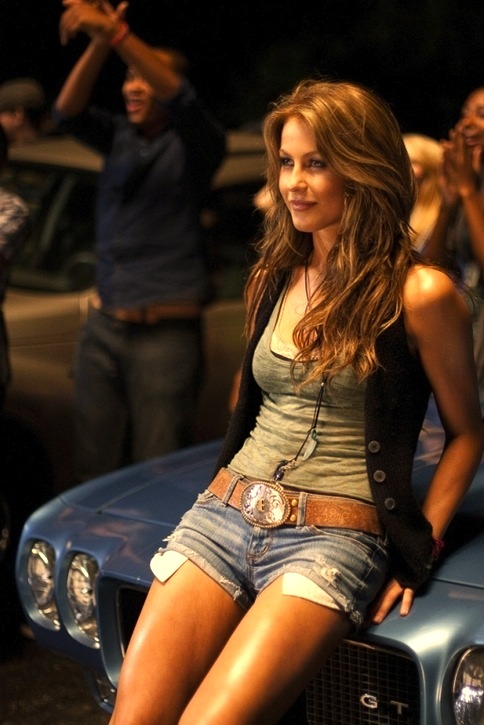
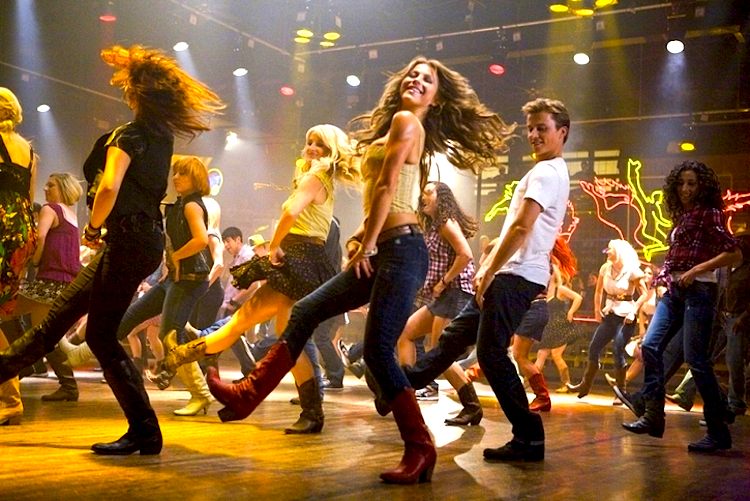
On his first day at the new school, Ren locks eyes with the preacher’s daughter Ariel (Julianne Hough), who is carrying on with a race car driver bad boy, reacting against her own sorrow after brother Bobby’s death in the car crash. Complications, love triangles and spirited dancing ensue; lessons are learned. And Brewer delivers without pandering or disdain for his subject—or audience.
Yes, this movie understands and respects its audience. Brewer deepens the original’s broad caricatures into characters; we come to care about and root for even the grownups. He edits out the derisive edge exhibited in the first. Notably, Ren respects Ariel before she respects herself, like a true man would—and he learned that from his family. Footloose understands that to its teen audience a single kiss can hold greater import in their lives, as in Ren and Ariel’s, than the cynical hooking up in most other Hollywood movies aimed at their demographic.
Big dance numbers.
The supporting characters are well developed as well. Uncle Wes (only a bit less scruffy as his character in Sonsof Anarchy), and his wife own and work at a used car dealership, take care of their own kids and even manage to send money to Ren’s mother after his father left. They’re good people, smart and fairly successful; their business is holding fast in the recession. The parents and kids enjoy and care for each other. They take Ren in when the need arises. In short, they are not cartoons. Instead, they embody the best of the American family ethic. The townsfolk are real people: they reluctantly support the curfew and ban on dancing because they fear another horrific accident, like the one that killed the preacher’s son and four other kids. There’s no bannin’ of books or firin’ of uppity teachers as in the earlier version. Ren protests the dancing ban with respect and through proper channels (take note, Occupy Wall Street) because he respects where the town and the reverend are coming from. And yet there is no sugary aftertaste; Ren doesn’t smoke dope, because he’s a gymnast—not because he’s holier than thou. The kids chafe under the restrictions of their elders, and they demand a little freedom— along with the risk. Safety versus security—timely questions. Continue reading It’s Safe to Visit The South Again: LFM Reviews Footloose
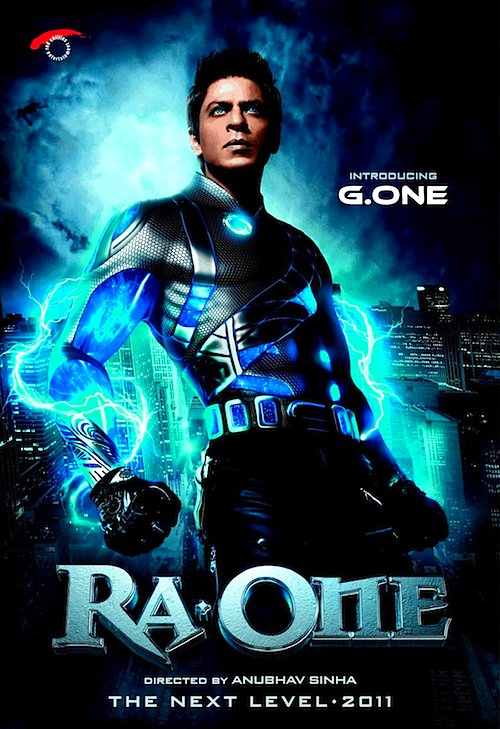 By Joe Bendel. Two video game characters will continue their epic struggle of good versus evil in the real world. At least one of them also sings and dances. It’s not the super-villain. Combining Bollywood style musical numbers with Terminator and Tron inspired science fiction motifs, Anubhav Sinha’s RA.ONE (trailer here) opens today in New York after already setting box-office presales records in India (a feat that should stand for at least another month, possibly six weeks).