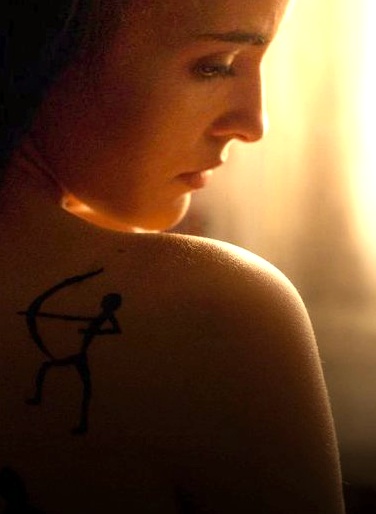
By Joe Bendel. Archery is a handy sport to take up if you want a valid excuse to carry about a potentially lethal weapon. As it happens, a young Italian woman has a strong motivation to become an archer in E.M. Artale’s My Bow Breathing (trailer here), one of two shorts with both genuine art film polish and genre movie appeal screening at the 49th New York Film Festival.
She has not been training long, but her coach recognizes her natural talent. However, the woman has weightier matters on her mind than merely winning competitions. She is out for revenge and she will have it. Played with slow burning intensity by Giulia Bertinelli, “The Archer” holds her own with “The Bride” from Kill Bill, delivering more retribution on a per frame basis than the original Death Wish. Like Chaimae Ben Acha in Sean Gullette’s Traitors, Bertinelli has real movie-star potential, but a lot of people will miss their work at NYFF because of a prejudice against shorts. Do not mistake this mistake.
Stylishly helmed by Artale, Bow looks nothing like a standard vigilante-payback film, but it can easily be enjoyed on such terms by those so inclined. Likewise, Jaime Dezcallar’s The Bird Spider is far more psychologically complex than a mere killer spider movie, but there is no denying the presence of the deadly eight-legged crawler.
If arrows are a somewhat unusual weapon for vengeance-seeking, a poisonous spider represents a downright bizarre method of suicide. Yet, a depressed man is not simply out to take his own life, but to burn away the pain of his recent break-up by enduring his worst childhood phobia, until it kills him. Buying a poisonous spider from a pet store (exotic pet regulations must be lax in Spain), he turns it loose in his apartment. Conscious the spider could strike at any moment, he willingly plunges himself into a Kafkaesque nightmare.
Bird Spider has a similar vibe as many of the recent bumper crop of creepy Spanish horror movies, but offers more than just a few good jolts (which it definitely has). The claustrophobic setting and unsettling premise really get under your skin, while Raffel Plana Honorato’s score also nicely helps build the suspense as well as a sense of melancholia.
Highly recommended, Bow and Bird are excellent short films that should satisfy snobby cineastes and genre diehards in equal measure as the 2011 NYFF approaches the homestretch.
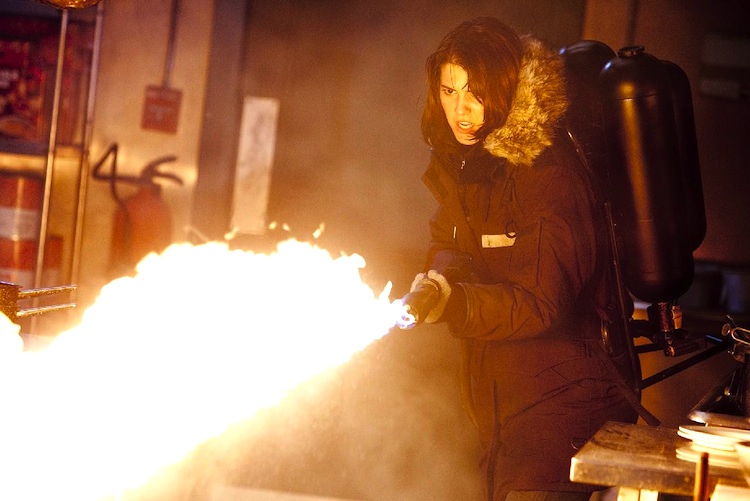
Mary Elizabeth Winstead lights it up in "The Thing."
By Jason Apuzzo. THE PITCH: Universal and director Matthijs van Heijningen, Jr. bring The Thing back to life as a direct prequel to John Carpenter’s 1982 cult favorite about a shape-shifting alien discovered by a research team in the Antarctic – both films being based on John W. Campbell, Jr.’s classic 1938 sci-fi short story, “Who Goes There?”
THE SKINNY: While the 2011 version of The Thing will not likely be remembered as fondly as Howard Hawks’ 1951 classic, this new adaptation serves as a crisp, gripping prelude to Carpenter’s film, driven by a stand-out performance from Mary Elizabeth Winstead and suspenseful direction from Matthijs van Heijningen.
WHAT WORKS: • Mary Elizabeth Winstead radiates warmth and intelligence as American paleonthologist Dr. Kate Lloyd, in the same kind of role that once made Sigourney Weaver a star (playing Ripley in Alien). A conventional scream queen in her earlier roles, Winstead graduates here to depicting a resourceful, sympathetic female scientist who keeps her wits about her while the rest of her colleagues fall to pieces – both literally and figuratively.
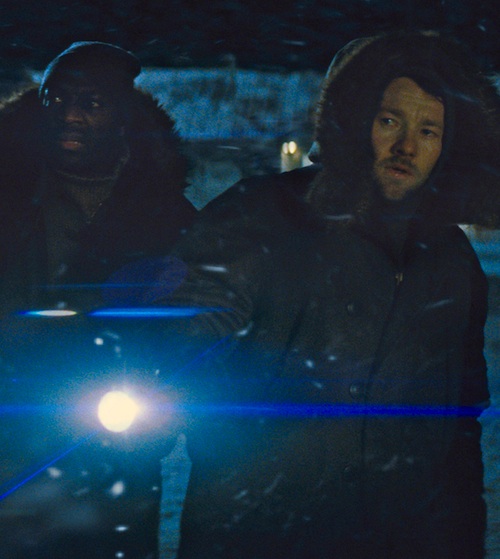
Adewale Akinnuoye-Agbaje & Joel Edgerton as American helicopter pilots.
• Matthijs van Heijningen’s understated direction brings out the natural suspense of the story, allowing the isolated setting, mutual suspicions of the characters and the intrinsically frightening situation to do the heavy dramatic lifting.
• The cast feels credible as a hardy professional research crew, much more so actually than the (otherwise superb) cast in Carpenter’s film – and this has the effect of enhancing the suspense and paranoid vibe of the film. Indeed, Winstead’s heroism in the film consists precisely in her taking a more professional-scientific attitude toward the alien threat than that of her compatriots. (And on this point, the new version of The Thing is rarely played for laughs in the way that the Carpenter version sometimes seems to be.)
• One thing this 2011 Thing has over previous versions is that it exploits the alien’s saucer more than before, eventually even taking us inside it at the film’s climax to nice effect.
WHAT DOESN’T WORK: • This new version of The Thing is burdened by the need to present the same grotesque, Hieronymus Bosch-show of creature-transformations as were depicted in the Carpenter version of the film. With that said, the transformations in this new film are slightly less disgusting, and often take place in shadow.
• Both the 1951 and 1982 versions of The Thing have iconic musical scores, from Dimitri Tiomkin (with his groundbreaking use of the theramin) and Ennio Morricone/John Carpenter, respectively. Composer Marco Beltrami’s score here is too conventional; he should’ve tried something more unusual or distinctive for this new film to keep the tradition of musical innovation going.
• As I mentioned last week with respect to the film’s screenplay, this new version of The Thing lacks humor – a major component of both the 1951 and 1982 films. Also: the new film drops one of the great gags of Carpenter’s film, which is depicting several of the researchers as having such bizarre personalities (particularly Richard Masur as Clark) as to seem alien even before the creature shows up.
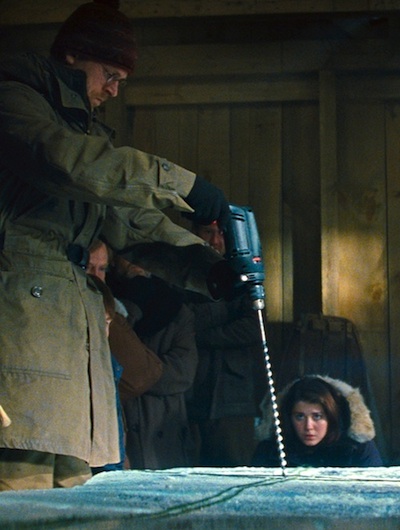
Opening Pandora's box.
• There’s room to ask here whether it was a good idea to bring back this story in the form of a prequel to Carpenter’s film. There is, ultimately, very little about this version that qualifies as being ‘original’ or imaginative, even if its execution is solid. The Hawks version is tighter, more sophisticated and features larger Cold War connotations; the Carpenter version has more colorful characters and satiric flourishes. Possibly what was needed here was a totally different interpretation in order to take the film to the next level.
THE BOTTOM LINE: What makes this new version of The Thing work – which it does, in my opinion – is that it has the basic sense to tell what is already a great story straight, without the embellishments that contemporary filmmakers sometimes add when they don’t trust their material. Director Matthijs van Heijningen and screenwriters Eric Heisserer and Ronald Moore obviously believed in Campbell’s/Carpenter’s basic story material here, and therefore didn’t clutter the film up with obnoxious revisionisms or distractions like the political propaganda found in the Day the Earth Stood Still remake from 2008, or the bizarre plot involutions of 2007’s The Invasion (a flaccid remake of Invasion of The Body Snatchers). This by-the-book approach doesn’t necessarily make this new version of The Thing a classic, but it does make it effective and streamlined as an exercise in sci-fi horror.
Certainly the easiest thing in the world to say about this new version of The Thing is that it doesn’t rise to the level of Howard Hawks’ 1951 version, nor of John Carpenter’s 1982 film. I’m not sure how much that says, however; Hawks’ film is easily one of the greatest sci-fi films ever, and Carpenter is one of the greatest sci-fi/horror directors of all time. Judged against such standards, a lot of contemporary films and filmmakers would pale in comparison.
A better point of comparison for this new version of The Thing might be the recent wave of alien invasion thrillers from this past year – and here I think The Thing stands out as a solid, suspenseful film that is better than a whole variety of over-hyped/under-performing competitors from 2011, including: Super 8, Cowboys & Aliens, and an entire season’s worth of Falling Skies. Call me old fashioned, but I prefer my aliens to be really terrifying, and of all the aliens I’ve seen from this past year – and I’ve seen a lot of them, with a few more still to come – the one I would least want to be caught in a room with (outside of Transformers’ Shockwave, who wouldn’t fit into a room to begin with) would be the omnivorous, protean, infinitely imitative and malevolent creature from The Thing. The creature in this new film still packs an unnerving, visceral punch, in much the same way that Carpenter’s did – even if the previous film’s spectacle of gore is slightly toned down here.
My advice if you are a fan of Carpenter’s film? Give this new one a shot, preferably late at night.
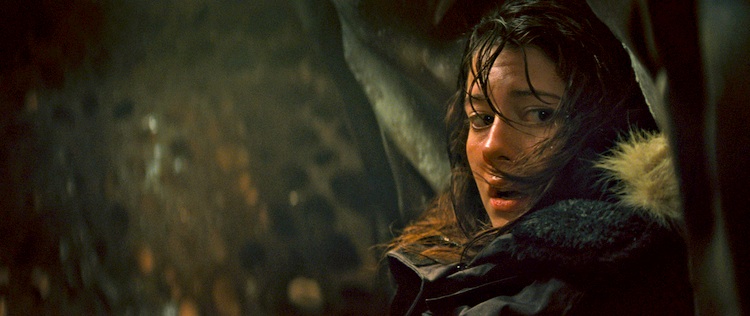
Mary Elizabeth Winstead projects authority and professionalism as Dr. Kate Lloyd.
One final point: films are star-driven, and there’s a special pleasure associated with watching a new star emerge in a film. I went into this film looking forward to seeing Joel Edgerton, whom I already knew to be a good young actor (and he’s good here, playing a rough-and-tumble American helicopter pilot), but the real discovery in this film was Mary Elizabeth Winstead. This is clearly going to be a break-out role for her, largely because of her ability to project intelligence and authority. And although she doesn’t yet have the screen presence that the young Sigourney Weaver showed back in the 1980s (she isn’t as lanky, sexy or vaguely odd as Sigourney), Winstead brings a conviction to this type of role that I haven’t seen since the Sigourney-heyday of the 1980s. And what’s nice here is that she doesn’t have to become a Kate Beckinsale-type action hero to do it; instead, like a classic female scientist from 50s sci-fi (think Faith Domergue from It Came from Beneath the Sea or This Island Earth) she uses her wits and innate professionalism to get herself out of jams – along with, of course, a handy flamethrower.
After all, no one ever said sci-fi women can’t heat things up.
By Joe Bendel. They are like the Runaways of Tangier, except a Moroccan all-women punk group really is rather rebellious, just in its very existence. Yet family issues will preoccupy their fiery lead singer over the course of a typically eventful day for the band in Sean Gullette’s Traitors, which screens this Saturday as part of the 49th New York Film Festival’s Shorts Program #2.
Best known as the ragged mathematician in Darren Aronofsky’s Pi, Gullette makes his directorial debut with Traitors (that is, with an anarchy sign for the “a”), named after the band fronted by Malika. The camera truly loves hitherto unknown Chaimae Ben Acha as the lead singer, even the handheld digitals used by Gullette’s cinematographers Benoït Peverilli and Niko Tavernise. If there is one future international star represented at this year’s festival, it must be Acha.
For one thing, she can really belt it out Joan Jett style. We first encounter Traitors rehearsing a song that tells us all we need know about their opinion of Morocco’s cops and politicians. It’s not very high. In need of cash for an upcoming gig, Malika naturally plans to “borrow” some from her elegant, professional-class mother. However, in the process of rifling through her parents’ room she learns an upsetting secret.
As Malika and her bandmates careen through the night, we get a visceral sense of the Tangier underground youth culture. When the cops show up, they do their best to live up to Traitors’ cynical assessment. Yet, aside from petty public corruption, Gullette’s film avoids the larger potential macro-conflicts. Just what the local religious authorities would think of the band is left to viewers’ imagination. Still, crude sexism and unwelcomed lechery seem to be fairly widespread among the Moroccan men Malika encounters.
Acha gives a knockout performance, but she is not carrying the film alone. Firouz Rahal Bouzid and Abdesslam Bounouacha also contribute wonderfully human supporting turns as Malika’s parents. Running just over half an hour, Traitors is no mere sketch. By any standards of dramatic cinema, it is a wholly satisfying, self-contained film. A real discovery, Traitors screens this Saturday (10/15), as a selection of Shorts Program #2 at the 2011 NYFF.
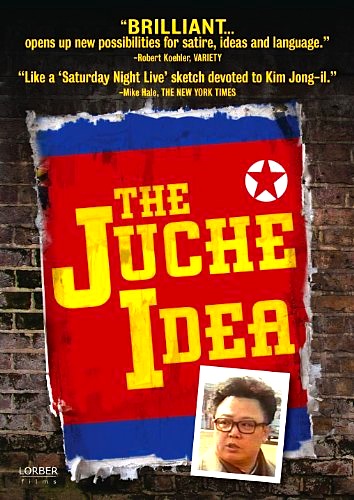
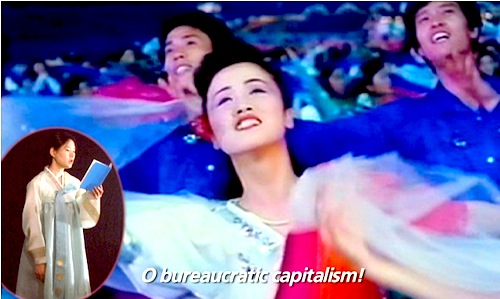
By Joe Bendel. Before Kim Il-sung, mass-murdering megalomania had never been so kitschy. The Kim dynasty’s tyrannous misrule has been marked by imposingly ugly architecture, stilted cinema, and truly bizarre mass “arirang” stadium performances, all of which promoted the so-called Juche Idea, his crypto-Confucian brand of self-isolating socialism. An expatriate leftist South Korean filmmaker takes on the challenge of making Juche propaganda art films for an international audience, when not weeding the vegetable patch of a North Korean arts collective in The Juche Idea (trailer above), Jim Finn’s experimental mockumentary mash-up, now available on DVD.
Before he bravely led the proletariat into the future, the crown prince Kim Jong-il wrote North Korea’s definitive book on film studies. Not surprisingly, he concluded any honest, class conscious film should scrupulously adhere to his father’s Juche Idea concepts. DPRK films tended to be a wee bit formulaic as a result, typically culminating with a tearful self-criticism session and a vow to rededicate one’s self to Communist Party, as Finn illustrates with several clips crying out for the Crow and Tom Servo treatment.
As Yoon Yung Lee, the filmmaker-in-residence, splices together her strange Chuck Workman-like Juche films, the insular nature of the North’s ideology-driven culture becomes inescapably obvious. As soon as any distance is applied to the cheesy visuals and overblown synchronized dance numbers, irony rushes in like air into a vacuum. There is also an unexpected abundance of accordion music to heighten the surreal vibe of it all.
Finn never directly addresses the brutal reality of DPRK concentration camps, intrusive secret police, and widespread famine. As a result, Juche Idea really ought to be seen in conjunction with other North Korean documentaries, like Mads Brügger’s fearlessly subversive Red Chapel, which Lorber Films has also just released on DVD. Unlike the play-it-safe “Yes Men,” Brügger and his colleagues punk a target that wields absolute, unchecked power, on its own turf. You have yet to truly live until you have witnessed a pair of Danish-Korean comedians perform a slapstick rendition of “Wonderwall” for an audience of stone-faced DPRK apparatchik-minders in this mad expose-performance art hybrid.
In contrast, Juche Idea is all about the outrageous over-the-top propaganda serving the Great and Dear Leaders’ personality cults, without any reality-based context. Though it seems hard to miss the joke when a Russian tourist’s loose bowels lead to a lecture on the merits of North Korea’s socialized medicine, some of those protesting downtown might just swallow it whole.
Clearly, Finn is not exactly an underground conservative filmmaker, having also produced the short film Dick Cheney in a Cold, Dark Cell, which should have certainly maintained his standing in the experimental film community. Still, after watching Juche it is clear North Korea is a profoundly scary place, at least by any rational aesthetic standard.
Viewers who missed Brügger’s Chapel in theaters should definitely catch up with it first and then supplement it with Juche’s head-spinning images and sly satire. Though only sixty-two minutes, there are some nice supplements on the DVD, including some deleted scenes, such as a whacked-out Juche comic book given the motion-comic treatment, as well as Finn’s short film Great Man and Cinema, which essentially boils down the essence of Juche Idea to three minutes and forty-nine seconds. Recommended for the ironically-inclined and the propaganda-savvy, Juche Idea and Chapel are easily two of last week’s most notable DVD releases.
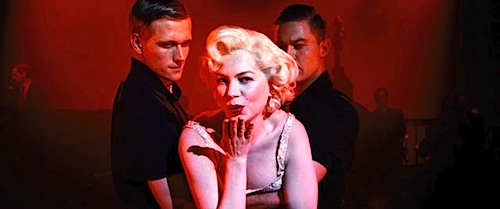
By Joe Bendel. Sir Laurence Olivier and Marilyn Monroe were about to achieve career highpoints in John Osborne’s The Entertainer and Billy Wilder’s Some Like it Hot, respectively. However, the chemistry was somewhat lacking in their one and only film together, The Prince and the Showgirl, tepidly received by critics and audiences alike in 1957. The behind-the-scenes story of their rocky shoot is told from the perspective of a smitten production assistant in Simon Curtis’s My Week with Marilyn (trailer here), the centerpiece selection of the 49th New York Film Festival.
Though to-the-manor-born, young Colin Clark wants to make his own way in the world working in motion pictures. Refusing to take no for an answer, Clark parlays a dubious introduction into a gofer job with Olivier’s production company. Recently knighted, the great actor is planning to direct the American bombshell in a light comedic role his wife, Vivien Leigh, originated on-stage. Unfortunately, when Monroe shows up with full entourage in tow, it is quickly apparent that she’s deeply enthralled by the method school of acting, dubious claptrap Sir Laurence has little patience for.
Despite beginning a healthy romance with Lucy, a wardrobe assistant arguably as attractive as the childlike and frequently doped-up Monroe, Clark falls hard for the famous sex symbol. While not exactly mutual, Monroe starts to rely on the solicitous young man’s emotional support. It all leads to much gossip and quite a bit of ill will on the set.
Bringing an icon back to life.
If Marilyn Monroe truly was a ragingly insecure woman who lived in a pronounced state of arrested development, then Michelle Williams plays her quite well indeed. Though she is already being positioned as an Oscar contender, her Monroe seems to be a blank slate on which the other characters project their desires. Was that all there really was to her? If so, how very sad.
In welcomed contrast, the British ensemble cast, including the likes of Dame Judi Dench, Michael “Foyle” Kitchen, and Julia Ormand (as Leigh, no small part to step into either), plays it to the hilt, bandying about witticisms as if they are in The Bad and the Beautiful, as rewritten by Noel Coward.
Yet, the casting of Kenneth Branagh as Olivier is particularly inspired. Not only does Branagh have the right “classically trained” presence and flair for razor-sharp dialogue, one can see parallels of his own career in that of Sir Laurence. Earning acclaim and the not infrequent comparison to Olivier with his early Shakespearean films, Branagh’s recent career had been somewhat checkered (including a critically drubbed remake of the Olivier vehicle, Sleuth), until scoring an unlikely comeback with Thor. Regardless, he plays the iconic thespian with genuine depth and charisma.
Granted, Week is based on his memoir, but the amount of screen time devoted to Eddie Redmayne’s Clark seems wildly misappropriated, considering the far more interesting actors and great larger than life figures of cinema history that are also assembled in the film. Frankly, his sad eyed, love-struck act quickly gets rather dull. Fortunately, the seasoned veterans like Branagh, Dench, and Sir Derek Jacobi can be relied upon to supply Week with periodic jolts of energy.
Curtis certainly keeps the filmbreezing along nicely, capturing a nice sense of the era along the way. Always pleasant viewing, Week features some wonderfully tasty supporting performances. It just seems to consistently focus on the two dullest people at a banquet of greatness. A case of a film whose sum of its parts is probably greater than its whole, Week screens again tonight (11/12) at the Walter Reade Theater as the Centerpiece of the 2011 NYFF. However, only standby tickets are available, so good luck.
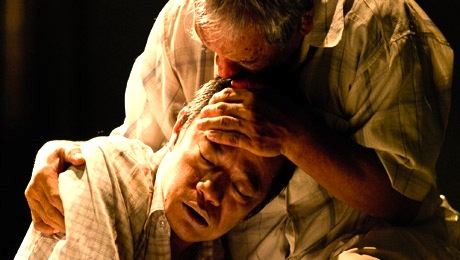
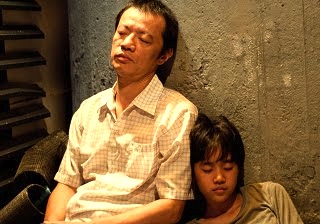
By Joe Bendel. After twenty-five years of incarceration, the recently released ex-con Lin Wen-sheng understands how to take a beating. It is a skill he tries to teach to a gangster’s abused pre-teen in Chienn Hsiang’s Ranger, the powerful concluding film of the San Francisco Film Society’s 2011 Taiwan Film Days.
In contradiction of established film noir conventions, Lin did not leave prison looking for revenge or redemption. Having enduring the assaults of rival gangs for a quarter century, he is essentially dead inside. Though the aging crime boss Dragon intends to look after him, Lin is left forgotten in a corner, next to the beaten and battered kid the mobster never wanted.
After a particularly rough beating, Lin takes the child to the hospital. Of course, this necessitates a police report, setting in motion a chain of events Lin will be largely oblivious to. Reluctantly though, he starts to care for the vulnerable youngster, perhaps seeking to make amends for his crimes or to compensate for his estranged relationship with his own father.
Ranger is about as grimly deterministic as a film can get. Yet its view of humanity is not unremittingly pessimistic, showing many small but touching acts of kindness, as Lin marches towards his destiny. Indeed, it blends naturalism and humanism into a strange cocktail that ultimately represents Taiwan and Taiwanese cinema quite well.
From "Ranger."
The winner of the Taipei International Film Festival’s best actor award for Ranger, Wu Pong-fong’s Lin is viscerally intense but scrupulously understated. His work with the film’sadolescent costar is also rather honest and poignant. In fact, Ranger might herald the arrival of a considerable young star in the making, yet the nature of the performance is such that it is difficult to discuss without spoiling a major development.
While periodic flashbacks establish the crushing weight of the past, former cinematographer Chienn Hsiang sensitively helms Ranger, allowing its quiet moments to blossom organically. It is a film that a distributor like Magnolia ought to take a serious look at, since they could position it either for the serious art-house market or as a gritty genre gangster movie. Regardless, it is a very accomplished film. The highlight and fittingly the closing selection of the SFFS’s Taiwan Film Days, Ranger is quite highly recommended when it screens this coming Sunday night (10/16) at the New People Cinema.
 If arrows are a somewhat unusual weapon for vengeance-seeking, a poisonous spider represents a downright bizarre method of suicide. Yet, a depressed man is not simply out to take his own life, but to burn away the pain of his recent break-up by enduring his worst childhood phobia, until it kills him. Buying a poisonous spider from a pet store (exotic pet regulations must be lax in Spain), he turns it loose in his apartment. Conscious the spider could strike at any moment, he willingly plunges himself into a Kafkaesque nightmare.