LFM Review: The Matchmaker @ The Israel Film Festival in New York

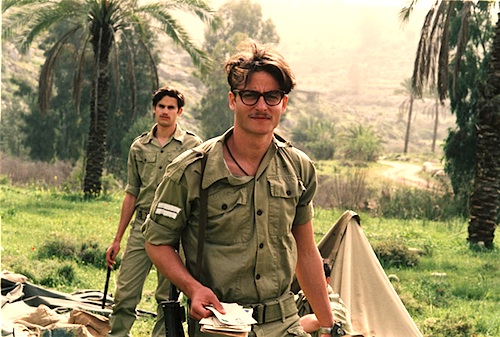
By Joe Bendel. Would you buy a second-hand heart from this man? Yankele Bride genuinely wants to make love connections, even for those who cannot afford to pay. Of course, the dodgy contraband in the storeroom is another question altogether. 1968 proves to be a tumultuous year for Bride and his adolescent assistant in Avi Nesher’s The Matchmaker, one of the highlights of the 2011 Israel Film Festival in New York.

Bride was literally scarred by his time in the concentration camps, yet he still believes in love. He is a realist though, telling his clients he “gets them what they need, not what they want.” Despite his many dubious enterprises, he scours the neighborhoods looking for the marginalized in need of his match-making help. That is how Arik Burstein initially encounters him. Fatefully, Burstein’s attempt at a practical joke at Bride’s expense backfires when it turns out he is a long lost classmate of his Romanian émigré father, Yossi. Before he knows it, young Burstein is working as Bride’s assistant, which largely involves trailing prospective clients to make sure they are on the up-and-up.

Although romance is Bride’s business of choice, he must settle for a close but chaste friendship with Clara, the love of his life, who remains profoundly haunted by her Holocaust experiences. In contrast, Burstein struggles against his attraction to Tamara, his best friend Benny Abadi’s sultry hippy cousin, who finds herself spending her summer with the Jewish Iraqi family.

Continue reading LFM Review: The Matchmaker @ The Israel Film Festival in New York
LFM Review: Infiltration @ The Israel Film Festival in New York
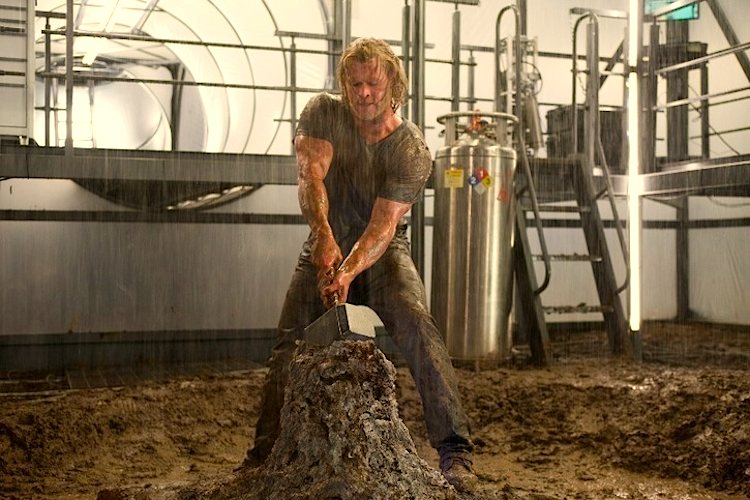
From "Infiltration."

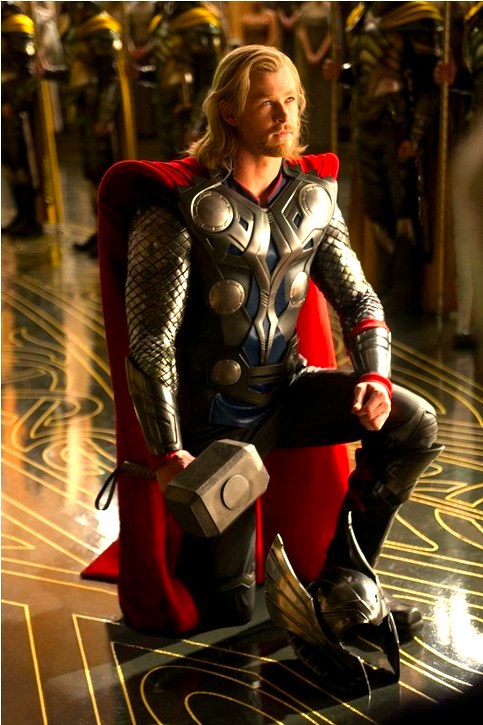
By Joe Bendel. The platoon of rejects undergoing bootcamp at IDF Training Base 4 cannot be called a Dirty Dozen. Frankly, they are not even dirty. Each should have been disqualified on the basis of physical or mental grounds. Instead, they are botching basic training together as a misfit unit in Dover Kosashvili’s Infiltration (trailer here), which screens during the 2011 Israel Film Festival in New York.

Miller is an epileptic. Peretz has anger management issues. Poor Rachamim Ben Hamo is a wreck, both physically and mentally. It is not exactly clear why self-styled ladies’ man Gabay is there, but it is quickly obvious he is the sort of person who makes every situation more difficult than necessary. Nearly everyone in the platoon expects a menial assignment when their course is completed, except Alon Harel. As a strapping young kibbutznik, he refuses to consider anything less than the paratroopers, not that he has any say in the matter. Unfortunately his resentment will not dissipate, despite the (mostly) helpful suggestions of Commander Benny, their NCO drill instructor.

Based the 1986 novel by Yehoshua Kenaz, Infiltration (so titled for a war game exercise) obviously inspires comparisons to Full Metal Jacket. However, Commander Benny is no R. Lee Ermey. Granted, he can be cruel, but it is rather hard to blame him. After five minutes, you will want to haze the holy terror out of his recruits too. Continue reading LFM Review: Infiltration @ The Israel Film Festival in New York
By Asgard’s Hammer!: LFM Mini-Review of Thor

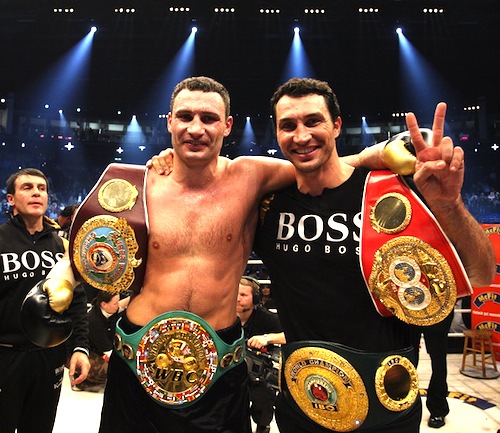
Chris Hemsworth as Thor.

By Jason Apuzzo. THE PITCH: Muscular Aussie newcommer Chris Hemsworth swings the heavy hammer in Thor, a big-budget adaptation of Stan Lee’s superhero comic series – featuring an expensive, A-list cast (Anthony Hopkins, Natalie Portman) and operatic direction from Kenneth Branagh.

THE SKINNY: Thor brings muscle, pomp and even Marlovian court intrigue to this revered Marvel Comics property – while never losing its sense of humor. In a genre that sometimes takes itself too seriously, Thor strikes a nice balance between campy light humor and mythic/fantasy storytelling.

WHAT WORKS:

• Chris Hemsworth, who between Thor and Red Dawn (which I’ve already reviewed, in its original, non-castrated form) is about to become a major star. Physically, Hemsworth reminds me of the linebackers who played for Pete Carroll at USC – big, wild, ripped dudes with long hair, like Clay Mathews or Brian Cushing. As an actor, though, Hemsworth excels in moments when he needs to project warmth, sensitivity or shrewdness. He’s the complete on-screen package, and should have a strong career ahead of him. The rest of the film’s pricey cast is similarly solid – especially Anthony Hopkins as Odin, and Tom Hiddleston as Loki.

• Thor’s boffo set pieces and art direction from Maya Shimoguchi and her team make Asgard look like something out of Wagner’s Ring-cycle as performed by The Met. Shimoguchi and cinematographer Haris Zambarloukos also elevate the film’s New Mexico desert town into a cozy, archetypal burg out of classic 1950s sci-fi. I wanted to move right in and hunt aliens.

• Strong, humanistic values. Thor is a lover and a fighter, you might say. Banished to Earth by his father Odin (a highly grizzled Anthony Hopkins, complete with eyepatch), and having lost his super-powers, angry young man Thor matures and comes to enjoy Earth and all its human pleasures (coffee, beer, cute astrophysicists). Plus, although our government doesn’t know who he is – after he weirdly drops out of the sky into the New Mexico desert, and cheerfully clobbers everyone in sight – and although government agents quasi-threaten him with ‘enhanced interrogation,’ Thor eventually comes around to the government’s side, pledging himself to defend Earth’s security. Thor’s very much a team-player, a good egg who digs small town America, and you basically get the sense he would fit in well on SEAL Team 6.

A ripped Chris Hemsworth tries to lift Asgard's hammer.

Continue reading By Asgard’s Hammer!: LFM Mini-Review of Thor

LFM Review: Land of Genesis @ The 2011 Israel Film Festival in New York

By Joe Bendel. When watching a mongoose take out his hissing foe in Israel’s first nature documentary, the allegory is almost too easy to draw. Fortunately, Israel has been the scrappy mongoose, not only defending the only civilized corner of the Middle East but also preserving considerable areas of pristine nature. Moshe Alpert documents three species of mammals raising their young in the wild habitats of Israel most people never knew existed in Land of Genesis, which screens during the upcoming 2011 Israel Film Festival in New York.

Genesis will radically change how many people think of Israel, particularly the Golan Heights, where two wolves are starting their own pack. Likewise, the Sea of Galilee probably has much different associations for viewers than as the habitat for swamp cats. At least the desert might seem like a fitting environment for exotic species, like the ibexes Alpert follows. Continue reading LFM Review: Land of Genesis @ The 2011 Israel Film Festival in New York

LFM Review: Klitschko @ Tribeca 2011

By Joe Bendel. Mother Klitschko is no fun. She expressly prohibited her boxer sons Vitali and Wladimir from fighting each other. Of course, that is exactly what the boxing world wants to see. Sebastian Dehnhardt profiles the two well-educated Ukrainian brothers who rose to the top of the boxing ranks, got knocked down, and clawed their way back in the simply but aptly titled documentary Klitschko, which screens at the 2011 Tribeca Film Festival.

The Klitschko brothers.

Growing up military brats, the Klitschko brothers’ father was an ardent Communist. However, he would pay for his blind faith, when his unit responded to the Chernobyl crisis without adequate protective gear. Fortunately when his cancer inevitably surfaced, the Klitschkos already had sufficient means to provide their father with the best of western medicine. Coincidentally, the now cancer-free Col. Klitschko has had a complete ideological change of heart, at least according to his sons.

Though not technically twins, the Klitschko boys were always big and nearly impossible to tell apart. The older Vitali actually started out as a kick-boxer while so-called “Western martial arts” were prohibited in the Orwellian Soviet Union. Eventually the Klitschkos switched to boxing, where fighters could make serious money. Due to inopportune injuries, they lost several high profile bouts they should have won. The elder Klitschko was especially dogged by the quitter epithet. Yet, both brothers would have their Rocky moments in the ring.

Klitschko the film is definitely produced with boxing fans in mind. However, those who follow post-Soviet politics will also find Dehnhardt’s documentary engaging. A reformer, the elder Klitschko was even elected to the Kiev City Council for two stormy terms. The film is also unexpectedly (and unfortunately) topical, given the increased interest in the Chernobyl disaster following the near-repeat in Fukushima. Continue reading LFM Review: Klitschko @ Tribeca 2011

LFM Review: Flowers of Evil @ Tribeca 2011

By Joe Bendel. The wave of protests sweeping the Middle East started in Iran, but it was the Islamist government that supplied all the rage. Their crackdown was swift and violent. The almost-revolution was not televised, but it was on YouTube, where a young Iranian expat breathlessly follows the tumultuous events rocking her country from the safety of France in David Dusa’s Flowers of Evil, which screens at the 2011 Tribeca Film Festival.

Rachid Youcef in "Flowers of Evil."

When the French-Algerian Rachid (a.k.a. Gekko) first meets Anahita, he does not make a strong impression. He is the one carrying her bags when she checks into her upscale hotel. It is not snobbery. The attractive Iranian is understandably preoccupied with the government’s brutal response to the “Green” pro-democracy demonstrations. It is not just political. She has a number of friends and relatives ominously missing. Yet Rachid’s joie de vivre appeals to her, particularly as she faces the reality of Iranian oppression.

Anahita and Rachid initially connect through Facebook, and social media is deeply ingrained in their daily lives. Though both are Muslim, their socio-political backgrounds are radically different. Naturally she is the moderate, though he wisely refrains from judging her occasional glass of wine (much). Initially they appear to be a good match, with Anahita drawing off his energy, while he learns from her to appreciate the French culture he had always taken for granted. She even introduces him to the poetry of Baudelaire (hence the title). Unfortunately, her survivor’s guilt often manifests itself in bouts of depression, which the immature Rachid has little patience for. Continue reading LFM Review: Flowers of Evil @ Tribeca 2011