LFM Review: George R.R. Martin’s Game of Thrones on HBO

Sean Bean as Eddard Stark in HBO's "Game of Thrones."

By Joe Bendel. The Lord of the Rings and Narnia films proved there is now adequate technology to credibly adapt epic fantasy for the big (or small) screen. Having sufficient time is a separate issue. Readers of big fat fantasy novels are not simply interested in hack-and-slash action. Exotic world-building and impossibly intricate plotting are arguably even more important for them. Enter HBO, who have done right by the fans of George R.R. Martin’s A Song of Fire and Ice novels with their ten episode series adaption of the first book, Game of Thrones, which debuts this Sunday night.

“Winter is coming” says the motto of the House of the Stark, but winters in the Seven Kingdoms have a bite beyond mere cold temperatures. Lord Eddard “Ned” Stark understands winters and wars better than anyone. A grizzled veteran who prefers his northern provincial home to life at the court in King’s Landing, he is ever loyal to his monarch and former comrade-in-arms, Robert Baratheon. However, when the “King’s Hand” (essentially a Viceroy) dies under mysterious circumstances, Stark reluctantly accepts the position. It will be awkward, though. There is little love between the House of Stark and the House of Lannister, whose ranks include Queen Cersei and her arrogant twin brother Ser Jaime.

Emilia Clarke as Daenerys Targaryen.

While the Lannisters give Stark plenty to worry about, there are other storms brewing on the horizon. Viserys Targaryen, Baratheon’s vanquished rival for the throne, has made an alliance with the barbarian hordes of the east, betrothing his sister to their Khal. Meanwhile, Stark’s illegitimate son Jon Snow has joined the Night’s Watch, which stands guard over the great northern wall, where there have been disturbing reports from the “lawless lands” on the other side.

Naturally, everything gets very complicated. In fact, those just looking for a little swordplay might grow impatient with the first two installments. Still, Game’s knack for ending each episode with a dramatic revelation should keep most viewers hooked. Fans of the novels should be especially delighted with the series’ attention to gritty details that vividly bring Martin’s fantasy world to life. Time is also profitably allotted to explore dozens of relations that a two hour feature would have had to sacrifice, such as the sparring sessions and life lessons dispensed to Arya, the youngest Stark daughter, by her fencing instructor – who looks and sounds as if he stepped out of a Rafael Sabatini novel (that is not a bad thing).

Coming in with serious swashbuckling credibility from his work as Bernard Cornwall’s Richard Sharpe, Sean Bean was the perfect (and perhaps only) choice to play Stark. He effortlessly combines a commanding presence with an unassuming integrity. An alumnus of sitcoms and The Full Monty, Mark Addy is surprisingly effective as the blustering, tempestuous king. He also has some intriguingly nuanced scenes with the beautiful Lena Headey, who makes a riveting Lady Macbeth figure as Queen Cersei.

Undeniably though, the real breakout fanboy superstar from Game will be Peter Dinklage as Tyrion Lannister, the queen’s hedonistic younger brother, known as “The Imp” for his diminutive size. Recognizing the appeal of a good anti-hero, Dinklage plays his role to the hilt, chewing the scenery and visibly enjoying his character’s wickedness. It is contagious. The Imp’s scenes crackle with verve, giving the series a jolt of energy with each and every appearance.

Game is a laudably ambitious undertaking that works remarkably well based on the evidence of the first six episodes. It gets epic fantasy right and definitely leaves viewers wanting more at the conclusion of each installment. While not especially violent (though there are certainly some intense sequences), parents should fully understand Game is not Narnia. There are plenty of elements that will definitely remind viewers they are watching HBO, the home of Michael Apted’s Rome, if you follow. Regardless, most relatively mature viewers should be absorbed by its intricate story and first-rate effects.  Definitely recommended, Game’s first episode, Winter is Coming, debuts this Sunday (4/17), only on HBO.

Posted on April 15th, 2011 at 10:41am.
LFM Review: Cynical Hanna Takes Pot Shots at The CIA

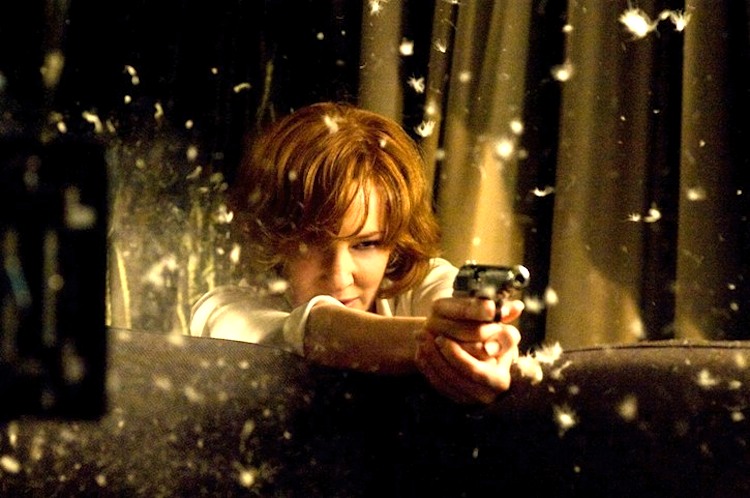
Cate Blanchett in "Hanna."

By Joe Bendel. There are 102 stars on the memorial wall at CIA headquarters in Langley. Each one signifies an officer who died in the line of duty. In their latest film, director Joe Wright and screenwriters Seth Lochhead and David Farr add at least eight stars to their ranks, inviting the audience to give a bloodthirsty cheer for each and every execution. Hollywood has come a long way since we first met James Bond’s CIA colleague Felix Leiter, but it is difficult to think of a film more hostile to the men and women who serve in America’s intelligence services than Wright’s Hanna, which opens widely today.

Hanna was developed by the Agency to be a super-killer. However, when the program was canceled, vampy agent Marisa Wiegler was charged with disposing of the evidence—and you know what that means. Somehow though, Hanna’s presumed father Erik was able to whisk her away to a remote Finnish hideaway, where he continues her training, relentlessly attacking her like a fatherly version of Inspector Clouseau’s man-servant Cato.

When Hanna decides she is ready to face Wiegler, she activates Erik’s clunky CIA signal beacon, a piece of hardware perhaps developed by the same company that produces self-destruct switches for super villains’ lairs.  (This seems like an oddly passive strategy, considering Hanna and Erik spend about eighteen hours of the day stalking wild game or each other.)

Extracted simply so she can escape again, Hanna cuts through at least eight CIA personnel and a number of freelance contractors on her way to rendezvousing Erik. If that were not disturbing enough, dear old Erik also kills two completely innocent German cops, though their deaths are kept antiseptically off-screen.

As Hanna, Saorise Ronan is quite a credible young action star and can be excused for not fully appreciating the film’s ideological implications. For his part, Eric (with a “c”) Bana mostly broods sullenly as Erik (with a “k”). However,Cate Blanchett’s Wiegler looks and sounds like a stand-up comic’s bad impression of the late Ann Richards. At least she is allowed a personality. The rest of the film’s CIA personnel and associates are colorlessly interchangeable—mere meat for Hanna’s grinder, except for one conspicuously “swishy” contractor, a bizarre exercise stereotyping for this day and age.

To give due credit, Wright stages some energetic action sequences. Unfortunately, this also makes the film more effective as propaganda. It is only too easy to picture Hanna playing for months in countries across the Mideast eager to indulge in some cheap anti-Americanism. Indeed, following the revelation that YouTube clips of Brian De Palma’s anti-Iraq broadside Redacted helped spur the fatal shooting of two American servicemen at the Frankfurt airport, a film like Hanna can no longer be viewed in an ethical vacuum.

Frankly, Wright, Bana, Blanchett, and the rest of the grown-ups behind the film should be asked directly how they would explain their film to the family of CIA officer Johnny Michael Spann, the first official American casualty in Afghanistan – killed by duplicitous Taliban terrorists. What would they say to the family of William Buckley, the CIA Beirut station chief brutally tortured and murdered by Hezbollah? What would they say to the friends and family of anyone of the fallen 102?

Indeed, Hanna has serious issues far beyond its gaping logical holes and clunky performances. It is deeply cynical and profoundly disrespectful of the American intelligence officers who risk their lives on behalf of their country. Entirely problematic, Hanna should be avoided when it opens today.

Posted on April 8th, 2011 at 10:41am.


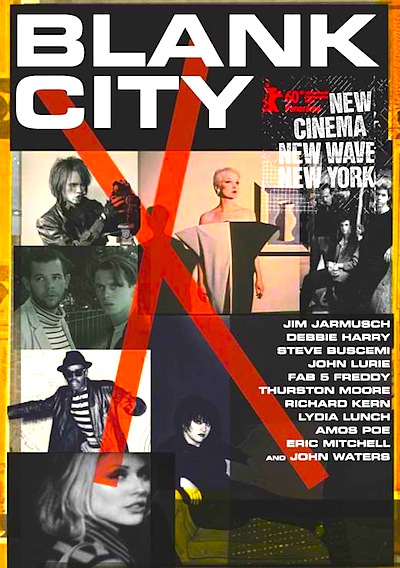
The CBGB Film School: LFM Reviews Blank City

By Joe Bendel. In 1968, Amos Poe was a budding photographer visiting family in Czechoslovakia. For obvious reasons, the Soviet invasion cut short his photographic sojourn to the countryside. There were no such constraints in the lawless anarchy of late 1970s New York, where Poe became a trailblazer in the underground Super-8 filmmaking community. Céline Danhier profiles those squatter-auteurs in Blank City, which opens this Wednesday in New York at the IFC Center.

Abe Beam’s New York was about as pre-Giuliani as the City ever got. The rule of law was tenuous at best, but rents in the East Village were relatively affordable—not that anyone even bothered to pay. CBGB’s was the center of the musical universe, also hosting a number of early screenings of what would later be dubbed the “No Wave” movement.

Danhier scored interviews with just about every significant surviving figure on the scene at the time. A portrait emerges of a kind of dormitory-like atmosphere, where everyone knew each other, but nobody had a job. Though they do not confess it outright, “coolness” within the clique was clearly of primary importance. Musician-turned-filmmaker John Lurie admits he hid his saxophone, “because nobody was doing what they knew how to do . . . technique was so hated.”

The great irony of Blank is that Danhier’s doc is far easier to watch than a good many of the films it documents. Fortunately, just about every chaotic shoot generated its share of humorous anecdotes, which generously pepper Blank. Indeed, the film is at its best when filmmakers like Jim Jarmusch reminisce about their early days. However, it is hard to stifle the eye-rolling when her interview subjects get political. At least Lizzie Borden expresses grief for the World Trade Center terrorist attack, while acknowledging the awkward similarity between 9/11 and the conclusion of her film Born in Flame.

Granted, Poe’s Blank Generation is probably not at the top of a lot of Netflix queues. Still, it is bit of an eye-opener to see how many figures from the Blank scene either legitimately crossed over, like Jarmusch, Steve Buscemi, Debbie Harry, Susan Seidelman, and Ann Magnuson, or kind-of sort-of did, such as John Lurie, Charlie “Wild Style” Ahearn, and Bette Gordon.

Like the films under discussion, Blank is best when its participants do not take their illustrious careers too seriously. While the time spent with the subsequent “Cinema of Transgression” lacks the same charm, the film mostly works as a valentine to scruffy independent filmmaking. Surprisingly entertaining, Blank opens today at the IFC Center.

Posted on February 6th, 2011 at 3:24pm.

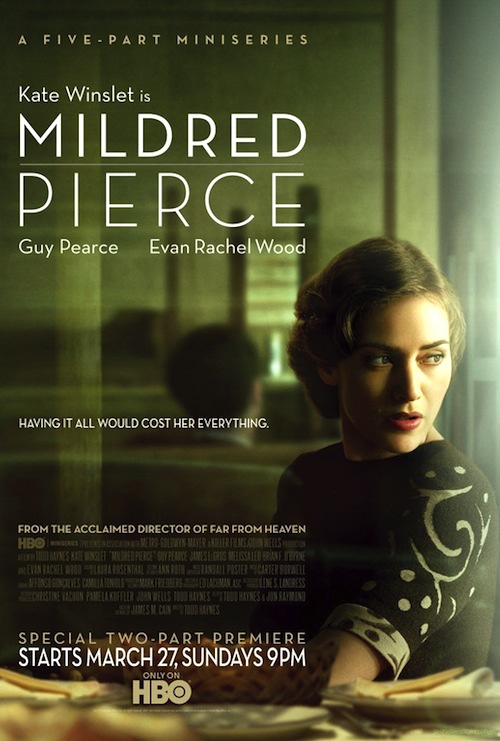
HBO’s Mildred Pierce: Faithful, If a Little Cold

By Jennifer Baldwin. “About her face there was no distinction whatever. She was what is described as ‘nice-looking,’ rather than pretty; her own appraisal she sometimes gave in the phrase, ‘pass in a crowd.’ But this didn’t quite do her justice. Into her eyes, if she were provoked, or made fun of, or puzzled, there came a squint that was anything but alluring, that betrayed a rather appalling literal-mindedness, or matter-of-factness, or whatever it might be called, but that hinted, nevertheless, at something more than complete vacuity inside. It was the squint, Bert confessed afterwards, that first caught his fancy, and convinced him there was ‘something to her.’” – James M. Cain, Mildred Pierce (1941).

The squint in her eye is Mildred’s defining detail in James M. Cain’s novel, but in Todd Haynes’s (dir. Far From Heaven) beautifully detailed new adaptation, it’s the one detail that’s been left out. Meticulously rendered, obsessively detailed, HBO’s new five-part miniseries Mildred Pierce is a gorgeous and intoxicating recreation of Depression-era southern California. And Kate Winslet throws herself full-throttle into the part of Mildred, a recently divorced housewife and mother who does what she must in order to provide for her children, especially her snobbish, cruel elder daughter, Veda (Morgan Turner, Evan Rachel Wood). Winslet gives a naturalistic performance and her sobs and flashes of anger are neither histrionic nor mechanical, but instead subtle and filled with an inner intensity. She puts as much life into Mildred as she can and you can see Winslet’s skill at work in every frame (and she’s in almost every frame of the show). Unfortunately, seeing is not feeling, and I was left strangely cold by Winslet’s performance, despite being hypnotically sucked in by the luridness of the story and the sumptuousness of the set design. Continue reading HBO’s Mildred Pierce: Faithful, If a Little Cold

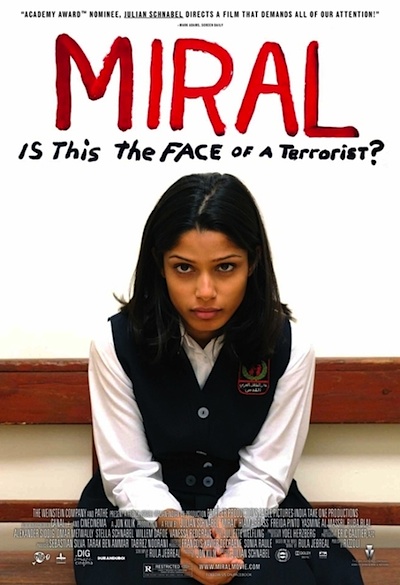
LFM Review: Miral, and the Envy of Suffering

By Patricia Ducey. Miral, the latest from painter turned filmmaker Julian Schnabel, strives to marry lyricism to polemic; the clumsy union fails.Written by Schnabel’s collaborator and now girlfriend Rula Jebreal from her “fictionalized autobiography,” the resulting, uneven film has been soundly rejected by both critics and audiences alike. Schnabel’s prior efforts–The Diving Bell and the Butterfly, Before Night Falls, and Basquiat–chose real artists as their subjects and these unique stories, told with his exquisite painterly vision, proved eminently watchable and thoroughly satisfying as stories. Schnabel knows the territory of artist versus society, artist versus himself, and of the ecstatic vision that can sometimes destroy–he inhabits this milieu himself. He fancies himself a bit of an artistic rebel as well, clad always in his silk pajamas, carrying on his serial marriages in the NY gossip columns, all with a carefully calibrated dash of épater la bourgeoisie. Why then veer away from this successful, tragic-Romantic vein and choose the highly politicized Israeli-Palestinian conflict instead?

It would be too easy to suggest that Schnabel’s love affair with the beauteous Jebreal that began with their collaboration entirely influenced his adaptation. Instead, I attribute this filmic failure to a common psychological characteristic of the left: a veneration of victimhood that surpasses real understanding or compassion.

The Germans call it Leidensneid, or an “envy of suffering.” Based on exaggerated idealism, those who have not suffered much at all feel somewhat guilty for their good fortune (as if freedom and prosperity were mere happy accidents) and almost inexplicably offer support to ideals that they would never countenance in their own life. Communism, radical Islam, fascism; all have been momentary darlings of the left. This envy of suffering propelled the German and Italian activists/terrorists of the ‘60s to identify with the Vietnamese or the PLO against the West, for instance, and culminated in Entebbe – with the end always justifying the means, however murderous. In the leftist moral universe, the losing side is always right. Thus in Miral, if Israelis are prosperous and free thinking, the poverty stricken and devout Palestinians must be their victims. Continue reading LFM Review: Miral, and the Envy of Suffering

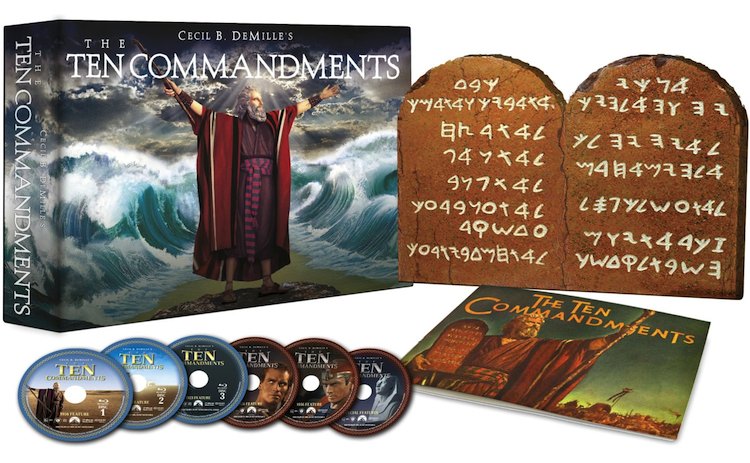
LFM Review: The Ten Commandments (1956) on Blu-ray, Available March 29th

By Jason Apuzzo. The new Ten Commandments Blu-ray comes out this Tuesday, March 29th (see the trailer for the Blu-ray at the bottom of this post). Paramount will be releasing a 2-disc Blu-ray set of the classic film, and also a Limited Edition 6-disc DVD/Blu-ray Combo set, that features both Cecil B. DeMille’s 1956 and 1923 versions of the film – and a host of goodies, including a handsome archival booklet that may be worth the price of the set on its own.

The Ten Commandments is a special favorite of mine. Not only is the film one of Hollywood’s greatest epics of the 1950s, the film is also a timeless and enduring ode to human freedom – and one which seems to grow only more timely and urgent as the years go by. The Ten Commandments is a film that will always remain powerful and ‘relevant’ so long as there are souls yearning for freedom – even, as we’ve seen recently, in contemporary Egypt and North Africa where so much of The Ten Commandments was filmed.

We had the pleasure of showing what was then the best existing print of The Ten Commandments at our first Liberty Film Festival in 2004, when we invited cast member Lisa Mitchell to talk about her recollections of Mr. DeMille – and how influential he was in her life. Several years later Govindini and I spent time with Cecilia DeMille Presley, granddaughter of Cecil DeMille and a caretaker of his legacy – who shared some wonderful memories of her grandfather with us. Most special, however, was the opportunity Govindini and I had years ago to meet Charlton Heston himself at The Egyptian Theatre in Hollywood, when he introduced a special screening of The Ten Commandments. (We actually sat right behind him during the screening – and watched his reactions to the film, which he still seemed to take great delight in so many years later.) It was an extraordinary thrill to meet him; even late in life, he was still handsome and rugged, with a biting wit – but also a warm and generous spirit. He was the consummate gentleman.

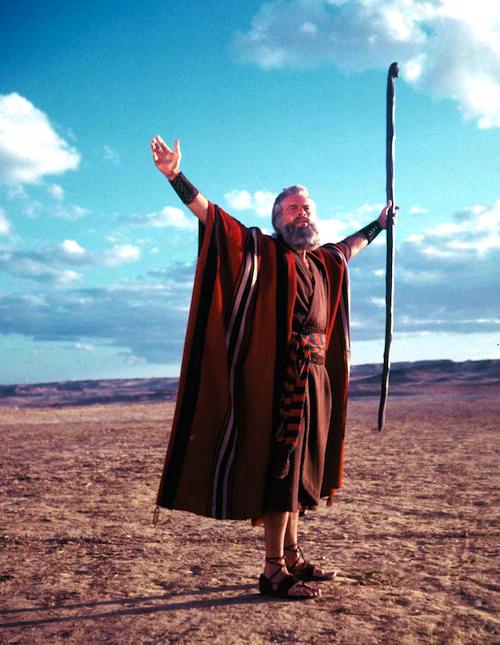
Charlton Heston in "The Ten Commandments."

The Ten Commandments is without a doubt one of the best films Hollywood has ever produced, and a carrier of important ideas about freedom, so I thought we’d take a little look back at it today. It also happens to be a magnificent showpiece for the Blu-ray medium – with the film’s rich, saturated colors, beautiful costumes and production design, endless desert vistas, and iconic visual effects sequences. To put it mildly, The Ten Commandments is not only an emotional spectacle of the heart … it’s also an eyeful.

Interestingly,The Ten Commandments happens to be the fifth highest-grossing film of all time, adjusted for inflation. When the film was released in 1956, theater tickets cost about 50 cents – and the film still grossed over $65 million. What this means is that at today’s ticket prices, The Ten Commandments would have grossed over $1 billion at the domestic box office. In the history of American moviemaking, only Gone With the Wind, Star Wars, The Sound of Music and E.T. have fared better at the box office than did DeMille’s extraordinary film.

I don’t mention The Ten Commandments‘ box office success because that denotes anything in particular about the film’s merits – success at the box office can always be misleading – but to suggest the kind of powerful bond this film has with the public. The Ten Commandments is, as it turns out, a beautifully written, directed, acted, photographed and scored film – a majestic and emotional voyage into one of the primary myths of Western religious life. It’s also the crowning achievement of one of America’s greatest moviemakers. At the same time, The Ten Commandments is something else: it’s a part of American popular mythology, as important to America’s filmic conversation about freedom and individual dignity as Casablanca, Gone With the Wind or On the Waterfront. Continue reading LFM Review: The Ten Commandments (1956) on Blu-ray, Available March 29th