LFM Reviews Captain Phillips @ The New York Film Festival

By Joe Bendel. In 2009, when the MV Maersk Alabama was hijacked by Somali pirates, it was carrying 5,000 tons of African relief supplies. No matter how desperate the poverty of its outlaw assailants might have been, waylaying the ship would not make the world a better place. This detail is acknowledged (but hardly belabored) in Paul Greengrass’s serviceable Captain Phillips, which opened the 51st New York Film Festival over the weekend.

The facts of the Maersk Alabama case are well known and Greengrass sticks to them relatively faithfully. Although an experienced merchant officer, Captain Richard Phillips is a little uneasy about his Oman to Mombassa cargo haul, for good reasons. Their route will take them past the Somali coast, soon after the release of a heightened piracy advisory.

Of course, the ship is attacked by pirates—twice. The first time, Phillips’ well drilled crew foils their assault through evasive maneuvers and improvised trickery. Unfortunately, they cannot shake Abduwali Abdukhadir Muse and his three criminal accomplices the next day. However, the crew fights back admirably, preventing the pirates from assuming operational control of the vessel. Yet, in a frustrating twist of fate, Captain Phillips is taken hostage aboard the Maersk Alabama’s lifeboat.

As a tick-tock hijacking thriller, CP is not bad at all, but it suffers when compared to Tobias Lindholm’s recently released A Hijacking, which is the superior film in every respect. Frankly, Greengrass’s film can be divided into two halves, the first be considerably stronger than the second. CP is indeed quite riveting when following Phillips and his hidden crew as they sneak about and devise ways to communicate with each other.

Oddly though, the film slackens somewhat once the action moves to the lifeboat. The tension ought to increase in such a considerably more confined space, but Greengrass cranks up the deterministic angst to such an extent, it starts to undercut the suspense. Captain Phillips almost serves as a Greek chorus, warning Muse it will all end in tears.
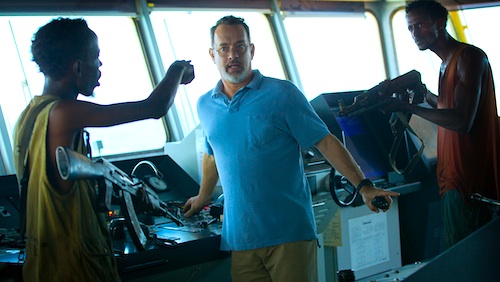
From "Captain Phillips."

Still, Muse’s already much quoted and scoffed at rejoinder “maybe in America” (as in maybe you western capitalists have other options besides piracy) poorly serves the rest of the film. It is not nearly as didactic as that soundbite suggests, making its inclusion in trailers an utterly baffling marketing decision. Greengrass bends over backwards to portray Muse and his cohorts as the pawns of shadowy masterminds, who have abandoned them to their fate. Somehow, though, he never spells out their possible connection to al-Qaeda linked al Shabaab and he certainly isn’t about to get into the whole Islam thing.

Despite an inconsistent New England accent, Tom Hanks finds the appropriate balance of world weariness and Yankee gravitas for the title character. He goes all out down the stretch in hopes of another little gold statue, with interesting if imperfect results. Barkhad Abdi also deftly walks his tightrope, expressing Muse’s erratically violent nature as well as his metaphorical (and literal) hunger pains.

Yet, the real stars of CP are the imposing Maersk Alabama (or rather the nearly identical Maersk Alexander, which serves as its stand-in) and the U.S. Navy. The ships (including the USS Truxtun, doubling for the USS Bainbridge) look awe-inspiring and the Navy SEALs are cool, calm, and deadly professional. Even though the Navy employs forms of deception, not once will reasonable viewers question the actions they take.

Greengrass shows a tremendous facility for shooting in and around the hulking ships and making the complicated chain of events perfectly clear and easy to follow. As a technical feat, the movie is hugely impressive. Yet it lacks the insight and soul-draining intensity of its Danish counterpart. Reasonably taut and tight, Captain Phillips is still a good sight better than Green Zone would lead you to suspect. Recommended on balance, Captain Phillips opens wide October 11th, after kicking off this year’s NYFF.

LFM GRADE: B-

Posted on September 30th, 2013 at 5:48pm.
LFM Reviews Alan Partridge @ The New York Film Festival

By Joe Bendel. Alan Partridge could be described as the Ted Baxter of North Norfolk, except he is more self-centered and less self-aware. The alter-ego of comedian Steve Coogan is wildly popular in the UK, but more of a cult thing here in America. Regardless, cinema obviously represented the next logical step for the name brand franchise established through radio, TV, books, and webisodes. North Norfolk’s smarmiest broadcaster finally gets the attention he craves with Declan Lowney’s Alan Partridge (a.k.a. Alan Partridge: Alpha Papa), which screens during the 51st New York Film Festival.

As fans know all too well, Partridge currently hosts Mid-Morning Matters on North Norfolk Digital with Sidekick Simon. Initially, the shallow blowhard thinks little of it when a Clear Channel-like conglomerate acquires the station, rebranding it the “SHAPE.” However, when Partridge agrees to speak to the new management on behalf of his nervous colleague, Pat Farrell, he learns either he or his supposed friend will face the corporate axe. Of course, Partridge unsubtly stabs Farrell in the back.

The pink-slipped Farrell takes the news rather badly, returning to the station with a shotgun for a spot of hostage taking. Assuming the best of his two-faced pal, Farrell demands Partridge act as the go-the-between as a police stand-off ensues. Finding himself in the media spotlight, Partridge is determined to capitalize on this career opportunity, but as always, he fumbles and bumbles at every step.

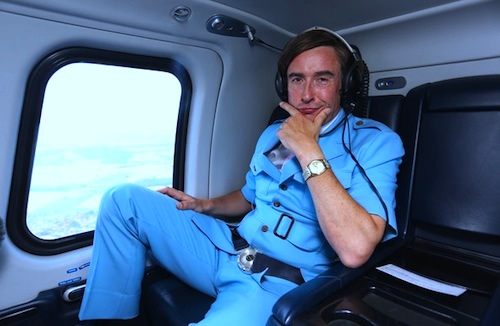
From "Alan Partridge."

If you like Partridge, the Partridge film delivers plenty, but the laugh lines are pretty much exclusively reserved for Coogan’s “bête noire” (as he referred to his signature character during the film’s NYFF press conference). It is often very funny, but it very definitely stays within the Partridge Zone. After all, satisfying the existing fan-base is the most pressing objective for any TV franchise crossing over to the big screen, which should certainly be the case here. Fear not, Partridge never develops a conscience or any sense of decorum.

Co-written by Coogan and his frequent collaborator Armando Iannucci, with Neil Gibbons, Rob Gibbons, and Peter Baynham, the film raises the stakes from previous Partridge outings, what with the hostage crisis and all, while staying true to its roots. Naturally identified as conservative in past incarnations (because that is so conducive to success with the BBC), the big-screen Partridge wisely eschews politicized humor in favor of broad physical comedy and the comeuppance of public humiliation.

Coogan still clearly enjoys the Partridge shtick and Lowney maintains a snappy energy level throughout. Although Colm Meaney gets second billing as Farrell, he does not have much opportunity to exercise his considerable comedy chops (ironically showcased quite nicely in Terry George’s hostage comedy renamed The Stand-Off, post-Tribeca). It is Partridge’s show and don’t you forget it. Enjoyably shameless overall, Alan Partridge is recommended for series fans when it screens again next Monday (10/7) at Alice Tully Hall as a main slate selection of the 2013 NYFF.

LFM GRADE: B

Posted on September 30th, 2013 at 5:44pm.

LFM Reviews Le Week-End @ The New York Film Festival

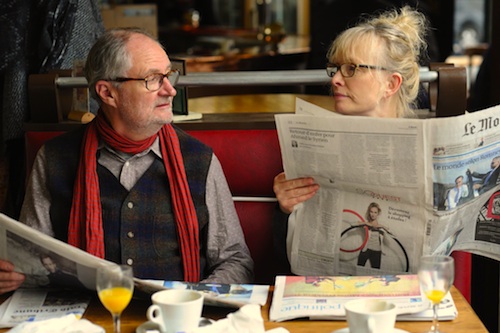
By Joe Bendel. Thanks to the Chunnel and relaxed EU customs, it is relatively easy for a late middle-aged British couple to pop over to Paris for a romantic getaway—unfortunately. Just because you can doesn’t mean you should, but they make the trip nonetheless. The pent-up resentment will flow freely in Roger Michell’s Le Week-End, which screens during the 51st New York Film Festival.

Old lefty lit professor Nick Burrows’ only success in life was marrying his wife Meg, but she never lets him forget she was and still is well out of his league. The magic ran dry quite a while ago, but recent pressures have only made matters worse. For Nick, this sentimental trip will be a desperate attempt to renew their relationship, but his wife may have different ideas. Probably the last person he needs to run into would be Morgan, his vastly more successful former hipster protégé, yet that is exactly what happens.

Week-End is very definitely a writer’s film, completely driven by its often caustic dialogue. It seems like screenwriter Hanif Kureishi takes sadistic pleasure from old put-upon Nick’s discomfort, forcing him into one dignity-stripping conversation after another. This necessarily means Meg gets most of the film’s sharpest wince-inducing lines.

Frankly, you have to sympathize with poor Nick on some level. A mere ninety minutes of Meg’s withering banter is exhausting, so the prospect of a lifetime of marriage with her makes the head reel. Still, Kureishi maintains the consistency of their voices and scores a number of rueful laughs.

From "Le Weekend."

Perhaps the viewers’ best friend during Week-End is Jeremy Sams, whose elegant jazz-influenced score (featuring trumpeter Freddie Gavita) gives us something warm and agreeable to hold onto. Even though they are radically dissimilar films, the combination of muted trumpet and Parisian streets by night immediately calls to mind Louis Malle’s Elevator to the Gallows and its Miles David soundtrack.

As Meg Burrows, Lindsay Duncan wields Kureishi’s cutting lines like a scimitar. Yet Jim Broadbent’s hang-dog face draws Michell’s focus like a magnet. They spark like crazy together, but it is still hard to believe the extreme emotional disparity of their union. To lighten the mood, Michell turns Jeff Goldblum loose as Morgan, lifting all restraints on his schticky mannerisms with rather amusing results.

It is pleasant to soak up Weed-End’s Paris locations while listening to the moody but swinging score. In a way, it provides a tart rejoinder to films like Marigold Hotel and Quartet, reminding audiences seniors are not always cute. Well crafted but somewhat over-written, Le Week-End is recommended for fans of talky relationship films when it screens again next Monday (10/7) at the Walter Reade Theater, as a Main Slate selection of this year’s NYFF.

LFM GRADE: C+

Posted on September 30th, 2013 at 5:40pm.

LFM Reviews Blind Detective @ The San Francisco Film Society’s Hong Kong Cinema Series

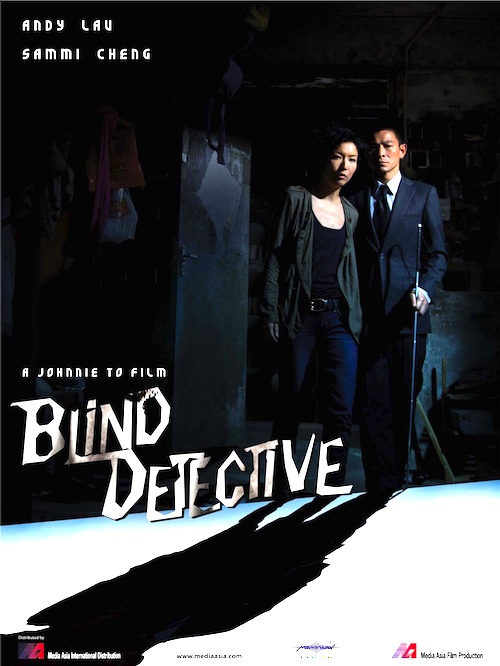
By Joe Bendel. He is sort of a consulting detective, whose bedside manner is about as warm and friendly as Holmes at his chilliest. Chong “Johnston” Si-teun has a sizeable ego and an even larger chip on his shoulder, but he is not without empathy—for the dead. Somehow, he still might find love with a far less deductive copper (his personal Lestrade) in Johnnie To’s genre blender, Blind Detective, which screens on the opening night of the 2013 edition of the San Francisco Film Society’s annual Hong Kong Cinema series.

Johnston’s sudden onset of blindness forced him to retire as police detective, but he still solves crimes for a living. He now relies on reward bounties, particularly those still valid for cold cases. Impressed by his results, Inspector Ho Ka-tung retains his services to find her long missing high school friend, Minnie. She has always been good with firearms and martial arts, but the cerebral side of detective work has always troubled her. Promising to teach her his methods, Johnston moves into her spacious pad, but immediately back-burners Minnie’s case in favor of several expiring bounties.

The half-annoyed Ho indulges Johnston for a while, eventually embracing his extreme re-enactment techniques. Blind arguably reaches its zenith when Johnston and Ho recreate a grisly murder conveniently set in a morgue, strapping on helmets and whacking each other over the head with hammers. If you ever wanted to see the Three Stooges remakes Silence of the Lambs, To delivers the next closest thing. Of course, their search for Minnie soon percolates back to the surface, when Johnston starts to suspect she fell victim to a serial killer preying on broken-hearted young women.

Much like the old cliché about the weather, if you don’t like the tone of Blind Detective, just wait five minutes, because it will change. You do not see many films incorporating elements of romantic comedy, slapstick farce, and dark serial killer thrillers, probably for good reason. To gives roughly equal weight to all three, yet it all hangs together better than one might expect.

Sammi Cheng is a major reason Blind works to the extent that it does. It is great to see her Inspector Ho act as the film’s primary action figure and her radiant presence lights up the screen. She develops decent chemistry with Andy Lau’s Johnston, but he looks profoundly uncomfortable in the intuitive curmudgeon’s skin. However, To fans will be relieved to hear Lam Suet duly turns up as a fugitive gambler hiding out in Macao.

To also delivers plenty of bang for the audience’s bucks in the third act. There are some distinctly creepy bits and a fair amount of suspense. On the other hand, a drawn out subplot involving Johnston’s long held crush on a dance instructor chews up plenty of time but serves little purpose except to telegraph the feelings beginning to stir between the odd couple detectives.

Thanks to two well executed showdowns, Cheng’s winning performance, and some evocative Hong Kong locales, Blind Detective chugs along steadily enough for a while and picks up mucho momentum down the stretch. Recommended for To fans and those with a taste for comedic mysteries, Blind Detective screens this Friday night (10/4) at the Vogue Theatre as part of the SFFS’s 2013 Hong Kong Cinema series. Action aficionados should also check out Chow Yun-fat’s massive return to form in Wong Jing’s The Last Tycoon screening Saturday (10/5) and Sunday (10/6) at the same venue.

LFM GRADE: B-

Posted on September 30th, 2013 at 5:37pm.

LFM Reviews The Missing Picture @ The New York Film Festival

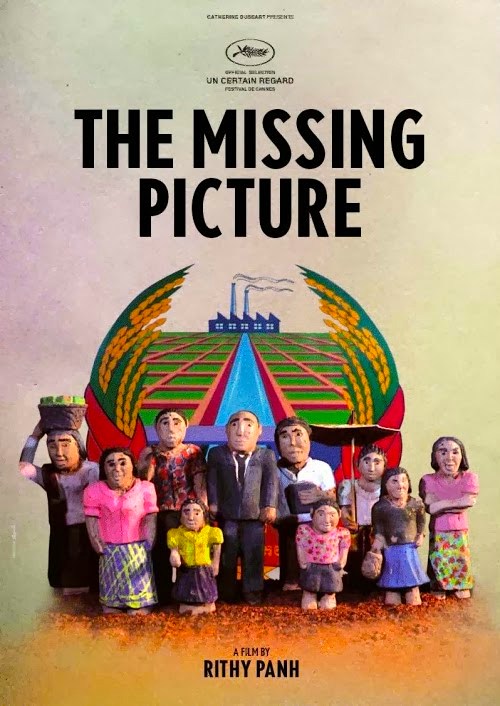
By Joe Bendel. According to estimates, the Maoist Khmer Rouge regime executed ninety percent Cambodia’s creative artists and performers. During their reign of terror, the nation’s once thriving film industry was also literally decimated. Decades later, a filmmaker and a sculptor combined their talents to chronicle Cambodia’s years of madness with unusual power and grace. Rithy Panh is arguably the foremost documentarian chronicling the crimes of the Khmer Rouge, but to tell his family’s story he enlisted the skills of French Cambodian artist Sarith Mang. Where once there were no surviving images, Mang’s carved figures bring the tragic past back to life in Panh’s The Missing Picture, which screens during the 51st New York Film Festival.

While the Khmer Rouge churned out plenty of propaganda, they were more circumspect in documenting their own crimes. That left plenty of holes for Panh to fill in, as his title suggests. With the help of Mang’s coarse yet eerily expressive clay figurines, Panh recreates the torturous conditions he somehow lived through, but which claimed the lives of his parents, nephews, and little sister, one by one.

Panh’s decision to use Mang’s figures and richly detailed diorama backdrops might sound bizarrely hyper-stylized, but it is shockingly effective. Frankly, the scenes depicting the horrifying death of Panh’s sister are nothing less than devastating. It is an unlikely approach, but it directly conveys the emotional essence of the circumstances.

To better understand the extent of what was lost, Panh periodically looks back at happier, pre-Khmer Rouge days, as well. Again, he compellingly evokes of tactile sense of those innocent times. Viewers can practically smell the spices at the neighborhood parties as they listen to a hip local rendition of Wilson Pickett’s “Midnight Hour.”

Rarely has a documentary ever been so exquisitely crafted. Each and every one of Mang’s figures is a work of art, perfectly lit and lensed by cinematographer Prum Mésa to bring out their full eloquence. Composer Marc Marder supports the visuals with what might be the most mournful film score since Schindler’s List. It is a film that resounds with raw pain and defiant honesty (aside from a dubious bit of moral equivalence regarding western capitalism, probably tossed out to mollify festival programmers).

Not a film to be shrugged off, The Missing Picture holds viewers completely rapt and haunts them for days after viewing. Recommended for a considerably wider audience than traditional doc watchers, it screens this coming Monday (9/30) at the Beale Theater and Tuesday the eighth at the Gilman as an official selection of the 2013 NYFF.

LFM GRADE: A-

Posted on September 27th, 2013 at 3:20pm.

LFM Reviews Fifi Howls from Happiness @ The New York Film Festival

By Joe Bendel. Given his darkly surreal imagery and his penchant for destroying his own work, there is definitely something Kafkaesque about the late Iranian expatriate artist Bahman Mohasses. For years he had removed himself from the world. Yet, he was ready, perhaps even eager to talk when Mitra Farahani tracked him down for her documentary profile, Fifi Howls from Happiness, which screens during the 51st New York Film Festival.

Mohassess is clearly out of step with the current Islamist regime in Iran. It seems his large scale nude statues were not compatible with the post-Revolutionary standards of “decency.” He also happened to be gay, but in a defiantly politically incorrect way (marriage was not exactly a priority for him). However, his first extended period of self-imposed exile began shortly after the Shah’s ascendency.

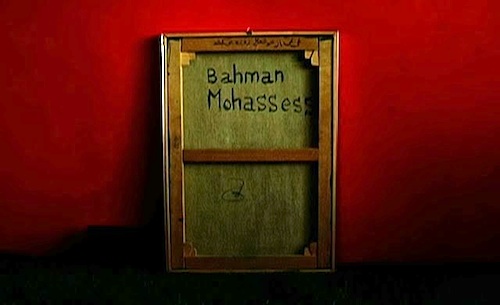
Eventually, Mohassess returned to his homeland, where the Shah’s wife became one of his leading patrons. A far cry from a fundamentalist, Mohassess still gave the Islamic Revolution a fair chance, but eventually tired of the gauche scene. Before he left, Mohassess destroyed a significant portion of his oeuvre, taking only a few pieces with him (most notably including the painting that supplies the title of Farahani’s film).

On one hand, Mohassess’s actions echo the existential self-negation of a Dostoyevsky character, yet at other times one suspects it is all a calculated attempt to create mystique. It almost seems like Mohassess has been waiting for someone like Farahani to take his bait. Regardless, she develops a considerable rapport with the artist, but never sounds nauseatingly fawning.

From "Fifi Howls from Happiness."

While not quite deleted from Iranian history books, Mohassess’s place in the nation’s collective consciousness is decidedly ambiguous, which makes Fifi a valuable cinematic record. Clearly, there are still Mohassess collectors, like Rokni and Ramin Haerizadeh, prominent Iranian artist-brothers working in Dubai. Through Farahani, they visit Mohassess to commission what may or may not be his last great artistic statement.

Since Fifi is almost entirely shot in Mohassess’s residential hotel, the film is visually somewhat static. Still, it is fascinating to see the stills of his work, accompanied by his artist commentary, especially considering most of said pieces no longer survive. Farahani cleverly incorporates her subject’s unsolicited directorial advice, ironically following it to the letter. Her extended allusions to Balzac’s The Unknown Masterpiece and Visconti’s The Leopard also add literary flair.

Indeed, Farahani earns great credit for working with and around Fifi’s inherent limitations. Mohassess is a difficult subject, who never sounds like he is really “for” anything or anyone, not even himself. Yet, Farahani does him justice, convincing the audience he is an odd character to visit, but one well worth saving from the memory hole. Recommended for connoisseurs of art documentaries and Mohassess’s work, Fifi Howls from Happiness screens tomorrow (9/28) and Tuesday (10/1) at the Gilman Theater as part of the Motion Portraits section of the 2013 NYFF.

LFM GRADE: B

Posted on September 27th, 2013 at 3:12pm.