Feininger

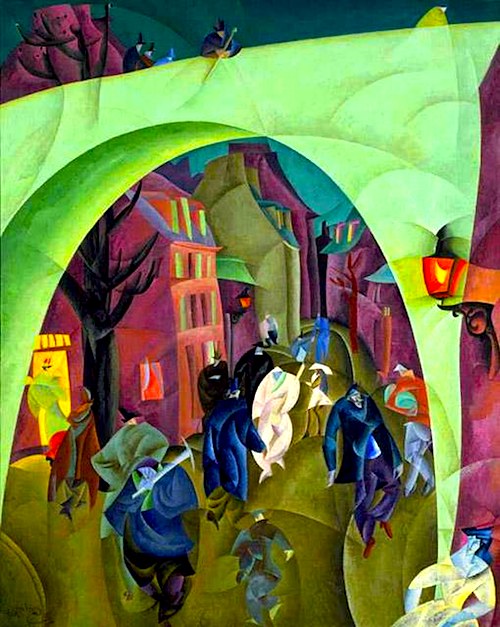
"Green Bridge II" (1916).

By David Ross. Lyonel Feininger has suddenly and splendidly swung into view, like some rare astral event. The Whitney Museum is holding, through October 16, an exhibition called “Lyonel Feininger: At the Edge of the World,” which should go far toward confirming the obvious: Feininger was for half a century one of the world’s chief painters. The exhibition is a major contention on his behalf, as the magnificent exhibition catalogue – available here – makes clear.

Feininger (1871-1956) is less celebrated than he should be principally because he confuses the national categories that structure so much art history. He was born in New York to German parents. So far so good. At age sixteen, he shifted his studies to Germany and wound up becoming the proverbial American abroad. During his fifty-year German sojourn, he fell in with the expressionists and later joined the faculty of the Bauhaus as an instructor in printmaking. During the 1920s, he became one of the “Blue Four,” an eminent coterie that included Kandinsky, Klee, and Alexej von Jawlensky (see here for an excellent survey). Feininger returned to the U.S. in 1937, after the Nazis sent a not so subtle signal by including his work in their infamous “Degenerate Art Exhibit.”

Neither quite American nor quite German, Feininger figures in nobody’s national tale. Had he remained in the U.S. or expatriated himself in England or France – countries entwined in our own modernist myth – I suspect he would now be considered one of the Titans of twentieth-century American art. Certainly he was a greater painter than Marsden Hartley (born 1877), Georgia O’Keeffe (born 1887), and Thomas Hart Benton (born 1889), who may be his closest American counterparts. As it is, the Wikipedia entry on American art does not even mention Feininger.

Complicating matters further, Feininger passed through three distinct and not easily reconciled phases. He was first a German expressionist, an oil cartoonist of spooky elongations and lurid Halloween scenery; he was second an impeccably elegant cubist of the school of Cezanne in its Weimar manifestation; he was third – especially during his later American years – a sketch artist whose modest drawings of sailboats, waterfront scenes, and New York buildings translated nature into a kind of wiry architecture, a taut cross-hatching whose inspiration, it’s not incredible to think, may have been the rigging of ships. These latter drawings, sometimes overlaid with watercolor, have a wonderful simplicity, a relaxed confidence in the soundness of their own geometry. Which is the primary Feininger? What explains the strange, disjunctive pattern of his career? There are no clear answers and thus few critics inclined to take up the questions. Continue reading Feininger
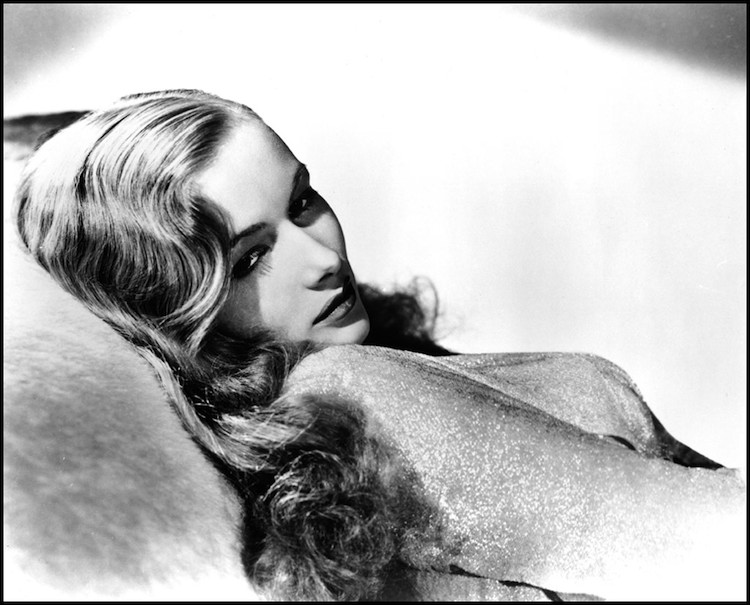
Veronica Lake, by George Hurrell

By David Ross. My preferred form of Internet time-wasting is “Google Images.” I collect photos of great writers, Georgian architecture, Michelin-starred food (the kind I may never get a chance to eat), nineteenth and early twentieth-century art (Samuel Palmer, Lyonel Feininger, Wyndham Lewis, etc.), and, yes, glamour shots of classic actresses, including, but not limited to, Anouk Aimee, Lauren Bacall, Capucine, Audrey Hepburn, Katherine Hepburn, Anna Karina, and Grace Kelly, preferably in Givenchy or Chanel, always in glorious black and white. In short, I’m a minor connoisseur, on which basis I would like to make the reckless assertion that the above photo of Veronica Lake, circa 1941, is the greatest still photo – the most elegant, seductive, multivalent – ever taken of an actress. The photographer was George Hurrell (1904–1992), whom Virginia Postrel calls the “master of Hollywood glamour.” You can read about his revival here and buy his work here.

The photo seems at first glance your standard come-hither boilerplate, elevated, obviously, by Veronica’s preternatural bone structure and hallmark tresses. I find, though, that Veronica’s expression has a kind of Gioconda irreducibility. At once sexy, weary, predatory, and demure, her expression seems to say something like, “I have no interest in you – no interest in the mere world – but if you insist, I will rouse myself to the matter of your destruction – and you will relish every wound.” Notice the faint sneer that registers at the right corner of the mouth; notice the shadowed right eye that carries dual connotations of the harlequin and the gun moll with a shiner; notice the coffin-forming play of light and shadow. This is a disconcerting silhouette indeed: a dark little study of sex and death, a forked image of the sleeping beauty and the stirred succubus, the thirst-awakened vampiress.

In comparison, Rita Hayworth kneeling on her satin-sheeted bed and Marilyn Monroe struggling with her billowing skirt are images of mere adolescent wish fulfillment, of sweaty pubescence. If buxom vistas are your thing — well, enjoy. Hurrell’s version of Veronica Lake belongs to an entirely different category. Its glamour recalls Beardsley, Weimar, what have you; it’s not kid’s stuff.

Posted on September 9th, 2011 at 2:07pm.

The Art of Stage Fighting: LFM Reviews My Kingdom

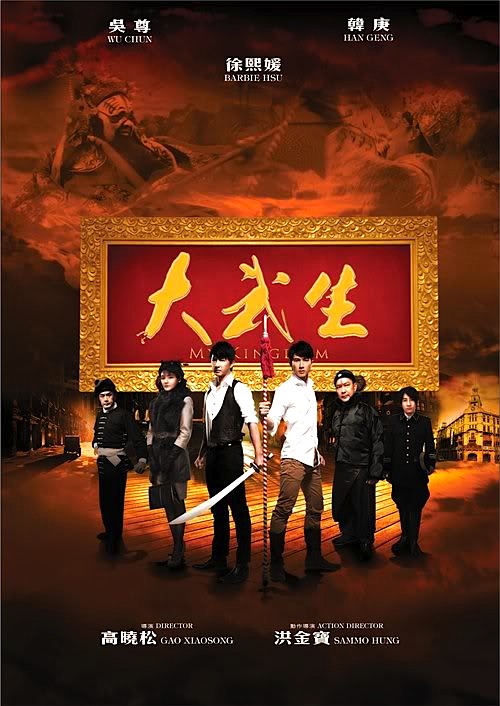
By Joe Bendel. Early Twentieth Century China was a rough and tumble place. If the Shaolin monks could mix it up with warlords and imperialists, why shouldn’t the actors get in on the act? Two adopted brothers will play parts in a high tragedy of almost Biblical dimensions in Gao Xiasong period action revenge drama, My Kingdom (trailer here), which opens today in New York.

Young Er Kui’s singing voice saved his life. Unfortunately, the rest of the Meng clan, including his little sister, were beheaded by the cruel Prince Regent. Er Kui is raised – with the slightly older Guan Yi Long – to be an apprentice to revered opera performer Master Yu. Opera is serious business in 1920’s China, especially when Master Yu is awarded a golden plaque designating him “The Mightiest Warrior.” Drawing a full contact challenge from the resentful Master Yue (with an “e”), Yu must “break his spear,” and retire from the stage after losing the duel under somewhat questionable circumstances.

Both brothers, however, yearn for vengeance. Yi Long is determined to regain their master’s golden plaque from Yue, while Er Kui is determined to bring down his wrath upon the Prince who bestowed it. The first proves relatively easy, but enormously cinematic. The latter will be more difficult, considering the offending Prince is dead. He had seven sons, though (but maybe not for much longer). Further complicating matters is Xi Mulan, Yue’s lead actress and former lover. She now shares the stage with the brothers who have taken over Yue’s Beijing Opera troupe, which is more than a little awkward.

Kingdom is somewhat akin to Japanese filmmaker Kon Ichikawa’s truly classic Revenge of a Kubuki Actor, combining a behind-the-scenes view of traditional theater with a good old-fashioned payback story. However, Kingdom has far less angst and much more melee, with Master Sammo Hung serving as action director (as he did for Detective Dee and the Ip Man franchise). He puts quite a stamp on the film, choreographing the fight scenes with appropriately theatrical flair. Continue reading The Art of Stage Fighting: LFM Reviews My Kingdom

The Return of John Landis: LFM Reviews Burke & Hare

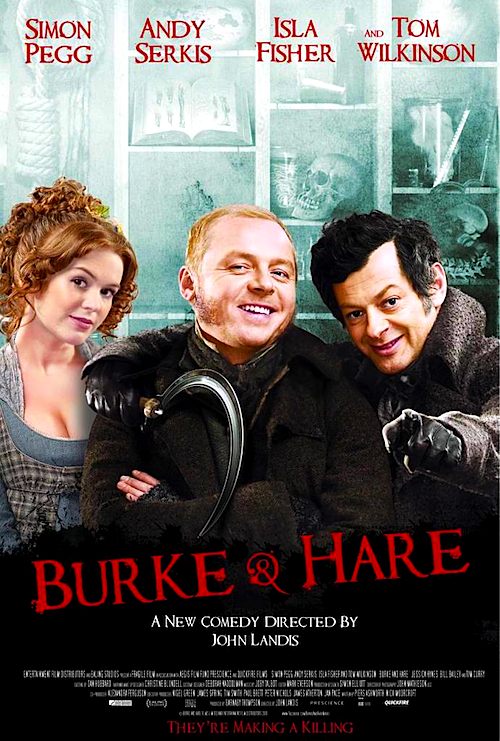
Isla Fisher in "Burke & Hare."

By Joe Bendel. William Burke and William Hare would definitely be considered working class, but they probably never put in an honest day’s labor in their lives. They do grasp some basic economics, though. Edinburgh’s celebrated anatomy colleges have a large unmet demand for fresh cadavers. Even these two idiots understand how to increase the supply in John Landis’ Burke & Hare (trailer here), which opens this Friday in New York at the IFC Center.

For those who have been wondering where Landis (the director of such iconic comedies as Animal House, The Blues Brothers, and An American Werewolf in London) has been for the last decade or so, he was back in the UK (amongst other places, presumably), where B&H was shot on location in Edinburgh and at the storied Ealing Studios. Indeed, B&H has a charming period look, evoking the spirit of early Hammer horror films and Roger Corman Poe adaptations (which Landis can probably quote chapter-and-verse).

The two Williams are not evil per se, but they are definitely low lives. Largely they sponge off Hare’s wife Lucky, who rents rooms to elderly pensioners. When one tenant passes away before settling for the month, she makes the lads dispose of the body. However, when they discover the ambitious Dr. Robert Knox will give five pounds a pop for fresh bodies, it opens up a whole new business venture for them. Of course, it also attracts some unwelcome attention.

Though there is plenty of gross-out humor and a not inconsiderable body count, B&H might be too gentle for many midnight screening patrons. Rather, the film has a nostalgic feel, nicely established with Angus the Hangman’s introductory tour of the city. The Hammer vibe is further reinforced by an appearance from the great Sir Christopher Lee as Old Joseph, one of the gruesome twosome’s early victims.

Andy Serkis obviously gets it, reveling in Hare’s roguish degeneracy. However, Simon Pegg’s put-upon shtick as Burke gets a little tiresome, particularly with the subplot involving the manipulations of a gold-digging actress he is smitten with. After all, according to the old nursery rhyme: “Burke’s the butcher, Hare’s the thief,” not the knebbish soft touch.

However, as Knox, “the boy who buys the beef,” Tom Wilkinson chews the scenery with relish, channeling Peter Cushing and Vincent Price as a sophisticated man of science led astray by his enthusiasm and arrogance. He even gets off a mother joke at his rival’s expense worthy of Tracy Morgan. Indeed, B&H has a great supporting cast, including Tim Curry as the clammy Dr. Alexander Monro and Downton Abbey’s Hugh Bonneville as Lord Harrington, the Solicitor General.

With an epilogue that could almost, but not quite, be considered educational, B&H is strangely endearing for a film about grave-robbing cutthroats. Yet Landis manages to keep the tone light and breezy, while paying homage to the more innocent costumed horror films of old. It is entertaining enough to lead movie lovers to hope it is the beginning of a full-fledged return to narrative features for Landis (who has been a talking head in scores of recent documentaries, including American Grindhouse and Machete Maidens Unleashed). Amusing and atmospheric, B&H is definitely recommended for genre fans when it opens this Friday (9/9) at the IFC Center in New York.

Posted on September 8th, 2011 at 3:33pm.

An Apocalyptic Vision: LFM Reviews The Lost Town of Switez

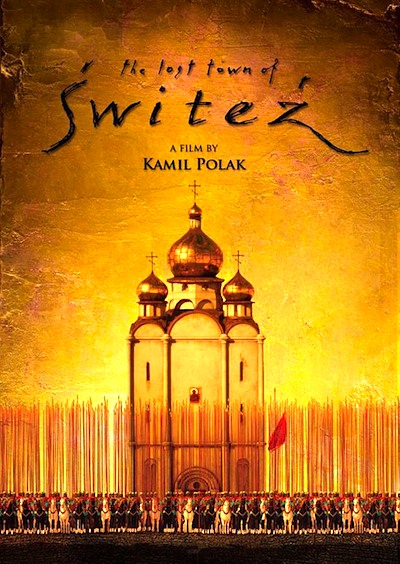
By Joe Bendel. So deeply ingrained are the images of a devastated Poland during WWII and the Soviet era, many Americans forget the millennia-old country was one of the great European powers during the Middle Ages. Poland’s Casimir III was the first crown head of Europe to grant legal protection to Jewish subjects. It was also one of the few European countries untouched by the Black Death, perhaps the result of good national karma. The glory of Medieval Poland is evoked in Kamil Polak’s visually arresting animated short The Lost Town of Świteź (trailer above), which screens this Saturday as part of the shorts program during the Film Society of Lincoln Center’s Transitions retrospective of recent Polish cinema.

Based on Adam Mickiewicz’s epic poem, one of many celebrating Poland’s folklore, Town begins on the proverbial dark and stormy night. A nineteenth century nobleman’s carriage is waylaid by the inclement weather. Far from a sanctuary, this forest appears to be enchanted. Seeking refuge from spectral horse-soldiers, the man finds himself transported to the mythic city of Świteź, where he witnesses its destruction at the hands of the hordes pursuing him. As the city faithful send up orisons to heaven, a choir of angels comes down to bear witness to man’s carnage (and perhaps the salvation of the next life).

Combining specially commissioned oil paintings, rendered in a style suggestive of great Polish artists like Józef Chełmoński and Aleksander Gierymski, with state of the art computer animation, Town has a rich, ethereal look unlike any in recent animation. Some enterprising film festival ought to program it with Lech Majewski’s The Mill and the Cross, which in many ways is the nearest comparable film.

Perhaps though, what is most striking about Town is the unapologetically powerful Christian imagery. Completely without irony, Polak’s film conveys an apocalyptic Christian vision with far greater overwhelming immediacy than anything attempted in recent evangelical cinema. Yet it can also be enjoyed simply as a Slavonic variant on the Atlantis archetype. The film is also perfectly scored by Irina Bogdanovich, whose compositions unambiguously suggest the Middle Ages, but with a hint of romanticism.

Town truly proves animation can be both a form of entertainment as well as high art. Best appreciated on the big screen, Polak will present his painterly canvas in-person when Town screens this Saturday (9/10) at the Walter Reade Theater, as part of Transition’s shorts block. It will also screen again in New York later in the month (9/23) at the 2011 NYC Short Film Festival as part of program A.

Posted on September 8th, 2011 at 3:02pm.

Patti Smith

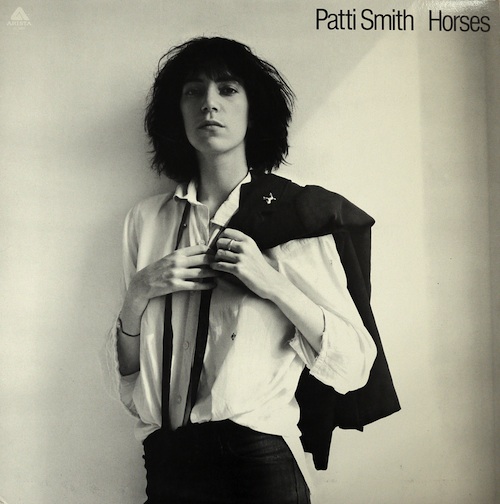
By David Ross. Let’s admit it. We all have a weak spot for certain women from the wrong side of the political tracks. Maybe you have little fantasies about discussing Bresson with Susan Sontag while soaping her back in the tub. Maybe you imagine sharing the Sunday paper with Joan Didion. My own weakness – lifelong – is for Patti Smith. I had a girlfriend who gamely stood in line to have Patti sign a CD copy of Horses for me. When she finally got to the front of the queue, she told Patti, “My boyfriend is in love with you.” Patti said, “Doesn’t he notice these grey hairs?” My girlfriend said, “I don’t think he cares.” Well spoken on my behalf.

William Blake offers – perhaps ‘records’ is the more appropriate verb – this exchange with the prophet Isaiah in The Marriage of Heaven and Hell:

Then I asked: “Does a firm persuasion that a thing is so, make it so?”
He replied, “All poets believe that it does, and in ages of imagination the firm persuasion removed mountains; but many are not capable of a firm persuasion of anything.” (V, 27-32).

What’s so alluring in the supra-physical sense is Patti’s capacity for this “firm persuasion.” She’s not mugging (like Bono) or merely howling (like Kurt Cobain): her music is a disciplined act of conviction in her own poetic and prophetic calling. One can look awfully silly as a self-styled poet or prophet (Jim Morrison certainly did) but Patti never waivers and never allows the spell to break; we’re convinced in the end because she’s utterly convinced from the start. Arguably, Patti was the last legitimate keeper of the romantic flame itself, that desperate belief in art that began in the late nineteenth century and guttered utterly in our own time.

A bony, boyish waif from Woodbury Gardens, NJ, Smith cut her teeth at the Chelsea Hotel and St. Mark’s Church during the late 1960s and early 1970s, achieving minor underground celebrity as an actress, playwright, rock journalist, artist, and poet. Her chief inspirations were predictable but nonetheless powerful: Rimbaud, Genet, Burroughs, Ginsberg, Dylan, Hendrix, the Rolling Stones. In 1971, she began to recite her poetry to guitarist Lenny Kaye’s accompaniment. By 1976, she had improbably become the most acclaimed female rock star since Janis Joplin and Grace Slick had emerged ten years earlier.

Smith’s first album, Horses (1975), weds cascades of Beat-and Symbolist-inflected poetry to the lean, driving sound of proto-punk garage rock. The album remains a signature argument for the artistry of rock’n’roll and is to my mind one of the ten supreme albums of the rock era. Rolling Stone ranks Horses 44th on its list of the 500 greatest albums of all time, just behind Dark Side of the Moon. This becomes a backhanded compliment when you consider certain albums that rank higher: the Eagles’ Hotel California (#37), Carol King’s Tapestry (#36), David Bowie’s The Rise and Fall of Ziggy Stardust and the Spiders from Mars (#35), U2’s The Joshua Tree (#26), Fleetwood Mac’s Rumours (#25), and Michael Jackson’s Thriller (#20). Preferring Tapestry to Horses is like preferring Jennifer Aniston to Veronica Lake – an aesthetic misjudgment that raises questions about one’s entire world view.

Judge for yourself: here is the epic studio version of “Birdland,” Smith’s fantastic synthesis of Arthur C. Clarke, Shelley’s Queen Mab, and the Book of Revelations. Ponder also these scruffy, raging, nearly epileptic live versions of “Horses” and “Gloria.” Continue reading Patti Smith