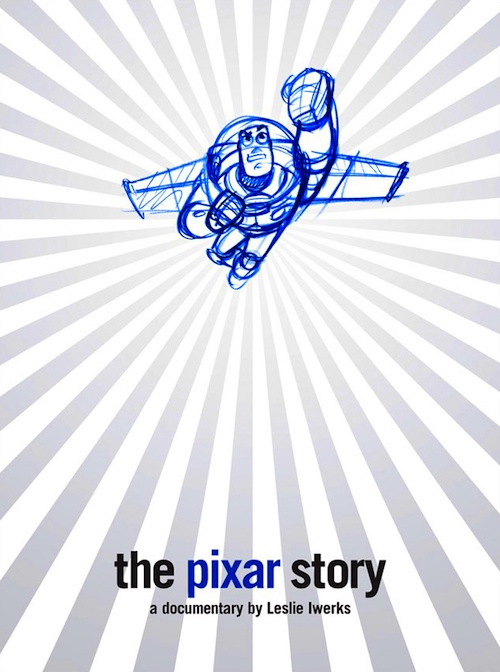
The Pixar Story & The Lessons of Pixar’s Success

By David Ross. We all have a vague idea of the ‘Pixar story’: John Lasseter, Steve Jobs, technological innovations of some kind, fractious dealings with a decadent Disney, eventual world-wide success measured in billions of dollars and universal critical adulation. The 2008 documentary of the same name fills in the historical detail and provides human color.

If the documentary itself is merely workmanlike, the story it narrates belongs amid the July 4th bunting of the American pageant. It’s a chapter in the tale of Graham Bell, Edison, the Wright Brothers, Disney, and Apollo 11, an episode in the cheerful reinvention of the world on the basis of something deep and generous in the American spirit. There’s very little for which contemporary Americans will not have to apologize to whatever god or superior alien race is watching, but Pixar speaks well of us. It mitigates just a little the malls and video games and rap music, everything we might, following Allen Ginsberg, call “Moloch.”

The Pixar Story is informative cultural history, but its implicit lessons have wider and more important application. For better and for worse, corporations now infiltrate every crevice of our culture, and it has become crucially important to weigh how corporatism and cultural meaning can be reconciled. Pixar represents a rare digital-age example of a corporation that’s deepened rather than debased the culture. The lessons are not particularly abstruse, but difficult to drive home and implement, viz.:

1) Corporations must construe themselves as communities rather than machines. Communities consist of autonomous and interactive people; machines consist of inanimate parts that exist in a paradoxical state of mutual dependency and complete isolation. Pixar resists the temptation to rationalize, regulate, and formalize presumably because those at the top – Lasseter et al. – are so free of the usual egomaniacal impulse to control and subsume. The result is an organization that’s supple, organic, and decentralized, as loose and yet unified as an eighteenth-century village. I imagine that Chuck Jones’ Warner Brothers team was much the same. Continue reading The Pixar Story & The Lessons of Pixar’s Success
Avast! LFM Mini-Review of Pirates of the Caribbean: On Stranger Tides

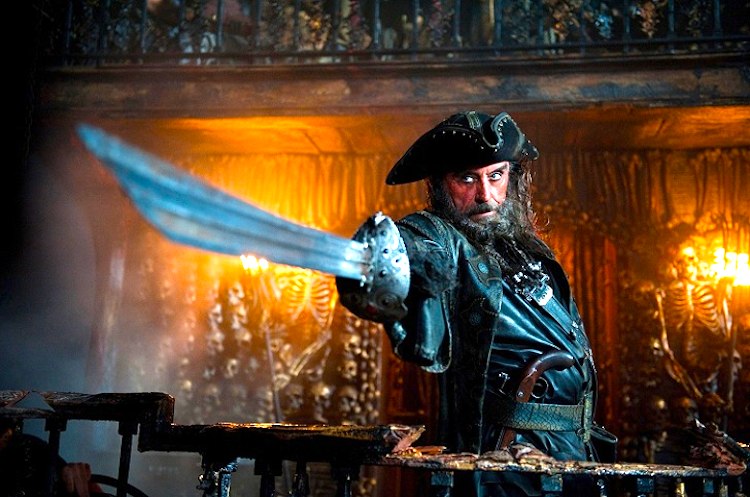
Ian McShane as Blackbeard in "Pirates of the Caribbean: On Stranger Tides."

By Jason Apuzzo. THE PITCH: With seductive mermaids, the Spanish fleet, and a cranky Geoffrey Rush standing in their way, Johnny Depp’s Captain Jack Sparrow leads saucy pirate wench Penélope Cruz and Ian McShane as Blackbeard on a quest for the mythical Fountain of Youth.

THE SKINNY: After the previous film’s reportedly $300 million budget, Disney’s formidable Pirates franchise goes on a diet – as this slightly undernourished sequel jettisons the heavy VFX sequences of the past, but makes up for them with humor and a colorful turn by Ian McShane as the legendary, real-life pirate Edward Teach/Blackbeard, along with a long-overdue love interest for Captain Jack in the form of a fiery and duplicitous Penélope Cruz.

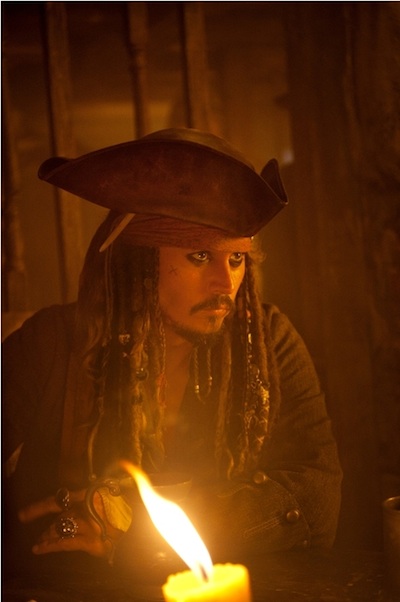
Johnny Depp as Captain Jack Sparrow.

WHAT WORKS:

• Johnny Depp’s Jack Sparrow schtick has been refined down to a pleasant bouillabaisse of squints, smirks, pirouettes and self-effacing one-liners. It all works here again, like clockwork, and it’s the key to what makes these films tick. While most of the Pirates cast typically get lost in their costumes or heavy make-up, Depp is the only one who really seems to feel at home – always bringing a lightness of touch to the proceedings. Whatever Disney’s paying him, it’s worth it, as the franchise would be lost without his good humor.

• Even though they’re a bit too covered-up for my tastes, the film’s exciting mermaids add to the growing catalogue of vivid mythological creatures already encountered in this series.

• Typical of the Pirates series, the film’s production design is rich and sumptuous. Also helping matters out in giving the film a lavish touch is Hans Zimmer’s score, aided here by guitar flourishes from the Mexican musical pair Rodrigo y Gabriela.

• An absolutely priceless cameo from Keith Richards, who utters what’s probably the film’s most memorable line.

WHAT DOESN’T WORK:

• Geoffrey Rush is an actor I’ve never warmed to, and this film doesn’t help matters. For someone so vexatious, with a permanently constipated look on his face, he certainly gets a lot of screen time.

• In comparison to the vast VFX spectacles of the past, this new Pirates feels a little on the smallish side – and some sequences feel like filler. Also: I’m not certain that the film’s payoff at the end – at the Fountain of Youth – really packs enough of a punch, given what we’ve become accustomed to from this series.

THE BOTTOM LINE: Continue reading Avast! LFM Mini-Review of Pirates of the Caribbean: On Stranger Tides

The 1 Year Anniversary of Libertas Film Magazine

By Jason Apuzzo. Today, May 19th, is the one year anniversary of our re-launch of Libertas as Libertas Film Magazine (LFM). Govindini and I want to thank all of our writers – including (in alphabetical order) Jennifer Baldwin, Joe Bendel, Patricia Ducey, Max Garuda, Steve Greaves, David Ross and The Joker – for their wonderful contributions of this past year. It’s a great pleasure putting this site together with you all each day, and we sincerely thank you for the insight, dedication and good humor you’ve brought to this new version of Libertas. We could not do LFM without you. Our thanks also go out to Lars Larson for featuring Govindini regularly on his national radio show and for publicizing our efforts, and also to Michael Apuzzo, and to special friends of Libertas Gretchen Brooks and Rebecca Julian for their kindness and enthusiasm.

And on behalf of all of our writers, we also want to thank our readers. If there’s any group of people who make this site go, who make Libertas an exercise in communication, it’s our readers – who contribute so much in the comments section each week, and always turn what we do here into a productive and colorful conversation. We thank you humbly for your attentiveness.

When we launched this new version of Libertas last year, we described the site in our inaugural post as having “a different emphasis from that of its predecessor … Whereas the prior Libertas spent most of its time critiquing the ideological content of Hollywood entertainment – much of which is still inimical to freedom – the new Libertas Film Magazine is focused on positively promoting films that celebrate freedom, democracy, and the dignity of the individual.”

Having launched the site with that new mission, I had one major concern: whether there would be enough films to even talk about! Little did I know what a task we were actually setting ourselves – because easily the most pleasant surprise we’ve had over the past year is how many new films we’ve been able to discuss that are infused with these basic values. This has easily been the most encouraging aspect of doing this site – what filmmakers all around the world have contributed to it, by way of their creativity. And in a sense, it’s really to them that Libertas is dedicated. Their courage, devotion and vision demand a voice – and that’s what Libertas endeavors to provide.

So again, let me thank everyone, and encourage our writers to keep writing, and our readers to keep reading and commenting … but most importantly, I encourage filmmakers out there, many of whom read this site, to keep making films. You and your inspirational efforts, ultimately, are why we’re all here.

Posted on May 19th, 2011 at 9:48pm.

A Classic Movie Lover’s Weekend at The 2011 TCM Film Festival

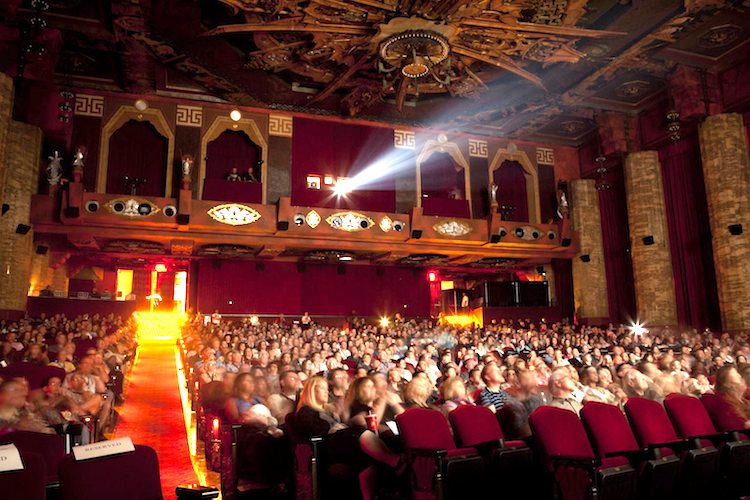
Watching "Gaslight" (1944) inside the Chinese Theatre during the TCM Classic Film Festival.

By Jennifer Baldwin. A funny thing happened on the opening night of the TCM Classic Film Festival: I fell in love with an old movie. That shouldn’t be so funny, really, since I fall in love with old movies all the time. It’s just what I do. It’s my thing. I watch a random old movie on TV one night and next thing you know I’m in love. No, what’s funny about that first night of the TCM film fest is that I fell in love with an old movie I already loved.

An American in Paris may not be regarded as the best musical film of all time (most would say Singing in the Rain), but I’ve always had a soft spot for it in my heart. The Gershwin songs, the wild Technicolor, the audaciousness of that twenty-minute dance finale – it may not have the most riveting storyline in the world (few musicals do, really), but it more than makes up for it in terms of musical and visual pizzazz.

A special occasion for classic movie lovers.

I always end up watching the “I Got Rhythm” and “’S Wonderful” sequences with a huge grin on my face – and then there’s the “Our Love is Here to Stay” number, and the “American in Paris” ballet -and suddenly my heart is aching and I’m all swept up in the passion of the love story. It’s funny, and romantic, and colorful (boy, is it colorful!), and what more is there to ask of a musical? I’d seen the movie many times before, so why was the screening at the TCM festival such a revelation?

It’s an obvious answer, but nevertheless, it came as a shock to me: the movie was a revelation because I was watching it in a theater. Gorgeous Grauman’s Chinese Theatre, to be exact. With a packed house. And all the energy and excitement of the night went crackling and sparkling through the theater as I sat there watching, falling in love. We applauded the credits; we applauded Leslie Caron and Gene Kelly; we applauded after the musical numbers. I’ve watched old movies on a big screen before, in an auditorium, for my film classes. Nobody in those classes ever applauded. Nobody ever cheered. There was no energy or magic.

But that opening night premiere of a new 60th anniversary digital print of An American in Paris was magical. It helped having Leslie Caron on hand to talk about the film and her days at MGM, in a lovely conversation with Robert Osborne before the start of the movie. It was like a mutual love fest: Ms. Caron, coming out to an adoring audience, proclaiming, “This is awesome!” (with a beautiful smile on her face, and a spring in her step), while we gave her a standing ovation. It wasn’t just a movie, it was an event, a communal celebration of classic film. Continue reading A Classic Movie Lover’s Weekend at The 2011 TCM Film Festival

Conservatism & The Arts

Writer David Mamet.
Writer David Mamet.

By David Ross. The Obamas have invited some apparently outrageous rapper to the White House to participate in a ‘poetry reading,’ with predictable repercussions. The left-wing radio host Randi Rhodes fumes:

Look, the conservatives, if Shakespeare were alive, and he went to the White House to get, you know, some sort of a reading, they would be outraged about him – talking about killing his brother, and the father had to go, and a mother he slept with – They’d be out of their fricking minds with this. They don’t understand culture! Or literature!

Conservatives – at least the many who ridiculed this comment online – do know the difference between Shakespeare and Sophocles, and know that Oedipus killed his father and not his brother. Or is Rhodes hazily thinking of Hamlet? Who can tell?

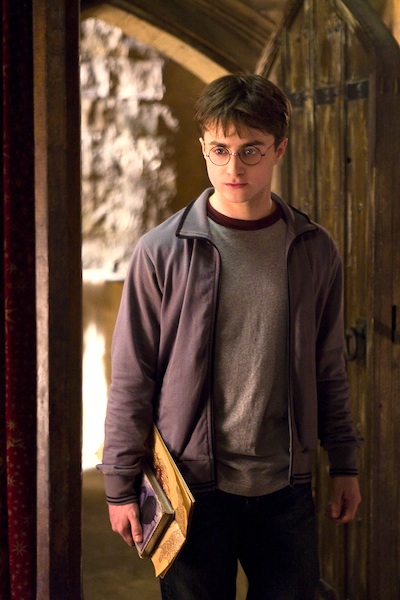
From "Harry Potter & The Half-Blood Prince."

The NPR-ish notion that conservatives are sub-literate is so annoyingly counter-factual, as the central vein of Anglo-American literature for the last two hundred and more years has been essentially conservative: Swift, Burke, Coleridge, Jane Austen, Carlyle, Trollope, Thoreau, Ruskin (a self-described “violent Tory of the old school”), Yeats, Lewis, D.H. Lawrence, Pound, Eliot, Tolkien, C.S. Lewis, Nabokov, Waugh, Flannery O’Connor and the Southern agrarian writers in toto, Saul Bellow. Only Dickens and possibly George Eliot, among the greatest writers, can be neatly grafted onto a liberal moral or political scheme. Even self-professed radicals, like William Morris, Virginia Woolf, and George Orwell, are only superficially or problematically so, while the elusive James Joyce is imaginable as a conservative but inconceivable – utterly self-contradictory – as a liberal of any sort. I myself consider Morris the most conservative man who ever lived and attribute his communism to a complete and rather silly misunderstanding: his communist utopia was not progressive but maniacally reactionary, a fantasy of the Middle Ages idealized and restored. Not for nothing did Yeats call Morris his “chief of men.” Some day, I believe, a scholarly fellow with a certain entrepreneurial instinct will write a fascinating book on the conservatism of Harry Potter, which borrows more than plot conventions from Tolkien and Lewis, and harks back, in its fundamentals, to the monasticism of the Middle Ages and to the legend of St. George.

In the coup de grace to the Rhodes stereotype, David Mamet, our most renowned playwright, has announced his conservative conversion with a splashy new book (see here). Continue reading Conservatism & The Arts

Ring-a-Ding-Ding: Pan Am, Playboy Club Trailers Begin the ‘Mad Men’ Cash-in

By Jason Apuzzo. I’m curious as to what people think of the new trailer above for NBC’s forthcoming show The Playboy Club, as well as the clip below from ABC’s forthcoming series Pan Am. Both series are set in the early, swingin’ 60s – and both are looking an awful lot like Mad Men … in fact, almost embarrassingly so. Christina Hendricks and January Jones would seem to be owed some residuals, here.

It seems fairly clear that the major network Mad Men cash-in has begun, except that whatever ironic detachment and/or sophistication with which Mad Men approached the 50s/early 60s seems to be jettisoned here in favor of abject lifestyle propaganda and product placement (even of an obsolete brand, in the case of Pan-Am).

Due to their overall flavor of pandering, my sense is that the networks are going to have a difficult time selling these shows – although I certainly could be wrong. In any case, it’s fascinating to me that this is the turn popular entertainment is taking during the Obama era. Obama has always struck me as a 50s-style, Adlai Stevenson-type person in terms of his tight, disciplined personal demeanor, academic-style liberalism and Illinois background. Perhaps we are, in sense, going back to the late 50s/early 60s these days. Reader feedback is encouraged. Continue reading Ring-a-Ding-Ding: Pan Am, Playboy Club Trailers Begin the ‘Mad Men’ Cash-in