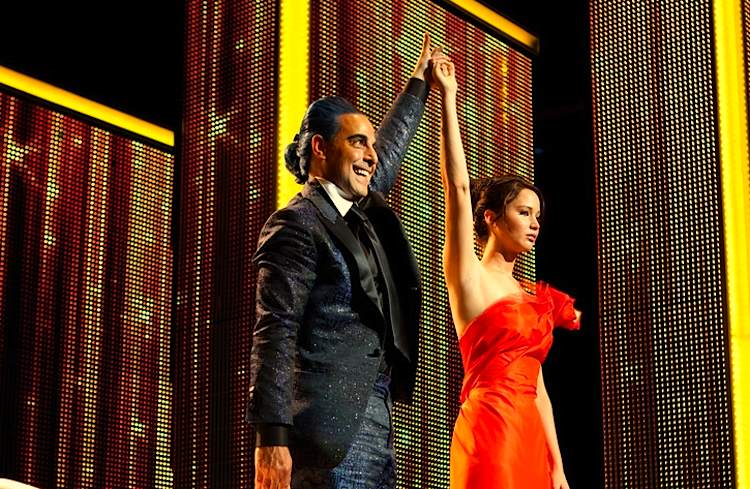
LFM’s Govindini Murty in The Atlantic: Decoding the Influences in Hunger Games, From ‘Spartacus’ to ‘Survivor’

[Editor’s Note: The article below and its accompanying slideshow appears in its entirety today at The Atlantic.]

A guide to the cultural touchstones alluded to in the new sci-fi smash

By Govindini Murty. The Hunger Games enjoyed the biggest-ever box office opening for a non-sequel film this past weekend, and it’s likely to keep captivating audiences in coming weeks with its edgy action and potent critique of today’s celebrity-worshiping culture.

Decoding the influences on a blockbuster.

The film depicts a totalitarian future in which the all-powerful government of Panem (in what was once the United States) demands an annual “tribute” of two youths from each of its 12 districts to fight to the death in a televised event known as the Hunger Games. Sixteen-year old Katniss Everdeen (Jennifer Lawrence) of the dirt-poor District 12 volunteers to take her younger sister Primrose’s place in the Games. But when she reaches the Capitol of Panem, she realizes that in order to succeed, her physical abilities are not enough. She must also create a convincing (if false) public narrative that she and fellow tribute Peeta Mellark (Josh Hutcherson) are “star-crossed lovers” in order to win the allegiance of the audience and outwit the “gamemakers.” This crafting of her own media narrative eventually turns Katniss into a popular heroine with the power to change the future of Panem itself.

Author Suzanne Collins has said that her inspirations for The Hunger Games came from a variety of sources, including the ancient Greek myth of Theseus, Roman gladiatorial games, contemporary TV, her father’s experiences in the Vietnam War, and news footage of the Iraq War. However, the movie adaptation of The Hunger Games contains a number of other cultural and historical references as well. Here’s a mini-guide to the cinematic, literary, and historical allusions in The Hunger Games.

The Goddess Diana

The Goddess Diana.

An early scene in The Hunger Games depicts Katniss sneaking into the forest to hunt for food. She retrieves her bow and arrows from a tree, and spotting a deer, attempts to shoot it—before her friend Gale interrupts her. The imagery of Katniss with her bow and arrow—central to The Hunger Games—evokes the imagery of Diana, the Roman Goddess of the Hunt, who was frequently associated with deer hunting. In one famous story from Ovid’s Metamorphoses, when the hunter Actaeon accidentally sees Diana bathing nude in a forest pool, she turns him into a stag and sets his own hounds to chase him down and tear him apart. One can see allusions to these hounds in The Hunger Games when the gamemakers send monstrous dogs into the forest to hunt down Katniss and Peeta. In addition, Diana was a chaste goddess, and Katniss’s reluctance to engage in a romance with Peeta reflects this warrior-woman ethos of independence from men. Early in the film, Katniss even tells Gale that she will never have children. Peeta himself, in his somewhat subservient position to Katniss, resembles male acolytes of the Goddess Diana, from Hyppolytus to the Priest-Kings of Nemi—who themselves participated in a famous ritual of fighting to the death, as described in Frazer’s The Golden Bough.

[For the rest of the article and the accompanying slideshow, please visit The Atlantic.]

Posted on March 26th, 2012 at 1:58pm.
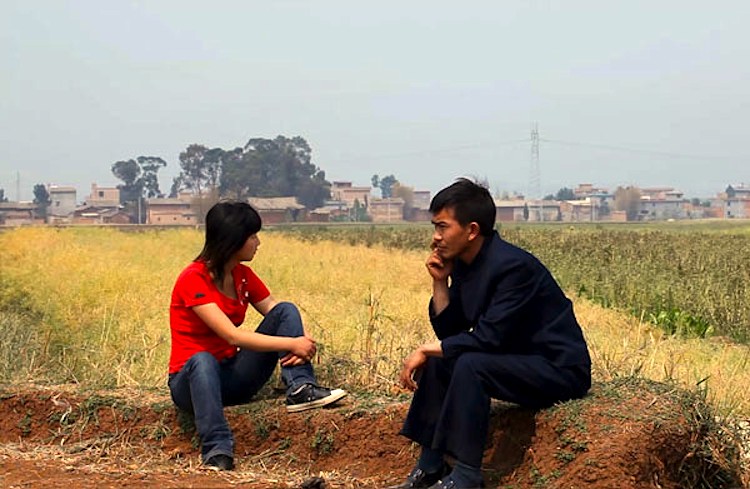
China’s One Child Policy: LFM Reviews Huan Huan

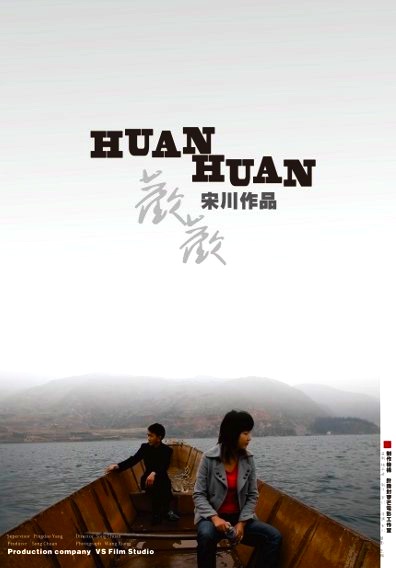
By Joe Bendel. China is a man’s world and becoming ever more so. In addition to making young girls increasingly less common, China’s One Child policy poisons the personal relationships of several working class provincial villagers in Song Chuan’s Huan Huan, which screens during the 2012 New Directors/New Films, jointly presented by the Film Society of Lincoln Center and MoMA.

Huan Huan has not taken control of her own life. She passively married a habitual gambler and acquiesced to the advances of “Doctor” Wang, a dodgy practitioner of “Chinese and Western medicine” married to Chunfeng, the village’s government enforcer. When their ill-concealed affair becomes public, Chunfeng starts harassing Huan Huan’s family, while Wang starts paying a monthly consideration to her deadbeat husband. Huan Huan’s eventual pregnancy complicates matters tremendously, particularly in light of the One Child policy and Chunfeng’s infertility.

Indeed, given the harsh procreation laws, everyone is interested in Huan Huan’s baby, hoping for a son of course. As a result, what might be a passionate infidelity melodrama in the West becomes a study in cold calculated decisions for Huan Huan’s circle. The frank matter-of-factness with which Song Chuan addresses the One Child policy and the petty corruption of local officials is nothing less than stunning. He also clearly argues contemporary Chinese society is sexually objectifying women, most notably in the low pop culture it imports.

Unfortunately, though Song’s social criticism is undeniably trenchant, his unprofessional cast largely acquit themselves as such. Lead Tian Yuefang is rather convincing in a true-to-life way as the sullen and self-destructive title character. However, the supporting cast is guilty of frequently awkward line readings and a clumsy fight scene that would not pass muster in most dinner theaters.

In addition, Song follows in the aesthetic tradition of independent Chinese filmmaking initiated by the Digital Generation (or DGenerate) School. As a result, Huan Huan features the long static shots and unhurried ground level naturalism that are hallmarks of the movement, but can be distancing for undisciplined viewers. He displays a strong sense of composition, though, vividly conveying the hardscrabble environment of Yunnan.

Ultimately, Huan Huan is more interesting for what it portrays than as a fully engaging drama for audiences to submerge themselves into. According to Deadline Hollywood, Song was denied a visa to attend ND/NF, so it worth seeing on those grounds alone. A bold undertaking, but quite a mixed bag cinematically, Huan Huan screens this Tuesday (3/27) at the Walter Reade Theater and Wednesday (3/28) at MoMA.

Posted on March 26th, 2012 at 11:09am.

LFM Reviews My Girlfriend is an Agent

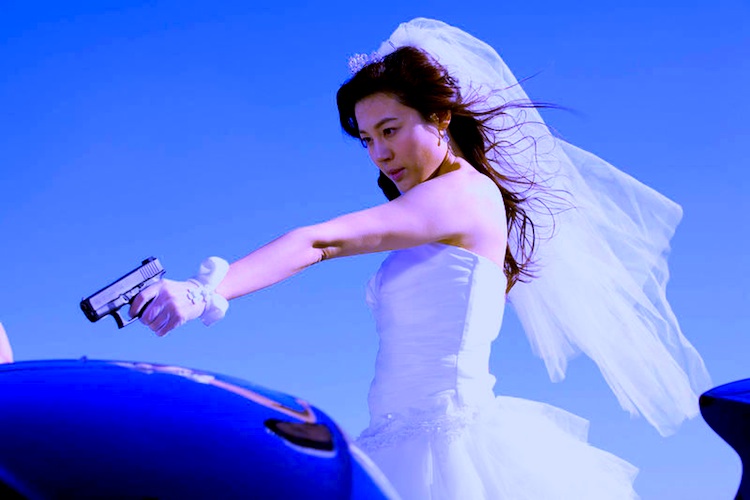
Kim Ha-neul in "My Girlfriend is an Agent."

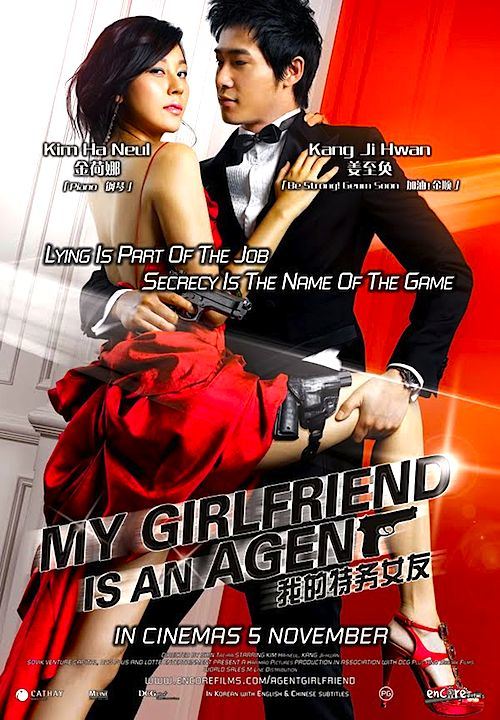
By Joe Bendel. Evidently Jamie Gorelick also set up an information-sharing firewall for Korean intelligence. Unbeknownst to each other, two agencies are tracking the same Russian gangster-spies out to purchase the latest monster virus. Nor do Ahn Soo-ji and her ex realize they work for the rival agencies. Things get rom-com complicated in Shin Tae-ra’s My Girlfriend is an Agent (trailer here), which screens – for free – this Tuesday in New York as part of the Korean Cultural Service’s current It’s a Fine Romance film series.

Ahn is an excellent operative, but things like rejection make her loose her cool. In contrast, Lee Jae-joon is completely incompetent, but he is a rookie. At least his Russian background will be useful. Obviously, the evil Victor Somethingrussian has a huge advantage. Every Korean operation targeting him is blown when Ahn and Lee blunder into each other.

Of course, they fight like cats and dogs, providing much entertainment for the local coppers, while scrupulously maintaining their classified affiliations. When Ahn and Lee’s teams finally start to suspect their respective exes, they assume each is in league with the Russians, as duly required in secret agent comedies.

Agent is not afraid to milk a public yelling match for all its worth. Indeed, the comedy is pretty broad here, but it barrels ahead quite confidently. To give credit where it is due, Shin and screenwriter Cheon Seong-il certainly know how to introduce their heroine, immediately putting Ahn into the field as a pistol-packing, jet-ski driving undercover bride. That so works.

In fact, as Ahn, Kim Ha-neul makes a pretty engaging action protagonist, poised in her fight scenes and rather endearing when navigating her romantic frustrations. However, the slapstick incompetence of Kang Ji-hwan’s Lee is lathered on far too strongly, quickly undermining any possible dramatic credibility. Still, his goofiness is not difficult to translate.

Clearly, Agent just wants viewers to have fun, which is cool. Frankly, it contrasts rather favorably with Hollywood spy comedies of recent vintage that unfailingly portray either the CIA or the U.S. military as the “real villains.” Though they have their secrets, Agent’s heavies are still Russian, through and through.

A smash hit in Korea, it is fairly easy to understand Agent’s appeal. Light and breezy with a healthy dose of romance, it is an amusing bauble. It ought to be quite pleasant to watch it with an appreciative audience—again, for free—so plan to arrive early when it screens this Tuesday (3/27) at the Tribeca Cinemas, courtesy of the Korean Cultural Service in New York.

Posted on March 26th, 2012 at 11:07am.

One World Chic: The New Trailer for Stephenie Meyer’s The Host + Shepard Fairey to Produce New 1984 Adaptation?

A promising new teaser trailer is out for In Time director Andrew Niccol’s adaption of Stephenie Meyer’s alien invasion novel The Host, so check that out. Apparently alien-possessed people all have blue eyes. Who knew?

Plus, in seemingly related news, Obama-Hope poster artist Shepard Fairey apparently wants to produce a new adaptation of George Orwell’s 1984 with Brian Grazer and Ron Howard’s Imagine Entertainment. The irony of Fairey’s participation in such a project is apparently lost on Grazer and Howard … or is it?

Posted on March 23rd, 2012 at 12:13pm.

Armageddon on the Lower East Side: LFM Reviews 4:44 Last Day on Earth

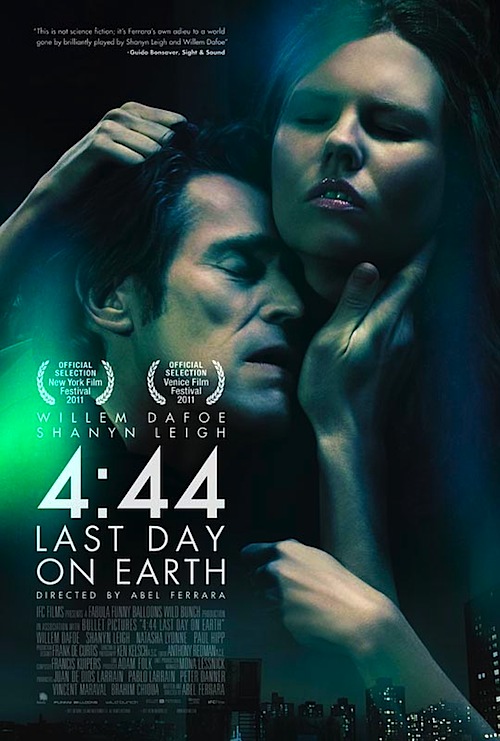
By Joe Bendel. Abel Ferrara is determined to vindicate Al Gore. He will have to destroy the world to do it, but surely that is a small price to pay. Armageddon indeed comes to the Lower East Side in Ferrara’s 4:44 Last Day on Earth, which opens today in New York at the IFC Center.

The details are vague (for obvious reasons), but we are told Gore was more right than even he knew. Global warming has become so severe, all life will end at 4:44am in some sort of great microwaving, but of course women and children will be hit the hardest (?). At least it’s not daylight savings, because it would be a real bummer to lose an hour tonight. Cisco and his girlfriend Skye will spend their final hours together, as New York prepare for the end.

Frankly, Ferrara’s set up is surprisingly effective. During the first half hour or so, New Yorkers will be reminded of the empathic solidarity that swept over the City on 9-11 and to a lesser extent during the blackout. He really creates a convincing sense of what it would be like to knowingly experience the apocalypse in New York.

As the day progresses, Cisco and Skye frequently make love in between her creative bursts of painting, which is perfectly appropriate given the dramatic context. However, viewers will start to wonder where Ferrara is taking it all. Frankly, nowhere.

Essentially, 4:44 shows us scene after scene of Cisco puttering about his apartment, wrestling with the mother of all existential crises. Late in the day, Ferrara makes a half-hearted attempt to gin up some phony drama, but it quickly subsides. We also get one cheesy montage before its Hasta time.

During the long stretches of Wilem Dafoe gamely channeling his inner Ferrara as Cisco, we hear intrusive excerpts from an old Gore appearance on Charlie Rose and several streaming lessons from the Dalai Lama and other Buddhist teachers. It is as if the secular faith of environmentalism is battling Buddhism for the soul of the apartment. Considering how clumsily Ferrara tilts the playing field in favor of the former, most viewers will want to throw their lot in with His Holiness.

Strangely, despite the Dalai Lama’s archival appearance, 4:44 is largely unconcerned with the religious ramifications of the end of the world. Indeed, it never speculates on the implications for the cycle of reincarnation so important to the Buddhism, but viewers might as their attentions start to wander. In another piece of good local color, 4:44 also shows the final broadcasts of NY1 anchor Pat Kiernan. He might not be particularly well known outside New York City, but that’s okay, considering ninety-nine percent of the film’s audience will come from a handful of Brooklyn and lower Manhattan neighborhoods.

As you would expect from such a quintessentially New York filmmaker, Ferrara nails the City vibe, but that’s about all 4:44 has. Quite skippable in theaters, it might be worth sampling the first twenty minutes on cable eventually, but don’t make any special effort. For Ferrara’s die-hard fans, it opens today (3/23) at the IFC Center.

LFM GRADE: D+

Posted on March 23rd, 2012 at 12:09pm.

Peter Berg, Brooklyn Decker Discuss How Battleship Helped Refine the Navy’s Strategy Against Alien Attack

Alexander Skarsgard, Brooklyn Decker and Peter Berg talk "Battleship" at WonderCon.

No kidding. Courtesy of io9, watch Battleship director Peter Berg and star Brooklyn Decker at the recent WonderCon discuss how their new film helped refine the Navy’s thinking about how to cope with a potential alien attack.

It’s great when Hollywood can pitch in like this.

Posted on March 23rd, 2012 at 12:03pm.