Talking With Director Benh Zeitlin About Beasts of the Southern Wild

By Govindini Murty. Benh Zeitlin’s Beasts of the Southern Wild has garnered much acclaim on the film festival circuit and is one of the top indie films in theatrical release right now, having already earned $5.9 million at the box office. The story of a little girl and her father struggling to survive in the flooded bayou of southern Louisiana, Beasts of the Southern Wild won the Grand Jury Prize at Sundance, the Camera D’Or at Cannes, and the Audience Favorite Award at the LA Film Festival. There is already talk that it may be nominated for an Oscar for Best Film, and that Quvenzhané Wallis, the film’s remarkable eight-year old lead, may be nominated for an Oscar for Best Actress.

We had the opportunity to attend the premiere of Beasts of the Southern Wild at the LA Film Festival this summer and enjoyed the Q & A conducted afterward by John Singleton with director Benh Zeitlin and the film’s stars, the irrepressible Quvenzhané Wallis (who utterly stole the show) and the charming baker-turned-actor Dwight Henry.

We spoke briefly with Benh Zeitlin after the screening and also met John Singleton, who expressed repeatedly what a fan he was of the film. Here’s the conversation I had with Zeitlin, followed by excerpts from the Q & A that Singleton held with Zeitlin, Wallis, and Henry.  While there were a variety of topics discussed in the Q & A, my focus here is on the comments that Zeitlin made about the creative and practical aspects of translating his vision to the big screen.
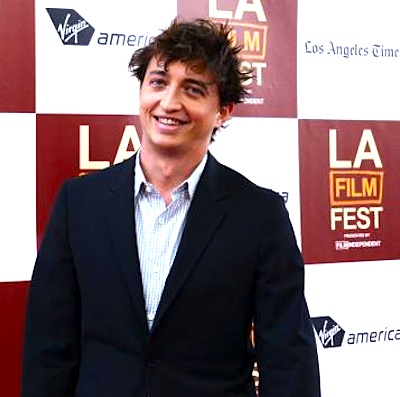
Director Benh Zeitlin at the LA Film Festival.

GM: I was curious about your influences. Were you quoting anyone specific in the film? What inspired you – either in classic or contemporary film?

BZ: The big one for me is this film called Underground by Kusturica. That’s the one that made me most want to make films when I was growing up … the way that the fantasy and reality worked in that film I think was a big deal. And then we watched a lot of documentaries – we watched a lot of Les Blank documentaries. This one called Dry Wood – and all those ‘70s films that he made – were kind of how we came up with the cinematography. But you know, I studied the way that Cassavetes directs actors and Mike Leigh directs actors – and looking at narrative from Disney movies, like Bambi [Zeitlin himself has a background in animation and his parents are folklorists]. So, really, it was from all over the place, from all eras – from high-brow to low-brow – sort of a broad world.

GM: That’s interesting. You mention Les Blank – did you see Burden of Dreams, about Werner Herzog making Fitzcarraldo?

BZ: Oh yeah, of course. Werner Herzog, absolutely.

GM: Because [Beasts of the Southern Wild] just reminded me – the atmosphere – the organic feeling of being in the mud with the animals and the wilderness all around –

BZ: Definitely, yeah. He was a huge inspiration for me. The first time I saw that film I was like “This is what I want to do.”

GM: I interviewed Werner Herzog a few months ago and there’s some great footage from that film [Les Blank’s Burden of Dreams] that’s online. But you know, I was curious, because the film has that blend [of reality and fantasy] that you were mentioning. But I didn’t know about Bambi, that’s going to be interesting to throw in there –

BZ: [Laughs.] You got to go back to Bambi, always got to go back to Bambi.

GM: Well thanks so much, that was fun to see.

BZ: Thanks very much, nice to meet you.

Beasts of the Southern Wild tells the story of Hushpuppy (Quvenzhané Wallis), a six-year old girl growing up on an island off the coast of Louisiana known as “The Bathtub.” The story follows Hushpuppy and her widower father, Wink (Dwight Henry), as they eke out a living on their small plot of land – with the little girl caring for their farm animals and living in tune with the rhythms of the natural world. Her father, who has a mysterious illness, almost like a latter-day Fisher King, teaches Hushpuppy how to fish and emphasizes that she needs to learn how to take care of herself so she can succeed in the world and climb to the “top of the ladder.”

The island community of the Bathtub might lie in the shadow of New Orleans and Lake Pontchartrain, but its rural lifestyle feels a world away. To emphasize this, Beasts was shot in a documentary-verité style on 16mm film, which, when blown up on a large screen, creates a grainy, mysterious image that paradoxically heightens the mythological and poetic themes of the film. Hushpuppy’s view of the world is thus depicted in an alternately realistic and fantastical manner that Benh Zeitlin called “a heightened world built out of very real parts.” For example, Zeitlin noted that though there is no place called the Bathtub in Louisiana, it was based on the real Isle de Jean Charles, an island that is slowly falling into the Gulf and that has gone from 200 families to 20 families in recent years. As Zeitlin explains, “we took elements of things and swirled them together – almost like a folk tale.” Continue reading Talking With Director Benh Zeitlin About Beasts of the Southern Wild
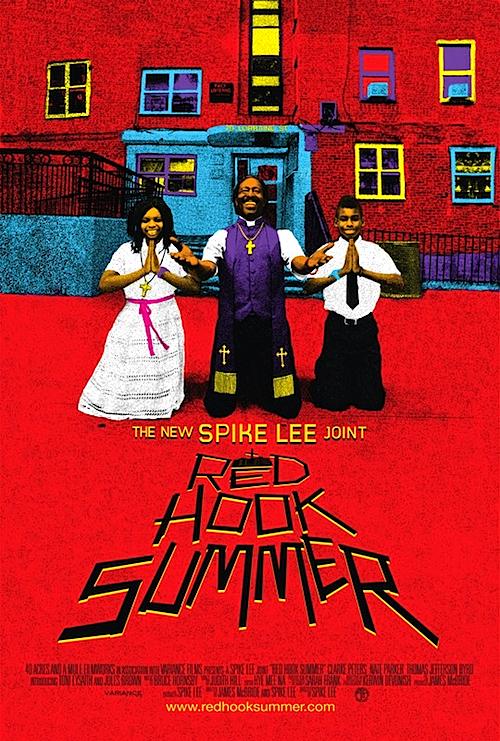

Bring Your iPad: LFM Reviews Spike Lee’s Red Hook Summer

By Joe Bendel. For the final cut of Pulp Fiction, Quentin Tarantino deleted a scene of Uma Thurman talking to John Travolta through the lens of a camcorder. It was already too clichéd. That was nearly twenty years ago. In his latest film, Spike Lee heavily relies on a similar device, hoping the upgrade to an Apple iPad makes it seem fresher. Such a strategy perfectly represents the tired blood of Red Hook Summer, which opens this Friday in New York.

Colleen Royale can hardly stand her father, Enoch Rouse, introduced to viewers as “Da Good Bishop” of the Little Piece of Heaven church, or his old time religion. Nonetheless, she deposits her anti-social suburban son Flik in her father’s Red Hook housing project apartment for the summer. Like a little Spike Lee, Flik has a compulsive need to film the world around him, but no faith. Thus begins a generational cold war, with the minister determined to bring the young cuss to Jesus.

Frankly, Hook’s first two sluggish acts are downright laborious, but grandfather and grandson seem to be building a relationship by meeting each other halfway. That would be a worthy enough lesson we could all stand to be reminded of again, if the film followed through on it. Instead, Lee foists one of the laziest, most obvious third act revelations on viewers, completely undermining any good will he might have built up thus far. Remember Enoch Rouse is a man of the cloth. Anyone who has seen a Hollywood film in the last twenty years should be able to guess the rest.

Yet, since Hook clearly implies Rouse’s daughter has a good idea what her father’s deep dark secret is, it is absolutely baffling why she would send her son to stay with him unsupervised, with only his annoying sense of entitlement for protection, unless she is just understandably sick of the sullen brat. No matter, Lee is determined to pull Rouse through the gauntlet, which he does in punishing, Grand Guignol style.

To be fair, Clarke Peters does his best to maintain Rouse’s basic humanity, working like his soul depends on it, but Lee stacks the deck against him. Nonetheless, his performance stands head and shoulders above the rest of the cast. That includes Lee himself, briefly appearing in the guise of Do the Right Thing’s Mr. Mookie, clearly hoping viewer enthusiasm for his defining film will rub off on this wan return to the County of Kings.

Hook is a bad movie, but it is not the fault of the musicians. New Orleans’ Jonathan Batiste performs some stirring Hammond B-3 solos and brings some refreshing energy to film when appearing in character as “Da Organist” TK Hazelton. Likewise, Bruce Hornsby draws on his jazz chops for a pleasing gospel influenced instrumental soundtrack.

Yes, Hook sounds great, but the paucity of originality is honestly depressing. Perhaps it is time for Lee to follow Woody Allen’s lead and leave his beloved New York to make a psychological thriller with social climbing Londoners. At least then he would not have the overpowering temptation to fall back on his predictable Spikisms. Not recommended, Red Hook Summer will disappoint even Lee’s most dogged champions when it opens this Friday (8/10) in New York at the AMC Empire.

LFM GRADE: D-

Posted on August 8th, 2012 at 1:04pm.

New Trailer for Kathyrn Bigelow’s Zero Dark Thirty, Dramatizing the Hunt for bin Laden

A new trailer and five photos for director Kathryn Bigelow’s Zero Dark Thirty have come online. Zero Dark Thirty dramatizes the daring and successful Navy SEAL Team 6 bin Laden raid in Pakistan from last year.

The film opens on December 19th, and stars Joel Edgerton, Jessica Chastain, Edgar Ramirez, Kyle Chandler and others.

Posted on August 6th, 2012 at 12:59pm.

Playing Liars’ Poker in Hong Kong: LFM Reviews Supercapitalist @ The Asian American International Film Festival

By Joe Bendel. Like a financial Luke Skywalker, Connor Lee is about to assume his destiny as the son of a legendary trader. He will find his destiny in Hong Kong. His Chinese is limited, but he speaks money. That will be all he needs in Simon Yin’s $upercapitalist, the centerpiece selection of this year’s Asian American International Film Festival, which opens this Friday in New York.

Lee regularly predicts the unthinkable, yet is never able to adequately capitalize on his foresight. That may soon change. He has caught the eye of hedge fund master of the universe Mark Patterson, who dispatches him to Hong Kong. His assignment is to mount a takeover of Fei & Chang, a hidebound family run conglomerate in which they already own a minority stake. This does not sit well with the ruling Chang family, especially the heir apparent son, Richard, who is spearheading a top secret project afoot to radically re-engineer the company’s ailing import-export division.

Will Lee facilitate the revitalization or the liquidation of the company? This depends on who gets the final word: the devil or the angel sitting on his shoulders. The devil is Quentin Wong, Lee’s colleague and mentor in the HK fast life. The angel is Natalie Wang, a corporate publicist working with Richard Chang and his IT guru.

From "Supercapitalist."

Once again, $upercapitalist portrays an American hotshot who must go abroad to get a lesson in business ethics. At least it is HK rather than the CP dominated Mainland doing the teaching this time around. However, the supposed killer app for employee motivation Richard Chang’s team is developing sounds highly dubious. Essentially, their plan to increase productivity involves an intra-company facebook, in which workers try to amass attaboys from their peers. I think I’d rather start the day with a dozen lashings.

Conceived as a star vehicle for himself, screenwriter Derek Ting has a few nice moments in $upercapitalist as Lee. Mostly though, his character follows the old school Tom Cruise template of a humbled young Maverick finding redemption through the help of a more emotionally mature love interest. Kathy Uyen holds up her end well enough as the virtuous publicist, but it is not a particularly well fleshed out role.

However, as Wong, Darren E. Scott clearly enjoys playing the villain, bringing a nice infusion of energy to his scenes. Still, for those who follow Asian cinema, the real highlight of $upercapitalist is seeing veteran HK actors Richard Ng (a Jackie Chan alumnus also seen in Detective Dee) and Kenneth Tsang (recently in Starry Starry Night, as well as John Woo classics like Once a Thief) do their thing as Chairman Donald Chang and his board member brother Victor, respectively.

$upercapitalist is not a bad boardroom soap opera, but it falls in too easily with the lazy Bain Capital attacks currently circulating in the media. Frankly, if Fei & Chang’s import/export division is dragging down the entire company, they have a responsibility to all their employees to fix the problem. Of course, why worry about the complexity of reality in a film when simplistic stereotypes are so much safer? A decent showcase for some fine supporting work, the flawed but still quite watchable $upercapitalist opens this Friday (8/10) in New York at the Village East.

LFM GRADE: C

Posted on August 6th, 2012 at 12:57pm.

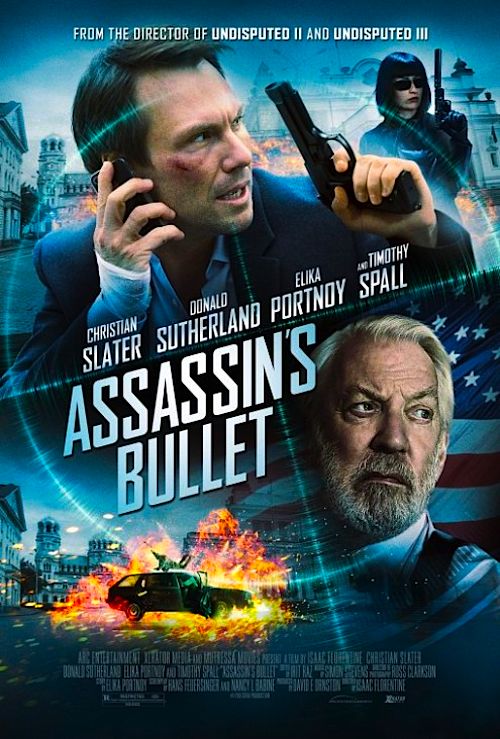
La Femme Sofia: LFM Reviews Assassin’s Bullet

By Joe Bendel. Someone is killing Europe’s top Islamist terrorists. This is a problem for American intelligence bureaucrats, because it makes them look bad. The vigilante has taken out priority targets they could not even find – and therefore must be stopped, post-haste. That assignment falls to a former FBI agent assigned to America’s Bulgarian embassy in Isaac Florentine’s Assassin’s Bullet, which opens this Friday in New York.

Still wracked with guilt over his wife’s death, Robert Diggs is taking a timeout from life in Bulgaria. Happy overseeing on in-country educational initiatives, Diggs is reluctant to get back into investigative work. However, Ambassador Ashdown is a political appointee very aware he is in over his head and in need of Diggs’ services. Reluctantly Diggs starts tracking the vigilante, who is obviously also the English teacher at the Embassy-sponsored high school, as well as the belly dancer who has been come-hither dancing for Diggs at his favorite night club.

The good news about Bullet is that it has no tears for the vigilante’s prey. Her motivation is clear: terrorists murdered her family. Had they lived, her targets would have only spread more death and misery. It even unambiguously associates the keffiyeh scarf with terrorism, which makes it a pretty dumb choice of accessory for Diggs during the climatic third act. The bad news is a spoiler that will not be much of a surprise: there is some shadowy villainy going on at the highest levels of the American diplomatic-intelligence services.

So Bullet isn’t really a great movie, but it is sort of a shame you can hardly see serviceable B-movies like this in the theaters very much anymore. Back in the day, this totally would have been worth a trip to the drive-in or the bargain cinema. In fact, on a technical level, Bullet is a surprisingly polished production. Florentine stage-manages a couple of nifty little fight scenes. Of course, that is his specialty, having previously helmed the Scott Adkins Undisputed series and the Power Rangers, for both the big and small screens (don’t scoff at that gig; they don’t entrust important franchises like that to hacks). Shot on location, Florentine made the most of the exotic Sofia sites and cinematographer Ross W. Clarkson gives it all a moody, mysterious sheen.

The real mixed bag here is the cast. Christian Slater is more or less okay as the earnest Diggs and co-scenarist Elika Portnoy is sort of/kind of okay as the mystery woman. At least Donald Sutherland does not disappoint doing his stately roguish thing as the Ambassador. Yet, the high point might be Timothy Spall, clearly enjoying the ambiguity of the friendly but inscrutable Dr. Kahn, a part that would have had Donald Pleasance’s name all over it in years past.

As it happens, Bullet’s DVD release is already scheduled to follow hard on the heels of its New York opening. Make of that what you will. Frankly, it ought to find an audience through more affordable means of distribution. It is not classic, but some considerable filmmaking talent went into it (most definitely including the contributions of Florentine, Clarkson, and Spall). Eventually recommended for B-movie lovers at B-movies prices, Assassin’s Bullet opens this Friday (8/3) in New York at the Cinema Village.

LFM GRADE: C+

Posted on July 30th, 2012 at 12:44pm.