LFM Reviews SFFS’s Artist-in-Residence Ashim Ahluwalia’s Miss Lovely

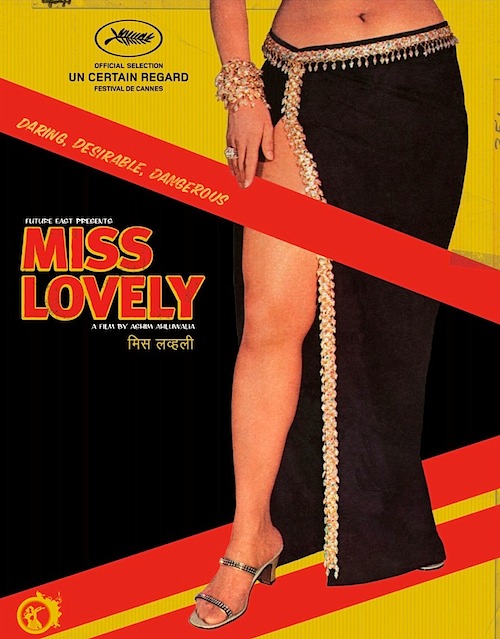
By Joe Bendel. Technically, it is illegal to exhibit films that are not certified by India’s so-called censorship board. Of course, it happens anyway. For so-called “C-Grade” filmmakers and performers, going legit is a tricky proposition, but Bollywood dreams die hard in San Francisco Film Society Artist-in-Residence Ashim Ahluwalia’s Miss Lovely (trailer here). In addition to the Society’s educational outreach programs for local schools and aspiring filmmakers, Ahluwalia will attend a screening of Miss Lovely and participate in a special artist talk, both of which should be fascinating, because this is a film guaranteed to inspire questions, starting with just how much of his misadventures in underground filmmaking are based on truth.

The Duggal Brothers specialize in grinding out horror-themed sex features for the seamy C-Grade circuit. Vicky is a born user who calls the shots, while Sonu is sensitive and passive by nature. They specialize in production, leaving distribution to their dodgy associates. When Vicky gets ideas about vertical integration, it causes considerable difficulties. However, personal problems will be the brothers’ ultimate undoing.

Sonu is completely enamored with Pinky, a girl from a strictly traditional family, who harbors aspirations of Bollywood stardom. The quiet Duggal Brother is determined to finance and direct a mainstream star vehicle for her, to be titled Miss Lovely. He is even willing to use his brother’s money to do so. Fraternal ties are frayed and secrets are revealed, as the illicit combination of sex and money inevitably leads to tragedy.

Originally Ahluwalia intended to make a documentary about the scandalous C-Grade film industry, but reconceived Miss Lovely as a narrative feature out of necessity. He definitely immerses viewers in the sleazy, dangerous vice world. For the most part, he deliberately eschews the hallmarks of Bollywood filmmaking. Nonetheless, the frequently funky soundtrack goes down smooth.

Hardly a glamorization of C-Grade films, Ahluwalia portrays the Duggal’s enterprise as grubby, exploitative, and thoroughly dominated by underworld types. It is far more a cautionary tale than a Hindi Boogie Nights.Things definitely come to grief pretty darn fast. Yet, somehow the faux cheesy scenes of the Duggals’ naughty horror movies will appeal to a lot of cult viewers’ inner Tarantinos. Indeed, production and costume designer Tabasheer Zutshi’s team does spot-on work fully recreating this lurid environment on-screen.
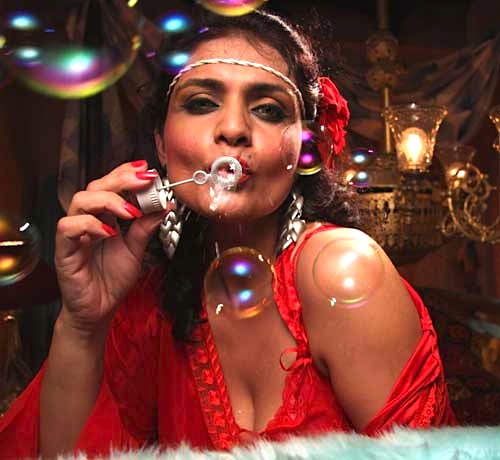
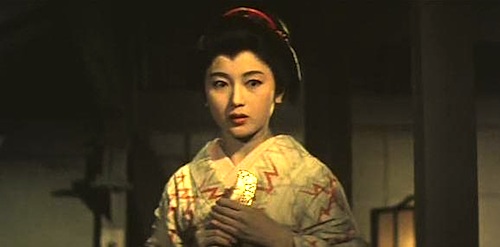
From "Miss Lovely."

Most importantly, this is clearly a milieu Ahluwalia fully understands. Straddling genres, he toys with crime story elements, but essentially tells a Cain and Abel tale, skewering India’s celebrity-obsessed culture and sexual mores along the way. Stylistically, he spans the gamut from trippily disorienting to in-your-face naturalism. This is kitchen-sink filmmaking at its most relentlessly indie.

Anil George’s Vicky Duggal is a compulsively watchable, almost mesmeric pseudo-villain. Nearly unrecognizable from Gangs of Wasseypur, Nawazuddin Siddiqui revels in cringy pathos as poor Sonu. Frankly, much of the supporting cast-members are essentially hanging on for dear life, but that sort of works given the circumstances.

Big, bold, and fearless, Miss Lovely approximates the sweep and scale of the Bollywood it rejects. Part expose and part fall-from-grace epic, Miss Lovely is highly recommended for connoisseurs of Indian art cinema and those who simply love films about filmmaking (in all its ragged forms). It screens at the New Peoples Cinema in San Francisco this Thursday (2/28), with Ahluwalia’s Artist Talk to follow next Tuesday (3/5) at FilmHouse, as part of his residency now underway with the San Francisco Film Society.

LFM GRADE: A-

Posted on February 25th, 2013 at 2:16pm.

The Birth of the Bourekas and Beyond: LFM Reviews A History of Israeli Cinema

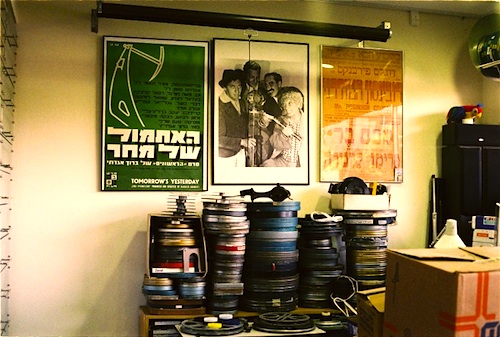
By Joe Bendel. Ten Israeli films have been nominated for the best foreign language Academy Award, which is not bad for a small, relatively young country, living with the constant threat of terrorism. While Israeli filmmakers have yet to take home the Oscar, they have become the toast of the international festival circuit. The development of their national cinema is chronicled and analyzed in Raphaël Nadjari’s two hundred nine minute documentary undertaking, A History of Israeli Cinema (trailer here), now available on DVD from Kino Lorber.

Premiering during the final days of 1932, Chanukah in fact, Chaim Halachmi’s Oded the Wanderer is considered the first Israeli feature, well predating UN recognition. Focusing on the ruggedness of nature and the even more rugged protagonist, it became a model for the Zionist-minded cinema that would follow. Ironically, one of the films most effectively swaying world opinion Israel’s way was the product of Hollywood liberals: Otto Preminger’s Exodus, starring Paul Newman. In contrast, the subsequent wave of Israeli films would challenge notions of Zionism to varying degrees.

Arguably, the most popular new movement were the so-called Bourekas films, ethnic melting pot comedies named after the savory Eastern European pastry (which you can find in New York at Café Noi). At times, the humor ranged towards the broader end of the spectrum, but they presented more diverse, less severely stoic characters for audiences to identify with.

Of course, Israeli filmmaking continued to evolve, largely reflecting the same cultural shifts apparent in Western cinema. The “New Sensitivity” school incorporated Cassavetes-like intimacy with the avant-garde sensibilities of European art cinema. As the 1960’s became the 1970’s, films became more overtly political, directly questioning the traditional Zionism of the 1930’s and championing the indigenous and former Arab populations’ claims for exceptional victim status.

From "A History of Israeli Cinema."

It is a frustrating fact of life for Israel’s international supporters that the democratic state’s home grown films are often as critical as those coming from Hollywood and its hostile neighbors, which is indeed reflected in Nadjari’s History. Nonetheless, the lack of love for Menahem Golan’s zeitgeist-bucking Operation Thunderbolt is an unfortunate omission. Golan appears quite frequently as an interview subject, mostly in reference to the early Bourekas films he produced. Nadjari never explores his American interlude as half of the Golan-Globus running Cannon Films, bringing to the world the American Ninja franchise amongst other meathead classics. Technically speaking, they are not Israeli films, but who wouldn’t want to show clips of Steve James and Michael Dudikoff slicing through hordes of ninjas like straw men?

Arguably, Nadjari has a bias towards art films, but so will most of the viewers seeking this documentary out. He has a shrewd eye for selecting illustrative clips and shows the patience to let them play out sufficiently. Even though he shows the very end of Hill 24 Doesn’t Answer, considered the first feature film officially produced in the new state of Israel, it will definitely make war movie buffs want to see the whole thing from the beginning. He talks to just about every filmmaker of stature, including Joseph Cedar (helmer of Footnote), Amos Gitai, Ronit Elkaetz (who also co-starred in Eran Kolirin’s Oscar disqualified The Band’s Visit), and Dover Kosahvili. Being good marketers, Kino also includes trailers for their other Israeli films, which feels more like a DVD extra in this case than merely an attempt to plus-sell. Recommended for patrons of Israeli culture and armchair film historians, A History of Israeli Cinema is now available as a two-disc set from Kino Lorber.

LFM GRADE: B-

Posted on February 25th, 2013 at 2:15pm.

Into the Shintoho Mind Warp: LFM Reviews The Ghost Story of Yotsuya

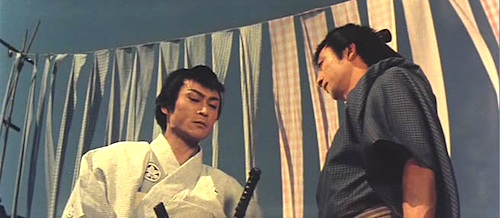
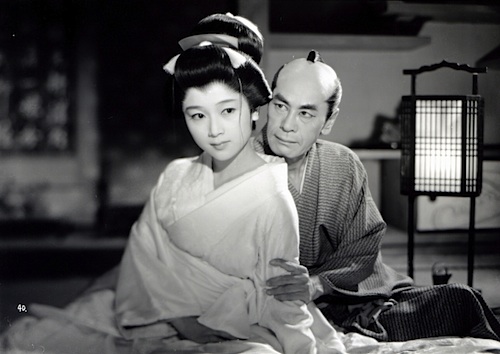
From "The Ghost Story of Yotsuya."

By Joe Bendel. When revenge is promised, revenge must be delivered. One villainous samurai learns this the hard way in Tsuruya Nanboku’s classic Kabuki drama. It was a lesson that would be repeated in thirty screen adaptations. This one is considered the best, but it has not been widely screened in America, as is true for most of the upstart genre studio Shintoho’s late 1940s to early 1960’s releases. In its New York premiere, Nobou Nakagawa’s The Ghost Story of Yotsuya launches the Japan Society’s 2013 Globus Film Series, Into the Shintoho Mind Warp: Girls, Guns & Ghosts.

Iwa’s father is not about to let his daughter marry Iemon. It is not just because he is a position-less samurai. He can tell the man is a bit of a cad. Unfortunately, the proud ronin reacts badly when rebuffed yet again. Killing the man and a well heeled associate, Iemon finds himself beholden to the crafty servant Naosuke to back up his story. Swearing to Iwa he will avenge her father, he instead dispatches her sister Sode’s intended, again with the help of the insidious Naosuke.

As the years pass, Iemon claims to be pursuing retribution in much the same way O.J. was searching for the “real killer.” By now, the sociopathic ronin has tired of Iwa and the constant hassling to make due on his promises. Instead, he covets Ume, the daughter of a wealthy clan leader and the position she would bring. Of course, good old Naosuke has the answer: a poison that first disfigures and then kills. Inviting over Takuetsu, her torch-carrying admirer, to complete the frame-up, Iemon completes the evil deed and embarks on a new life with Ume. However, when Iwa pledged revenge from beyond the grave, she was not kidding.

Yotsuya probably should be classified as a horror film, but by the time Iwa and Takuetsu rise from the dead, viewers are ready to throw in their lot in with the angry spirits. In the tradition of E.C. Comics, Yotsuya is a case of bad things happening to bad people. Nonetheless, it is all kinds of creepy and atmospheric.

From "The Ghost Story of Yotsuya."

Frankly, it is rather flummoxing that Nakagawa is not more renowned amongst genre cineastes. It really ought to rank with Shindo’s Kuroneko and Onibaba. While many focus on Iwa’s grisly transformation, Nakagawa’s patience introducing the supernatural elements, effectively cranks up the tension before the cathartic release. Arguably, it is also a comparatively feminist genre outing, with Iwa’s sister Sode facing their nemesis in the climatic fight sequence, sword in hand, along with an ally making a surprise reappearance.

As Iwa, Katsuko Wakasugi has one of the all time great and gruesome death scenes. She would also be quite scary as an angry ghost, were we not so primed for Iemon’s comeuppance. In a way, the final third of Yotsuya is like a Grudge film in which viewers root for the supernatural force. Likewise, Noriko Kitazawa is appealingly earnest and swings a credible sword as sister Sode. Shuntarô Emi is hissable loathsome as Naosuke, in an enjoyable genre bad guy kind of way. Oddly, Shigeru Amachi (whom Nakagawa would send to Hell as the protagonist of Jigoku) is a bit of a cold fish as Iemon. It is hard to understand why Iwa or Ume would be charmed by him, but his karmic beatdown is certainly satisfying.

Filmed by cinematographer Tadashi Nishimoto (a future Bruce Lee alumnus) in queasy hues of red and yellow, and accompanied by Michiaki Watanabe’s eerie kabuki-esque score, Ghost Story of Yotsuya is a quality production that holds up spectacularly decades later. Recommended for fans of the supernatural who also appreciate psychological depth and archetypal resonance, it screens this Wednesday (2/27) at the Japan Society, with a party to follow featuring the music of Neo Blues Maki. The drool-worthy Shintoho Mind Warp retrospective continues with more screenings over the weekend.

LFM GRADE: A

Posted on February 25th, 2013 at 2:12pm.

Into the Shintoho Mind Warp: LFM Reviews Ghost Cat of Otama Pond

By Joe Bendel. If you have read your Poe you know a cat without an outraged sense justice can be a real handful. However, this spectral feline’s thirst for vengeance transcends generations, ensnaring an innocent couple in Ishikawa Yoshiro’s Ghost Cat of Otama Pond, which also has its official New York premiere as part of the Japan Society’s 2013 Globus Film Series, Into the Shintoho Mind Warp: Girls, Guns & Ghosts.

It is getting late, but no matter which path they take, Tadahiko and Keiko always end up back at the same sinister pond. Spying a black cat, Tadahiko insists on following it to presumed shelter. Unfortunately, it takes them to a deserted (and in fact haunted) house that renders Keiko catatonic. Seeking help, Tadahiko stumbles across the home of a priest, who attempts an exorcism, while explaining the sinister history of the area.

During the feudal era, Yachimaru, the son of the village headman, was in love with Kozasa, the daughter of his father’s bitter rival, Gensai. Unfortunately, after Yachimaru leaves to start a career in the capital, Gensai and his ally the Magistrate kill Yachimaru’s father and withered granny, capturing his sister. Shortly thereafter, she manages to take her own life rather than submit to the Magistrate’s foul desires. The family cat Tama saw it all and is profoundly offended. Before the long, the supernaturally empowered cat stalks the killers, with the help of Kozasa, in a partly willing state of possession. Payback ensues.

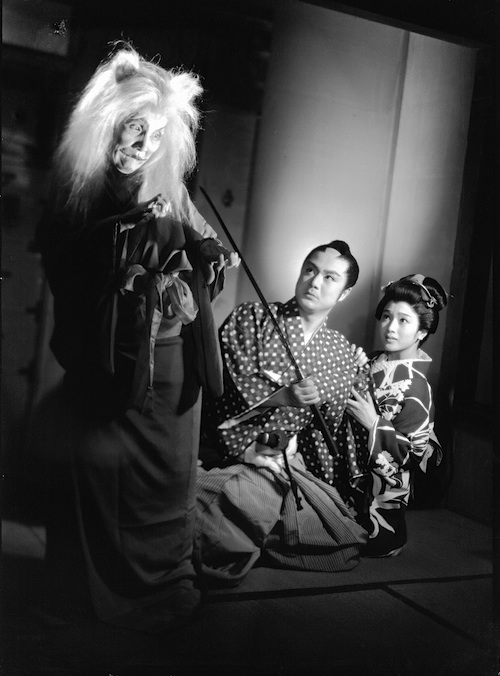
When Tama assumes a crazy cat woman form, Otama approaches Corman-esque territory. However, when it is simply the stealthy feline or the vacant eyed Kozasa directing the uncanny torments, the film is all kinds of creepy and atmospheric. Yoshiro makes particularly effective use of his evocative settings, the spooky houses and deep dark well that eerily reappear in the later time frame.

From "Ghost Cat of Otama Pond."

In dual roles as the star-crossed lovers of both eras, Shôzaburô Date is sufficiently uptight or tightly wound as Tadahiko/Yachimaru, whereas Noriko Kitazawa is kind of spectacular as the vengeful Kozasa (while spending most her time as Keiko either whining or in a paranormal coma).

Yoshiro was a protégé of Nobou Nakagawa, whose influence can be seen in Otama’s bone-deep themes of honor and betrayal, macabre use of traditional folkloric elements, Hammer-like color cinematography, and aptly moody soundtrack. A little overstuffed up top with witchy apparitions, a little less would have been more in Otama, which is always the case for this sort of film. Yet, its third act is a site to behold for genre fans. Where have these Shintohos been all our lives?  Highly recommended for fans of both 1960’s horror movies and Japanese cinema in general, Ghost Cat of Otama Pond screens this Friday (3/1) at the Japan Society as part of the can’t miss Shintoho Mind Warp series (that will continue on to Philadelphia, San Francisco and Vancouver later in the year).

LFM GRADE: B+

Posted on February 25th, 2013 at 2:11pm.

LFM’s Govindini Murty @ HuffPost Live Talks About Women Directors at The Oscars

LFM’s Govindini Murty appeared on HuffPost Live today to talk about the issue of women filmmakers being left out of the Oscars, and also about women in the film industry, in general. The entire 25 minute segment is available above. Thanks to HuffPost Live for inviting her on.

Yesterday Govindini had a piece in The Atlantic on women filmmakers breaking into the mainstream film world through Sundance and independent film.

Posted on February 22nd, 2013 at 2:54pm.

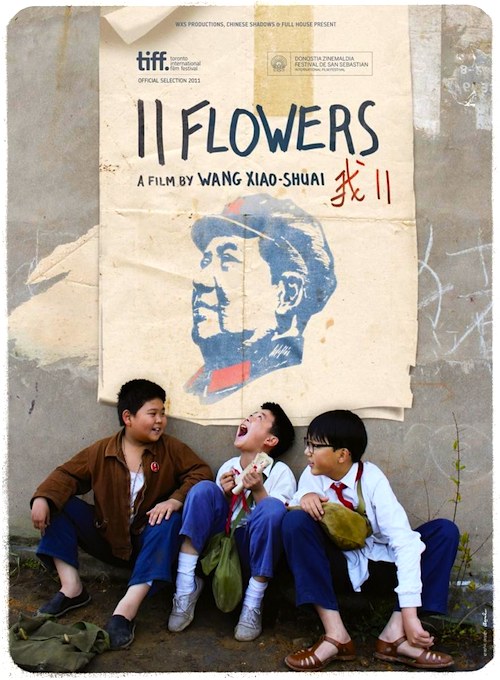
Coming of Age During the Cultural Revolution: LFM Reviews 11 Flowers

By Joe Bendel. Wang Han should not be growing up in the countryside. Whether they like it or not, his parents were forced to relocate to Guizhou province as part of the Cultural Revolution’s Third Front campaign. For an active eleven year old boy, it is not such a bad environment. However, he has an unusual vantage point to observe the struggles of another “intellectual” family in Wang Xiaoshuai’s 11 Flowers, which opens today in New York.

Frankly, Wang Han’s father is fortunate to have a job with an out-of-town opera company, but it requires spending extensive time away from home. Each time he commutes to work, he accompanies Wang Han part of the way to school. It is an important ritual that cements their bond. Wang Han does not share a similar bond with his stern factory worker mother. When chosen to be the leader of his school’s morning calisthenics (part of their daily Maoist regimen), Wang Han’s principal rather insensitively tells the boy to ask for a new shirt for the occasion. Of course, this would be a considerable investment in money and cloth ration vouchers for the family. Nonetheless, his mother eventually relents.

For a brief period, life is good for Wang Han, but the discovery of a dead body is an ill omen, as is the conspicuous distress experienced by Jue Hong, his frequently absent crush. While his family has largely avoided trouble, her “intellectual” father, Xie Fulai, has not. Nor has she. Evidently, the dead man raped the young girl, as her brother the killer explains to Wang Han, when circumstances bring them together in the forest. It is a frightening meeting for the eleven year old, made considerably worse when the fugitive forcibly takes his new shirt.

It might be overstating matters to describe the semi-autobiographical 11 Flowers as the late Cultural Revolution era version of To Kill a Mockingbird, but it gives a general sense of what to expect from the coming of age story. Wang focuses on the personal, but the political periodically intrudes in rudely menacing ways. Through Wang Han’s eyes, the Cultural Revolution is not so much an exercise in ideological excess, but the periodic explosion of street thuggery, as when his father is caught in a Red Guard rampage.

Liu Wenqing is a remarkably expressive young actor, who perfectly anchors the film. He makes Wang Han’s slow evolution from innocence to awakened conscience quite riveting and moving. Likewise, the young supporting cast-members are spot-on as his classmates. Yet, the subtle power of Wang Jingchun’s work as his father really sneaks up on audiences. When he encourages Wang Han’s painting as a means of artistic freedom, it feels light and natural at the time, but it is hugely significant in retrospect.

11 Flowers is unusually sensitive and accomplished. It is probably the best film to focus on a youthful cast since Tom Shu-yu Lin’s Starry Starry Night, which was probably the best since who knows what? Beautifully lensed by Dong Jinsong, it is quality cinema on every level. Highly recommended, 11 Flowers opens today (2/22) in New York at the Quad Cinema downtown and the Elinor Bunin Munroe Film Center uptown.

LFM GRADE: A

Posted on February 22nd, 2013 at 2:52pm.