LFM Reviews Liv & Ingmar @ The New York Film Festival

By Joe Bendel. They collaborated on some of the least romantic films ever (see Hour of the Wolf, for instance). Yet Ingmar Bergman and Liv Ullmann became the first couple of international art cinema. The Swedish auteur’s romance with his Norwegian muse would not last, but their relationship continued to evolve and endure. Ullmann reflects on each stage of her career-defining association with Bergman in Dheeraj Akolkar’s Liv & Ingmar, which screens as part of the 50th New York Film Festival’s Cinema Reflected sidebar.

What a difference a few years and a more northern latitude make. Whereas Ingrid Bergman was pilloried for leaving her husband to take up with Roberto Rossellini, Ullmann essentially did the same thing with Bergman, but with no attendant outrage from the world press. As she tells it, she was widely encouraged by friends to do so. Indeed, the film is entirely presented from Ullmann’s perspective, relying almost entirely on her narration and extended interview sequences to tell their story.
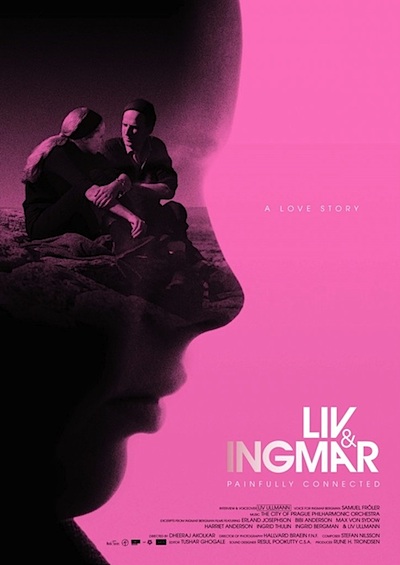
Nevertheless, there is no score settling in L&I. Even after the dissolution of their intimate cohabitation, the legends of Scandinavian cinema remained on good terms, eventually becoming the closest of friends. There is definitely a lesson in that, especially if you think documentary crews will one day be interviewing your former lovers. However, it might not make the most compelling viewing.

Ullmann still offers some insight into the dark places manifested in Bergman’s films, but that is about as far as the film goes. As a result, L&I is permeated with a fatal sense of respectability. Granted, nobody wants or needs to see a great filmmaker like Bergman trashed by an ex. The fact that he and Ullmann continued to mean so much to each other is quite touching and nearly the extent of the film’s takeaway.

Scenes of Ullmann revisiting Bergman’s Fårö Island home give the documentary a vivid sense of place and there are plenty of tellingly illustrative clips from their films. L&I is quite a heartfelt tribute, but as a work of cinema in its own right it is hardly essential (though it is an interesting film to see in conjunction with Francesco Patierno’s thematically related War of the Volcanoes, also screening during this year’s NYFF). Mostly recommended for dedicated Bergman and Ullmann admirers, Liv & Ingmar screens this coming Monday (10/1) and Tuesday the 10th during the 2012 New York Film Festival.

LFM GRADE: C+

Posted on September 28th, 2012 at 1:21pm.
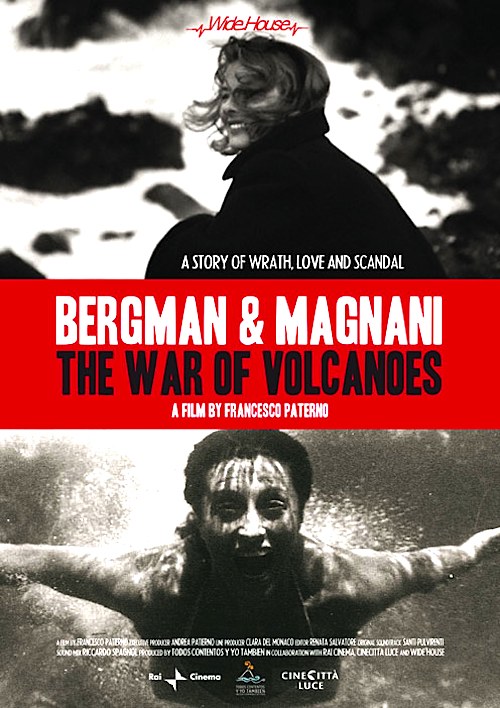
LFM Reviews The War of the Volcanoes @ The New York Film Festival

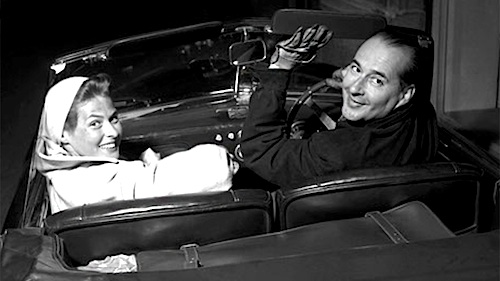
By Joe Bendel. Before Pitt, Jolie, and Aniston dragged their relationships through the tabloids, Ingrid Bergman, Roberto Rossellini, and Anna Magnani thoroughly outraged the filmmaking world. However, they did it with exponentially more talent. Francesco Patierno documents their headline-making scandal and the competing film sets on which it played out in The War of the Volcanoes (trailer here), a selection of the Cinema Reflected sidebar at the 50th New York Film Festival.

Rome, Open City was an international triumph for both Magnani and her director, Rossellini. They quickly became close collaborators and lovers, despite their differences in temperament. Magnani was the passionate, ever faithful diva. Rossellini was the charmed smooth talker. It probably would not have lasted, even without Rossellini’s mutual admiration for the unhappily married Ingrid Bergman.

Looking for a break from the Hollywood system, Rossellini’s Stromboli appeared to be the perfect project. A morality play set against the exotic backdrop of the volcanic Aeolian Islands, Stromboli was largely lifted from a proposal developed by Rossellini’s cousins—or at least that is how they saw it. Slightly put out by the appropriation, the budding filmmakers produced their film anyway, with Hollywood director William Dieterle at the helm and none other than the spurned Magnani herself as the star. Guess which director brought their film in on-time and within budget.

As production began on the isolated Stromboli Island, thanks to Howard Hughes, the relationship between Rossellini and Bergman intensified. With rumors swirling and pictures of PDA’s splashed across the newspapers, she became radioactive for her former Hollywood colleagues, leading to no end of stress for the Swedish movie star. The narrative elements of both competing films, featuring disgraced women shunned by narrow-minded islanders, did not exactly help either, but it certainly represents fertile soil for film critics and historians to analyze.

Bergman and Rossellini.

Most movie fans will know the broad strokes of this infamous story, but the details are fascinating. Patierno completely eschews talking heads, telling the tale through anonymous voiceover narration, archival publicity footage, and shrewdly selected clips from the principles’ films that thematically fit the events under discussion (like for instance, Hitchcock’s Notorious). Almost entirely black-and-white as a result, Volcanoes captures a vivid sense of the era’s sophistication.

While rather a shorty at fifty-two minutes (preceded by a ten minute short following the eternal Manoel de Oliveira during the filming of The Strange Case of Angelica), War of the Volcanoes is nonetheless quite informative and entertaining, like a gossip show for upscale cineastes. Recommended for fans of Italian cinema and Hollywood’s golden age, War of the Volcanoes screens this Saturday (9/29) and the following Wednesday (10/3) as part of the 2012 NYFF.

LFM GRADE: B+

Posted on September 27th, 2012 at 12:21pm.

LFM Reviews Final Cut @ The New York Film Festival

By Joe Bendel. It is the classic Hollywood story. Everyman meets everywoman, with everycomplication ensuing. One-upping Chuck Workman, György Pálfi aggregates clips from some of the greatest milestones of international cinema, as well as two of his own previous films, into the loose narrative form that is Final Cut—Ladies & Gentleman (trailer here), which screens as part of the Cinema Reflected sidebar at the 50th New York Film Festival.

As Charlie Chaplin, the protagonist wakes up and stretches. As Gene Hackman he shaves and knots his tie – as Leonardo DiCaprio, amongst others. A chance encounter on the street will lead him to pursue a mystery woman, who turns out to be a nightclub singer, played by the likes of Liza Minelli and Jessica Rabbit. Despite the efforts of a jealous ex-boyfriend(s), they fall in love and marry. Yet, domestic life presents its own challenges.

Final Cut is light years removed from the somewhat unpleasant Taxidermia, Pálfi’s last film to have an American theatrical release—and it’s a good thing that it is. What started as a creative response to the Hungarian film industry’s economic doldrums became the 2012 Cannes Classic’s closer. However, his love letter to cinema is not likely to ink a distribution deal anytime soon, since Pálfi was never bourgeoisie enough to actually seek permission to use his constituent snippets. Considering that Walt Disney and George Lucas films are well represented in the mix, one would not be shocked if there are a few cease & desist letters in its future.

Kim Novak in "Vertigo."

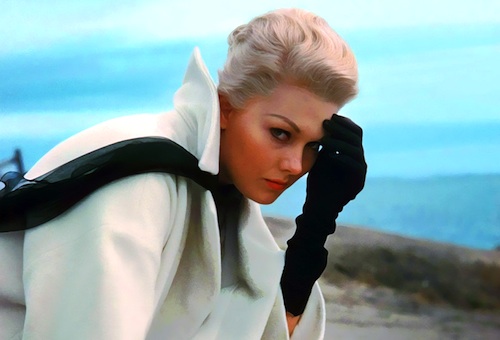
Make no mistake, we all recognize intellectual property rights here, but it is sort of shame a home DVD release is not likely for Final Cut. It could be quite the party game for movie buffs, looking for bragging rights for how many more films they can recognize than their friends. While many of us will recognize the Kurosawa and Godard excerpts, some of the Eastern European selections might be a little tricky. The idiosyncrasies of Pálfi’s editorial sensibility are also sometimes surprising (Angel Heart, again?). For those wondering, Hitchcock’s Vertigo did indeed make the cut, at the risk of drawing another eyebrow-raising statement from Kim Novak, a la The Artist.

Granted, Final Cut is hardly groundbreaking. There are several short films floating around the internet based around similar concepts, but Pálfi takes it further, even tossing in the occasional full frontal for comedic effect. If nothing else, it brings back a flood of movie memories and should spur wide ranging post-screening did-you-ever-see discussions. Not particularly deep or perhaps even legally defensible, Final Cut—Ladies & Gentleman is still a fair amount of film geek fun. It screens this coming Monday (10/1) at the Francesca Beale Theater during the 2012 NYFF.

LFM GRADE: B-

Posted on September 27th, 2012 at 12:20pm.

The Man Behind the Russ Meyer Myth: LFM Reviews Up the Valley and Beyond @ The New York Film Festival

By Joe Bendel. He has been called the most successful independent filmmaker of his era. Yet there was no secret formula to his films. The hallmarks, so to speak, of Meyer’s oeuvre are impossible to miss. Todd Rosken dramatizes the sexploitation pioneer’s creation story in Up the Valley and Beyond (trailer here), which screens as part of Shorts Program 1 at the 50th New York Film Festival.

Meyer was a war hero, as he is happy to explain to anyone who asks. During the post-war/pre-Mad Men era, he sets out to reinvent himself as a pin-up photographer. However, he has difficulty finding a subject that truly excites his artistic sensibility, if you will. Then a colleague refers him to Eve Turner, a diva model whose qualities are unmistakable—both of them.

From "Up the Valley."

Meyer fans will be surprised the grindhouse auteur never even picks up a movie camera in Valley, so there will be no behind-the-scenes treatment of Faster, Pussycat! Kill! Kill! Still, Rosken and co-screenwriter “Bobby D. Lux” cleverly hint at the roots of frequent Meyer motifs. As Meyer, Jim Parrack’s performance is somewhat akin to Johnny Depp’s Ed Wood, portraying his earnest gusto with almost guileless naiveté. In contrast to Wood, though, Meyer’s cinematic vision is easy to “get,” continuing to reverberate with fans decades after his glory years.

Although it is part of the shorts program, Valley would also be a good fit for NYFF’s Cinema Reflected sidebar. It certainly captures the enthusiasm of a particularly idiosyncratic filmmaker. Quite a presentable period production with a number of affectionate laughs, Up the Valley and Beyond is recommended for all cult movie fans when it screens this coming Monday (10/1) and Sunday, October 14th, as part of the first short film programming block at the 2012 NYFF.

LFM GRADE: B

Posted on September 27th, 2012 at 12:10pm.

LFM Reviews The Savoy King: Chick Webb and the Music that Changed America @ The 50th New York Film Festival

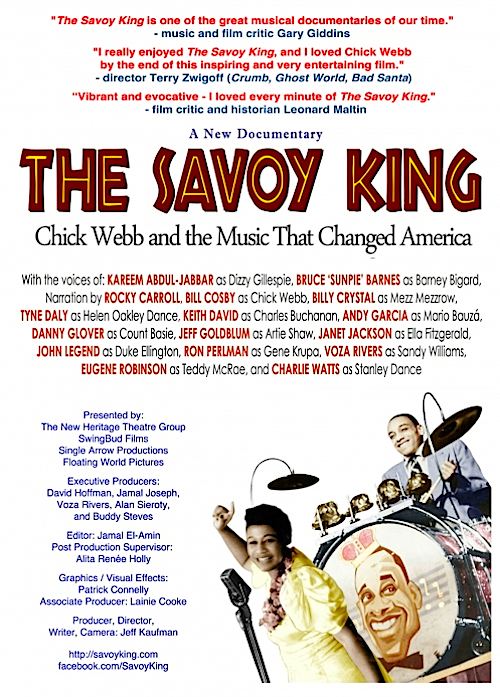
By Joe Bendel. To his colleagues, Chick Webb was a musicians’ musician. For dancers, he was their bandleader of choice. Yet, the man who drove the Savoy’s house band is not as widely recognized alongside the Dukes and Counts of jazz royalty as he ought to be. Surviving friends and fans help rectify that in Jeff Kaufman’s thoroughly entertaining documentary profile, The Savoy King: Chick Webb and the Music that Changed America, which screens as part of the 50th New York Film Festival’s On the Arts sidebar.

Chick Webb did not have much margin for error in life. He was an African American, naturally slight of stature, whose childhood back injury led to a broken body and a short lifetime of pain. He could play those drums, though. A reluctant bandleader, Webb held his outfit together during some decidedly hard times, largely thanks to the quality of his personality and music. Eventually, they hit it big through the perfect combination of venue and band.

Under progressive management, the Savoy Ballroom was unlike other Harlem nightspots, allowing interracial socializing. It welcomed neighborhood residents onto its dance floor—and dance they did. The eternally youthful Frankie Manning explains how the Chick Webb Orchestra became the band of choice for Lindy Hoppers in general and especially for him. In fact, it was Webb providing special rhythmic support for the first time Manning publicly unveiled his still dazzling air-steps.

Those familiar with Ken Burns’ Jazz will also know the basic story of Webb’s legendary battle of the bands with Benny Goodman. Yet, Savoy King tells it from a slightly different perspective, through the written recollections of his friend and promoter, Helen Oakley Dance. Webb also had the distinction of giving a band singer named Ella Fitzgerald her first big break. It all happened in thirty-four all too brief years.

Indeed, one of the many drawbacks of dying at a young age is the difficulty of staking one’s claim on history. Savoy King rightly does so on his behalf, calling upon expert testimony from the likes of Manning, the impossibly cool Roy Haynes, and trumpeter Joe Wilder, a true gentleman of jazz if ever there was one. He also enlists an all-star cast to give voice to the giants of the era, including Bill Cosby (a frequent host of the Jazz Foundation of America’s Great Night in Harlem gala concerts) fittingly cast as Webb himself. For his colleague and favorite arranger Mario Bauzá, Andy Garcia is also about as perfect a match as you could hope to make. However, Janet Jackson as Ella Fitzgerald? She wishes.

Savoy King is a compelling blend of cultural and social history that shrewdly always keeps the music prominent in the mix. Although director-producer-writer Kaufman fully explores Webb’s many tribulations, it is a pleasure to revisit the early swing era in his company. Hip and sensitive, Savoy King is an obvious highlight of this year’s NYFF for jazz fans, but it is also highly recommended for general audiences when it screens this Saturday (9/29) at the Walter Reade Theater and the following Tuesday (10/2) at the Francesca Beale.

LFM GRADE: A-

Posted on September 26th, 2012 at 3:32pm.

Puritans Kicking Butt: LFM Reviews Solomon Kane

By Joe Bendel. Yes, it’s been said before, but it bears repeating—don’t pick a fight with the Puritans. Seventeenth Century ruffians are particularly advised to give a wide berth to a reformed killer with a satanic price on his head. There will be a fair amount of dark fantastic swashbuckling as Robert E. Howard’s hero searches for redemption in Michael J. Bassett’s Solomon Kane, which wayfares into theaters this Friday.

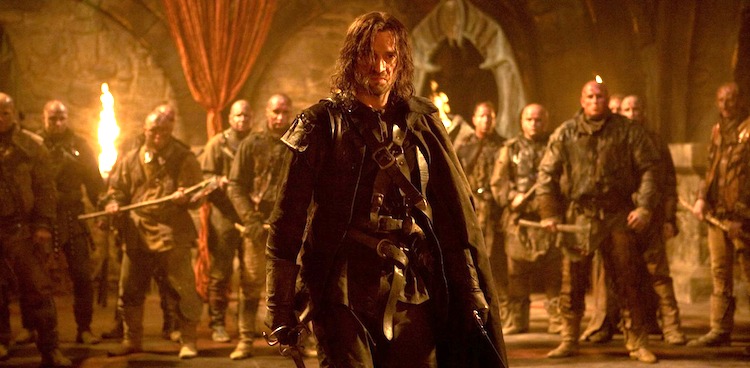
Kane was once a warrior so ruthless, he sort of accidentally made a pact with the Devil. When Scratch’s minions come to collect, the adventurer is a bit freaked. Taking refuge in a monastery, Kane converts, pledging to never take another life. With the forces of darkness still pursuing him, Kane’s presence is rather bad for business, so the penitent sets out to confront his destiny. He finds it with the Crowthorns, a truly Christian family of pilgrims.

When his traveling companions are attacked by a demonic militia, Kane watches helplessly out of obedience to his oath. However, when they carry off the eldest Crowthorn daughter, Kane pledges to rescue her, even if it costs his very soul. Yet Kane will find that her fate is intertwined with the secrets of his past, as we would expect.

If nothing else, Kane is a nattily accessorized action hero. Although some liberties are taken with his origin story, Bassett taps into something powerfully archetypal in his depiction of the menacing Puritan. His script treats concepts of damnation and redemption with deadly earnest, which is appreciated. In a way, SK is a far more effective evangelical film than those made for the express purpose of proselytizing. There is also a fair amount of hack and slash.

From "Solomon Kane."

James Purefoy is about as good fit for Kane as one could hope to find. He is no Ryan Gosling or Reynolds, thank the merciful Heavens. Quite good in the superior Ironclad, he is equally credible here both in the action scenes and brooding like a man accursed. Adding further heft, the late great Pete Postlethwaite memorably portrays the dignity of faith as William Crowthorn. Max von Sydow is also very Max von Sydow as Kane’s noble father, seen in flashbacks.

Yet, when you get right down to it, SK ought to be more fun than it is. The religious overtones are actually rather distinctive, but the film just gets bogged down too often. There are simply too many scenes of Kane riding through forests, while the climax over-relies on Harry Potter style magical pyrotechnics.

Still, Bassett was definitely onto something in Kane. Howard readers should appreciate how well he captured that sense of ancient corrupting dread. Not perfect but a worthy effort, Solomon Kane is recommended for Howard fans and more adventurous evangelical audiences when it opens this Friday (9/28) in New York at the AMC Empire.

LFM GRADE: C

Posted on September 26th, 2012 at 3:31pm.