LFM Reviews Ricky on Leacock @ DocuWeeks 2012

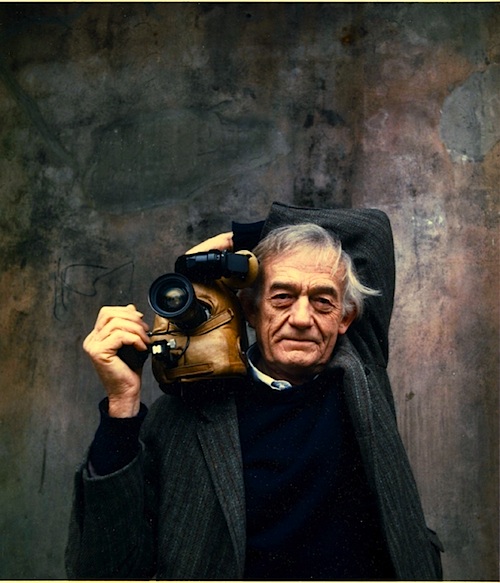
Documentarian Richard Leacock.

By Joe Bendel. For many, Richard Leacock was Mr. Documentary, directly inheriting the title from Robert Flaherty, with whom he once worked. Since his name is attached to many of the Twentieth Century’s acknowledged exemplars of the field, his reputation was not without merit. Longtime friend, colleague, and protégé Jane Weiner collects decades of footage she shot of the verité pioneer in her documentary profile Ricky on Leacock, which screens as part of the 2012 DocuWeeks showcase.

Leacock shot his first documentary as a teenager to serve as a PR film for his father’s banana plantation. Decades later, Canary Island Bananas is still regularly screened at Leacock tributes and retrospectives. Obviously not exactly from humble roots, Leacock was educated at private boarding schools. It was at one such institution Leacock happened to meet Flaherty, who promised to hire Leacock after viewing Bananas. Though Leacock dismissed the pledge at the time, he did indeed find himself side by side Flaherty shooting footage for Louisiana Story.

Frankly, Flaherty’s 1948 classic boasts some of the strongest images collected in Weiner’s documentary, along with the uber-cool visuals of Roger Tilton’s smoking short, Jazz Dance, on which Leacock served as a cinematographer with Jimmy McPartland’s combo providing the music (with Willie “the Lion” Smith on piano, Pee Wee Russell on clarinet, and the great slap bassist Pops Foster, oh yes indeed). Yet problematically, many of his grungy later super-eight micro-docs that fired Leacock’s passion are not so powerful looking when collected on-screen.

Leacock back in the day.

Granted, there are some interesting making-of stories about Leacock’s films, including his collaborations with D.A. Pennebaker, who shares some on-camera reminiscences. Yet, the fact is that Leacock’s oft repeated calls to “democratize” documentary filmmaking sound awfully dated in the digital age, as does the invective he directs towards television. His frustration might be understandable, but frankly if you cannot get anyone with a financial stake to share your vision for a project, perhaps that ought to tell you something – especially considering his filmography includes the sharply critical Ku Klux Klan—the Invisible Empire produced for CBS in 1965.

Regardless, Weiner cannot seem to get enough of her teacher’s words of wisdom. Granted, Leacock had a distinctive voice, but his opinions are not always as timeless as his best films. She also loves to watch him cook, which is fine the first few times we watch him putter about the kitchen.

The result is a moderately interesting oral history of documentary filmmaking probably best suited to the television Leacock so brusquely dismissed. Tilton’s Jazz Dance is highly recommended for all audiences (check out Jeff Van Gundy getting down around the 8:06 mark), whereas Ricky on Leacock is strictly for those who have an abiding fascination with the work of Leacock and select collaborators, like Pennebaker and Flaherty. It screens through Thursday (8/16) at the IFC Center in New York and then runs for a week (8/17-8/23) at the Laemmle Noho 7 in Los Angeles as part of the 2012 edition of DocuWeeks.

LFM GRADE: C

Posted on August 13th, 2012 at 1:37pm.
LFM Reviews Painted Skin: The Resurrection

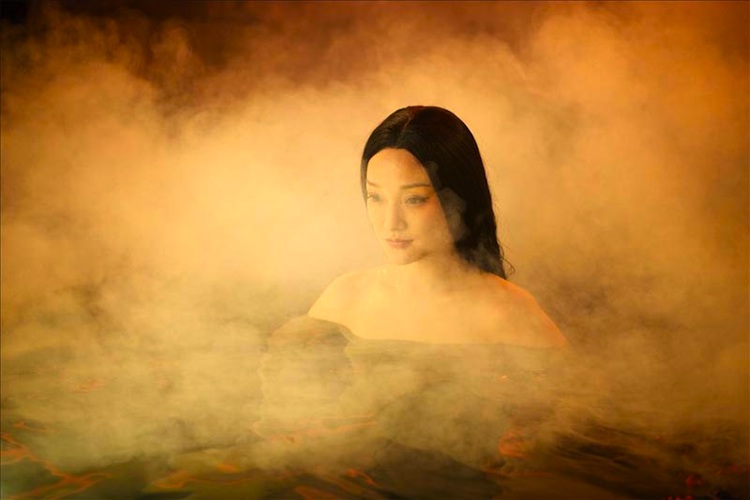
Xun Zhou in "Painted Skin 2: The-Resurrection."

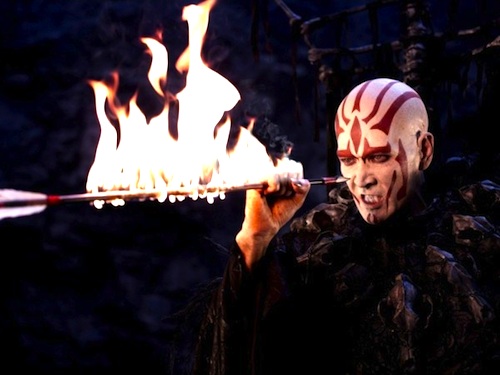
By Joe Bendel. Can you have sympathy for a demon like Xiao Wei? You might if she looked like Zhou Xun. Her story is indeed a tragic one, rooted in heartaches past. Nonetheless, as a fox demon, she must constantly consume human hearts. Still, she yearns to become human herself in Wuershan’s wuxia paranormal romance Painted Skin: The Resurrection (trailer here), which opens this Friday in New York.

Those who have not seen the previous Painted Skin (or King Hu’s prior adaptation of the Pu Songling story) should not be concerned. The sequel is practically a complete reboot. Xiao Wei is doing her thing once again, tearing men’s hearts out (literally), with only the bird demon Quer for companionship. As she preys on powerful men, she hopes in vain someone will willingly and knowingly offer theirs up to her, so that she may become human again. The clock is ticking, though. A looming solar eclipse may spell the end of her.

Suddenly deliverance might have arrived in an unlikely form, when a warrior with a smoldering heart “rescues” Xiao Wei from marauders. However, this is no hero—this is the Princess Jing, masking herself to hide the scars she received in a rather nasty teenaged encounter with a bear. General Hou Xin blames himself for that incident. He also still harbors a forbidden love for the Princess he failed, which she reciprocates. Yet, even the true blue palace guard is no match for a fox demon’s bewitchments, setting the stage for a supernatural love triangle. Meanwhile, the rival Tian Liang clan is making threatening noises. Unfortunately, the Princess and her General are distracted by the agitation caused by Xiao Wei’s presence. That’s what happens when you have a demon in your midst.

From "Painted Skin 2."

Then again, Xiao Wei is not really the villain in this story. Her yearning to live is somewhat akin to Larry Talbot’s search for the secret of death in the classic Universal Wolfman films, except Zhou Xun is obviously no Lon Chaney, Jr. to look at – not by a long shot. As Quer the bird demon Mi (Mimi) Yang is also cute as a button. In fact, she develops some surprisingly sweet romantic chemistry with Pang, an unprepossessing demon hunter, by virtue of his bloodline. It is a surprisingly appealing turn by Feng Shaofeng, evolving from somewhat cringy comic relief into a legit secondary hero.

For a special effects-laden tale of demons and swordplay, Resurrection has unexpected depth of feeling and a third act reversal that works quite well, at least before Wuershan resorts to the Harry Potter-esque thunder-and-wrath climax. The real fireworks involve the two alluring co-leads. Blessed with an extraordinary expressiveness (check her out in Equation of Love and Death, if you can), Zhou renders the fox demon as a fully dimensional, deeply tragic figure. Though Zhao Wei occasional flirts with melodramatic excess, as Princess Jing, she effectively expresses romantic longing while totally rocking the Phantom of the Opera-style mask. Chen Kun’s Hou broods and pines well enough, while Yang and Feng consistently inject energy and verve into the proceedings. Unfortunately, the evil Tians are not well defined, though Chen Tincha and Fei “Kris Phillips” Xiang certainly look menacing as the dastardly clan princess and sorcerer, respectively.

Featuring several dangerous women, a few men who are a bit slow on the uptake, and a whole lot of frustrated ardor, Resurrection is a far better date movie than most wuxia epics. It is also a great showcase for Zhou. Recommended for her fans and those who appreciate big, dark uncanny spectacles with a strong human element, Painted Skin: The Resurrection opens this Friday (8/17) in New York at the AMC Empire and in San Francisco at the AMC Metreon and Cupertino.

LFM GRADE: B

Posted on August 13th, 2012 at 1:35pm.

Talking With Director Benh Zeitlin About Beasts of the Southern Wild

By Govindini Murty. Benh Zeitlin’s Beasts of the Southern Wild has garnered much acclaim on the film festival circuit and is one of the top indie films in theatrical release right now, having already earned $5.9 million at the box office. The story of a little girl and her father struggling to survive in the flooded bayou of southern Louisiana, Beasts of the Southern Wild won the Grand Jury Prize at Sundance, the Camera D’Or at Cannes, and the Audience Favorite Award at the LA Film Festival. There is already talk that it may be nominated for an Oscar for Best Film, and that Quvenzhané Wallis, the film’s remarkable eight-year old lead, may be nominated for an Oscar for Best Actress.

We had the opportunity to attend the premiere of Beasts of the Southern Wild at the LA Film Festival this summer and enjoyed the Q & A conducted afterward by John Singleton with director Benh Zeitlin and the film’s stars, the irrepressible Quvenzhané Wallis (who utterly stole the show) and the charming baker-turned-actor Dwight Henry.

We spoke briefly with Benh Zeitlin after the screening and also met John Singleton, who expressed repeatedly what a fan he was of the film. Here’s the conversation I had with Zeitlin, followed by excerpts from the Q & A that Singleton held with Zeitlin, Wallis, and Henry.  While there were a variety of topics discussed in the Q & A, my focus here is on the comments that Zeitlin made about the creative and practical aspects of translating his vision to the big screen.

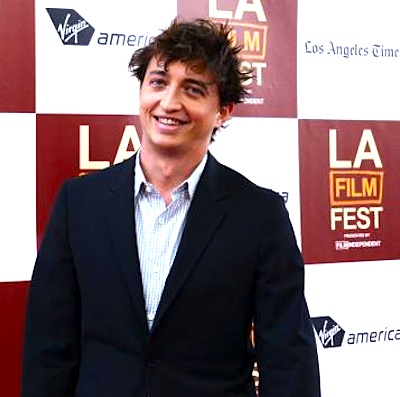
Director Benh Zeitlin at the LA Film Festival.

GM: I was curious about your influences. Were you quoting anyone specific in the film? What inspired you – either in classic or contemporary film?

BZ: The big one for me is this film called Underground by Kusturica. That’s the one that made me most want to make films when I was growing up … the way that the fantasy and reality worked in that film I think was a big deal. And then we watched a lot of documentaries – we watched a lot of Les Blank documentaries. This one called Dry Wood – and all those ‘70s films that he made – were kind of how we came up with the cinematography. But you know, I studied the way that Cassavetes directs actors and Mike Leigh directs actors – and looking at narrative from Disney movies, like Bambi [Zeitlin himself has a background in animation and his parents are folklorists]. So, really, it was from all over the place, from all eras – from high-brow to low-brow – sort of a broad world.

GM: That’s interesting. You mention Les Blank – did you see Burden of Dreams, about Werner Herzog making Fitzcarraldo?

BZ: Oh yeah, of course. Werner Herzog, absolutely.

GM: Because [Beasts of the Southern Wild] just reminded me – the atmosphere – the organic feeling of being in the mud with the animals and the wilderness all around –

BZ: Definitely, yeah. He was a huge inspiration for me. The first time I saw that film I was like “This is what I want to do.”

GM: I interviewed Werner Herzog a few months ago and there’s some great footage from that film [Les Blank’s Burden of Dreams] that’s online. But you know, I was curious, because the film has that blend [of reality and fantasy] that you were mentioning. But I didn’t know about Bambi, that’s going to be interesting to throw in there –

BZ: [Laughs.] You got to go back to Bambi, always got to go back to Bambi.

GM: Well thanks so much, that was fun to see.

BZ: Thanks very much, nice to meet you.

Beasts of the Southern Wild tells the story of Hushpuppy (Quvenzhané Wallis), a six-year old girl growing up on an island off the coast of Louisiana known as “The Bathtub.” The story follows Hushpuppy and her widower father, Wink (Dwight Henry), as they eke out a living on their small plot of land – with the little girl caring for their farm animals and living in tune with the rhythms of the natural world. Her father, who has a mysterious illness, almost like a latter-day Fisher King, teaches Hushpuppy how to fish and emphasizes that she needs to learn how to take care of herself so she can succeed in the world and climb to the “top of the ladder.”

The island community of the Bathtub might lie in the shadow of New Orleans and Lake Pontchartrain, but its rural lifestyle feels a world away. To emphasize this, Beasts was shot in a documentary-verité style on 16mm film, which, when blown up on a large screen, creates a grainy, mysterious image that paradoxically heightens the mythological and poetic themes of the film. Hushpuppy’s view of the world is thus depicted in an alternately realistic and fantastical manner that Benh Zeitlin called “a heightened world built out of very real parts.” For example, Zeitlin noted that though there is no place called the Bathtub in Louisiana, it was based on the real Isle de Jean Charles, an island that is slowly falling into the Gulf and that has gone from 200 families to 20 families in recent years. As Zeitlin explains, “we took elements of things and swirled them together – almost like a folk tale.” Continue reading Talking With Director Benh Zeitlin About Beasts of the Southern Wild

LFM Reviews It is No Dream: The Life of Theodor Herzl

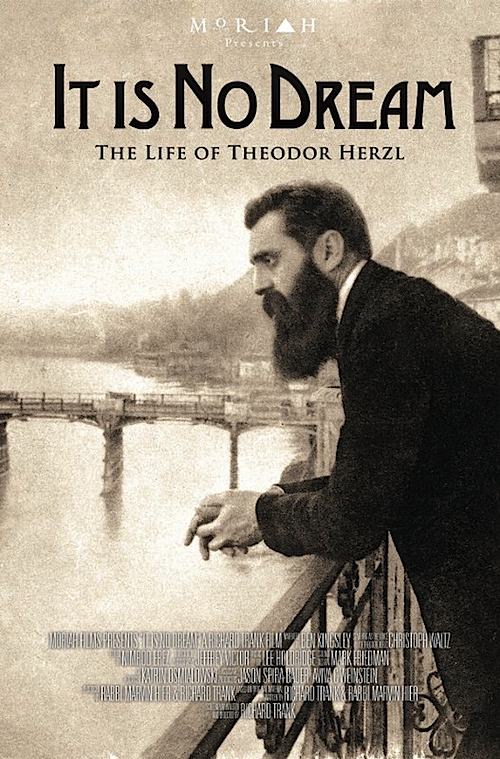
By Joe Bendel. Theodor Herzl once advocated mass Jewish conversion to Christianity, but would nonetheless become a unifying leader for the Jewish Diaspora. Profoundly concerned about the rise of anti-Semitism, his fears would be dreadfully justified in the years soon following his death. Yet, they provided the early impetus for the Zionist movement that ultimately led to the founding of the State of Israel. His life and mission are documented in Richard Trank’s It is No Dream: The Life of Theodor Herzl, which opens this Friday in New York.

Herzl believed that if an anti-Semitic wave could sweep across France, the cultural capitol of Europe in the 1890’s—and it was—it could happen anywhere. Never particularly religious, covering the Dreyfus Affair as a journalist forced Herzl to take stock of his own Jewish heritage and seriously address the increasing volume of European anti-Semitism. His early ideas proved impractical on further reflection, but the notion of a sovereign Jewish state (not original to Herzl) remained a viable option.

For the remaining years of his life, Herzl became the preeminent leader of the movement to forge a Jewish homeland, making his case to some of Europe’s most influential power brokers, including the Kaiser. For Herzl, the only question was where. Eventually, the colonial territory entrusted to England by a League of Nations mandate, known at the time as “Palestine,” became the obvious choice, given the Jewish people’s deep roots to the region. However, Herzl was appalled by the backwardness and poverty of the British Mandate during his first visit. Still, this did not disqualify the small tract of land from consideration. Arguably, it made even more sense on several levels.

Produced by Moriah Films, the Simon Wiesenthal Center’s film production subsidiary, Dream is a welcome and necessary antidote to malicious attempts to make “Zionism” a dirty word in the media. Trank and co-writer-co-producer Rabbi Marvin Hier clearly illustrate the alarming nature of anti-Semitism during Herzl’s lifetime, largely leaving unspoken (but ever-present in viewer’s minds) the enormity of the Holocaust, which would tragically vindicate all his fears.

Narrated by Academy Award winner Sir Ben Kingsley, with fellow Oscar winner Christoph Waltz giving voice to Herzl’s letters and writings, Dream has a fair amount of star power for a serious historical documentary. With an elegant score composed and conducted by the Emmy winning Lee Holdridge (whose credits including Moonlighting), Dream is a pretty prestigious package, but the real attraction is Herzl’s short but epic life-story, which will probably come as a revelation to many viewers outside the Jewish faith. Though perhaps not the target market, it is those viewers of good will not especially schooled in Jewish history who would get the most out of the film.

Consistently fascinating and never dry, Dream tells a compelling story that remains only too timely for the world today. Well paced and informative, It is No Dream is recommended for general audiences, regardless of religion or political affiliation, when it opens this Friday (8/10) in New York at the Quad Cinema.

LFM GRADE: B+

Posted on August 8th, 2012 at 1:05pm.

Bring Your iPad: LFM Reviews Spike Lee’s Red Hook Summer

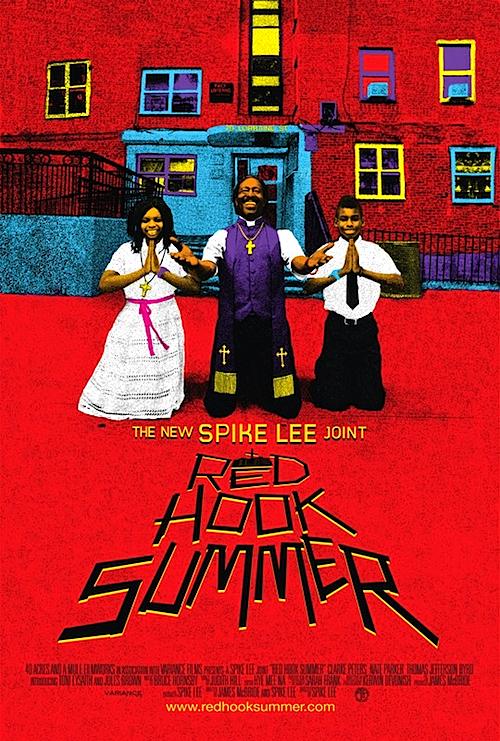
By Joe Bendel. For the final cut of Pulp Fiction, Quentin Tarantino deleted a scene of Uma Thurman talking to John Travolta through the lens of a camcorder. It was already too clichéd. That was nearly twenty years ago. In his latest film, Spike Lee heavily relies on a similar device, hoping the upgrade to an Apple iPad makes it seem fresher. Such a strategy perfectly represents the tired blood of Red Hook Summer, which opens this Friday in New York.

Colleen Royale can hardly stand her father, Enoch Rouse, introduced to viewers as “Da Good Bishop” of the Little Piece of Heaven church, or his old time religion. Nonetheless, she deposits her anti-social suburban son Flik in her father’s Red Hook housing project apartment for the summer. Like a little Spike Lee, Flik has a compulsive need to film the world around him, but no faith. Thus begins a generational cold war, with the minister determined to bring the young cuss to Jesus.

Frankly, Hook’s first two sluggish acts are downright laborious, but grandfather and grandson seem to be building a relationship by meeting each other halfway. That would be a worthy enough lesson we could all stand to be reminded of again, if the film followed through on it. Instead, Lee foists one of the laziest, most obvious third act revelations on viewers, completely undermining any good will he might have built up thus far. Remember Enoch Rouse is a man of the cloth. Anyone who has seen a Hollywood film in the last twenty years should be able to guess the rest.

Yet, since Hook clearly implies Rouse’s daughter has a good idea what her father’s deep dark secret is, it is absolutely baffling why she would send her son to stay with him unsupervised, with only his annoying sense of entitlement for protection, unless she is just understandably sick of the sullen brat. No matter, Lee is determined to pull Rouse through the gauntlet, which he does in punishing, Grand Guignol style.

To be fair, Clarke Peters does his best to maintain Rouse’s basic humanity, working like his soul depends on it, but Lee stacks the deck against him. Nonetheless, his performance stands head and shoulders above the rest of the cast. That includes Lee himself, briefly appearing in the guise of Do the Right Thing’s Mr. Mookie, clearly hoping viewer enthusiasm for his defining film will rub off on this wan return to the County of Kings.

Hook is a bad movie, but it is not the fault of the musicians. New Orleans’ Jonathan Batiste performs some stirring Hammond B-3 solos and brings some refreshing energy to film when appearing in character as “Da Organist” TK Hazelton. Likewise, Bruce Hornsby draws on his jazz chops for a pleasing gospel influenced instrumental soundtrack.

Yes, Hook sounds great, but the paucity of originality is honestly depressing. Perhaps it is time for Lee to follow Woody Allen’s lead and leave his beloved New York to make a psychological thriller with social climbing Londoners. At least then he would not have the overpowering temptation to fall back on his predictable Spikisms. Not recommended, Red Hook Summer will disappoint even Lee’s most dogged champions when it opens this Friday (8/10) in New York at the AMC Empire.

LFM GRADE: D-

Posted on August 8th, 2012 at 1:04pm.

New Trailer for Kathyrn Bigelow’s Zero Dark Thirty, Dramatizing the Hunt for bin Laden

A new trailer and five photos for director Kathryn Bigelow’s Zero Dark Thirty have come online. Zero Dark Thirty dramatizes the daring and successful Navy SEAL Team 6 bin Laden raid in Pakistan from last year.

The film opens on December 19th, and stars Joel Edgerton, Jessica Chastain, Edgar Ramirez, Kyle Chandler and others.

Posted on August 6th, 2012 at 12:59pm.