By Joe Bendel. Shakespeare famously wrote in As You Like It: “all the world’s a stage.” That includes the “Roof of the World” as well. In an act of sheer cinematic bravura, Sherwood Hu moves the Danish tragedy to the high Tibetan mountains, taking invigorating liberties with the Shakespeare play in the process. Appropriately, Hu’s The Prince of the Himalayas (trailer here), will have its premiere American theatrical engagement exclusively at the Rubin Museum of Art (home to the largest collection of Himalayan art in the West and some of the City’s finest film and jazz programming), starting this Friday.
Returning from his studies in Persia, Prince Lhamoklodan is distressed to learn he just missed his father’s funeral. He is also put-off by the news his uncle Kulo-ngam will become the crown-regent by marrying his mother Namn. Indeed, one ceremony closely follows the other, as his school chum Horshu observes. However, it is the ghost of his father who confirms Lhamoklodan’s suspicions, setting him on a bloody course of vengeance.
So far, so Shakespearean. Yet Hu has several surprises in store for viewers, most notably his decision to make the Himalayan Gertrude and especially its Claudius, the sympathetic core of the film. We learn rather early Kulo-ngam always loved Namn, but his not so dearly departed older brother cruelly intervened. As a result, Lhamoklodan comes across as one of the harsher, more spiteful Hamlets ever seen on-screen. Conversely, the ethereally beautiful Osaluyang is one of the most heartbreaking Ophelias. She also reaches rare heights of madness in a role often required to discretely slip into the water off-screen or off-stage in many conventional productions.
Borrowing elements from Macbeth and Sophocles, Hu’s adaptation of Shakespeare is inspired, but hardly slavish in its faithfulness. He arguably remains true to the spirit of the original play (although you probably would not want to argue the point with Harold Bloom). Without question, though, the Tibetan mountains and tundra must be the grandest, most expansive setting for any staging of Hamlet. If there is any misstep in the Himalayan Prince, it is that of over-scoring. The vast spaces of the Jiabo kingdom call out for eerie silence rather than prestige picture orchestrations. Continue reading Hamlet Reincarnated: LFM Reviews The Prince of the Himalayas
[Editor’s Note: The post below appears today on the front page of The Huffington Post.]
By Govindini Murty. When The Girl with the Dragon Tattoo hits movie theaters on December 21st, it will be the second major female-led franchise movie released in just over a month. The first, The Twilight Saga: Breaking Dawn – Part I, has already earned over $640 million dollars worldwide since its November 18th release and has become the third-highest grossing movie of 2011 (after Harry Potter and the Deathly Hallows: Part 2 and Transformers: Dark of the Moon – and on a lower budget than those films). The remarkable success of the Twilight film series, with over $2 billion in worldwide ticket sales to date, proves that audiences will show up to see tentpole movies built around women. Now with the upcoming release of The Girl with the Dragon Tattoo and the spring/summer 2012 openings of Mirror Mirror, The Hunger Games, and Snow White and the Huntsman, audiences are being offered a run of female-oriented big-budget films unlike anything they’ve seen in recent years. After decades of lavishing resources on male-led action and comic book movies, Hollywood is finally making an effort to give women and their stories the blockbuster treatment.
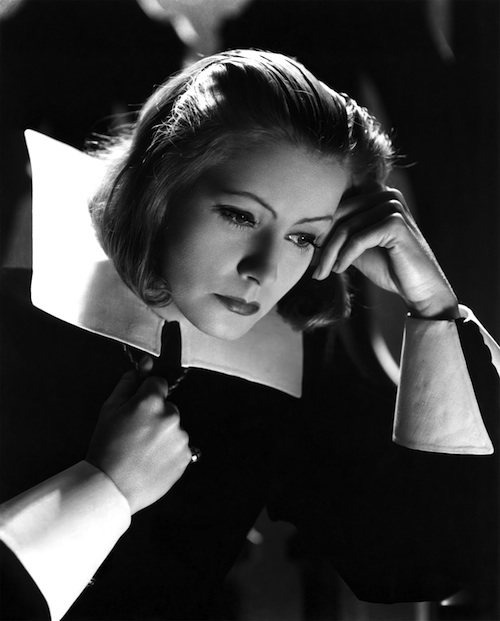
Greta Garbo in "Queen Christina."
In doing so, the film industry is hearkening back to what was once a strength of classic Hollywood: the blockbuster women’s film. Such films were high-quality productions that elevated the unique psychology, heroism and romance of women’s lives to the level of epic entertainment. The great era of this kind of women’s film was in the ’30s and ’40s when movies like Greta Garbo’s Queen Christina, Vivien Leigh’s Gone with the Wind, Marlene Dietrich’s The Scarlet Empress, Joan Crawford’s Mildred Pierce, Greer Garson’s Mrs. Miniver, and Bette Davis’ Jezebel enthralled audiences. Whether they told historical or contemporary stories, such films offered a ‘blockbuster’ vision of women’s lives – both in terms of the resources the studios devoted to them (A-list directors and casts, big budgets) as well as in the importance they placed in their heroine’s emotional journeys. Such films were a mainstay of classic Hollywood, filling box office coffers and building the careers of talented actresses. Further, these films inspired both women and men, for they successfully transformed the unique emotions and experiences of women into works of art with universal significance.
The success of classic women-led films is reflected in their status as some of the highest grossing films of all time. According to Box Office Mojo’s list of the all time highest grossing films (all figures are domestic, adjusted for inflation), Gone with the Wind (1939) is still number one with an astonishing U.S. theatrical total of $1.6 billion dollars. The Sound of Music ($1.13 billion), Snow White and the Seven Dwarfs ($867 million), and Titanic ($1.02 billion) also figure in the top ten list – and one could argue that Dr. Zhivago ($988 million) and The Exorcist ($880 million) owe much of their success to their strong female characters, as well. The success of these films shows that women and their stories have been a compelling draw in many of the biggest movies ever made.
Starting in the 1970s and 1980s, however, the action movie rose in prominence – and a genre that naturally favors men over women took over Hollywood. The success of the male-oriented action film was used to justify spending less money on women’s films, and women were increasingly relegated to lower budget romantic comedies and dramas. This led to a vicious cycle in which the modest budgets given to women’s films led to modest box office returns that were then used as an excuse to spend even less on women’s films – completely contradicting the evidence of the successful women’s films of the classic Hollywood era. While some fine movies were made in this period – Norma Rae, Julia, An Unmarried Woman – much of the heroism, glamor, and romance that had characterized the great women’s films of the ’30s and ’40s was lost.
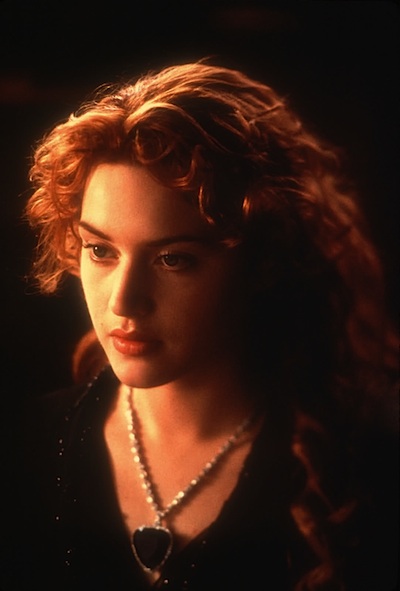
Kate Winslet in "Titanic."
There was a brief resurgence of the blockbuster women’s film in the ’80s with Out of Africa, Terms of Endearment, and comedies like Romancing the Stone, but this promising trend petered out in the early ’90s. By the late ’90s, the film industry’s downgrading of women’s importance in the movies was such that when Titanic became a massive hit in 1997 – a film very much built around Kate Winslet and her emotional journey – the film’s success was instead credited to Leonardo DiCaprio and to the film’s special effects.
This mindset has led to another trend in contemporary Hollywood: the rise of the comic book movie. With the comic book movie, the film industry has became preoccupied with producing a never-ending stream of films based around male adolescence and coming of age. That’s fine for men, but there’s little there to relate to for women. On the rare occasion when a woman plays the lead in a big-budget comic book or video game movie – say Angelina Jolie in the Tomb Raider films, or Milla Jovovich in the Resident Evil films – her role is little different from that of a man. This is a shame because women are capable of a lot more on the big screen than simply wielding violence.
Women’s life experiences are different from those of men. We wish to be leaders and to achieve success in the world, but in our entertainment we also want romance, adventure, and emotional catharsis. When the Twilight movies came along, they answered this need beautifully. Twilight‘s highly traditional storyline of a young woman falling in love with and taming a dangerous man has appealed to women for generations and dates back to the 19th century Gothic novel and beyond (as I describe in my analysis of the literary and mythological themes in the Twilight series). One sees this storyline in everything from the fable of Beauty and the Beast to novels like Jane Eyre and Gone with the Wind. Ultimately, this storyline serves as a metaphor for a woman’s heroic quest to overcome the forces of evil and find love and fulfillment in the world. Continue reading LFM’s Govindini Murty at The Huffington Post: The Girl with the Dragon Tattoo, Twilight and the Return of Women’s Blockbuster Films
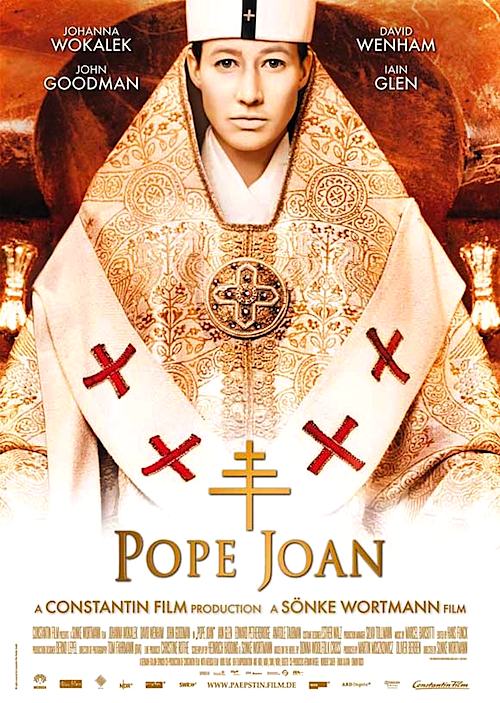
By Joe Bendel. She was a figure of anti-Catholic lore largely but not decisively debunked by Protestant scholars. For centuries millions truly believed in the existence of a legendary female Pope. Indeed, enough references could be found in various sources (before you ask, this definitely includes Martin of Troppau’s Chronicon Pontificum et Imperatorum) to provide Donna Woolfolk Cross the hooks on which to hang a speculative novel about Johanna Anglicus, the woman who would be Pope (allegedly). The most likely apocryphal and very definitely controversial story comes to television when director-co-adapter Sönke Wortmann’s Pope Joan (trailer here), debuted this past Sunday on ReelzChannel.
Like the other Joan, the life of Johanna (not yet known as Anglicus) will be short but epic. Her father is a priest from Britain who came to convert the godless Saxons. Unfortunately, most of his zeal is reserved for terrorizing his family. Despite her natural aptitude and general thirst for knowledge, he refuses to allow her any formal education. However, through the intercession of an unusually progressive Bishopric, Johanna eventually begins her studies at the Cathedral school, while staying as a guest of Count Gerold. She quickly forms a deep emotional bond with the Count, but not so much with the Countess.
War will soon disrupt their lives, but it offers Johanna the opportunity to assume her younger brother’s identity and take his place in a monastic order. There she will begin her ecclesiastic career, living in constant fear her secret will be revealed.
Pope Joan is not exactly a love letter to the Church (there was only one at the time), but not all of the clergy depicted are intolerant Savonarolas. In fact, at critical junctures of her life, Johanna is championed or protected by many men of the cloth, usually of the older and wiser variety. Frankly, one of the most sympathetic characters is Pope Sergius II, whom Anglicus (as he/she is then known) loyally serves. Still, her dogmatic father is so unremittingly abusive, it makes several of the early scenes punishingly difficult to watch.
Despite the gender-bending element of Anglicus’s supposedly suppressed story, Pope Joan is not really preoccupied with psycho-sexual issues. Instead, it is a more traditional feminist critique of an old world social order that afforded little or no opportunities to women. It does so with healthy doses of war, pestilence, and intrigue.
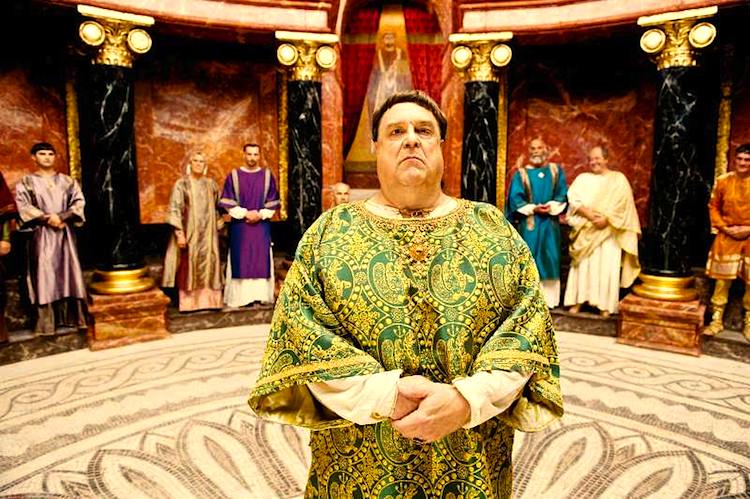
John Goodman in "Pope Joan."
Having previously played an acting president on The West Wing, an unlikely British monarch in King Ralph – and the mother of all governors, Huey P. Long – John Goodman rounds out his resume with the portrayal of a Pope. While he somewhat stands out amid the European cast, his larger than life presence fits Sergius nicely.
By Jason Apuzzo. The first trailer is now out for Sacha Baron Cohen’s forthcoming comedy, The Dictator, and for the most part I like it. Cohen has obviously thrown political correctness out the window, and at first glance it looks like this film could be hilarious. Take a look, and judge for yourself …
By Joe Bendel. They said Prohibition could never work, because you cannot “legislate morality.” Try telling that to Iran’s Islamist government while you’re looking for a bottle of spirits in Tehran. Of course, a bottle can be found on the black market, but the risks are considerably higher and the costs are far greater than in New York of the 1920s. Still, a group of young Iranians keep the party going as best they can until the messy realities of life overwhelm them in Hossein Keshavarz’s Dog Sweat, which screens tonight during the 2011 New Orleans Middle East Film Festival.
Massoud and his cronies love their illegal hooch, or “dog sweat” as they call it. He sobers up quickly though, when his mother is critically injured by a driver who cannot afford to pay “blood money.” He is in no mood to hear how it is all one of the trials of life mandated by God, considering it more a test of Iranian society, which it fails miserably. Hooshang and Homan also enjoy the Tehran nightlife, but once the former gives into his wealthy family’s demands that he wed, the once constant companions no longer spend time together. Sweat never explicitly states why, but the implication is impossible to miss.
Hooshang’s new wife Mahsa also makes sacrifices to conform to the life expected of her. A talented underground vocalist, she must give up her forbidden musical career for the sake of married respectability. In contrast, Katie is involved in a more conventional love triangle, balancing the attentions of the impetuous Bijan and the older well-to-do Mehrdad, who also happens to be married, to her cousin. Held a virtual captive by her controlling mother, Katie bristles at the freedom allowed to her brother Dawood. Yet, he still cannot manage to find a place to be alone with his prospective girlfriend, Katie’s best friend Katherine.
Obviously produced without the official sanction of the Iranian film authorities, Sweat has much to say about gender inequality and the repression of sexual identity in contemporary Iran. It also addresses the lack of free artistic expression and the judgmental severity of religious fundamentalism. To top it all off, Mahsa’s mother Forough takes a pilgrimage to Karbala in Iraq, Iran’s traditional rival, experiencing for the first time in her life a feeling of peace and spiritual fulfillment there.
Given such themes, it is a bit of a surprise the undeniably bold Sweat does not feel heavier. Indeed, some decidedly tragic events occur and nobody (aside from Forough) is ever really happy, but Keshavarz and co-writer-producer Maryam Azadi (who both served as associate producers on his sister Maryam Keshavarz’s Circumstance) never revel in the misery and meanness. Instead, he shows it all to viewers in a straightforward, direct manner and then rotates his focus to the next set of characters. Although a product of necessity, the guerilla vérité-style production gives the film a raw, intimate look that nicely fits the subject matter.
In fact, it is a tribute to the ensemble cast that we do not consider them actors, but authentic people, perhaps in some ominous version of Real World Tehran. Still, Shahrokh Taslimi’s animal intensity as Massoud stands out fiercely.
When watching Sweat one has the sensation of sharing in the lives of this generation of young professional Iranians, who navigate a world that is half underground and half above-board. Granted, it is not perfectly executed. Keshavarz leaves a lot of messy lose ends and unresolved questions, but he definitely takes viewers into the world and heads of these acutely human characters. Highly recommended, Sweat screens tonight (12/14) during the New Orleans Middle East Film Festival, as part of a slate of films varying widely in terms of quality and political sophistication.
By David Ross. I have often met conservatives who lump poetry with other affectations of the urban left, like eating with your fingers at Ethiopian restaurants and bringing your own hemp-weave shopping bag to the grocery store. Who can dispute that in this perverse age they’re not entirely wrong? Who can dispute that political pose often matters far more than literary prowess? Witness the kerfuffle below (via Powerline):
First poet Alice Oswald withdrew her new book from the contest for the £15,000 award to be conferred with the T.S. Eliot prize administered by the Poetry Book Society, and now, the Guardian reports, Australian poet John Kinsella has joined her. Both poets have been short-listed for the prize, and Oswald is herself a former Eliot prize winner, so their withdrawal is something more than a mere gesture.
What is the cause that impels Oswald’s and Kinsella’s protest? Might it be the genteel anti-Semitism of the poet in whose name the prize is given? Of course not. Rather, it is the source of the beneficence that funds the award. The prize is the beneficiary of a newly-brokered sponsorship by investment management firm Aurum Funds. What’s wrong with Aurum Funds? Aurum is a specialized investment firm comprising a variety of hedge funds.
What’s wrong with hedge funds? Well, Kinsella is a rabid socialist. Moreover, he explained, “Hedge funds are at the very pointy end of capitalism, if I can put it that way.” Former prize winner Oswald observed that “poetry should be questioning not endorsing such institutions.” Better for the prize money to be laundered through the organs of the state after it is levied from the benighted taxpayers who prefer prose to poetry by the likes of Oswald and Kinsella.
Looking for a little background on Kinsella, we find that he is an Australian poet who describes himself as “a vegan anarchist pacifist of 16 years – a supporter of worldwide indigenous rights, and an absolute supporter of land rights.” Land rights, mind you, not property rights. Somehow it all makes sense.
Where is the author of The Dunciad when you really need him?
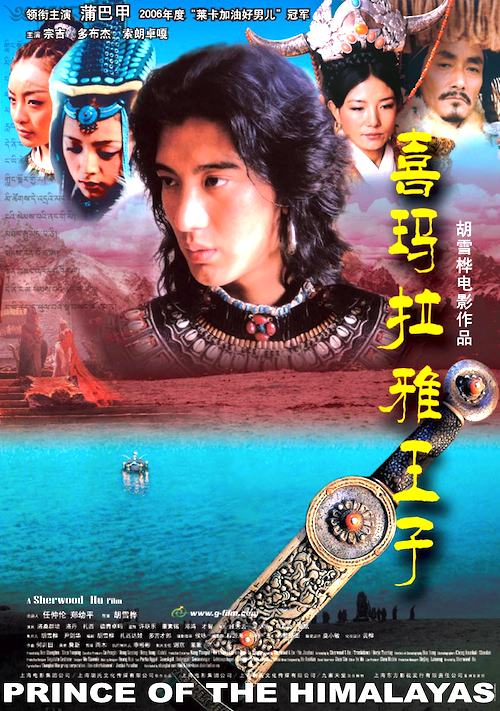 By Joe Bendel. Shakespeare famously wrote in As You Like It: “all the world’s a stage.” That includes the “Roof of the World” as well. In an act of sheer cinematic bravura, Sherwood Hu moves the Danish tragedy to the high Tibetan mountains, taking invigorating liberties with the Shakespeare play in the process. Appropriately, Hu’s The Prince of the Himalayas (trailer here), will have its premiere American theatrical engagement exclusively at the Rubin Museum of Art (home to the largest collection of Himalayan art in the West and some of the City’s finest film and jazz programming), starting this Friday.