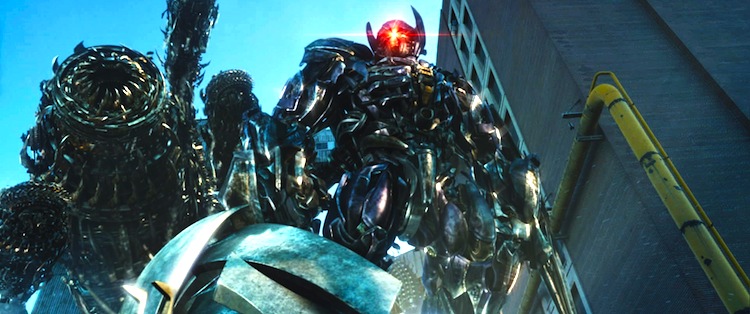
LFM Review: Transformers: Dark of the Moon

By Jason Apuzzo. The Transformers series is basically a high-speed, whipsaw collision of three things: 1) the venerable, 1950’s-based alien invasion genre, with its subtext of American freedom-fighting in the face of overwhelming technological threats from abroad; 2) a Hasbro toy line; 3) the retro-80s/MTV sensibilities of director Michael Bay.

This unusual and unexpected combination of elements have proven extremely successful at the box office over the past four years, but like any successful franchise, the Transformers movies are also more than the sum of their parts. The movies are fun, epic in scale, earthy in their humor, cheekily conspiratorial in their politics, playfully fetishistic in their focus on cars and girls, and keenly attuned to the sensibilities of the moment – what’s cool and what isn’t – in the same way the Bond films were in their heyday.

But the films offer a bit more than that, actually.  Like Michael Bay’s best work – Pearl Harbor comes to mind – the films are unbending in their affection for the things that make America special: our independent streak, our fighting spirit, our passion for technological innovation. The films also radiate middle class values: the value of hard work and sacrifice, of remaining loyal to friends, and the importance of family – even when your family drives you insane.
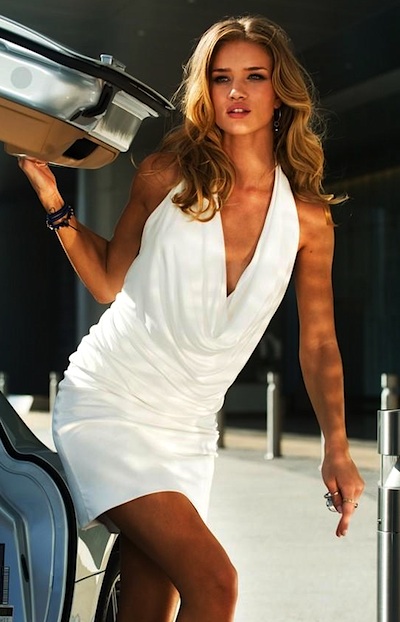
The high-class, professional girlfriend.

Transformers: Dark of the Moon doesn’t necessarily add anything new to this formula that wasn’t there in the first two films. The familiar elements are all there in the first half of Dark of the Moon, but what Bay adds in the film’s second half are action sequences so gigantic and complex in scale – and amplified by astonishingly detailed 3D imagery – that one can only really compare them to Avatar or to certain moments in the Star Wars prequel trilogy. And the sum of all this ultimately is quite arresting and entertaining … but sometimes a bit overwhelming.

So let me just blurt it out here and say that as much as I liked the film, it also felt a bit excessive. The first two Transformers movies I first saw on DVD, on a portable player, in a situation in which the action in my field of vision was tightly contained, and the audio channels compressed down to classic L-R stereo. Watching Dark of the Moon in 3D on a big screen in 7.1 sound – with the film’s rapid fire dialogue, multi-layered conspiracy plotlines, and mind-shattering action sequences – left me feeling liked I’d just spent 2 1/2+ hours behind a jet engine … while reading Stephen Ambrose. It was a lot to take in.

Michael Bay’s directing style might best be described as palimpsestic, like something out 17th century Baroque painting or drama: dense, tightly packed plotlines are unfolding as comic one-liners shoot at you rapid-fire, while imagery of complex machines hurtle through space in balletic, gravity-defying maneuvers … right as Rosie Huntington-Whiteley is turning a corner in an outfit that makes her look curvier than Jessica Rabbit.

And you have about .3 seconds to take all that in before the next shot.

Not a millimeter of the frame nor a single audio frequency is wasted in Dark of the Moon. Every moment is packed to the gills with detail – and frequently with references to other films. It’s a unique style that I’ve come to like from Bay – the style of a muralist, rather than a portraitist – and a style that assumes the audience is capable of absorbing an ocean of detail. But sometimes, as when you’re looking at a huge mural in a museum, it can be a bit overwhelming.

This isn’t a complaint or a criticism, so much as an observation: Michael Bay seems to be inaugurating a different kind of filmmaking in the Transformers series, a type of complex, information-rich filmmaking style that assumes his audience can go back endlessly on DVD/Blu-ray after seeing the film and actually figure out what the hell happened, and savor all the details (and there are plenty to savor; especially if you like Osprey helicopters, or Rosie Huntington-Whiteley’s legs). Because I liked Dark of the Moon, I recommend you do that – because on first viewing it’s quite a lot to take in. Continue reading LFM Review: Transformers: Dark of the Moon
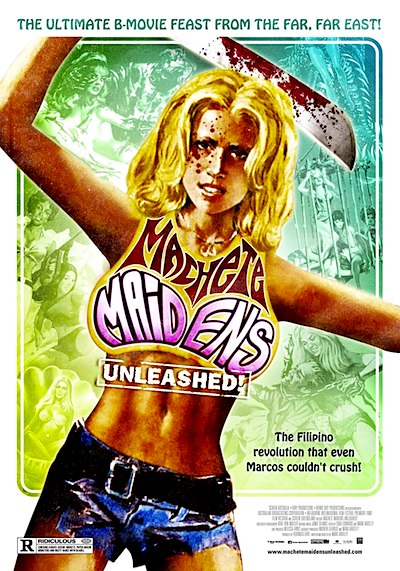
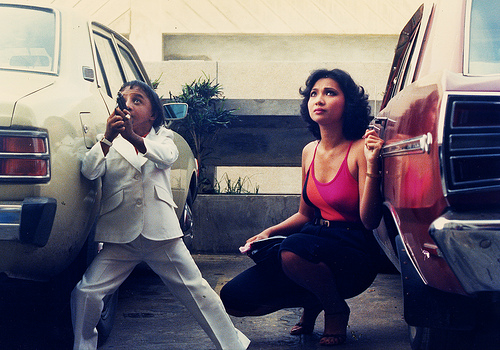
LFM Review: Machete Maidens Unleashed!

By Joe Bendel. Machetes and maidens: two great things that go great together and evergreen staples of Filipino exploitation films. Following up  Not Quite Hollywood, his epic survey of Ozploitation, Mark Hartley gives the That’s Entertainment treatment to the scrappy low budget actioners produced in the Philippines. Prepare thyself for an education when Hartley’s Machete Maidens Unleashed! (trailer here) screens during the  2011 New York Asian Film Festival, kicking-off this Friday, and once again bringing a heavy dose badness to the Lincoln Center.

Much like Tito in Yugoslavia, Marcos had plenty of military hardware laying about that he was more than willing to rent out to international productions. With the memory of the U.S. liberation during WWII still fresh for older generations, the Filipino climate was relatively pro-America and definitely open for business. Yet it took a visionary like Roger Corman to fully recognize the possibilities.

The Philippines made a star of Pam Grier, who starred in several women-in-jungle-prison films for Corman’s New World Pictures. Corman also recruited local talent such as Eddie Romero to grind out Brides of Blood movies for New World. As with protégés like Jonathan Demme, Monte Hellman, and James Cameron, who learned to crank them out fast and cheap under Corman’s tutelage before finding wider acclaim, Romero would eventually be recognized as an official National Artist of the Philippines. Yet, he happily sits down to talk about Black Mama, White Mama and similar cinematic milestones.

Never a dull moment.

Like Hartley’s NQH, MMU will leave viewers thirsty for many of the films sampled in glorious detail. For instance, Bobby Suarez’s Cleopatra Wong looks particularly intriguing (killer nuns) and vaguely PG-13-ish. Whereas many alumni of Corman’s prison films frequently express amazement at just how much they were able to get away with in terms of lurid sexual content—a point Hartley is not shy about illustrating.

Breezily paced, MMU features first-person interviews with Corman and scores of his American and Filipino colleagues, unabashedly gleeful in the naughtiness and profitability of their masterworks. While the commentary is not as laugh out loud funny as NHQ’s, it still has its moments, often courtesy of Corman vet John Landis. A good clean night at the movies (but best to leave the kiddies at home), MMU is a perfect example why NYAFF is pound for pound the most entertaining fest of the year. It screens with the straight-up legit Filipino exploitationer Raw Force this Saturday (7/2) at the Walter Reade Theater.

Posted on July 29th, 2011 at 7:30pm.

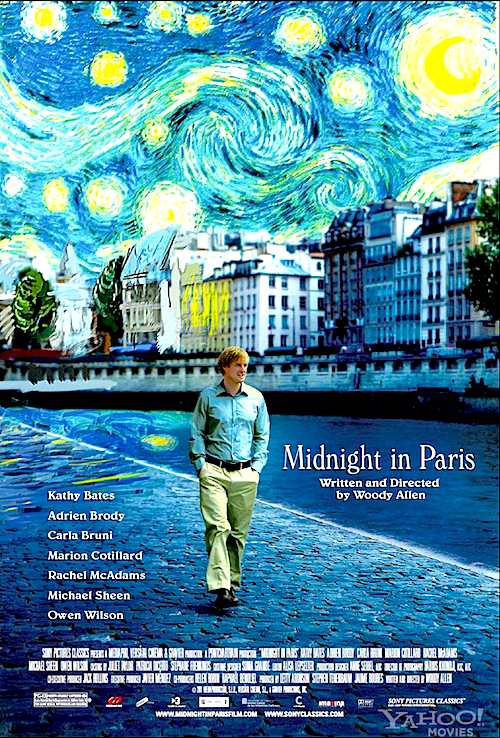
LFM Review: Midnight in Paris

By Patricia Ducey. Midnight in Paris, Woody Allen’s latest film, is a frothy romantic comedy topped with a healthy soupcon of wisdom, a welcome turn from the now 75-year-old filmmaker.

Screenwriter Gil (Owen Wilson) and his fiancée Inez (Rachel McAdams) accompany her well-heeled parents to Paris for a little pre-wedding vacation/shopping trip. Gil adores Paris and longs to leave L.A. behind to write novels there, a la Hemingway and Fitzgerald, in the heady Paris of his imagination; Inez, however, is quite content with the good life in a Malibu manse, financed by Gil’s steady income from what he derides as his B-movie success. (Mon dieu, what present day scribe would complain of steady sales of any scripts?!)

But Gil is an incurable romantic, and his longings create a pebble in the shoe of their relationship. He stalks off one night after a squabble to ponder his future, both literary and romantic. As the bell tower chimes midnight, an antique auto pulls up and the revelers inside drag him inside. As the night and the champagne flow, Gil comes to believe his hosts really are Zelda and Scott Fitzgerald, as they insist, and that he has landed somewhere inside his most cherished dream. And so his adventure ensues, with Gil concocting ever greater ruses to escape Inez to return to the ‘20s, where all his literary and artistic idols—and one particularly lovely woman—await him. But I will not spoil the fun by explaining; the story is very clever and surprising.

Some of Allen’s arch improv-style patter falls flat, but more of it produces smiles or laughter. And Paris is a character here, too; Allen and his cinematographer, Darius Khondji, weave a Paris of amber glowing streetlamps, sumptuous five-star restaurants and earthy flea markets for our delight. The city (at least the part in frame) looks perfectly lovely. He sets the action against a soundtrack of lively Cole Porter and many of his other jazz favorites perfect for the time. If you can’t afford a plane ticket, Midnight in Paris will do. Continue reading LFM Review: Midnight in Paris

Sex Slavery in the Islamic World: LFM Reviews The Price of Sex

By Joe Bendel. Istanbul might be a beautiful city, but the women living in the Aksaray neighborhood would not know. That is because it is a red light district and most of the prostitutes there are slaves, confined to seedy sex clubs and prison-like quarters. Crusading photojournalist Mimi Chakarova tells the stories of the voiceless women trafficked into sexual slavery in The Price of Sex, which screens during the 2011 Human Rights Watch Film Festival.

There is no question, sex trafficking is a problem in Western Europe and the Americas. However, when Chakarova wanted to investigate ground zero for sex slavery, she took her hidden cameras to Istanbul’s Aksaray and Dubai – two cities which obviously have absolutely nothing in common, right?

Chakarova briefly acknowledges the hypocrisy of Muslim communities rather openly indulging in the fruits of sex slavery. Evidently in Turkey, pre-marital sex is illegal but prostitution is not. There would seem to be an inherent contradiction there, but the crooked cops doggedly look the other way. While conditions might be slightly better in go-go Dubai, the fundamental realities remain the same. Demand for Eastern European women is also quite high in both “markets,” reflecting a “Natasha” fetish amongst the clientele. Indeed, the frequency with which Eastern European women are targeted by trafficking rings hit close to home for the naturalized Bulgarian-American Chakarova.

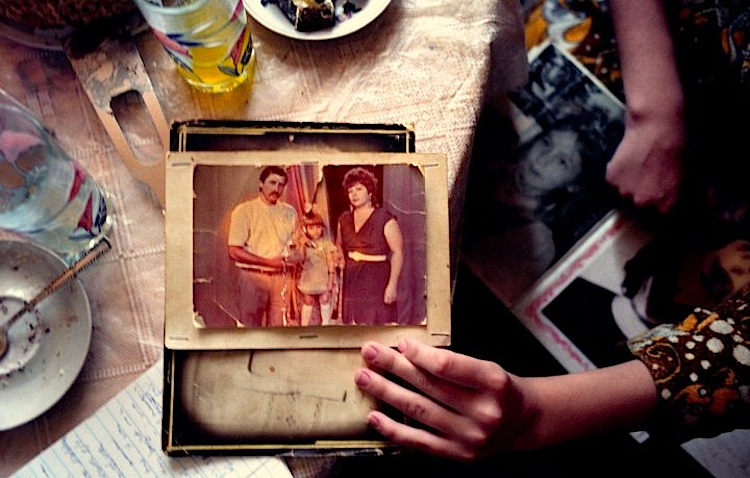
The personal toll of the global slave trade.

Continue reading Sex Slavery in the Islamic World: LFM Reviews The Price of Sex

The BBC’s Desperate Romantics

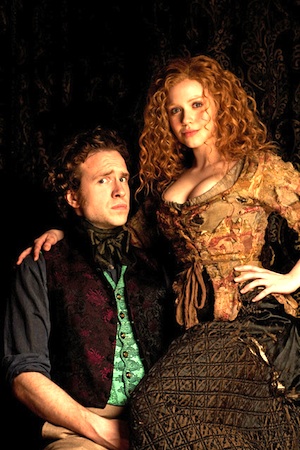
Amy Manson and Aidan Turner from "Desperate Romantics" (2009).

By David Ross. In my comments from last year on the Keats biopic Bright Star I opined that “film has no idea how to approach lives that are largely interior, with driving purposes that are inconveniently invisible and inscrutable. In consequence, film tends to emphasize the gossipy and scandalous, dwelling on the externals of sexual deviancy, alcoholism, and nervous breakdown.” This certainly describes the BBC’s Desperate Romantics (2009), but such a zesty and funny travesty is hard to resist, especially if, like me, you tend to think the twentieth century was rather a mistake.

The six-hour miniseries tells the story of John Everett Millais, Dante Gabriel Rossetti, and William Holman Hunt – the “Pre-Raphaelite Brotherhood” – as they scheme and bumble in pursuit of eternal art and sub-eternal flesh. Rounding out the dramatis personae are John Ruskin, the sexually neurotic titan of Victorian art criticism and incidentally one of the greatest prose stylists in the history of English; Effie Ruskin, the great man’s warm-blooded young wife, disconsolately intacta after five years in the marriage bed; the flame-haired milliner-cum-muse Lizzie Siddal, the “original supermodel”; and the milksoppy hanger-on Fred Walters, a fictional contrivance who narrates the whole business from a perspective of exasperation and vicarious titillation. Rossetti and Fred competitively love Siddal (what’s not to love!), while Ruskin is disgusted by his wife’s post-pubescent nether parts and schemes to fob her off on the virginal Millais. Meanwhile, the prostitute-model Annie Miller – a buxom, lusty lass – places the inconsistently evangelical Hunt in a series of difficult, shall we say, positions.

Rafe Spall and Jennie Jacques.

Edward Burne-Jones and William Morris make a late appearance as nerdy idolaters of Rossetti, the former vaguely epicene, the latter fat, manic, and socially incompetent. This ignores Morris’ polymath command, the hard will of the inveterate and consummate creator, but it serves a dramatic purpose, I suppose, providing Rossetti with a foil and the show with a cuckold-ready goof.

Unlike the BBC’s reverent and impeccable interpretation of Pride and Prejudice (see my comments here), Desperate Romantics is a cheese fondue of pros and cons. It takes liberties with the biographical record (Wikipedia totals up the damage); it has no interest whatsoever in the substance of the Pre-Raphaelites’ art or ideas; it depicts Rossetti – an artistic and poetic giant – as a charming but shiftless skirt chaser, which is at best a partial truth; it takes a particularly sunless view of Ruskin, depicting him as coldly repressed rather than as gloriously nuts; and its theme song, a thumping folk-rock jig, is the most annoying piece of TV music since the Seinfeld bass segue. On the other hand, the series is full of impish humor and salacious shenanigans, and the brotherhood’s banter abounds in dry British wit. Especially delicious are the episodes in which the Ruskins and Millais bumble toward what we’ll delicately call a physical outcome. We might ask: “How many Victorian geniuses does it take to screw in a -.”  Apparently it takes quite a few. Continue reading The BBC’s Desperate Romantics

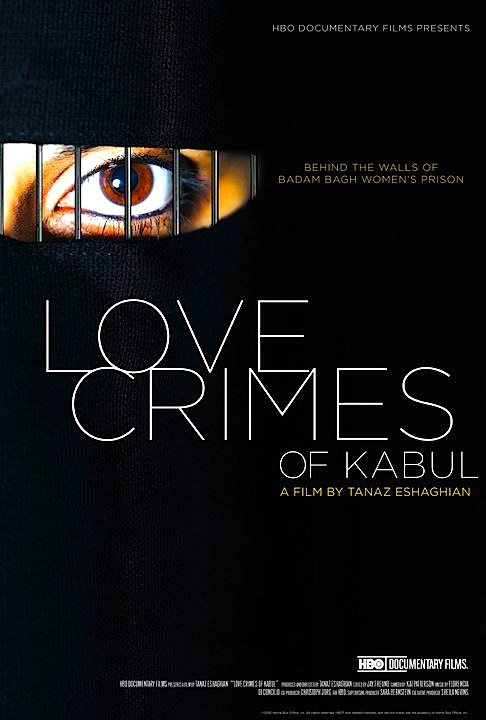
LFM Review: Love Crimes of Kabul

By Joe Bendel. Witness Islamic Sharia Law in practice. It is impossible to consider it anything less than institutionalized misogyny after observing the prosecution of “moral crimes” in Afghanistan. With remarkable frankness, Iranian-American filmmaker Tanaz Eshaghian takes viewers inside the Badam Bagh women’s prison, where half the inmates are incarcerated on dubious morals charges in Love Crimes of Kabul, one of the laudable selections of the 2011 Human Rights Watch Film Festival that actually addresses human rights abuses.

All three of Kabul’s primary POV figures are bright and attractive young women. All three stand accused of the heinous crime of premarital sex, but only one of them actually engaged in what would be perfectly legal behavior in a rational society. Not to be spoilery, but care to guess which one gets the most lenient sentence? Indeed, it quickly becomes apparent that justice has no place whatsoever in Islamic Law.

Easily the most shocking case is that of seventeen year old Sabereh, who simply had the misfortune to be caught eating a meal alone with a boy. Suspiciously, when a medical examination confirms her virginity, the prosecution switches gears, charging her with sodomy – the equivalent of going nuclear. Of course, Eshaghian’s cameras were banned from Sabereh’s trial, lest the railroading be exposed to sunlight, but the fix was obviously in.

At first, Kabul makes the audience’s blood boil, but as the full implications of the injustices perpetrated in Badam Bagh become clear, viewers’ stomachs will turn to ice. Eschewing talking heads and voiceovers, Eshaghian captures a visceral sense of life for the accused. She also records some brutally honest conversations as the women struggle with their Kafkaesque situations. Despite the relatively short running time, Eshaghian patiently lets scenes play out so viewers can appreciate their full import. Though her overall access is quite impressive, when her cameras are banned (as during Sabereh’s “trial”), the significance is similarly inescapable.

While Eshaghian’s unfiltered approach is undeniably bold and bracing, she leaves one rather obvious question largely unexplored. In fact, one of the most striking aspects of Kabul is the considerable presence of toddlers in Badam Bagh, who were either delivered while their mothers were serving their time or were essentially abandoned by their fathers. Strangely though, Kabul never tackles the issue of these true innocents growing up behind bars.

The injustices (ostensibly post-Taliban) faced by the women of Badam Bagh in general and young Sabereh in particular demand official American intervention. No doubt our current administration will get right on that, sometime after the U.S. Open. A shocking indictment, Kabul is a worthy companion film to The Green Wave, both of which are highly recommended at this HRWFF.  It screens today (6/22) at the Walter Reade Theater.  Part of HBO’s Documentary Films Summer Series, Kabul also airs on several of the network’s arms through July 27th.

Posted on June 22nd. 2011 at 1:13pm.